Tumour book 'highlights human side of medicine'

 Supplied
A woman's account of her brain tumour treatment highlights the "human side of medicine in a way that clinical training often cannot", a GP says.
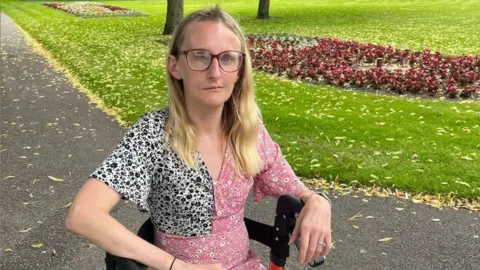
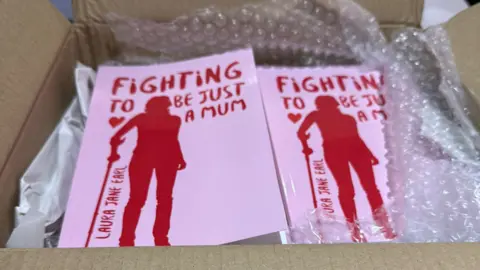
Laura Jane Earl, 37, from Carlisle, in Cumbria, wrote about her journey through the healthcare system in a book to raise awareness and money for charity Brain Tumour Research.
Brampton GP Dr Vicki Trotter said she was encouraging all her colleagues to take lessons from the account.
"Just reminding ourselves, as healthcare professionals who turn up every day to work, simple things go such a long way," she said. "Treating people with respect, treating people with care, remembering that everyone's a human."
Mum-of-four Earl's benign brain tumour was removed in 2024, but complications left her with facial palsy and unable to walk.
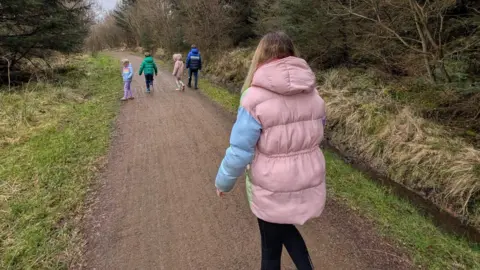
She had previously founded The Hiking Household, an online guide encouraging families to explore walking routes around Cumbria.
"I was fit, active, didn't smoke, didn't drink, was a big runner and it just proves unfortunately that these things can happen to anybody," Earl said.
 Laura Earl
In the book, called Fighting To Just Be a Mum, the former nurse described locked-in syndrome, where it looked like she was in a coma, but she could still feel and hear things.
"When I was lying there, I realised, did I sometimes speak about my annual leave? Did I sometimes speak about what I was having for tea that night?"
Earl also said she heard doctors speaking about her like she was not there.
She recalled hearing people saying "Laura's not going to make it, might not be able to do X, Y and Z".
"Obviously, it's very difficult hearing that and then not being able to communicate."
She said the book was not trying to be negative towards healthcare workers.
"I'm very thankful for them, but just trying to do better, myself included, to be the best that we can be professionally," Earl said.
 Supplied
Trotter said some of the examples of poor care in Earl's story were "just heartbreaking".
"It illuminated not only some of the issues facing the NHS currently, but small episodes of care that could have made such a difference," she said.
Trotter also hoped the book would raise awareness of symptoms, saying that brain tumours could be "challenging to diagnose".
Earl's recovery efforts mean she can now walk with the aid of a walking stick.
She also pivoted her business to focus on more accessible walks and ones with plenty of rest areas.