Hundreds oppose plans to restore Tudor mansion

 Kingswood Homes
Hundreds of people have objected to plans to restore an historic Tudor manor house because it would mean 400 homes being built on nearby green belt land.
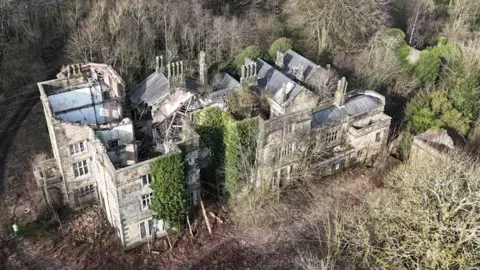
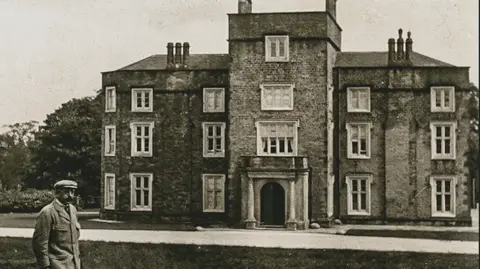
Dating back to about 1573, Grade II* listed Winstanley Hall in Wigan has lain derelict for about 40 years.
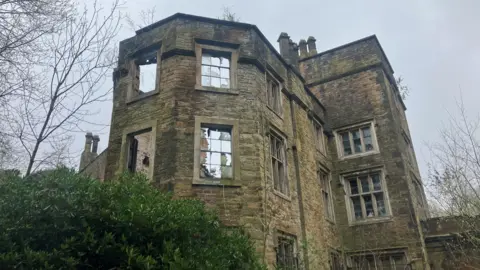
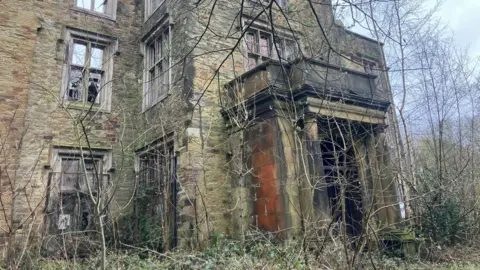
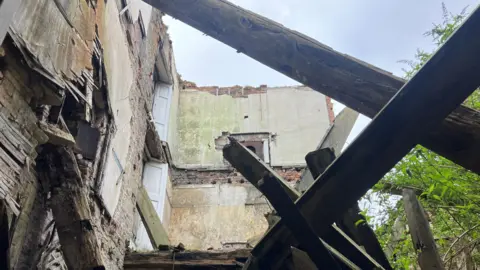
Much of its roof has caved in due to vandalism and water damage, only the walls remain standing in parts of the building, and the whole site is completely overgrown with trees.
The building was bought by Kingswood Homes last year. The developer has submitted plans to Wigan Council under which Winstanley Hall's restoration would be financed by building new homes.
The plans include the restoration of the hall and its conversion into 36 apartments and houses, with car parking, woodland walks and a heritage centre.
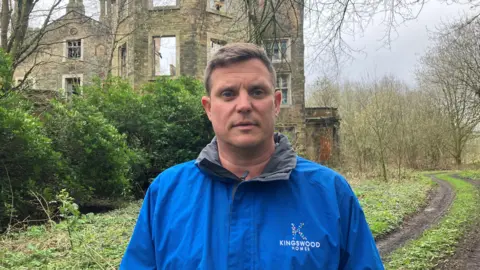
Paul Jones, from Kingswood Homes, said: "This is the last chance really to save this building because the roof has collapsed after the vandalism of the last 20 years.
"That said, there's chimneys which are obviously still here, the brickwork, all the decorative stonework with the gargoyles, the fountain and there is more on the inside of the building like some of the fireplaces that could well be restored."
According to Historic England, only about 5.8% of listed buildings are judged to be Grade II*.
The manor house and upper courtyard at Winstanley Hall are both on the Historic England "heritage at risk register", with the listing including the comment that the building is at "immediate risk of further rapid deterioration".
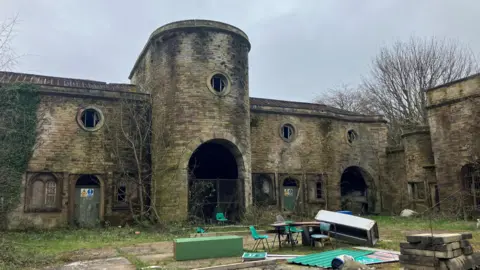
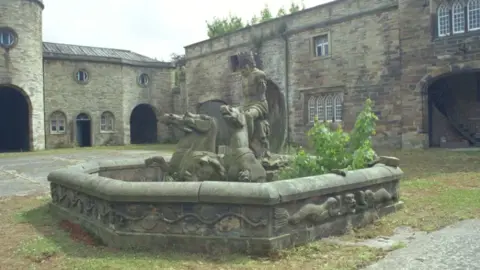
In the stable courtyard at Winstanley Hall, there is a fenced-off Grade II listed fountain which includes a statue of the Roman god Neptune and three horses.

 Roy Finch
As well as converting the house, the proposal also includes building 396 homes - varying from one to five bedrooms - on green belt land off Pemberton Road in Winstanley.
Some locals oppose the plan.
Nik Puttnam, 63, lives on Pemberton Road.
He said: "This is an exceedingly busy road, so when you add another 432 homes to this area, you're looking at a significant number of extra cars coming off one point of access."
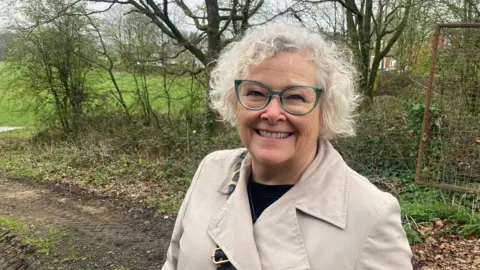
Deborah Orr, from the Save Winstanley Green Belt campaign, said: "To have this green space within walking distance is so precious to the local community."
The 61-year-old added: "There's beautiful old trees there and if you build on there, we're never going to get it back so it would be a tragedy to lose it."
 Fortune Series
Winstanley Hall was owned for 400 years by the Bankes family, who became very successful during the 18th and early 19th centuries from coal mining.
The Winstanley estate expanded significantly during this period, with the creation of a stable block and courtyard in 1834.
The house was last occupied in the mid-1980s before it was sold to a developer in 2000 whose regeneration plans never came to fruition.
Since then, the structure has deteriorated significantly due to a lack of maintenance and slates being stolen from the roof, which led to water damage and the collapse of the building's interior.
The mansion was bought by Kingswood Homes last year but the wider estate remains in the ownership of Tim Bankes, the descendant of the Bankes family.
Other local people have told BBC Radio Manchester they feared the restoration could mean losing some of the original features on the 450-year-old building including its staircase, fireplaces, roof timbers and skirting boards.
Syd Cottle, from Save Winstanley Green Belt, said: "Only the facade will be retained, so what you'll have is a brand new building replacing the internal heritage aspects of the structure."
The 55-year-old added: "I compare it to the building equivalent of poor taxidermy."
Kingswood Homes said it wanted to secure the building with scaffolding before making an assessment over which historic features could be saved.

A Historic England spokesperson said: "Historic buildings like Winstanley Hall need to be used and can give new developments something unique.
"By working with owners on sensitively designed schemes like this, we can rescue buildings whilst delivering much-needed homes for communities."
Aidan Thatcher, director of place at Wigan Council, said: "At this stage, no decisions have been made regarding the developer's plans at Winstanley Hall and the surrounding area.
"We are committed to a thorough and transparent planning process and will review all relevant information, including views from the public, before making a final decision."