Prince Harry's latest feud with the press is over (for now). Here are seven key takeaways

 Max Mumby/Indigo/Getty Images
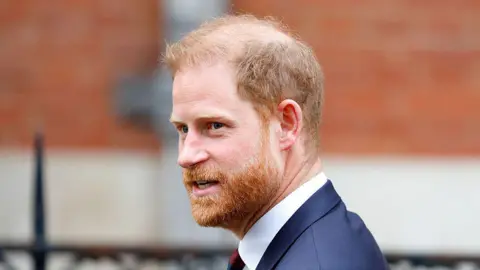
It's been a bitter 10-week showdown, which revealed just how angry Prince Harry still is with the press. It involved a witness switching sides, repeated arguments with the judge and tears.
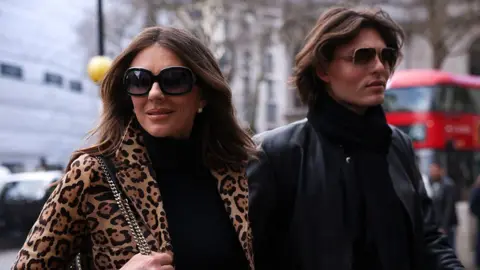
Harry was joined in court by model Elizabeth Hurley, actor Sadie Frost, Sir Elton John and the singer's husband David Furnish, as well as campaigner Baroness Lawrence and Sir Simon Hughes, the former Liberal Democrat MP.
Together, they sued Associated Newspapers Limited over claims it misused their private information. After so many other hacking trials, what did we learn from this one?
This was a bitter court battle
This has been the toughest newspaper court battle yet, and if the key allegations in the case are true, they will shred the reputation of the Daily Mail and Mail on Sunday.
The claims are that the papers' journalists knowingly commissioned shadowy figures to tap phones, hack computers, listen to voicemail and blag or pay for private information. These are criminal offences, so the stakes are high.
Associated Newspapers, the owners of the two papers, flatly denies acting unlawfully.
When the Duke of Sussex embarked on his last legal campaigns, against Mirror Group Newspapers and Rupert Murdoch's News Group, there was already plenty of evidence of media malpractice.
But the judge in this case, Mr Justice Nicklin, wanted a manageable trial. In contrast to previous cases, he decided the seven claimants could not just be able to reheat evidence previously uncovered, or make general accusations against the newspapers.
Instead, they would have to present facts that proved specific stories were the result of what became known as "unlawful information gathering", and that Mail journalists knew it was going on.
This made the claim much harder for Prince Harry and his team.
To the obvious fury of the judge, the prince's stubborn barrister David Sherborne often tested the boundaries of that decision. They repeatedly argued, with raised voices, in front of a watching court.
The seven claimants remain furious
The claimants gave often emotional evidence.
Prince Harry flew in to give evidence in person, spending two hours in the witness box. He accused the two newspapers of subjecting him to "an endless pursuit, a campaign, an obsession with having every aspect of my life under surveillance so they could get the run on their competitors".
His anger plain to see, he had to be reminded to answer questions, not try to make his case.
 Dan Kitwood/Getty Images
Hurley was reduced to tears after describing the effect of the reporting of the paternity row about her son with the American businessman Steve Bing.
It was clear the claimants did not accept that the details of their private life were a legitimate subject for the Mail newspapers.
A private investigator dramatically switched sides
Prince Harry's legal team says private investigator Gavin Burrows signed a statement in 2021 confirming he carried out some of the most serious wrong-doing alleged against the Mail newspapers.
But in 2022, he had an argument with a journalist who had been helping to gather evidence against the Mail newspapers. At that point, Burrows turned on Prince Harry's team.
The signature on his main witness statement had been forged, he said. Sherborne was then forced to treat Burrows as a witness who was hostile to their claim, rather than one who supported it.
Jerry Yanover, an ex-police officer sacked for misconduct in public office, told the court he had done unlawful work for Burrows, whom he said had boasted about being commissioned by the Mail.
But the judge may still throw out Burrows' evidence.
More than once he asked Sherborne to explain what would happen to his case "when you remove Burrows?"
Anthony White KC, who represented Associated in court, said many of the most damaging allegations would no longer be sustainable.
Associated Newspapers paid a network of people for information
Weeks of evidence presented to the court showed how the Daily Mail and Mail on Sunday paid large sums to a network of information providers to help journalists write stories.
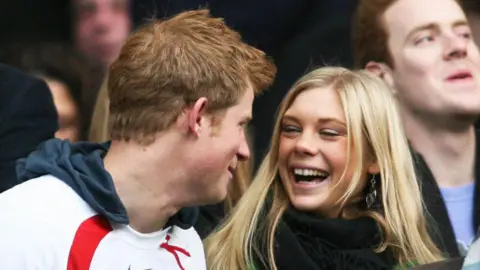
Freelancers provided tips and information. A South Africa-based reporter got the airline travel details for trips taken by Prince Harry and his then-girlfriend Chelsy Davy.
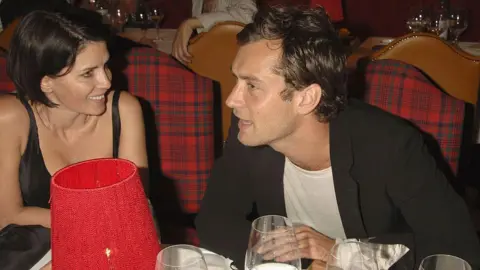
An experienced UK freelancer sourced stories about Sadie Frost's troubled relationship with Jude Law. The claimants said they used unlawful methods.
The publisher insisted they simply had great sources.
 CHRIS RATCLIFFE/AFP via Getty Images
 Dave Benett/Getty Images
Payment records suggest the newspapers used up to 14 private investigators to obtain information. Hampshire-based Steve Whittamore was one, contacting journalists from the email address blag2049@hotmail.com. In a statement he said his contacts got criminal records from the Police National Computer and driver details from the DVLA. Others, he said, were blaggers who convinced phone companies to send them call and billing information.
Associated has already admitted commissioning private investigators (PIs), including Whittamore. Mail journalists giving evidence said they believed PIs had access to legitimate databases allowing them to get public information more quickly, in an era when less was available online. They helped confirm the accuracy of stories, and track down celebrities for a response. The Daily Mail Editor Paul Dacre banned their use in 2007 after several were convicted of data protection offences.
Anthony White KC, who represented Associated, pointed out that a string of experienced journalists were willing to come to court to defend their reputations.
This was a civil trial and they could have refused. He argued they would not have been there if they had been guilty of wrong-doing.
The best evidence came on paper, but was there enough?
White said Associated had searched 20,000 boxes of company paperwork looking for relevant evidence, as part of the court disclosure process. However, he said it found very little because the allegations dated back 25 years.
The claimants had a leaked "ledger" of Associated Newspaper payments, invoices from some private investigators and extracts from reporters notepads with cryptic handwritten details of payments to sources.
But often it was hard to prove money had been paid for specific pieces of unlawful information.
"It's a bit like playing pin the tail on the donkey with us being partly blindfolded and there being very little donkey left for us to pin the tail on," Sherborne complained.
Detailing the evidence he said proved each article had been unlawfully obtained, he often admitted there was no killer document. The judge would have to infer guilt from the fact that stories contained private information, and, he claimed, Mail journalists had a "propensity" to use unlawful methods.
But he hit a wall. Mr Justice Nicklin started to ask what the best single piece of evidence for each article was, and Sherborne was forced to say: "We are asking your lordship to extrapolate."
The judge later suggested that, instead of proving his case, Sherborne was trying to get the newspapers to bear the burden of showing how they sourced a story.
Journalists were forced to explain where stories came from
Newspaper reporters rarely have to account for their actions in public, yet this trial saw Daily Mail and Mail on Sunday veterans subjected to detailed cross-examination.
Katie Nicholl, the former Mail on Sunday Mail Royal Editor, and Rebecca English, the Daily Mail's current Royal Editor, were repeatedly asked where information about Prince Harry had come from. They said they, or their sources, were on the fringes of his social circle. And his friends talked.
Stephen Wright, the former Mail crime editor, led his paper's campaign to get justice for Stephen Lawrence and told the court he had been deeply affected by what he called "despicable" allegations that he commissioned unlawful techniques.
He was asked about his relationship with a corrupt police officer he said he kept "warm as a contact". He angrily denied paying the police for information, something that is a criminal offence.
For many of the journalists, their biggest problem was remembering the details of individual stories they had written - often one of thousands - more than a decade ago.
This case could be the last of its kind
It is now 20 years since the term "phone-hacking" entered the public consciousness, and 15 years since the News of the World closed - a tabloid marred by the scandal. Hundreds have been paid compensation for having their voicemails listened to.
The passing of time has made it harder for Prince Harry and his six co-claimants to prove their cases. There are time limits for bringing privacy claims which could still result in the judge rejecting some of the allegations against Associated Newspapers.
It is likely this difficult case will be the end of the road for the Duke of Sussex's campaign against the big newspaper groups. He is trying to rebuild his relationships within the Royal Family, and Buckingham Palace does not like litigation.
These days stars are more likely to reveal their own secrets on social media than have them revealed by a shadowy investigator. And this was a trial about stories printed in ink. Technology has changed everything.