Police bodycam footage livestreamed in new project

 Ellen Knight/BBC
A virtual ride-along scheme has been launched by a police force, allowing the public to see what officers get up to from the comfort of a police station.
West Mercia Police officers stream their bodycam footage as they go on patrol - with watchers able to view it in real time.
The force hopes it will allow people who may not be physically able to go on an in-person ride along - or those who do not want to be seen in a police car - the chance to see behind the scenes of frontline policing.
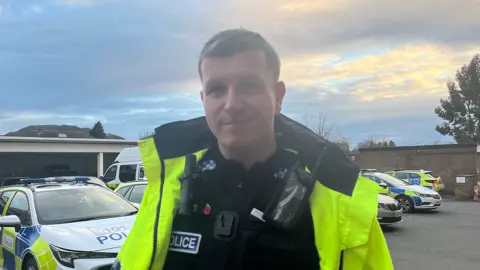
PC Ryan Davies, who is based at Wellington police station in Shropshire, had his bodycam footage broadcast and said it allowed the public to see "a fuller picture" of what officers did.
The public has been involved in in-person ride-alongs for years, but PC Davies explained that in those situations, they "can't really put them in danger".
By contrast, with the viewers safely in the police station, officers streaming their bodycams are "going to live jobs and incidents" without putting people at risk.
PC Davies said he was not fazed by knowing his shift was being scrutinised by viewers as "everyone's got a mobile phone now anyway".
He added that the scheme would "benefit" local people by highlighting what officers get up to.
 Ellen Knight/BBC
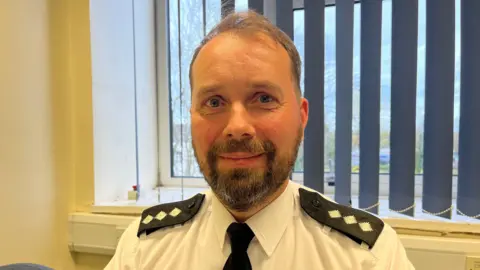
Ch Insp Charles Parker, who has been leading the project, which is named Operation Innovator, said the scheme would "lift that mystery of policing and get more community engagement".
Traditional ride-alongs created "a lot of risk", he added, noting that "there's certain things that [the public] can't go to".
"[But] with the virtual, we're in a police station, the person who's watching is safe."
He added that the force was hoping to appeal to people who were "not wanting to be seen in a police vehicle", as well as making the process more open to people with accessibility needs.
The end goal, he said, was "about reaching out to the community to understand how we police".
Asked whether a livestream that could be stopped at any time reduced transparency, he said the project would "increase the amount of jobs" the public could see.
The main aim of the project he said was to "increase the community's confidence in us" and give locals a "real understanding of how we're part of the community and how we're going to [...] reduce crime and disorder".
The virtual ride-alongs are open to residents of Shropshire, Herefordshire, and Worcestershire who are aged 18 and over.
Follow BBC Shropshire on BBC Sounds, Facebook, X and Instagram.