If Plaid win in Wales, that won't mean independence - at least not yet


 BBC
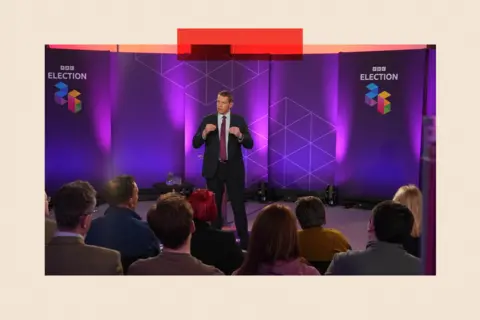
BBCIn a further education college in the Pembrokeshire town of Haverfordwest, a studio audience had gathered to hear leaders of Wales' political parties make their pitch at a BBC Wales Ask the Leaders debate.
After an audience member asked Plaid Cymru leader Rhun ap Iorwerth about independence, presenter Nick Servini followed up with a question about whether the party's plans for Welsh independence had been "paused".
Ap Iorwerth replied: "Do I sound as if I've paused on my ambition for Wales or my belief that this isn't as good as things could be for Wales? No, my situation on this has been the same, life-long. It's a question for the people of Wales.
"How brave we want to be, how far we want to go."
Take a closer look at the question and a closer look at the answer.
The question is about independence; the answer does not include that word.
The polls suggest that two diametrically opposed parties - Plaid Cymru and Reform, who are pro and anti-independence respectively - are vying to lead the Welsh government for the first time.
During this election, independence has certainly been part of the conversation - with claims that it is "the normal state for any nation", or "unaffordable", bandied about by either side. But it has not dominated the campaign. And there is an odd dynamic at play: the Welsh pro-indy parties tend to be talking about it less than those who are against it.
On the campaign trail, the parties are weighing up whether the issue of Welsh independence is a vote winner or loser.
As far as independence is concerned, the big question is: what would happen to the cause if Plaid Cymru wins and ap Iorwerth becomes first minister? And were that to happen, supposing the pro-indy Greens won enough seats that there became a majority in the Senedd in favour of Wales breaking away from the rest of the UK?
In the hunt for votes, politicians of all stripes are trying to convince the public that their forecast of what would happen or not happen is the correct one.
Independence, but not yet
Plaid's position on independence is clear. The second line of its constitution says: "As the National Party of Wales, the Party's aims shall be: to secure independence for Wales in Europe."
But party figures have consistently said that this is not an independence election.
The word was absent from ap Iorwerth's February conference speech and what was said at April's manifesto launch in Wrexham the morning after the Haverfordwest leaders debate, although a commitment to next steps towards that ultimate goal did appear in the document itself.
Plaid's opponents claim that if it wins, it will pursue independence "by stealth" or through the "back door" and also warn that Wales could not afford it. The Greens also seem reticent to mention the "I" word unprompted. It does not appear in their Senedd election manifesto.
 EPA
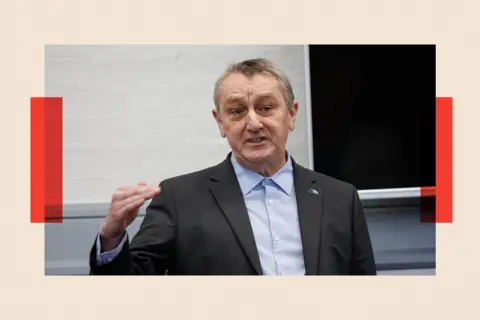
EPAWelsh leader Anthony Slaughter told the BBC that he "won't shy away" from independence but believes the issue is "not front and centre of this campaign". Slaughter suggested that talk of an independence referendum during this campaign would be "divisive" and hand the initiative to Reform.
He added that the cost-of-living crisis had to be the focus of the next four years. Both pro-independence parties also say the NHS, housing and a better deal for Wales under the current constitutional settlement are more important at the moment than the question of independence.
Plaid's next steps involve a National Commission, costing half a million pounds from the Welsh government's £27bn budget, that would "lay the foundation" of a future independence plan.
The party had already decided not to present a formal plan for independence during a first term in office - in contrast to the 2021 campaign, when then-leader Adam Price promised a referendum within five years.
In 2021 Plaid came third behind Labour and the Welsh Conservatives and shortly after taking over as leader in 2023 ap Iorwerth said that there would be no timetable.
"Independence by stealth?"
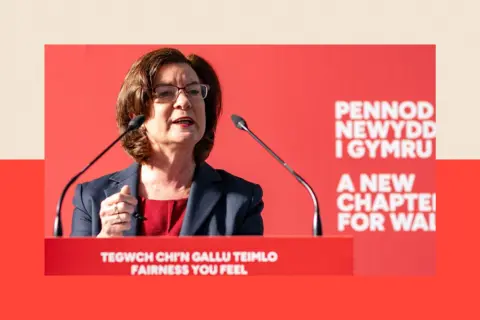
But Labour, which argues for a stronger Wales within the UK, insists its rival remains as committed to independence as ever. First Minister Eluned Morgan has warned that "separatism is now very much on the agenda in our nation".
But Labour is facing a threat on all sides, with polling analysis suggesting it is losing voters to Plaid, the Greens and to a lesser extent Reform. In a speech to the Institute for Government in January she said: "Support for independence tends to rise when politics feels stuck or uncertain, and it falls when people see devolution deliver."
"Devolution is the best way to lower the temperature and raise trust."
 PA Media
After more than a century of Westminster and Senedd elections in which it has been the biggest party, Labour is in danger of losing that status.
Now it is facing serious questions about its record, especially on the biggest area of Welsh government spending - the NHS. The health service regularly appears in the top three concerns for voters, according to the You Gov issue tracker.
Shortly after taking over as leader in 2024, Eluned Morgan made cutting waiting lists her top priority and is trying to gain political ground in highlighting that they have been falling for months. Her problem is that they are still high.
As for Labour's handling of devolution, especially since a Labour government took over in Westminster in 2024, there are questions over how well it has lowered that temperature mentioned by Morgan in her January speech.
A long list of Welsh Labour demands for more powers, such as devolution of the Crown Estate - the body that is responsible for much of the seabed around Wales, and vital to the development of floating offshore wind-power - and policing, as well as reform of how Wales is funded, has not been granted by its UK Labour colleagues.
While Welsh Labour is keen to extol the virtues of two Labour governments working together, citing the development of new nuclear power on Anglesey, rail infrastructure spending and what it describes as record levels of funding, its opponents say it does not get a good enough deal out of its colleagues in London - and when it doesn't get what it asks for, its opponents claim it is weak.
A row over the lack of specific Welsh funding from the HS2 high speed rail project has become politically totemic.
Plaid makes much the same demands as Labour but tells voters that it will press for a better deal.
Welsh Labour accuses Plaid of trying to move Wales towards independence by stealth. A source described Plaid's National Commission as "an independence commission in all but name".
Passion and pragmatism?
So how serious really is Plaid about independence going in to this election?
"I believe that the normal state for any nation is to be independent. I passionately believe that that is true for Wales," ap Iorwerth said.
But in 2026 there is that caveat: not yet. Back in February, Plaid's finance spokesperson Heledd Fychan denied that the party was trying to avoid a debate about independence and said that journalists needed to be "clear" on what the election was about.
Fychan accused Labour and Reform of trying to "scare" people by "shouting independence at us when we talk about a policy because they want to detract from their actual record or their lack of policies".
Given the pro-independence parties' reticence to put it front and centre of their campaigns, could it be that Welsh independence is simply not a vote winner?
 Getty Images
Ap Iorwerth said it wasn't a matter of that, but added: "I do not think now is the time to have that referendum because the people of Wales are not telling us that it's that time."
In a recent BBC Radio interview, he conceded that he would not win an independence referendum now.
When I asked him if there was any pushback from Plaid members, ap Iorwerth said: "The answer to that is no, because we share this belief in what Wales can be."
Richard Wyn Jones, director of the Wales Governance Centre at Cardiff University, thinks ap Iorwerth's confidence on the question of internal pushback is well-placed.
"If Plaid is the largest party after the election and has managed to depose Labour after a century, frankly he's going to be unassailable," he said.
A secondary consideration?
A recent poll carried out for the BBC found support for Welsh independence at 32%, with 52% against and 16% uncertain. The same poll suggests that only 56% of Plaid voters are in favour.
According to Dr Jac Larner, a leading Welsh pollster and political analyst, independence does not feature in the top three or four issues for Welsh voters.
Larner suggests that another issue is also at play: that for some left-leaning voters, a pro-indy Welsh government is "not as scary" as a Reform-led Welsh government would be and everything else is "a secondary consideration" to stopping the party.
He added: "Some people are thinking that even though Plaid wants independence, they're not going to be in a position to do it in the near future anyway."
Looking to Holyrood
There's an obvious template for Plaid for advancing the cause of independence in office - the SNP, which took power in Scotland in 2007.
Under Alex Salmond, it went on to secure a referendum on Scottish independence in 2014, which it lost - but the issue has never left the political agenda.
Richard Wyn Jones said it was "obvious" to longstanding independence-supporting Plaid members that the party was trying to pursue the SNP's post-2007 strategy.
"That is the election in which the SNP forms a minority government, is perceived as governing well, returns to power four years later and then negotiates with the UK government for a referendum."
"So if there is a model then that is it," he said.
A senior Plaid source said that the two parties had not "sat down in a room and discussed a roadmap for Wales", but that Plaid had been to Scotland for "valuable" learning about its sister party's experience of government.
The source added: "The prospect of two first ministers from the SNP and Plaid Cymru would represent a different dynamic. Where we had a common interest or common goals we would work with them."
The source also suggested that it might "focus minds" in Wales if the SNP started "banging the drum" for a second referendum, and that a lot would then depend on Sir Keir Starmer's approach to more powers or funding.
Crunching the numbers
The question of affordability also comes into play.
Wales Office figures published last autumn suggest a net fiscal deficit were Wales to be independent – in other words the gap between tax raised and spending on public services - of £21.5bn, or just under £7,000 per person in Wales.
Plaid Cymru accused Labour of "peddling dodgy numbers".
Labour hit back, warning of the fiscal implications for an independent Wales. It challenged Plaid to say how much it would borrow, what taxes it would raise or what services it would cut to manage the economy of a future independent state.
Ap Iorwerth maintained that the statistics ignore how independent states work - but he conceded that borrowing would be "inevitable", declining to say how much, beyond that it "would be very similar to the kinds of deficit that other countries have".
The pro-UK position
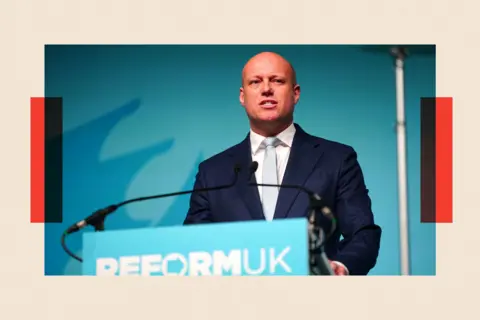
Reform's Welsh leader Dan Thomas is unequivocal about the "huge risk" of independence. He said he believed an emboldened ap Iorwerth would begin pushing the case for independence much harder if Plaid won in May.
 PA Media
He admitted that independence was likely to be a "secondary" argument, but that it was "fair game" to "keep reminding people about Plaid Cymru's ultimate goal".
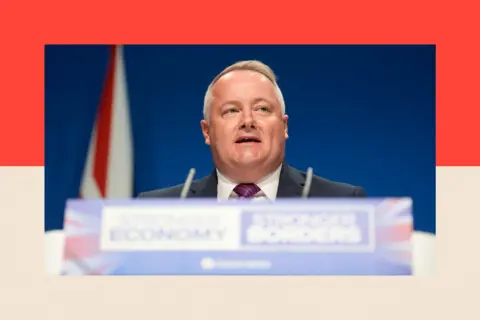
Darren Millar, the Conservatives' Senedd leader, made similar noises.
"Wales does not need a government that is fixated on independence," he said.
 PA Media
Millar thinks there are people in Plaid Cymru who would see a victory in May as a mandate to "try to break up the UK", adding: "It is little wonder that Plaid is trying to calm the waters and suggest that independence is not a big deal."
The Welsh Liberal Democrats could conceivably do a post-election deal with Plaid, but the publication of the party's "red lines" appears to have ruled that out.
Jane Dodds' party says that "not a single penny" should be spent on preparations for independence and although some of her colleagues appear to have left the door ajar, she is sticking to her guns. The Lib Dems manifesto itself is titled "A Stronger Wales in a Stronger UK".
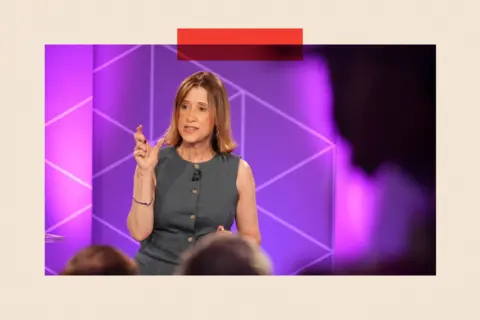
Is it worth pro-union parties sounding the alarm over independence ahead of this poll?
"It might be the case that if everyone starts talking about it, then it raises the salience," Jac Larner said. "It would be covered in the media and people would see it more. But I just think that for most voters, that is not what is on the table at this election.
"They see it as Reform or not, and that is the driving factor."
The end destination?
The independence debate has been a small if noisy element of this campaign. Parties in favour of remaining in the UK see it as a way of trying to rein in Plaid's apparent lead in the polls.
Plaid is also acutely aware not just that there is no majority support for independence, but also - and that many voters are looking not only for change but, as one source put it, "instant gratification".
Independence would not be a speedy process.
Ap Iorwerth appears to have approached the issue cautiously ever since he took over as Plaid leader in 2023.
But his opponents worry about the end destination.
Additional reporting by David Deans

BBC InDepth is the home on the website and app for the best analysis, with fresh perspectives that challenge assumptions and deep reporting on the biggest issues of the day. Emma Barnett and John Simpson bring their pick of the most thought-provoking deep reads and analysis, every Saturday. Sign up for the newsletter here