University turns to city's rubbish to power campus

 BBC
BBCA university has decided to switch off much of its gas-powered heating and hot water, but it won't be going cold.
For the 11 buildings on Coventry University's campus are now to be powered using energy from the city's rubbish instead.
Connecting the university will save money and and reduce its carbon footprint by the same amount a year as if they took 800 cars off the road.
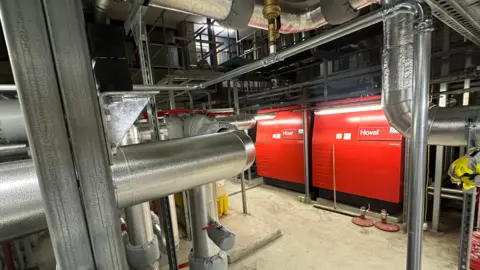
Its focus is on a boiler room beneath the Sir Frank Whittle Building, where the past has been decommissioned and the future is up and running.
Two massive red commercial gas boilers, about the size of two caravans and now switched off and awaiting removal, have been replaced by heat exchangers about the size a domestic fridge freezer.
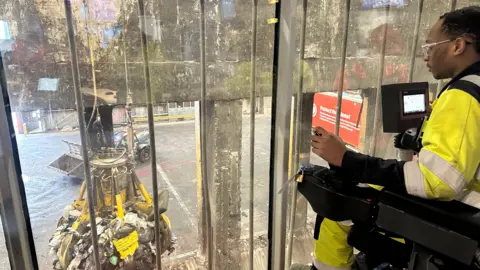
They will be using energy produced by burning 900 tonnes of the city's rubbish every day at the nearby waste-from-energy plant, what we used to call an incinerator.
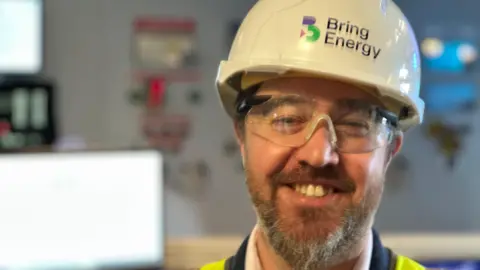
Mark Anderson, from Bring Energy, explained to me how the new system works.
"All the refuse is brought here and burned and that produces steam." he said.
"We take the steam and it goes to a heat exchanger and then we put it into hot water, which we pump up into the city centre."
This is Coventry's city centre district heating system, which already provides heat and hot water for places like the cathedral.
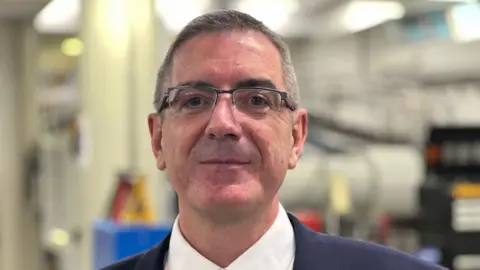
Given current issues in the Middle East, this switch away from gas to incinerator power could not come at a better time, according to pro-vice-chancellor Dr Clive Winters.
"Clearly with things going on in the Middle East at the moment, with the energy crisis we need a solution that's more stable that gives us financial stability as well," Winters said.
It is a reminder that changing how we heat our homes and hot water can have a big impact on both the environment and long term our bills.
Follow BBC Coventry & Warwickshire on BBC Sounds, Facebook, X and Instagram.