London's Moroccan Jews keep Mimouna tradition alive

 BBC
BBCIn a hired garden room near Marble Arch in central London, the atmosphere is warm and festive, echoing the feel of a traditional Moroccan celebration.
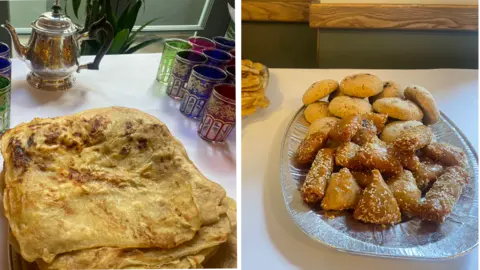
Guests arrive dressed in flowing kaftan dresses, while tables are laid with honey-soaked sesame sweets and stacks of pancakes known as mufletta and msemen. Conversations drift between Moroccan Arabic, English and French.
But this is not just any Moroccan party - it is Mimouna, a uniquely Moroccan Jewish celebration marking the end of Passover.
For the week of Passover, observant Jews refrain from eating leavened foods to commemorate the exodus from Egypt.
Mimouna begins the moment the holiday ends, welcoming back leaven bread - bread which has been allowed to rise - in a spirit of generosity and togetherness.
Traditionally, doors are left open for friends, neighbours, and even strangers to come in and share food, a custom rooted in centuries of coexistence between Jewish and Muslim communities in Morocco.
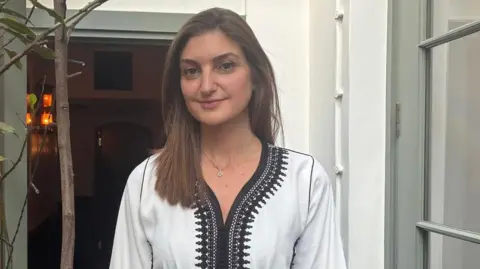
Stephanie Laurent decided to organise this celebration for the first time in London, both in memory of her late mother and to give visibility to the capital's small Moroccan Jewish community.
"Growing up, Mimouna was always one of the most joyful moments of the year. I wanted to recreate that feeling here not just for Moroccan Jews, but to share it with other Moroccans and those outside the community," she says.
"Before Brexit there was a much bigger community here because many came from France, but even though we are fewer now, I feel Mimouna is slowly becoming known amongst other Jewish communities in the city," adds Laurent.
"In Israel, France and Morocco the Mimouna parties are huge but here in London, it's just starting to emerge and become more known."
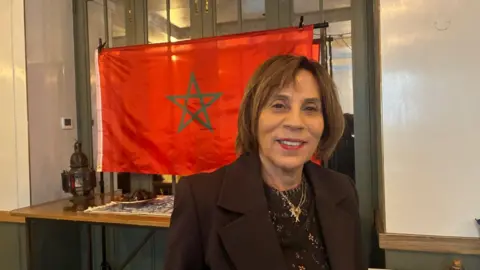
Liliane Harris who also is at the event says when she first arrived in London 50 years ago there were only four Moroccan Jewish families.
"But now this number has increased in the hundreds," she says.
"Mimouna is something very special for us and it's great to bring a bit of this Moroccan tradition in the city.
"I have grand children who were born and raised here but Morocco is still part of them," she says.
Who are London's Moroccan Jews and what is Mimouna?
Moroccan Jews have a long, rich history which stretches back over two millennia.
While many left Morocco in the mid-20th Century for countries such as Israel and France, smaller communities have formed in cities like London, bringing their customs with them.
According to Michel Dadoun, who chairs the Moroccan Jewish synagogue in Hendon, north-west London, called Porat Yosef, Mimouna is all about sharing.
"Mimouna is about opening your home and your heart," he says.
"During Passover we don't eat anything leavened. Back in Morocco as soon as Passover ends our Muslims neighbours bring us flour and this has been a tradition since the 18th Century."
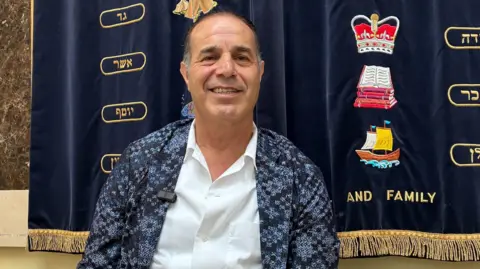
Michel adds: "It's a celebration of coexistence and reminds us of communities living side by side and supporting one another in very simple but meaningful ways."
It is not known exactly how many Moroccan Jews live in London but according to Michel hundreds attend his synagogue every week and the community is getting bigger.
'Hospitality, food and music'
Back at the celebration in Marble Arch the party is getting under way.
One guest says: "You can't come to a Mimouna party and be on a diet. Moroccan culture is all about hospitality, good food and good Moroccan music."
But beyond the music and food, Mimouna is entrenched in symbolism.
Dr Vanessa Paloma Elbaz, a lecturer of oral Moroccan history at Cambridge University whose family is originally from Tetouan in northern Morocco, explains that many of the items laid out on the table carry deeper meaning.
"The plate itself tells a story," she says. "The eggs, which are always five, represents fertility and the cycle of life.
"We also place five coins for prosperity, and flour and oil to symbolise abundance after a week of restriction. We also add five beans"
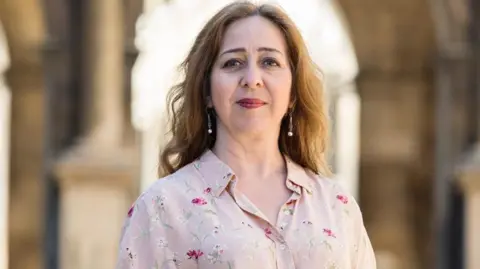 Vanessa Paloma Elbaz
"Everything has to be leavened again - msemen, baghrir [both are different types of pancakes], all the things we couldn't eat during Passover."
"Honey is placed on the lettuce, and it's given as a blessing for a sweet year, usually by the matriarch of the house," she says.
"Some families prepare zabadon which is made from whipped egg whites and sugar, while others place a leaven starter on the table later used to bake challah for the rest of the year, linking the celebration to the months ahead."
Vanessa adds: "During Mimouna as well as food, traditional Moroccan music is played. Music and food go hand in hand."
This year Mimouna fell on 9 April, and according to Stephanie, "in true Moroccan fashion, celebrations continue for several days, with families and friends visiting one another's homes".
Another guest adds: "With everything going on in such a divisive world, we could all do with a little bit of Mimouna."
Listen to the best of BBC Radio London on Sounds and follow BBC London on Facebook, X and Instagram. Send your story ideas to hello.bbclondon@bbc.co.uk