Tuam dig uncovers remains of another 36 children

 ODAIT
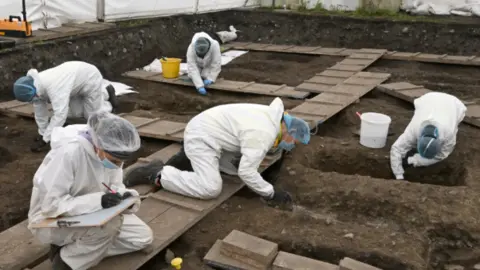
ODAITThe experts tasked with excavating the site of a former mother and baby home in western Ireland have uncovered the remains of another 36 infants.
The latest update in the ongoing search in Tuam, County Galway, brings the total number of infant remains found so far to 69.
The dig was commissioned by the Irish government, following widespread shock over revelations that babies and young children had been buried in a mass grave.
The scandal came to light in 2014 when amateur historian Catherine Corless revealed 796 children died as residents of the home, but had no burial records.
The mother and baby home, which housed unmarried mothers and their children, was operational for 36 years between 1925 and 1961.
It was run by an order of Catholic nuns, the Bon Secours Sisters, and during their tenure many of the children in their care died from malnutrition and disease.
The order has since apologised, acknowledging that children were "buried in a disrespectful and unacceptable way" at the Tuam home.
Children 'buried in white coffins'
Following a test dig in 2017 which confirmed evidence of a mass, unmarked grave, the government ordered a full forensic excavation of the site.
That operation began last summer and the team releases information on its findings on a monthly or bi-monthly basis.
In its latest update, they said the results of the excavation indicate that the infants they found "were buried in coffins which have since decayed".
"The evidence indicates that the majority of coffins were single shouldered with mounts and had been painted white," the report said.
It added that in a small number of cases "two or three individuals were buried in the same coffin".
The remains are being exhumed in the hope they can be identified through DNA analysis and returned to their families for a proper burial.
The team's latest information release is the sixth update since the operation began and covers the period from 29 January to 31 March 2026.
During that period, five more DNA samples have been taken from people who believe they may have relatives buried at the site.
It brings the total number of DNA samples submitted to 33.
The dig team has again appealed to anyone who believes they may have a family member buried at the Tuam site to contact them.