Maritime drone sector to get £50m boost

 PA Media
The South West's defence sector will get £50m to develop maritime drones, create "hundreds of jobs" and boost national security, the government says.
The investment would also "cut red tape", fund training and "keep Britain safe", it added.
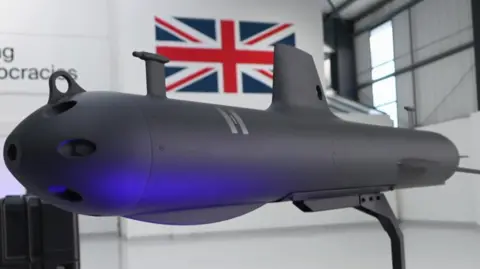
Part of the defence growth strategy unveiled in 2025, the £50m would "make it easier" for firms to develop and test surface and subsurface maritime drones - a term used to describe remotely operated vehicles that can move through water.
South West Devon Conservative MP Rebecca Smith welcomed the funding, but warned that businesses in Plymouth's marine autonomy sector might "pick up and leave" without regulation changes and a defence investment plan.
It comes amid the already rapid expansion of Plymouth's marine autonomy sector.
Plymouth is the National Centre for Marine Autonomy and has a thriving hub of businesses at Turnchapel Wharf developing vessels that operate without a crew.
Last year, German defence tech firm Helsing opened a factory on the city's outskirts, creating 50 jobs producing unmanned submarine gliders.
Meanwhile, James Fisher Defence has revealed plans to expand operations and is considering opening a manufacturing facility in Plymouth.
The £50m would help Plymouth develop technology for drones by "cutting red tape and providing access to waterfront innovation labs and state-of-the-art testing facilities", the Ministry of Defence (MoD) said.
But MP Smith said there were still issues holding back the sector.
She said these included strict regulations hindering development and delays to a defence investment plan, which she said meant the defence sector in Plymouth could not progress as it should.
Without changes, she said, the "uncertainty" meant long-term benefits for businesses were unclear.
"Unless we see the government literally putting their money where their mouth is, it's got the danger of being a bit vanilla rather than the strong growth piece we want to see.
"We've got such a great opportunity and it's going to be devastating if we don't fulfil it."
'World leader'
The government said the region already got £6.6bn a year in defence spending, supporting 37,300 jobs.
A new authority in Plymouth would support start-up and marine businesses to test drones - speeding up the path to market, it added.
Colleges and universities, led by City College Plymouth, would be supported to deliver 60 new defence-related courses, including advanced manufacturing, engineering and technology - answering the needs of Plymouth's defence industry, it also said.
Defence Minister Lord Vernon Coaker said: "This £50m investment will see Plymouth stay a world leader in maritime autonomy by making it easier for its defence businesses, creating hundreds of good jobs and boosting the defence industry across the South West."
The government said the investment would build on the success of Devonport-based Babcock, which carries out engineering, maintenance and refit surfaces for Royal Navy submarines and warships.
Citing Thales, Babcock, Leonardo, Airbus and BAE Systems among industry leaders driving innovation in underwater drones, submarine support and advanced helicopter engineering, it said Plymouth and the South West were "already at the heart of UK defence".
It said the investment was part of "the largest sustained increase in defence spending since the end of the Cold War".
Last year, the Royal Navy unveiled plans for a network of drones, warships and surveillance aircraft aimed at protecting vital undersea infrastructure.