Local elections profile: Kensington and Chelsea

 Getty Images
Ahead of the local elections on Thursday 7 May, we have produced short guides to London's 32 boroughs.
Where is it? The Royal Borough of Kensington and Chelsea is in west London. It is bordered by Westminster, Hammersmith and Fulham and the River Thames.
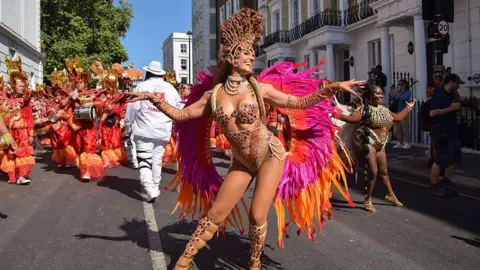
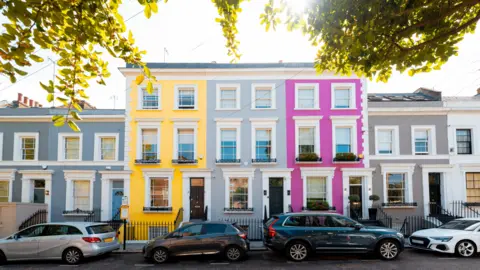
What's it like? The UK's most expensive borough, it is characterised by immense wealth, world-class museums and exclusive residential squares. There are also significant pockets of deprivation, particularly in North Kensington which contains some of London's highest concentrations of social housing.
Neighbourhoods: Ladbroke Grove, Portobello Road, Earl's Court, Holland Park, Kensington, parts of Knightsbridge, Fulham Road, Notting Hill, King's Road, Brompton.
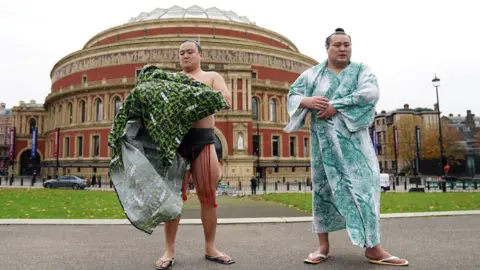
Places of interest: Science Museum, Natural History Museum, Portobello Road market, Kensington Palace, Harrods, Victoria and Albert Museum, Royal Albert Hall.
Pub quiz fact: Kensington and Chelsea is the smallest London borough by area at just 4.65 square miles (12 sq km).
Population (2024 estimate): 144,518.
Demographics: According to the 2021 census, 64% of residents identify as white, 11.9% as Asian, 7.9% as black, 6.6% as mixed race and 9.9% as other groups.
The borough has a significant international population, with more than 50 nationalities and 80 languages spoken.
Average property price: According to the Office for National Statistics (ONS) in December 2025 it was £1.18m, the highest price of any London borough.
Average monthly rent: The ONS says the average rent in Kensington and Chelsea was £3,628 in February 2026.
Transport: TfL says the borough has 12 Tube stations, on five London Underground lines: the Central, Circle, District, Hammersmith & City and Piccadilly. There are also around 270 bus stops.
You can find more information about Kensington and Chelsea here.
 Getty Images
Local history: The borough was created in 1965 with the merger of the old metropolitan boroughs of Chelsea and Kensington.
It inherited Kensington's royal borough status, granted by Queen Victoria who was born in Kensington Palace in 1819 and lived there until her accession in 1837.
The new borough was originally intended to be called Kensington, but after protests from thousands of Chelsea residents, it became the only borough in the new 1965 London local government divisions to include an "and" - though others followed in later years.
 PA Media
What is the electoral history of the borough? Kensington and Chelsea has been under Conservative control since it was created in 1965.
The Tories took 50% or more of the popular vote in 12 out of 16 elections so far.
What happened in 2022? The turnout was 32.7% and there was a 1.9% swing from the Conservatives to Labour.
Conservative: 35 seats (-1)
Labour: 13 seats (no change)
Lib Dem: 2 seats (+1)
Since the election, three Labour councillors have formed an independent group, one has defected to the Greens and another has defected to the Conservatives.
Another former Labour councillor who had the Labour whip removed was listed as sitting for Advance UK.
Election expert Tony Travers on what might happen in Kensington and Chelsea in 2026
Professor Tony Travers of the London School of Economics said that Kensington and Chelsea is the Conservatives' ultimate rock-solid London borough and it will remain so in 2026.
It is possible the Liberal Democrats or the Greens could win a seat here or there but it is still going to be a Conservative hold.
Listen to the best of BBC Radio London on Sounds and follow BBC London on Facebook, X and Instagram. Send your story ideas to hello.bbclondon@bbc.co.uk