How do you rebuild your life after marrying a conman?

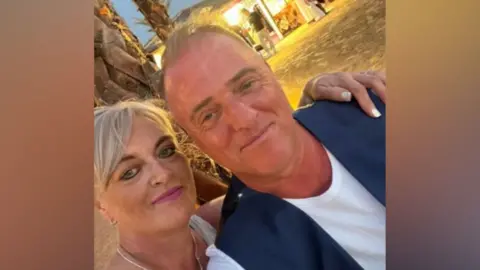 Melanie Graham
Melanie Graham thought she had met and married her soulmate in 2024 only to discover he was one of the UK's most prolific romance fraudsters. She said she was left feeling suicidal after realising the man she loved had lied about who he was and also had more than 40 convictions for theft and fraud, mainly against other women.
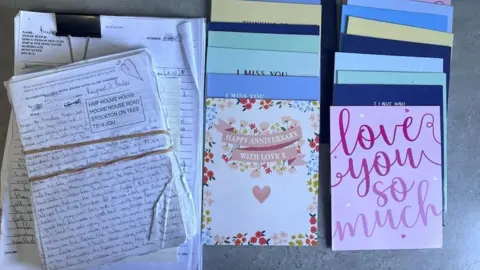
Even after his arrest he bombarded her with letters and cards from prison saying "I'm blowing kisses through the bars" and "I love you so much", adding to her confusion.
She said she felt "numb and shocked" when the letters started appearing and that he was still trying to "manipulate" her from behind bars.
Now, she has documented her recovery in the hope she can help other victims.
Mel has a box full of letters, cards and other mementos from her time with the man she married in 2024.
It also contains solicitors' letters, court documents and newspaper clippings from the coverage of Raymond McDonald's trial.
"This used to be where I kept the good memories.
"Now it's full of restraining orders - proof that all of this really happened," the 52-year-old said.
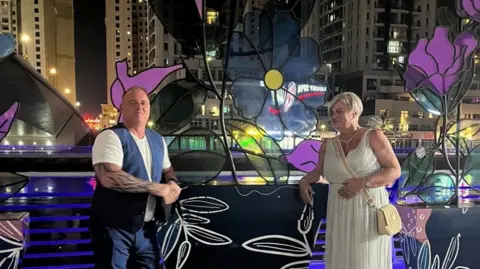
Mel, a mum of two with her own business, met Ray Owens, as he called himself then, in January 2024.
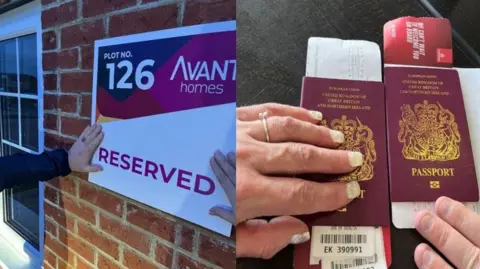
They dated for a matter of weeks before he proposed.
Mel acknowledges that their courtship moved quickly, but says it did not feel rushed at the time.
Friends and relatives approved of him, she says, and they had grown close quickly because life had "thrown them some curveballs".
McDonald, 52, of Peterlee, County Durham, was easy going and funny and claimed he had a demanding job working night shifts as a probation officer.
He told Mel his mother had died suddenly, shortly after the couple met.
He had also shown her messages he said were from his father welcoming her to the family.
His teenage daughter contacted Mel by text saying she was pleased her dad was so happy, but that she had fallen pregnant and did not know how to tell him.
Things had not been easy but she and McDonald laughed a lot.
She was supporting his daughter as best she could or so she thought, and they texted but never met.
Then, after just a week as newlyweds, Mel's friend called her saying she had seen a Facebook post that revealed McDonald was not who he said he was.
Her friend told her to get out of the house she shared with him as fast as she could.
Mel said there was no way she could have seen it coming.
"It was just shock, I couldn't speak. It was his picture on the post but a different name.
"My friend came and got me and we went straight to the police station."
McDonald had given Mel no reason to doubt anything he had told her.
However, out of the blue she discovered he was not a probation officer, but was actually on probation after being released from a prison sentence for fraud just weeks earlier.
He had more than 50 previous convictions and had served a string of stints in jail for scamming women out of thousands of pounds through false promises of love to fund a luxury lifestyle.
His mother was not dead, but his father was.
His daughter was not pregnant and it was McDonald who was sending the texts pretending to be her and his late father.
"My world didn't wobble – it fell apart," Mel says.
When Northumbria Police officers arrived to arrest him he was calm and was still not willing to admit he had lied.
"I got 146 letters from his prison cell within about three months.
"He said, 'This is a mistake I couldn't fake how I looked at you.'
"'I blow kisses from the bars every night.'
"I did contact the prison," Mel says.
"They said there were not enough prison staff to monitor letters. They seal the envelopes and they get sent out."
A Prison Service spokesperson said that it was "unacceptable" that McDonald, who has served terms including at HMP Holme House in Stockton-on-Tees, was able to send letters to Mel and apologised for the "distress and anxiety" caused.
They added that the prison involved had added "stronger checks on prisoner mail to ensure any unwanted contact is prevented".
McDonald was sentenced to four and a half years for defrauding Mel and two other women in August 2024.
At his trial, his victims learned he had been committing similar crimes for more than 20 years and police believe there could be "hundreds" of victims.
Mel read her victim impact statement in court describing how McDonald had wrecked her life.
"I wasn't sleeping, I was having nightmares. I didn't know who I was anymore.
"Everything I believed in had been twisted.
"The police and other people told me to forget about it and move on - it's done now, he's sentenced.
"But you don't just flick a switch and it's done. Your feelings don't change because he's gone to prison."
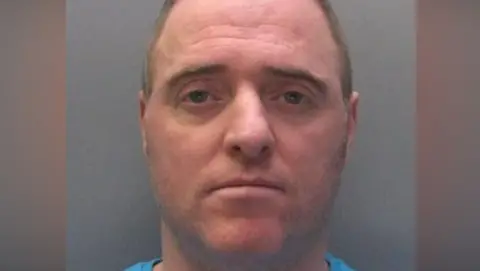 Northumbria Police
Mel has since undergone intensive therapy with a psychologist arranged through her GP who she said was "brilliant".
"I had kind of got it in my head that every time I met someone who I didn't know -that they were going to be like him," she says.
"I had to retrain my brain into realising that people aren't necessarily out to harm me."
'Slated on social media'
A number of McDonald's other victims have told the BBC that they have been left feeling ashamed and embarrassed after discovering he had been taking money from them to fund "fantasy lives" he was building simultaneously with others.
Mel says people in her position face harsh criticism simply for having experienced romance fraud.
"On social media we get slated saying we are after money, that was one of the things that was said.
"They say victims are fat, they're ugly - some of the comments on social media are horrendous.
"If a drink driver knocks someone over, you wouldn't blame the person who was crossing the road.
"With our kind of crime we're the ones that carry a lot of the blame - it's not ours to carry."
In February the Police Foundation released a report on the health impact of fraud which found there were "gaps in understanding" of how victims can be affected.
Research manager Ruth Halkon said fraud was usually treated as a financial issue, but findings suggested that almost all victims experienced an impact on their health.
More than 90% experienced a mental or emotional health symptom such as stress, anger and feeling unsafe.
A "significant minority" also reported symptoms such as depression - 17.9%, hopelessness - 15.6%, or panic attacks - 8%.
"More than half experienced physical symptoms including difficulty sleeping, headaches or excessive tiredness, while nearly two thirds reported behavioural changes such as distrusting others or hyper vigilance," Halkon said.
"The impact of the health symptoms varied greatly, but nearly one in five said their daily life, their ability to work, to socialise, to care for their families, had been very affected, and a quarter felt moderately affected.
"We are beginning to learn more about what impact fraud can have and how these can be addressed by the police and wider public services."
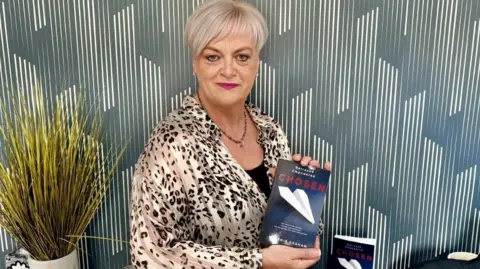 Melanie Graham
Mel says it's taken her two years to fully understand what happened to her and deal with the way it affected her mental health.
She has written a book called Chosen about the process of trying to heal - the title she feels has significance because one of the main questions victims ask is why a perpetrator singled them out.
'He left in handcuffs'
"Ray chose me as a victim," she says.
"I reclaimed control through writing this book. Doing the research about how these criminals operate has made things clearer for me.
"I don't know that you ever get over this, but I understand who he is, what he is now and I don't feel anything, love or hate, for him.
"I still have everything I had before I met Raymond. He left with more than he came in with.
"He left in a set of handcuffs."