'Surviving sepsis gave me a second chance at life'

 Skye Owen
"My recovery has been long and challenging, and learning to walk again made me realise just how precious everyday things like walking, hiking and being outdoors really are."
The words of Skye Owen, 24, from St Austell in Cornwall, who is looking to walk the 630 mile South West Coast Path after surviving a life-threatening case of sepsis.
"Surviving sepsis gave me a second chance at life, and this challenge is my way of making that second chance count," she said.
Throughout her walk Owen said she hoped she would be joined by fellow sepsis survivors who might want to share their experiences.
 Skye Owen
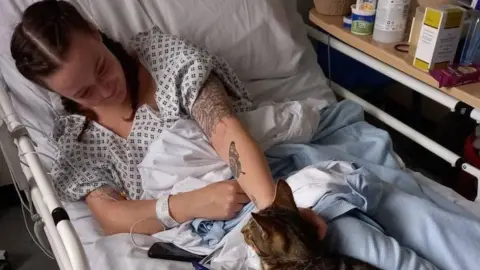
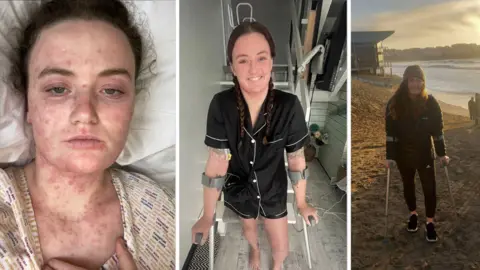
Owen was hospitalised for four weeks in September 2024 after developing sepsis caused by a staphylococcus aureus infection.
She then continued her recovery at home with a specialist care team administering intravenous antibiotics.
Her first experience of symptoms included severe back and hip pain which left her unable to move and led to an ambulance being called.
Further tests showed there was an infection in her hip and sacroiliac joints, and dangerously high infection levels led to a diagnosis of sepsis.
Part of what inspired her to take on the South West Coast Path challenge was the fact she had to relearn to walk during her recovery.
'Helps raise awareness'
Owen, who works as a teaching assistant in a special educational needs (SEN) school, sets off from Minehead, Somerset, on Monday and aims to walk the full length of the coast path to Poole in Dorset.
During the walk she hopes to raise awareness and funds for the UK Sepsis Trust.
She plans to walk between 10 miles (16km) and 20 miles (32km) per day depending on terrain and conditions, and expects the full journey to take between two and three months.
"If sharing my story and pushing through every mile helps raise awareness and saves even one life through the work of the UK Sepsis Trust, then every step will have been worth it," she said.
What is Sepsis?
According to the NHS sepsis is a life-threatening reaction to an infection.
It happens when a person's immune system overreacts to an infection and starts to damage it's body's own tissues and organs.
The UK Sepsis Trust said five people in the UK lose their lives to sepsis every hour.
It said sepsis could lead to shock, multiple organ failure and death if not recognised early and treated promptly.
The charity said there were six key symptoms people could look for and they spell the word sepsis.
- S for slurred speech or confusion
- E for extreme pain in the muscles or joints
- P for passing no urine in a day
- S for severe breathlessness
- I for "it feels like I'm going to die"
- S is for skin that's mottled, discoloured or very pale
It said in the UK sepsis was as common as heart attacks with nearly 80,000 people each year suffering life-changing after-effects and 82% of sepsis survivors experiencing 'post-sepsis syndrome' more than a year after hospital discharge.
It added 18% of survivors were left permanently unable to work.
Dr Ron Daniels BEM, founder and chief medical officer of the UK Sepsis Trust, said: "We are incredibly moved by Skye's dedication – her commitment to raising awareness of sepsis is truly inspiring."