Police 'jumped the gun' to charge killer - inquiry

 Nottinghamshire Police
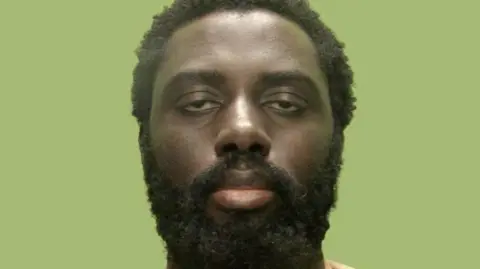
A prosecutor has told a public inquiry that police "jumped the gun" to charge triple killer Valdo Calocane after he carried out deadly attacks in Nottingham.
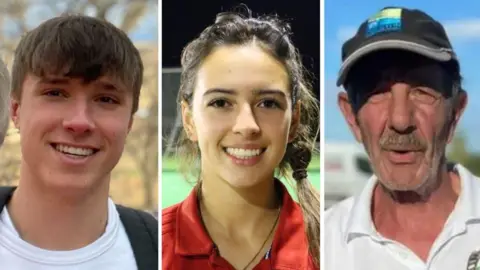
Calocane pleaded guilty to manslaughter on the grounds of diminished responsibility and to attempted murder after killing Barnaby Webber, Grace O'Malley Kumar and Ian Coates, and seriously injuring three others on 13 June 2023.
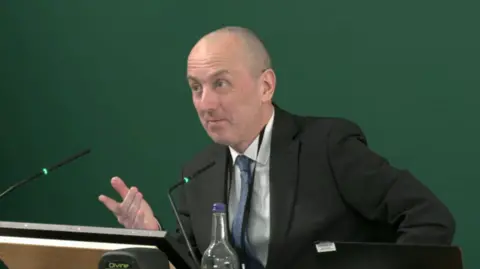
On Tuesday, specialist prosecutor Alan Murphy, of the Crown Prosecution Service (CPS), told the inquiry he had received an apology from senior investigating officer Leigh Sanders over the "emergency charge".
Murphy said Nottinghamshire Police had appeared to be "under pressure" before the killer was charged.
The judge-led Nottingham Inquiry is examining the events that led up to the attacks and the decisions made in the aftermath.
Earlier in the inquiry, the senior investigating officer, now retired Det Supt Leigh Sanders, said Calocane had been charged prematurely because he had "mistakenly" believed he was given "verbal authorisation" by the CPS.
Sanders denied progressing a charge against the killer early in an attempt to "shut down" stories being published in the media that could expose police failings to execute an outstanding arrest warrant for Calocane.
 Supplied
Murphy said he had become aware at about 15:00 BST on 16 June 2023 that Nottinghamshire Police was proposing to "emergency charge" Calocane.
The prosecutor said that "didn't make any sense" because an emergency charge was usually reserved for when custody time was running out.
In Calocane's case, the force would have been able to keep him in custody until the following day.
Murphy told the hearing: "I wasn't particularly happy about it, but it had been done."
He added Sanders had "jumped the gun" on the charge, but accepted his apology and granted retrospective authority.
Counsel to the inquiry, Rachel Langdale KC, asked: "When Leigh Sanders phoned you, did he say why he had done that?"
Murphy replied: "I got the impression - there was a lot of noise in the background at Leigh Sanders's end - that the police were under pressure from the press, and possibly from the families, to effectively get a charging decision sorted because he'd been in custody now for the best part of three days.
"It just appeared to be pressure from, as I say, from the press and from the families.
"I mean, I may be wrong on that. That's my recollection of that call."
 The Nottingham Inquiry
After Calocane - who had been diagnosed with paranoid schizophrenia in 2020 - was sentenced in January 2024, the CPS said medical experts agreed his condition "impaired his ability to exercise self-control".
Murphy told the inquiry it was clear mental health issues would play a part in the case early on.
On 23 November 2023, the inquiry heard a meeting had been held for prosecutors to decide whether to accept Calocane's guilty pleas to manslaughter on the grounds of diminished responsibility.
Asked if he had viewed evidence about Calocane's previous interactions with mental health professionals sceptically, Murphy said he was aware from evidence that the killer had sometimes been "unreliable in his story".
He accepted there had been "occasions when he doesn't tell the truth".
"So, when I came to my ultimate decisions about the case I was careful, always, to look for supporting evidence and not simply rely on what VC was saying to anyone," Murphy added.
The inquiry heard a number of experts had been instructed by the CPS to assess Calocane and his defence had also produced its own psychiatric report. However, the victims' families had raised concerns about those reports.
Langdale KC said: "You were all looking at this case, reasonable questions were being raised by the families that needed further investigation.
"Do you agree it appears rushed that it just had to be gotten through when these are really serious issues with lifelong consequences all-round?"
In response, Murphy said: "We had a very thorough - in my view - report from [forensic psychiatrist Prof Nigel Blackwood] and we were going to get a further report from [a second forensic psychologist Dr Richard Latham], so if we needed more time we would've asked for it, but we didn't need it."
Asked whether it would have been better to meet the bereaved families before discussions about Calocane's pleas, Murphy told the inquiry they had not been witnesses and could not have provided evidence to inform the decision.
"The purpose of having the meeting on the 23rd [November 2023] was to make the decision so that it could then be imparted to the families on the 24th," he added.
The inquiry will continue, after a short break, on 13 April.
Listen to BBC Radio Nottingham on Sounds and follow BBC Nottingham on Facebook, on X, or on Instagram. Send your story ideas to eastmidsnews@bbc.co.uk or via WhatsApp on 0808 100 2210.