Is laughter the key to successful learning?

 Nicola Haseler/BBC
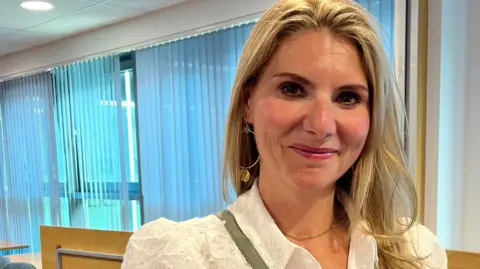
A chief laughologist and head of happiness believes laughter is an "important ingredient" in opening young people's minds to learning.
Behavioural scientists conducted sessions involving the use of paper planes at Luton Sixth Form College, to demonstrate how the brain learns best - and how humour and curiosity can improve memory and engagement.
Teachers have benefitted from earlier sessions on how creativity and laughter can impact their teaching style, but this is the first time a group of students have taken part.
Stephanie Davies, from Laughology UK, said: "It's not just about learning, it's about the experience we give them - and also the skills to be able to fail and do it again."
"We don't teach young people how to learn, we just give them knowledge and hope it sticks so what we need to do is help young people learn, how to learn and understand and how we enjoy learning not all the time but it's a really important ingredient," she added.
 Qays Najm/BBC
She called the technique "sticky learning", where the brain learns best when it has an emotional response to "wrap" around the knowledge.
"When we get stressed we have cortisol or noradrenaline," she said.
"Stress isn't bad for us but too much of it and the brain shuts down. It protects us and shuts down the thinking part of the brain.
"What we have to do to learn is open up the thinking part of the brain and that's what dopamine, oxytocin, serotonin and endorphins do - they allow the brain to feel safe and it opens up the thinking."
Student Nathaniel,17, said he went into the session with an open mind.
"Usually with learning it's very structured, it's very goal orientated, it's more to achieve a certain result rather than actually enjoying what you're learning.
"It was nice to hear from people out in the world that learning isn't just about the end result, it's about the process as well and the knowledge.
"Sometimes the pursuit of knowledge itself is its own reward."
 Nicola Haseler/BBC
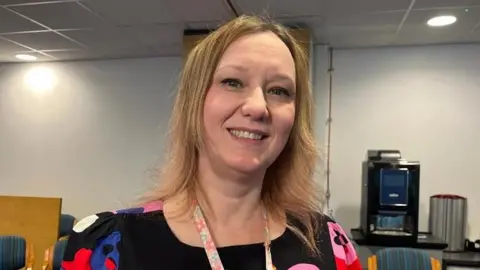
While sessions have been carried out for teachers at the school, Jody Swain, graphic design teacher said this was the first time they were brought in for the students.
She said a key outcome from the sessions had been making students feel more comfortable in a classroom environment.
"I have dabbled in bringing some of that into my lessons, through trying to raise the energy of the classroom which then helps with student participation, it helps them learn and also the outcomes are good as well," she said.
"They can be more receptive to things and they will be able to make mistakes and realise they can keep progressing and trying new avenues to investigate their learning."
Do you have a story suggestion for Beds, Herts or Bucks? Contact us below.
Follow Beds, Herts and Bucks news on BBC Sounds, Facebook, Instagram and X.