Coroner warning after sepsis patient was sent home

 Stuart Woodward/BBC
A coroner has urged a hospital trust to take action after a patient with symptoms of sepsis was discharged days before his readmittance and death.
David Fenn, 68, had attended Colchester General Hospital on 28 January 2025 with suspected sepsis but was discharged home within hours.
He was discharged from the hospital a few days before he was sent back to A&E on 1 February 2025 and was admitted to the ICU for urgent surgery.
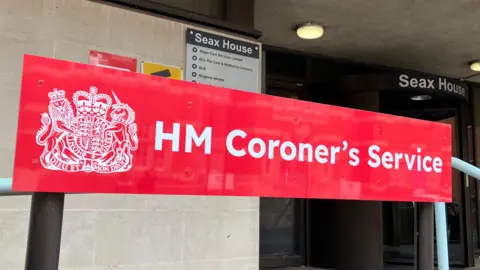
In a prevention of future deaths report (PFDR), senior coroner Lincoln Brookes said: "In my opinion there is a risk that future deaths could occur unless action is taken."
 Lewis Adams/BBC
The coroner conducted his investigation following an inquest into Mr Fenn's death on 25 February 2026.
He said Mr Fenn had been admitted to A&E at Colchester General on 1 February 2025 with suspected sepsis and septic left knee arthritis - days after his initial hospital discharge.
The patient had previously undergone knee replacement and revision surgeries over many years, he said.
But following urgent surgery on 2 February 2025, he was admitted to intensive care where his condition "progressively deteriorated".
He died of natural causes in hospital on 12 February at 10:23 GMT, the coroner concluded.
Mr Fenn had suffered multi-organ failure, septicaemia, septic arthritis left knee - as well as issues with his liver and kidneys.
The report revealed concerns that a consultant review had not been sought at Mr Fenn's first admittance to hospital.
It said a later attempt was hampered by the poor signal of a mobile phone in an operating theatre - and a junior doctor had not felt able to challenge the decision to discharge him.
However, the coroner added: "It was accepted by the hospital that with hindsight he should not have been discharged home and that instead the Sepsis 6 pathway should have been followed and that he should also have had urgent knee surgery to address the source of the sepsis."
In the PFDR, Brookes said the court "could not be satisfied" based on the balance of probability that Mr Fenn would have survived.
However he also remarked that he "could possibly have survived" if a so-called Sepsis 6 pathway had been followed and urgent knee surgery "to address the source of the sepsis" had been carried out.
The hospital must respond to the report within 56 days of it being published.
Catherine Morgan, the chief nurse at East Suffolk and North Essex NHS Foundation Trust, said: "Before the inquest, our teams conducted a thorough review of the care Mr Fenn received. We have already made changes to strengthen our clinical processes and communication. We will monitor these closely to ensure ongoing improvement.
"We will provide the coroner with our full response to the report in due course. We are committed to acting on the lessons learned."
Correction 30 March: A previous version of this article said that the senior coroner Lincoln Brookes said that Mr Fenn "would have survived" if the Sepsis 6 pathway was followed. It has been updated to make clear that the report said Brookes said the court "could not be satisfied" based on the balance of probability that Mr Fenn would have survived. It also makes clear that he "could possibly have survived" if the pathway was followed.
Follow Essex news on BBC Sounds, Facebook, Instagram and X.