Sir Paul McCartney engineer on hunt for stolen guitar

 BBC
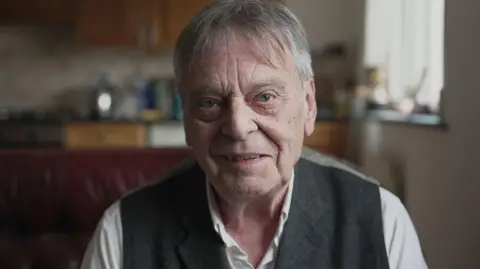
BBCA sound engineer who worked with Sir Paul McCartney after he left The Beatles has recalled the moment they realised one of the musician's most iconic guitars had been stolen.
McCartney bought the Hofner violin bass in Hamburg in 1961 and played it on some of the earliest Beatles recordings. The instrument remained in his collection after the band split up.
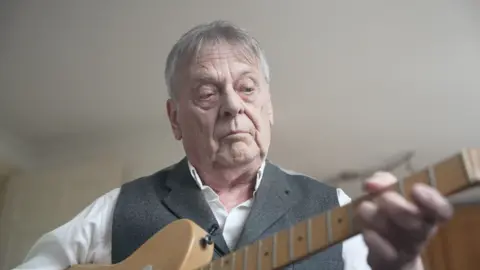
Ian Horne, 79, of Nailsworth, Gloucestershire worked as a sound engineer with McCartney during his time in Wings in 1972 and drove the band on its first UK tour.
After a long day in recording studios, Horne and a fellow crew member parked the van near London's Ladbroke Grove, locking two guitars inside, including the Hofner bass.
'My heart skipped a beat'
When he returned the next morning, something was wrong.
He said: "The first thing I saw was the padlock on the floor.
"My heart skipped a beat."
"Shock, horror, horrendous feelings. Yeah, it was traumatic, really. It was that bad it was like someone passing away."
Horne went to Paul McCartney's house in St John's Wood, to tell him the bad news.
He said: "I must have looked like a beaten man when I knocked on the door, expecting the worst.
"But he just very calmly said 'It's okay, Ian, I've got another one', and didn't freak out at all which was fantastic.
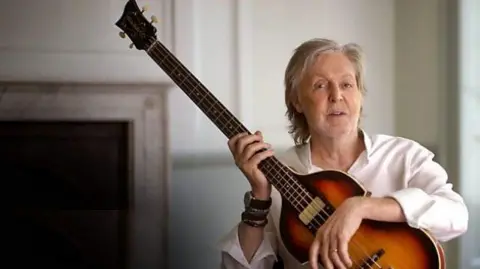
Although the musician took the loss calmly, the disappearance stayed with Horne for decades.
"But I was looking for it all my life, for 50 years.
"If I saw a tribute band or if I saw a Hofner I'd immediately go and have a look at it".
The story of the half‑century search for the missing instrument is told in the documentary McCartney: The Hunt for the Lost Bass, which is available to watch on BBC iPlayer.
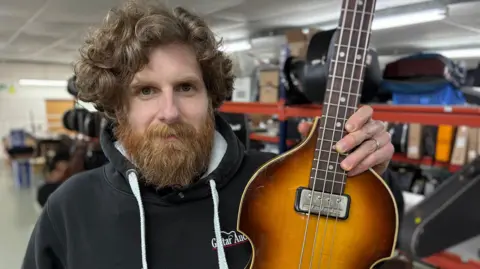
Guitar expert Luke Hobbs, head of guitars at Gardiner Houlgate Auction Rooms in Corsham, said instruments linked to famous musicians could reach extraordinary values.
Gesturing to a Hofner bass, Hobbs said: "Take this two-thousand pound instrument.
"Suddenly its Paul McCartney's and its worth, well, certainly in excess of two million, but the sky's the limit".
He added: "Without Paul McCartney's connection, I don't really think this bass would have become the icon that it is at all.
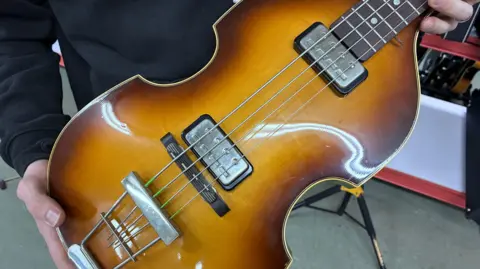
"He really is the artist that drove this bass as an image.
"Without that connection it wouldn't be what it is today."
Horne said he last saw Paul McCartney at a recording of Jools Holland's Hootenanny.
"He came over and he gave me a big hug, and we had a chat".
Follow BBC Bristol on Facebook, X and Instagram. Send your story ideas to us on email or via WhatsApp on 0800 313 4630.