What you need to know before taking weight-loss drugs

 Getty Images
Weight-loss drugs are not the quick fix solution that many people believe, especially if you hope to keep the pounds off in the long-term.
Sarah Le Brocq has direct experience of the transformative effects of weight-loss drugs. She has lived with obesity for most of her adult life and tried numerous diets. "Anything that came out, I thought, 'I'll try that because that might work for me'." Unfortunately, the weight always came back, she told the BBC's Inside Health.
After taking weight-loss drugs for more than two years, she has lost almost eight stone (51kg/112lb). "All of a sudden I wasn't thinking about food anymore," she says. "I've just got more energy, I'm doing things I couldn't do before… it's kind of given me a new freedom in life again."
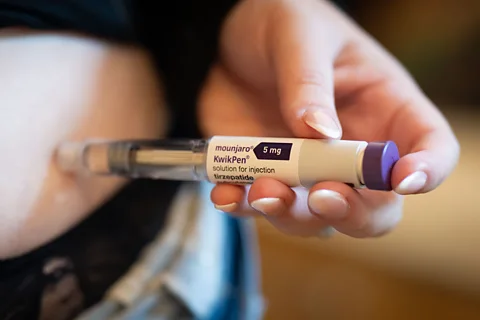
Millions of people like Sarah are now accessing medications like semaglutide and tirzepatide, better known by their popular brand names Ozempic and Mounjaro. The numbers of people on weight-loss medication is only likely to increase as new drugs appear on the market too, including pills rather than the current jabs.
It's clear that these drugs are opening up a new era in the treatment of obesity. The condition, is now a "mitigatable" issue, David Cummings, professor of medicine at the University of Washington tells me. "They are the closest thing I've seen to miracle drugs".
Other academics, however, warn that we risk losing sight of the need for behavioural change, especially as weight tends to be regained quickly when people stop taking the drugs.
So what should anyone planning to use weight-loss medication consider before they start?
How they work
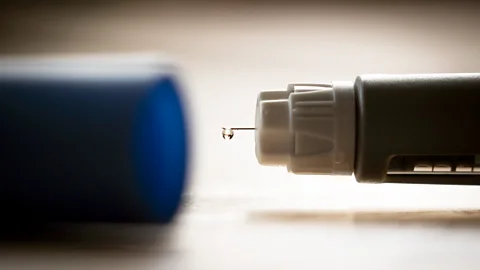
Weight-loss drugs work by suppressing an individual's appetite by mimicking hormones that tell our body when it is full. The most common are known as glucagon-like peptide 1, or GLP-1, and glucose-dependent insulinotropic polypeptide, or GIP.
The drugs bind to specialised molecules on the surface of our cells known as GLP-1 and GIP receptors, which play a key role in telling our body when it has had enough food.
Typically someone taking these drugs will begin to lose weight within the first few weeks. Although the drugs are only approved for weight loss in people with obesity, there is a rapidly growing private market for those not considered clinically obese.
Their popularity has been rising because they are extremely effective, with weight loss of between 14-20% in 72 weeks. But about 10-15% of people lose very little weight, so called "non-responders".
 Getty Images
GLP-1s are like "a chemical shield" that protects individuals against our "modern obesogenic environment, filled with cheap, calorie-dense foods", says Naveed Sattar, a professor of cardiometabolic medicine at the University of Glasgow and leads the UK Government's Obesity Healthcare Goals programme. He has also consulted on medical trials with several companies who produce weight-loss drugs but does not own any shares.
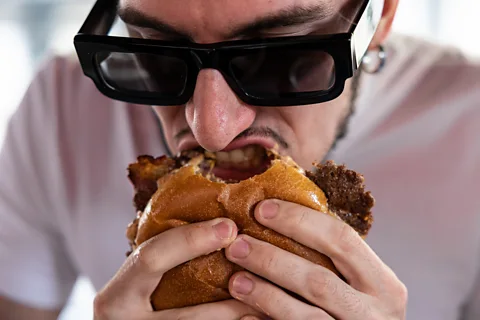
"There's food everywhere," he says – and within half an hour anyone "can pick up the phone and order 10,000 calories of food".
If you stop, you'll gain weight
If someone living with obesity starts to take weight-loss drugs, they need to consider that they may be on the drug long-term, says Cummings, who runs a weight management programme for individuals with obesity who have BMIs of 50 and above.
A common question he is asked by his patients before they start taking a weight-loss drug is how long they will be on it. Typically, they stop taking the drugs after about a year, he says. One analysis of scientific studies involving more than 9,000 patients indicated the average treatment duration was 39 weeks. People believe they can continue to lose weight using their willpower, he says, but the evidence suggests that is not the case.
People stop for various reasons, either due to the expense of treatment, their insurers stopping coverage or individuals not wishing to be on drugs for a prolonged period of time, Cummings has found.
And when people do stop the drugs, their weight tends to rebound. A recent study found that weight regain happens up to four times more quickly after stopping weight-loss drugs compared to someone ending a weight-loss programme that focuses on changing their behaviour.
Another study found that those on weight-loss drugs gained 1.5kg (3.3lbs) eight weeks after they stopped the medication, with their weight continuing to climb with the more time that passed. The same study also found that other health concerns, such as high blood pressure, also returns. New research has also found that people who stop taking weight-loss drugs gain back around 60% of the weight they lost a year later.
It returns quickly because of something researchers call "food noise", which consists of persistent and intrusive thought around food, says Sattar.
Hormones play a role too. When an individual tries to lose weight, it triggers a powerful hormonal response that tells your body to regain the weight you lost. Cummings explains that because of this, the brain interprets a calorie drop as an energy deficiency, so after stopping weight-loss drugs, hormones that stimulate appetite increase while the rate at which you burn energy – the metabolic rate – decreases. "If these biological defences are strong enough, they can blunt the drug's effectiveness," he says.
Lifestyle change
Sattar has observed that for a small proportion of people who make lifestyle changes, it may be possible to reduce the dose or use the drug intermittently instead. Some really do make "fundamental changes in their diet", he says.
"Others might need it at a lower dose than they would when they started. But the majority will probably still need some dose of the drug because the [food] environment is still the same."
There's also increasing concern that individuals are taking weight-loss medication as a substitute for making life-style changes – even though evidence shows that modifying lifestyle in combination with weight-loss drugs is what will lead to greater weight loss.
Experts have recently cautioned in a scientific review of the evidence that when there's a lack of behavioural and lifestyle support for those on weight-loss drugs, it can leave individuals vulnerable to nutritional deficiencies. "We need to make sure people are getting enough protein and are getting all the vitamins and minerals they need," says Marie Spreckley a nutrition and behavioural scientist at Cambridge University and lead author of the report. "You don't want to have longer-term unintended consequences, like frailty and muscle loss. We don't want to replace one health concern with another."
Because these medications cause a dramatic appetite reduction, patients tend to eat less overall, she and her colleagues note. This can lead to a "missed opportunity" if patients are not supported long-term and their food choices remain poor.
No quick fix
The World Health Organization has therefore stated that medication alone won't "reverse the obesity challenge". Early interventions, screening and creating healthier environments are also needed, the organisation has stated in its guidelines on using GLP-1 drugs.
This is easier when people are still taking the drugs, Sattar says. "You have more mental space to think about your diet."
But behavioural change is extremely challenging, says Amanda Daley, a professor of behavioural medicine at Loughborough University in the UK. She says there needs to be better communication with patients about how quickly they can regain weight once they stop taking GLP-1 medication.
 Getty Images
Obesity is a chronic, relapsing condition, she says, which means it cannot be "cured" with a drug alone. That's why additional support and "wraparound care" is key to ensure patients make dietary changes as well as increasing their physical activity.
It's unclear whether private providers are providing this crucial additional support, she says, which she finds concerning since so many people access the drugs privately and it is hard to monitor continuation of care.
Micro-nudges help change behaviour
To overcome some of this – researchers at Stanford have looked at how they can help support and encourage lifestyle changes. In one recent study, researchers tested whether small nudges – or "microsteps" – could help encourage healthy behavioural change for those taking GLP-1 medications.
The tiny changes focused on nutrition, physical activity, sleep and stress management. Crucially, the microsteps were small and manageable, such as swapping sugary drinks for water, no longer drinking coffee after lunch, taking a deep breath when stressed or popping outside for five minutes.
They found these helped improve behavioural expectations. It's this "expectation" that's a first necessary step for behavioural change, says Maya Adam, a clinical associate professor of paediatrics at Stanford School of Medicine, who was involved in the study.
"Achieving your best health involves a lot more than pharmacotherapy alone," she says. "We found that giving people these little nudges may be very effective." She calls these steps "too small to fail" because even small daily changes and habits make a real difference over time.
Side-effects
These kind of interventions are crucial to help give people the tools they need to enact change, Daley says, especially considering the known side effects. These include gastrointestinal issues. There has also been an observed increase in pancreatitis and gallstones. Muscle loss is another concern, especially among individuals who are not exercising. Recently a study found links to bone and joint conditions too.
While we now have several years of data on the effectiveness of GLP-1 drugs, we don't yet know what the long-term outlook will be or whether the results will wear off over time. There is also a lack of data on how these drugs affect pregnancy outcomes or future generations, as the advice is not to take weight-loss drugs during pregnancy.
But given the negative health outcomes for those living with obesity, the side effects pale in comparison, both Sattar and Cummings say. This is particularly the case for individuals with multiple weight-related conditions. Heart disease, cancer and stroke are the leading causes of death worldwide – and all are linked to obesity.
A changing landscape
What is clear is that the landscape for weight-loss medication is rapidly evolving.
There are other health benefits too beyond weight loss. In one major study involving two million people, the drugs were linked to better heart health, fewer infections, lower risk of drug abuse and lower incidences of dementia. It's also been shown to improve sleep apnoea, arthritis and substance abuse.
More like this:
• Counting calories doesn't work. Try eating smarter instead
• Is it possible to lose weight on an "Ozempic diet"?
• What happens when you stop taking weight-loss drugs?
A new drug called retatrutide has also shown promise in recent trials. It mimics three hunger-regulating hormones, and early evidence indicates weight loss of nearly 29%, after 68 weeks according to manufacturer Eli Lilly.
The drugs are but one tool for obesity care, Daley says. More important is the need to make it easier for people to make healthier changes that last beyond medication. And because of the abundance of people eating calorie-dense ultra-processed foods, obesity will continue to be a growing health concern, experts warn.
Our ultimate goal, Daley adds, should be to change the food environment to offer better choices and influence government policy so that the next generation won't need these drugs at all.
* Melissa Hogenboom is a senior health correspondent at the BBC and author of Breadwinners (2025) and The Motherhood Complex.
--
For trusted insights on health and wellbeing, sign up to the Health Fix newsletter by senior health correspondent Melissa Hogenboom who also writes the Live Well For Longer and Six Steps to Calm courses.
For more science, technology, environment and health stories from the BBC, follow us on Facebook and Instagram.