Did a flatbread help end British rule in India?

 Alamy
AlamyIn the 19th Century, a peculiar paranoia gripped the British East India Company: were the Indian people using flatbreads to transmit cryptic messages?
Something perplexing began in India in 1857.
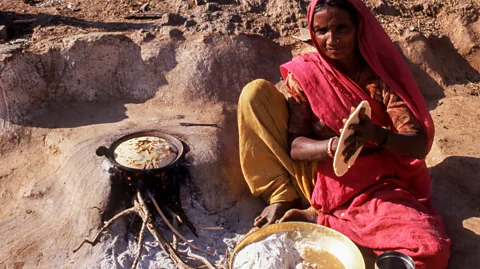
Chapatis – thin pancakes of unleavened bread, traditionally cooked on a griddle – started making their way from village to village. A messenger would appear with the flatbread, and hand it over to the headman of a village. The headman would then dispatch a fresh batch on to the next village, and so on and so on.
In such a fashion, the chapatis perambulated around north India, all the way from the principality of Indore, in what is now the central state of Madhya Pradesh, to the city of Gwalior in north of the state. They found their way to Rohilkhand, in what is now the northern state of Uttar Pradesh, through the region that was once the historical kingdom of Awadh and further south to Allahabad, which is now known as Prayagraj, also in Uttar Pradesh. It was estimated by British military leaders that the chapatis were travelling up to 160-200 miles a night, a speed that would have outstripped the mail service at the time. Sometimes, the chapatis were accompanied by lotus flowers, sometimes goat flesh, but mostly it was just chapatis, alone and unencumbered.
Almost 100 years earlier, troops from the British East India Company had faced the Nawab of Bengal and his French allies in eastern India at the Battle of Plassey, and won due to manoeuvring both on and off the field of battle. Among other things, the colonial victory meant the East India Company could collect taxes from Mughal territories, and paved the way for the company's dominion in India.
A century on, and India was jagged with nerves.
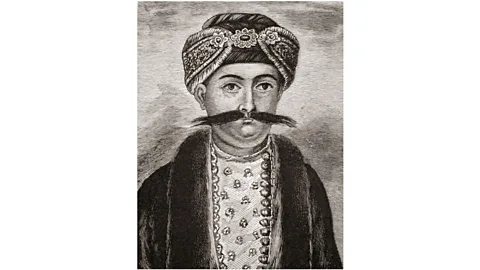
Cholera was rife in Indore. The previous year, the East India Company had annexed Awadh, and the Nawab had been deposed and exiled to Kolkata (known as Calcutta at the time). Rumours spread through the land: some alleged that the British were contaminating flour with the bone meal of cows and pigs, while others said that the British were adulterating medicine with their spit. ("The local Urdu newspaper from Lucknow, Tilism-e Lucknow, mentions an event where the hospital patients denied taking medicine as there were rumours that one of the British officials had spat in the medicines," says the historian Heena Ansari, guest lecturer in the department of history at Delhi University).
Author and historical translator Rana Safvi proposes another possible explanation for the disquiet: "There was a rumour that on the 100th anniversary of the Battle of Plassey in 1757, foreign rule would finish." Pooled together, these tales drew people to the assumption that the British were bent on evangelising the country.
Into such an atmosphere came the chapati movement, discombobulating the British completely.
 Getty Images
Befuddled officials sent perplexed letters to each other, suggesting that at least at the start of the movement, the chapatis were seen as an inexplicable aberration. Time and again, the chapatis were declared a mystery. "There is a most mysterious affair going on through the whole of India at present," wrote Gilbert Hadow, an army surgeon working for the East India Company, in a letter to his sister in March 1857. "No one seems to know the meaning of it. . . It is not known where it originated, by whom or for what purpose, whether it is supposed to be connected with any religious ceremony or whether it has to do with some secret society. The Indian papers are full of surmises as to what it means ... It is called ‘the chupatty [sic] movement’."
Mark Thornhill, who was magistrate of the city of Mathura at the time, wrote: "A man had come to a village and given a cake to the watchman, with injunctions to bake four like it, to distribute them to the watchmen of adjacent villages, and to desire them to do the same...after being a nine days' wonder, the matter ceased to be talked about."
Some fretted over the portents the chapatis carried with them. "They bore the mark of sedition for colonial officials and anti-colonial nationalist resistance for Indians," says Arun Kumar, assistant professor of British imperial, colonial & post-colonial history at the University of Nottingham in the UK. "Chapatis, like the circulation of the fiery cross in Scotland, began to be seen as instruments of political mobilization and rebellion." (A fiery or charred cross was once used as a rallying call to arms by the clans of Scotland.)
Yet others waved it away as a local custom used to ward off disease. And indeed echoes of such messenger items have reverberated through Indian history. "Among many objects, arrows, and specific plant leaves among the tribals of India, coconut and earthen pots were some other forms of communicating messages regarding diseases, festivals, mobilisation, and rebellion," says Kumar.
Kumar explains that the Kol people – a community indigenous toeastern India – reportedly circulated arrows in the continental plateau of Chota Nagpur in 1831-32 as a means of conveying messages. Meanwhile it's thought the Santal people – also based in eastern India – would circulate branches from the sal tree and the red cosmetic powder sindur before 1857 as a call for collective action.
"But they were small-scale events compared to the vast geographical spread of the Chapati movement," says Kumar. "The chapati, being the most relatable food item of North India, had a rural symbolic value that could garner the whole rural society." Later, Gandhi would attempt to charge rural India in much the same way, using the provocative symbolism of everyday items such as salt.
 Getty Images
Safvi points out that Muinuddin Hasan Khan, a police officer in Paharganj at the time, spoke about the spread of the chapatis with similar bafflement. "In the following month, February, another signal was given by the widespread distribution of chupattis, an ominous sign," he is reported to have said in Charles Metcalfe's 1898 book, Two Native Narratives of the Mutiny in Delhi.
Khan went on to explain: "At the time I was Thanadar [the head police officer] of the Pahargunge police station just outside the city of Delhi. Early one morning the village watchman of Indraput came and reported that the watchman of Seraie, Faruck Khan had brought in a chupatti..." He said he was instructed to cook five similar chapattis, and send them to the five nearest villages of the neighbourhood. Then each recipient village was to make five similar ones for distribution, like a kind of multiplying chapati relay race.
"Each chupatti was to be made of barley and wheat flour, about the size of the palm of a man’s hand, and was to weigh two tolahs [about 20 grams]," says Khan. "I was astonished, yet I felt that the statement of the watchman was true, and that there was importance in an event which undoubtedly created a feeling of great alarm in the native mind throughout Hindustan."
This idea of the chapati as a symbol of revolution was mentioned in the controversial politician and right-wing leader Vinayak Savarkar’s Indian War of Independence 1857. In his opinion, the chapati movement was a spur to restive Indians, who were unhappy with being part of the British Empire.
Then another rumour erupted. The cartridges provided by the British army for its Indian troops to use in battle – compatible with their brand new Enfield rifles – were allegedly lubricated with pork and beef fat. This would have been incompatible with the beliefs of Muslim and Hindu soldiers.
To compound the problem, the cartridges were cloaked in packages meant to be torn open with the troops' teeth. This brought events to a point of crisis. Hindu and Muslim soldiers, fearful of the threat to their religion and caste – only certain castes have historically avoided beef fat – refused to use the bullets. Their refusal lit a spark of rage, and along with other factors, the incident contributed helped lead to a large-scale rebellion.
 Getty Images
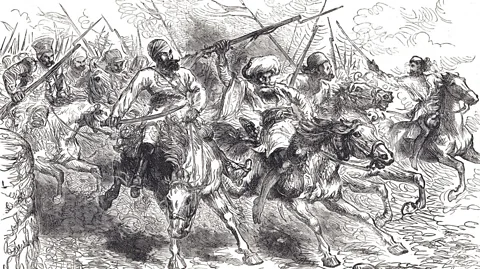
No longer just an insurgency by the soldiers, the incident focused the resistance of a colonised people. Leaders emerged, such as Delhi’s Bahadur Shah, Nana Sahib (the adopted son of the exiled Maratha Peshwa, Baji Rao II) in Kanpur, Rani Lakshmibai in Jhansi, Maulavi Ahmadullah Shah and General Bakht Khan in Lucknow, and Tantia Tope in central India – all aligning their cause in some way with the resistance. Desperate battles were waged from May to September, culminating with brutal reprisal killings by the British in Delhi.
Could the innocuous chapati have contributed to all this?
"The chapati mystery was a rumour that spread in early 1857 which was supposed to convey the message to the Hindustanis that the fat of the pig and cow was being used in cartridges for the new Enfield rifle which was being introduced," says Safvi. "As most accounts that mention the distribution also say no one knew why it was being done, it doesn't seem to have had any role in the outbreak of the Uprising, the dots must have been connected later by the people who joined the 'rebels'."
In recent decades, research has painted a complex version of the events of that year. In fact, several historians now believe that the call to insurrection ran through popular forms of entertainment such as lawaniyas, tamasha (popular folk theatre and musical traditions) and katputliya (puppetry), as well as through ink-and-paper messages such as letters, newspapers such as the Sadiq-ul-Akhbaar, pamphlets and placards which were all disseminated quickly and efficiently in any place likely to be thickly populated.
These documents intended to further Hindu-Muslim amity, while simultaneously seeking to revive the notion of Mughal sovereignty. The ingenuity of such communication – both textual and edible – was that it could not be easily constrained by imperial means.
Ansari makes a strong case for this. "Contrary to the idea that rebels spread ideas by word of mouth and other traditional methods, such as circulating the roti and lotus, there are a number of printed and handwritten materials available which show that the rebels used modern techniques as well. The Indian National Archives have a number of orders and proclamations issued by rebel leaders. Apart from this, they also drafted a constitution and established a Court to handle the disorder in the city of Delhi."
 Alamy
AlamySaiyid Zaheer Husain Jafri, a professor of history at Delhi University, who has studied the Great Uprising of 1857, agrees. "The mobilisation for 1857 definitely took place through the printed word. Around 74 pamphlets issued by rebel leaders have been located by historians – they included pamphlets and documents such as the manshoor issued by the local chieftains, by the nawabs, by the ranis, by the rajas. It was only in the 20th Century that Savarkar wrote about the chapati as a symbol, but without mentioning a single source."
And yet, in most colonial explanations of the event, this abundance of evidence has been overlooked – only the fixation on the chapatis remains. Some historians now believe that the overriding of written evidence was a deliberate attempt by colonial powers to flatten the intricacies of the rebel movement into eccentricities. It became another way to suppress and delegitimise the concerns of the rebels.
The events of 1857 were to completely reconfigure British rule in India. In the years since, the British rapidly swelled their surveillance network all across the country. They steeled themselves against further uprisings by passing exclusionary laws such as the Vernacular Press Act of 1878, also known also as the Gagging Act. This aimed to prevent newspapers published in Indian languages from criticising British policies, and was only applicable to local Indian media.
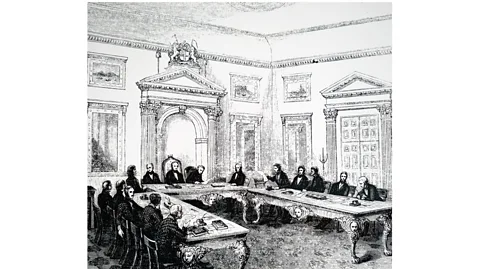
And so it was that a year that began with the dissemination of the humble chapati triggered an enormity – the beginning of the collapse of the East India Company, with its powers passing to the British Crown.
--
Join one million Future fans by liking us on Facebook, or follow us on Twitter or Instagram.
If you liked this story, sign up for the weekly bbc.com features newsletter, called "The Essential List" – a handpicked selection of stories from BBC Future, Culture, Worklife, Travel and Reel delivered to your inbox every Friday.