Full programme transcript >> Full programme transcript >>
The Herpes Viruses
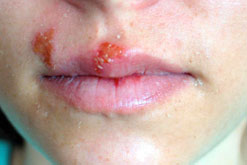
Few people make it past the age of 30 without becoming infected with at least one strain of herpes – the family of viruses responsible for chickenpox, shingles, cold sores and genital herpes.
In this edition of Case Notes, Dr Mark Porter investigates the herpes viruses.
Eight out 10 people will carry one of the two herpes simplex viruses that cause cold sores and genital herpes by the time they reach their mid-twenties.
The two are interchangeable – both cause blisters and sores on the skin they infect. If that happens to be on your face then it’s called a cold sore, and if it’s on your genitals, we call it genital herpes.
Mark visits the Genito-Urinary Medicine clinic at Royal South Hants Hospital in Southampton to speak to doctors and patients dealing with genital herpes, and finds out why this form is on the increase.
The herpes simplex viruses spread by skin to skin contact. Those infected are most likely to pass the virus on when they have active sores, but spread can sometimes occur when they are apparently symptom-free.
Chicken pox is also caused by another form of the herpes virus, as Dr Stacey Efstathiou, Head of the Division of Virology at Cambridge University, explains.
Like the herpes simplex virus, Herpes varicellae, which causes chicken pox, can re-emerge in the form of shingles.
Herpes virus infections are treated with anti-viral drugs which can be used to treat acute flare-ups – such as shingles, a cold sore, or genital herpes – or as regular suppressive therapy to stop recurrences. However, they must be used at the first sign of an attack.
Next week: bowel cancer |





 30 min