Full programme transcript >> Full programme transcript >>
Radiology
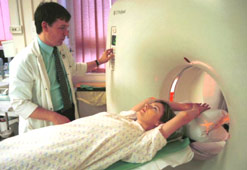
In the first of the new series of Case Notes, Dr Mark Porter looks at the role of radiology.
Nowadays medical applications of radiology are widespread, and include diagnosis of disease, radiotherapy and research.
Mark visits Hammersmith Hospital’s imaging department which offers a wide range of diagnostic and interventional procedures ranging from barium studies and ultrasound to bone density scanning.
The Hammersmith was the first hospital in the world to develop PACS – picture archiving and communication system – facilitating filmless X-rays and paperless reporting, which significantly reduce delays to the patient.
What are the effects of exposing patients to radiation? How safe are CT (computerised tomography) scans, which have revolutionised the diagnosis and treatment of diseases affecting almost every part of the body?
Mark investigates recent concerns about the increasing number of healthy people who are having CT body scans for “health MOTs”, and considers when the long term benefits of screening are greater than the risk of radiation exposure.
He also hears about strategies for dealing with patients who find scanners claustrophobic: Open MRI scanners, where the patients aren't enclosed in a small cylinder, are one way around the problem.
And Case Notes examines a new form of brachytherapy, a type of radiotherapy used to treat prostate cancer. Brachytherapy involves planting tiny pellets of radioactive material directly into the prostate gland, maximising the dose to the tumour and minimising damage to the urethra, bladder and rectum. |





 30 min