Summary

  1. 'Strait of Hormuz is in Iran's hands and tolls must be paid' - deputy parliament speakerpublished at 10:05 BST 12 April

    US Vice President JD Vance did not mention the Strait of Hormuz in his news conference following hours of talks with Iran in Pakistan.

    The vital waterway, where about 20% of the world's oil and liquefied natural gas (LNG) usually passes through, was a sticking point in the talks.

    A key part of the conditional ceasefire in place between the US and Iran has been the safe passage of ships through the strait.

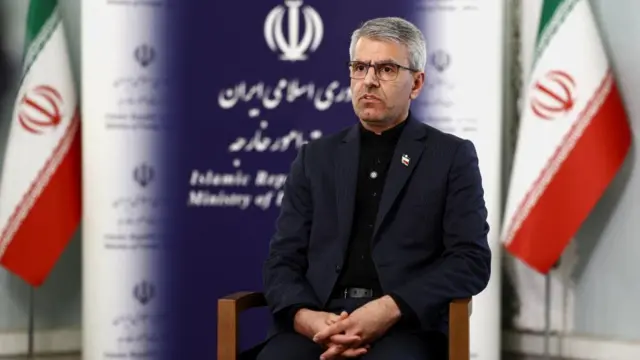
    The Iranian deputy parliament speaker Haji Babaei has said that the strait is a red line for Tehran, reports the Mehrs News Agency, which is linked to the Islamic Propagation Organisation.

    He says the strait is completely in Iran's hands and "its tolls must be paid in rials" - the Iranian currency.

    This Flourish post cannot be displayed in your browser. Please enable Javascript or try a different browser.

    Meanwhile, US President Donald Trump insisted the Strait will "soon be open" in a post on his social media site Truth Social on Saturday.

    US Central Command also said on Saturday two Navy destroyers had "transited the Strait of Hormuz" as part of a wider mission to clear the waterway of sea mines. But Iran has denied the claim that the two vessels sailed through the area.

    Iran's Revolutionary Guards has said "any attempt by military vessels to pass through the Strait of Hormuz will be dealt with severely," reports the AFP news agency citing state broadcaster IRIB.

  2. Iran's internet blackout enters 44th daypublished at 09:50 BST 12 April

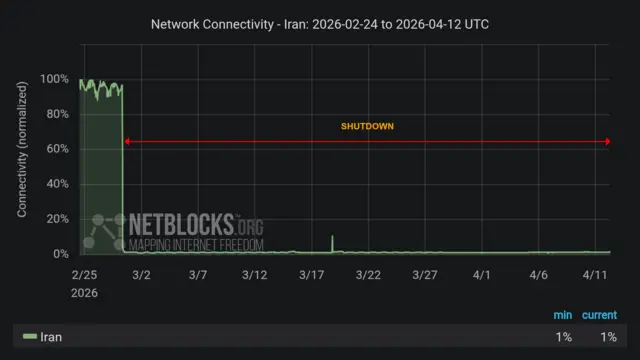
    A graph shows that the internet has been shutdown in Iran since the end of FebruaryImage source, NetBlocks

    A government enforced internet blackout has entered its 44th day, according to internet monitoring group NetBlocks.

    "The human and economic impacts of the extended censorship measure continue to pile up, breaking global records for shutdowns in a connected society," NetBlocks writes in a post on X.

  3. Analysis

    Trump has a stark choice - escalate or negotiatepublished at 09:13 BST 12 April

    Lyse Doucet
    Chief international correspondent, in Islamabad

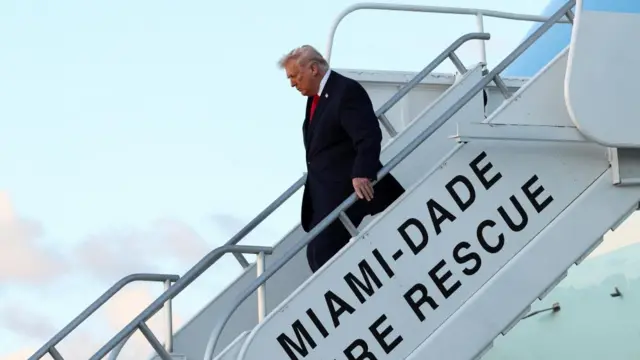
    Donald Trump walks down some stairs next to Air Force One in MiamiImage source, Reuters

    The US Vice-President called it good news and bad news. Good news that they had substantive discussions with the Iranians. Bad news that they have not reached an agreement.

    He called that bad news for Iran.

    The length of this single negotiating session was significant and surprising.

    But it’s not surprising that a deal wasn’t reached.

    The Americans came to Pakistan with a view that Iran had suffered so badly in this war that quick compromises were possible.

    "They have not chosen to accept our terms," Vance announced.

    But Iran also has its own red lines.

    It approached these negotiations believing it had a strong hand. Despite major damage to its military capabilities, it’s still able and willing to keep fighting.

    And it still has significant leverage especially in its control over the strategic Strait of Hormuz.

    The last time Tehran and Washington reached a nuclear deal a decade ago it took 18 months of breakthroughs and breakdowns.

    Trump now has confronts a stark choice – escalate or negotiate.

  4. How talks unfoldedpublished at 08:54 BST 12 April

    Jacob Phillips
    Live reporter

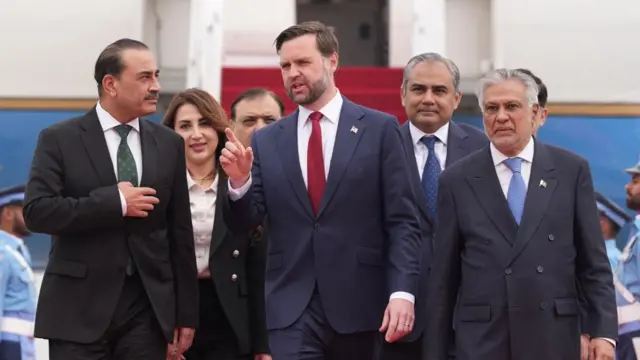
    JD Vance holds his finger up as he speaks to Asim Munir as he steps off a plane. Ishaq Dar is besides him and several people walk behind the trioImage source, Reuters
    Image caption,

    US Vice President JD Vance walks with Pakistan's Chief of Army Staff Field Marshal Asim Munir and Pakistani Foreign Minister Ishaq Dar

    Arrivals allay uncertainty

    As roads in Islamabad, Pakistan, were cleared and security increased on Friday, there was still uncertainty about whether US-Iran peace talks would go ahead at all.

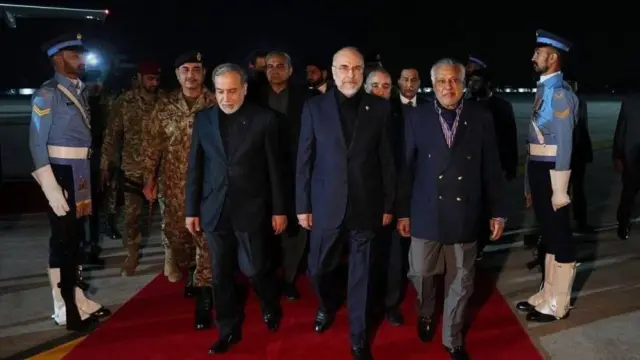
    Then we started to see movement: the Iranian delegation arrived in Pakistan in the middle of the night on Friday. They were greeted by Pakistan's foreign minister Ishaq Dar and its military chief Asim Munir.

    On Saturday morning, Dar and Munir met US Vice-President JD Vance as he stepped off Air Force Two.

    Separate and face-to-face talks

    Both sides then met separately with Pakistani representatives - the country's prime minister said he hoped they would "engage constructively".

    Pakistan government sources then told the BBC - and the White House later confirmed - that face-to-face trilateral talks were underway in Islamabad.

    Iranian Parliament Speaker Mohammad Bagher Ghalibaf (C) and Iranian Foreign Minister Abbas Araghchi (L) arrive at the airport in Islamabad alongside other delegates. They are flanked by soldier on a red carpetImage source, EPA/Shutterstock
    Image caption,

    Iranian Parliament Speaker Mohammad Bagher Ghalibaf (C) and Iranian Foreign Minister Abbas Araghchi (L) arrive at the airport in Islamabad

    Negotiations into early hours

    The two sides remained locked in negotiations through the night with very little information being passed on to the outside world.

    The outcome - and what's next?

    In the early hours of Sunday morning in Pakistan, an Iranian foreign ministry spokesman released a statement describing the talks as "intensive" and called on Washington to hold back from "excessive demands and unlawful request".

    Vance held a news conference shortly afterwards and said the US had made its red lines clear but Iran had not agreed to its terms.

    Today, both delegations have left Pakistan. Our world news correspondent takes a closer look at the key question - what's next?

  5. Saudi Arabia restores key oil pipeline following attackspublished at 08:24 BST 12 April

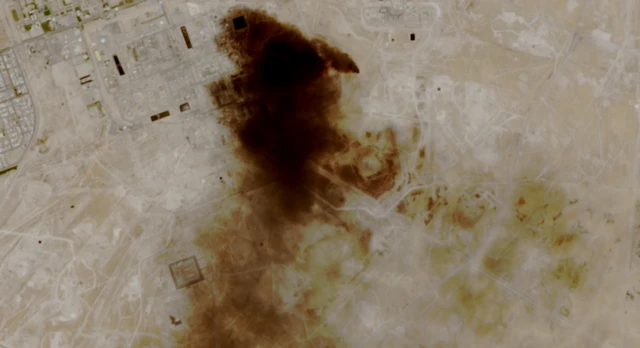
    A satellite view of smoke billowing at a Saudi Aramco oil facility after a reported attack, following the announcement of a two-week ceasefire in the Iran war, in Abqaiq, Saudi Arabia April 8, 2026.Image source, COPERNICUS SENTINEL-2/Reuters
    Image caption,

    A satellite view of smoke billowing at a Saudi oil facility following an attack on Thursday

    We can bring you an update now on the latest from elsewhere in the Middle East:

    Saudi Arabia has restored full capacity to its key East-West oil pipeline following attacks on the site and surrounding energy infrastructure on Thursday.

    The Ministry of Energy says the strikes had stopped 700,000 barrels of oil per day being sent through the pipeline.

    Since the US-Israel war with Iran began, Saudi Arabia has been forced to re-route oil exports away from the Strait of Homuz, where shipments have ground to a near halt, to the East-West pipeline where crude is sent to a terminal on the Red Sea.

    The Ministry of Energy said Saudi's Manifa production facility near the coast had also been restored following last week's attacks but repair work was continuing on the Khurais oil field further inland.

  6. Iranian foreign ministry: 'Talks took place in atmosphere of mistrust, suspicion and doubt'published at 08:06 BST 12 April

    Iran's Foreign Ministry spokesman Esmaeil Baghaei sat in a chair.Image source, Reuters

    We're hearing more comments from Iran's foreign ministry in the aftermath of failed peace talks in Islamabad.

    He earlier said the US should refrain from making "excessive demands"

    It was never expected that the US and Iran would reach an agreement straight away, spokesperson Esmail Baghaei says.

    He adds that talks took place in "an atmosphere filled with mistrust, suspicion and doubt", following more than 40 days of "imposed war" and not long after a ceasefire came into force.

    Baghaei tells the Iranian state's Student News Network: "We should not have expected from the start that we could reach an agreement in a single session. I don’t think anyone had such expectations."

    Still, he said, "diplomacy never ends".

  7. Israel spares Beirut from deadly attacks, but no respite in southern Lebanonpublished at 07:37 BST 12 April

    Hugo Bachega
    Middle East correspondent, in Beirut

    Away from the latest developments on failed peace talks in Islamabad, war rages on in Lebanon:

    After widespread condemnation following the deadly bombing of Beirut, Israel has spared the capital of its recent attacks. But for southern Lebanon, there is no respite.

    More paramedics have been killed, in what the health ministry here says is a systematic Israeli approach of targeting health workers, which could be a war crime.

    Israel has in the past claimed that ambulances are being used for military purposes, but has never provided any evidence.

    A fifth of Lebanon’s population remains displaced without knowing when – or if – they will be able to go back home.

    Invading Israeli troops continue to operate inside Lebanon to create what officials in Israel describe as a security buffer zone.

  8. Analysis

    Vance returning empty-handed, and disappointedpublished at 07:23 BST 12 April

    Caroline Davies
    Pakistan correspondent, in Islamabad

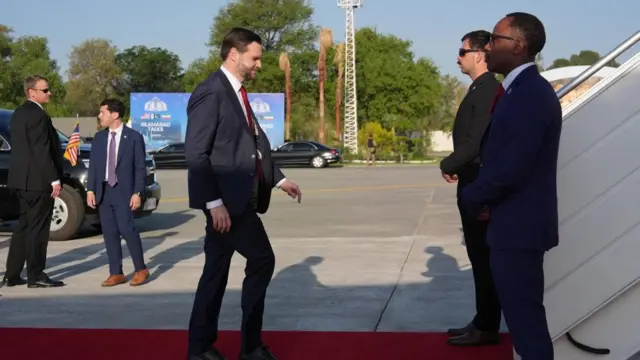
    JD Vance walks towards two security guards by the stairs to Air Force Two after peace talks in PakistanImage source, Reuters

    The announcement came as the sun was rising in Islamabad.

    After talks that ran from early afternoon into the early hours, JD Vance said the US delegation would be returning to home without a deal.

    Vance said they had spoken to the US president several times during the course of the discussions.

    He said his team had been unable to get Iran to confirm that they wouldn't seek a nuclear weapon nor the tools that would enable them to quickly achieve one.

    He described this as a core goal of President Trump - and expressed disappointment.

    Iran has always said that it does not plan to develop a nuclear weapon.

    There has yet to be a formal response by the Iranian delegation, but the country's state media has said the talks broke down because of unreasonable US demands.

    In his public comments, Vance didn't mention the Strait of Hormuz - the key oil route which the US wants Iran to open, and which was widely reported to be a major sticking point in the talks.

    Pakistan’s foreign minister has said it is imperative that the two parties continue to follow the ceasefire agreed before coming to Islamabad, although both sides have already accused each other of violating that deal.

  9. Iranian delegation leaves Islamabad - reportspublished at 07:03 BST 12 April

    The Iranian delegation has left Islamabad, according to Iran's semi-official Mehr news agency.

    The delegation, headed by Iran's Parliament Speaker Mohammad-Bagher Ghalibaf, left shortly after 9:00 local time (4:00 GMT, 5:00 BST), the agency reports.

    It comes after the US delegation including Vice-President JD Vance also left Islamabad after peace talks failed to reach a deal.

  10. Analysis

    The key question: What happens next?published at 06:36 BST 12 April

    Joe Inwood
    World news correspondent

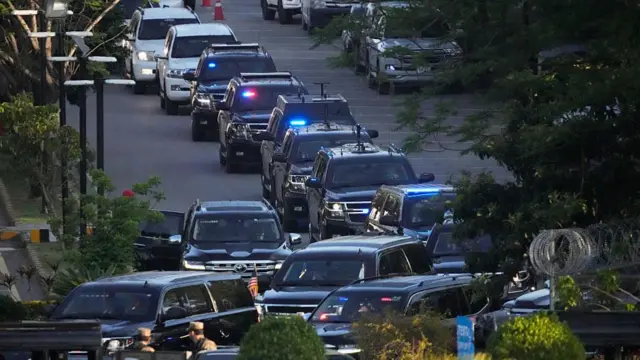
    A line of black cars on a road in Pakistan, some have flashing blue lights.Image source, Getty Images
    Image caption,

    JD Vance and the US delegation leaving Pakistan after talks with Iran failed to reach a deal

    With both sides arriving at these talks claiming to have won the war finding a deal was always going to be difficult.

    In the end it seems it was impossible. Both left essentially blaming the other for their failure.

    The key question - what happens next?

    The ceasefire - agreed on Wednesday - began amidst apocalyptic threats from the US President, saying he would destroy Iranian civilisation.

    There was no announcement on whether attacks on Iran will resume - but certainly the chances have increased.

    As for the Strait of Hormuz - the vital waterway which Iran had selectively, but effectively, blocked - a reopening through negotiations seems off the table. The arrival of two US warships in the Gulf suggests that the US sees another route.

    The US cited Iran’s failure to commit to never having a nuclear weapon as the key stumbling block. Iran has always denied wanting the ultimate deterrent, but two wars in the space of a year will have emboldened those calling for it.

    These face-to-face talks between the US and Iran were historic… but may well be remembered as a failure of diplomacy.

  11. Israel says it struck rocket launcher in southern Lebanonpublished at 06:12 BST 12 April

    The Israel Defence Forces (IDF) says it has struck a rocket launcher that was "positioned and ready to launch" towards Israel in southern Lebanon.

    In the statement on Telegram, the IDF said the launcher was identified in the area of Jouaiyya and was "struck and dismantled" before an attack could be carried out.

    It also included video footage of the strike.

    There is still disagreement over whether the ceasefire between the US and Iran includes Lebanon - or whether that ceasefire will remain intact after peace talks failed between both countries in Pakistan.

    Israel and Lebanon are set to hold their own talks next week in Washington. Here's everything we know about the situation.

  12. Trump attends UFC fight during Islamabad peace talkspublished at 05:41 BST 12 April

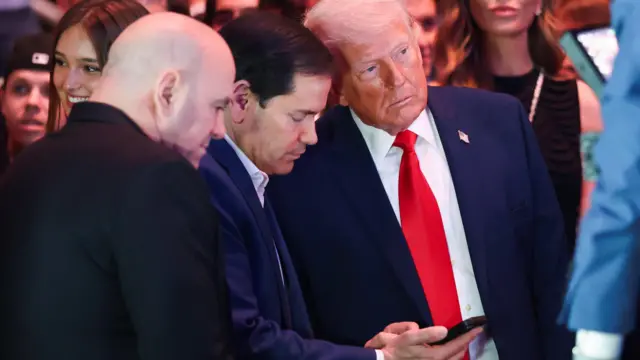
    While negotiations were underway in Islamabad, US President Donald Trump was attending a UFC fight in Miami, alongside several members of his family and US Secretary of State Marco Rubio.

    Vance said that he spoke with Trump "consistently" during the talks in Pakistan.

    "I don’t know how many times we talked to him, a half-dozen times, a dozen times over the past 21 hours,” Vance said.

    He added: “We were constantly in communication with the team because we were negotiating in good faith."

    UFC CEO Dana White, Marco Rubio and Donald Trump huddle together in a crowded room, with Rubio showing both men something on his phone.Image source, Reuters
    Image caption,

    Trump was seen alongside Rubio and UFC CEO Dana White

    US President Donald Trump and Hunter Campbell, CBO of UFC, are seen on the screens at UFC 327 at Kaseya Center.Image source, Getty Images
    Image caption,

    The US president was shown on the jumbotron during the fight

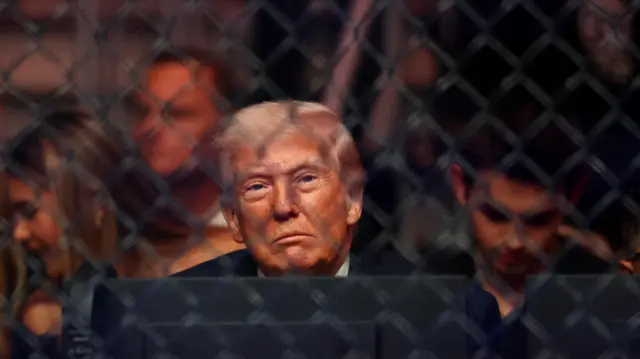
    Donald Trump looking directly at the camera through a see-through black wired barrier at a match at the Kaseya Center in MiamiImage source, Reuters
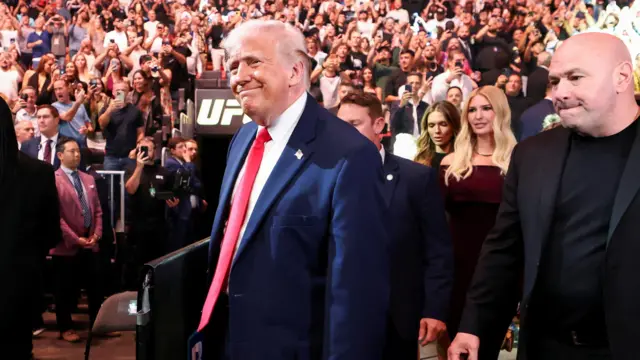
    Donald Trump walking through a crowded stadium wearing a navy blue suit and red tie.Image source, Reuters
    Image caption,

    Trump attended the fight with members of his family, including his daughter Ivanka seen behind him

    Return to the latest post
  13. 'Imperative' two sides uphold ceasefire, says Pakistan foreign ministerpublished at 05:12 BST 12 April

    Pakistan's foreign minister has released a statement following the conclusion of peace talks, urging both sides that it is "imperative that the parties continue to uphold their commitment to ceasefire".

    "We hope that the two sides continue with positive spirit to achieve durable peace and prosperity for the entire region and beyond," the post on X reads.

    The post ends with Pakistan saying it will continue to play a role in facilitating dialogue between the two parties "in the days to come".

  14. Differing accounts of talks emergepublished at 04:50 BST 12 April

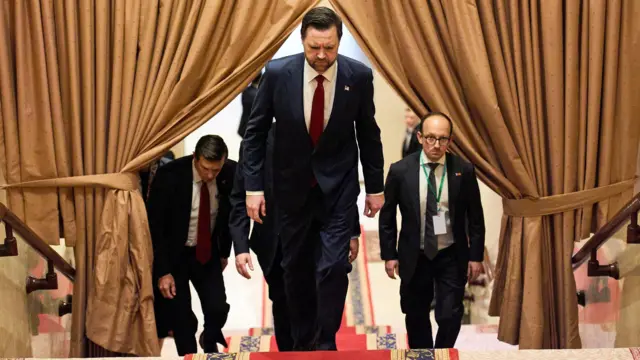
    Vice-President JD Vance walks up a flight of stairs with his head looking down to the floor and several men walking up behind him.Image source, Reuters

    The US and Iran are offering different reasons for the failure of the peace talks.

    According to Iranian state media, "unreasonable demands" from the US frustrated talks to end the war.

    "Despite various initiatives from the Iranian delegation, the unreasonable demands of the American side prevented the progress of the negotiations. Thus the negotiations ended," Iranian state broadcaster IRIB said in a post on Telegram.

    Meanwhile, the US says they were "flexible" and "accommodating".

    Vance said US President Donald Trump told him to "come here in good faith and make your best effort to get a deal. We did that, and unfortunately, we weren't able to make any headway". He says he was leaving after making "very simple proposal, a method of understanding that is our final and best offer".

    It's unclear what the next steps are in the two-week ceasefire deal or whether more talks are planned.

  15. 'Palpable sense of disappointment' in Islamabad as peace talks failpublished at 04:25 BST 12 April

    Carrie Davies
    BBC Pakistan correspondent, in Islamabad

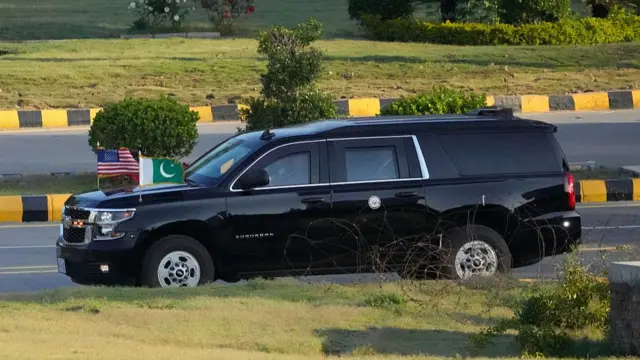
    A vehicle drives as part of a motorcade believed to be carrying US Vice President JD Vance as he leaves from the Serena Hotel for Nur Khan air base to depart Pakistan.Image source, AFP
    Image caption,

    A vehicle believed to be part of US Vice-President JD Vance's motorcade

    In the moments after the news conference, we and several other journalists who had been watching inside the conference centre, ran across the road to see what was happening outside the hotel, where Vance was speaking.

    When we got there, you could already see that there was a long convoy of cars ready to go. That included security provided by Pakistani authorities, as well as security that the American vice president travels with.

    We could see a car with the American flag leaving the hotel fairly swiftly, as well. So it is safe to assume that Vice-President JD Vance was ready to leave town after the lengthy discussions failed to lead to a deal.

    All around us, there was a palpable sense of disappointment at the outcome of these talks.

    Many had realised that both sides coming to a peace deal was a long shot, as there were big gaps in the positions between the US and Iran. But still, many had also hoped that given the seniority of the delegations – sent from both sides – that this indicated a sign that everyone was serious about trying to make a deal.

    That sense of disappointment will be shared far beyond this conference hall.

  16. Signs marking peace talks in Pakistan are now being dismantledpublished at 04:14 BST 12 April

    Carrie Davies
    BBC Pakistan correspondent, in Islamabad

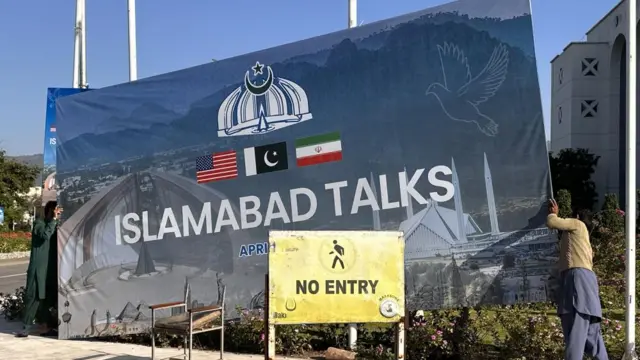
    Crews work to take down a sign that marked the historic peace talks between the US and Iran in PakistanImage source, EPA/Shutterstock

    It's been less than two hours since we heard the high-stakes talks aiming to bring peace between the US and Iran have failed.

    Already, I saw crews working to take down signs marking the historic talks in Islamabad.

  17. Key takeaways from Vance's remarkspublished at 03:50 BST 12 April

    Media caption,

    Watch: JD Vance says US and Iran failed to reach deal

    US Vice-President JD Vance has just taken off from Pakistan after lengthy, high-stakes discussions with Iran failed to lead to a peace agreement that would end the war.

    Standing near US Special Envoy Steve Witkoff and Trump’s son-in-law and White House advisor Jared Kushner, Vance spoke with members of the media before his departure.

    Here are some of the key lines from the news conference:

    • He says that after 21 hours of peace talks in Islamabad, the US and Iran have failed to reach an agreement to end the war
    • "We've had a number of substantive discussions with the Iranians, that's the good news. The bad news is that we have not reached an agreement and I think that's bad news for Iran much more than it's bad news for the United States of America," Vance says
    • "We just could not get to a situation where the Iranians would accept our terms," he says
    • The vice president also shared his appreciation for Pakistan's Prime Minister Shehbaz Sharif and Field Marshal Asim Munir, and said "whatever shortcomings" there were in the negotiations, "it wasn't because of the Pakistanis, who did an amazing job"
    • It was a short news conference with only a few questions asked by reporters
    • When asked about Iran's nuclear capacity, Vance replies that halting the country from having nuclear weapons both now and in the future is US President Donald Trump's "core goal"
    • He adds that Trump was involved in the talks and he spoke with the president anywhere from a "half dozen" or a "dozen times" during the negotiations
    • "We leave here with a very simple proposal, a method of understanding that this is our final and best offer. We'll see if the Iranians accept it," he adds before ending his comments

  18. Vance leaves Pakistan after failed peace talks with Iranpublished at 03:28 BST 12 April

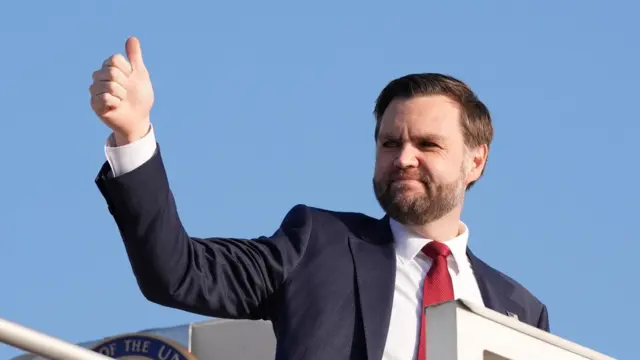
    U.S. Vice President JD Vance gestures as he boards Air Force Two.Image source, Reuters

    US Vice-President JD Vance has just boarded Air Force 2.

    He waved from the top of the stairs before the plane took off from Islamabad, where he and the rest of the US delegation will now head back to Washington.

  19. Vance ends news conferencepublished at 02:56 BST 12 April

    After several short questions, Vance has ended the news conference.

    He says the US delegation will be leaving Pakistan.

    Iran's Ministry of Foreign Affairs has also released a statement after the talks concluded, indicating they, too, had come into the talks with an open mind but said the US must refrain "from excessive demands and unlawful requests" along with accepting "Iran's legitimate rights and interests".

  20. Vance says talks included discussions about frozen Iranian assetspublished at 02:52 BST 12 April

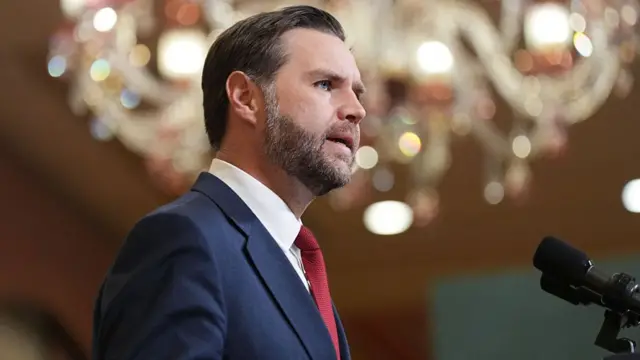
    JD Vance speaks in IslamabadImage source, Jacquelyn Martin via Getty

    "We talked about all those issues," Vance says, as well as "a number of issues beyond that".

    "We just could not get to a situation where the Iranians were willing to accept our terms."

    Describing the US approach to talks, he tells reporters "I think we were quite flexible, we were quite accommodating".

    He also says that he spoke with US President Donald Trump many times over the hours of talks. "I don't know how many times we talked to him, a half dozen times, a dozen times over the past 21 hours."