Summary

  1. A quick primer on the Strait of Hormuz, a vital energy shipping routepublished at 17:00 BST 12 April

    The US Navy will blockade the Strait of Hormuz, Donald Trump announced earlier, after talks in Islamabad failed to produce a deal between the US and Iran.

    It's a critical shipping route through which roughly 20% of the world's oil and natural liquefied gas is transported.

    The strait's geography has allowed Iran to use it as leverage throughout this war, selectively preventing vessels from passing through the narrow waterway and spiking oil prices in the process.
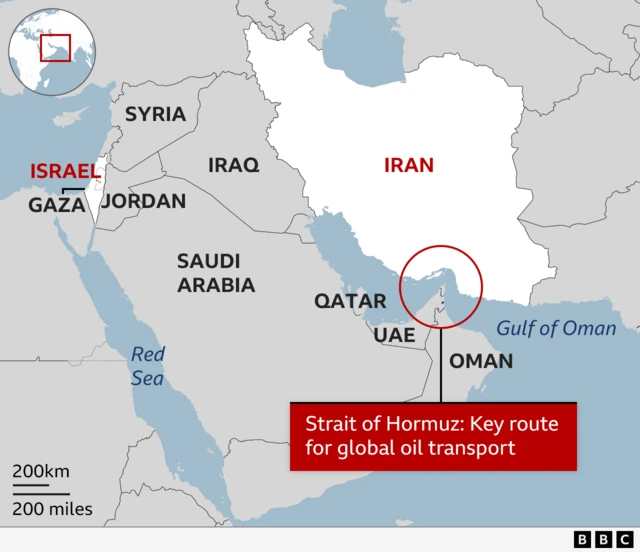
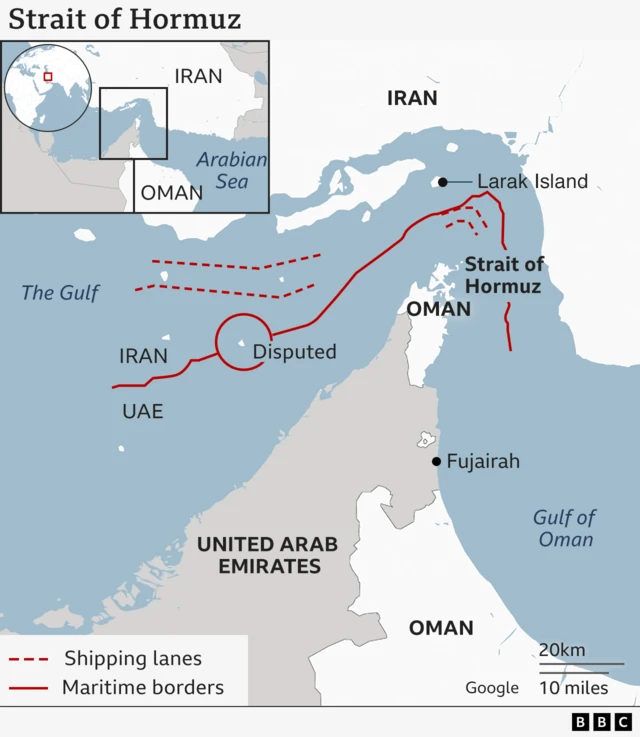
    Map showing where the Strait of Hormuz is in the Gulf of Oman, a key route for global oil transport. The strait lies between Iran and the peninsula of the United Arab Emirates and Oman. The map also shows countries in the wider Middle East region including Saudi Arabia, Iraq, Jordan and Israel
    Map showing The Strait of Hormuz, a narrow shipping route in the Gulf region. Countries highlighted: Oman, United Arab Emirates and Iran.
    Return to the latest post
  2. Nato to help 'clean out' Strait of Hormuz, Trump sayspublished at 16:40 BST 12 April

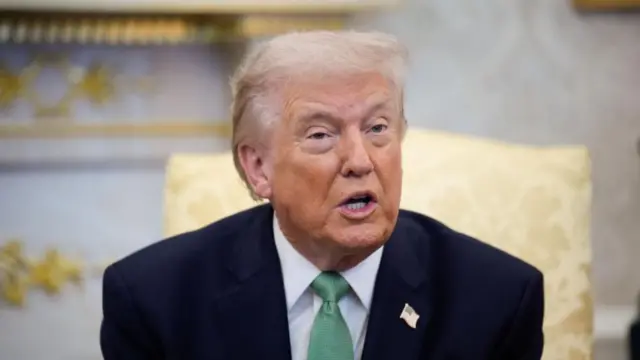
    Donald Trump sits in the Oval OfficeImage source, EPA/Shutterstock

    Trump says that Nato has offered to help "clean out" the Strait of Hormuz, in comments made to Fox News shortly after he announced plans to blockade the key shipping lane.

    He says the US was "very disappointed with Nato", but that "now they want to come and they want to help with the strait".

    "It won't take long to clean it out, so we're gonna clean out the strait", he tells the outlet, adding that he thinks it will be free to use again "in not too long a distance".

    He also says that the US is bringing in minesweepers, and that the UK - a member of Nato - will too. "I understand the UK and a couple of other countries are sending minesweepers", he tells the outlet.

    The BBC has approached the UK Ministry of Defence for comment.

  3. Analysis

    Israel has largely ignored the US-Iran talks in Pakistanpublished at 16:25 BST 12 April

    Nick Beake
    Reporting from Jerusalem

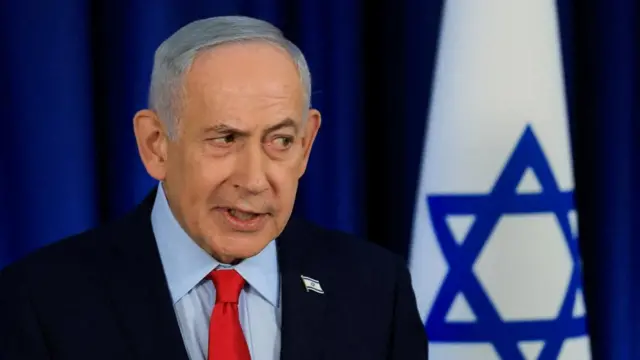
    Benjamin NetanyahuImage source, Reuters

    The Israeli government has largely ignored the talks in Pakistan – publicly at least.

    Prime Minister Benjamin Netanyahu didn’t want them to happen in the first place.

    His wish was for US and Israeli attacks on Iran to continue and he was forced to deny reports he only found out at the 11th hour that President Trump had agreed to a tentative truce, amid growing global turmoil.

    Today, there’s been no official reaction to the US and Iran failing to agree to any rapid deal in Islamabad – unlikely as one may have been.

    Instead, Israeli media is now reporting that IDF Chief of Staff, Eyal Zamir, has ordered the military to move to a heightened state of readiness - to a level seen on the eve of previous military operations.

    We’ve asked for confirmation from the IDF, but have not yet received it. Certainly, the language chimes with what Netanyahu has been saying.

    A few days ago he said the finger “remained on the trigger”, and last night he vowed once again that the war with Iran was not over.

    All the while the IDF continues to bomb Lebanon, saying it is hitting Hezbollah positions.

    The authorities in Beirut say these Israeli operations have killed more than 2,000 people in recent weeks.

    Last Wednesday, more than 350 were killed – a third of whom were women and children, according to the Lebanese health ministry.

  4. Trump blockade will only impact small number of vesselspublished at 16:05 BST 12 April

    Rachel Clun
    Business reporter

    US President Donald Trump’s threat to blockade the Strait of Hormuz will only affect a small handful of vessels that are still navigating the waterway, shipping expert Lars Jensen says.

    “If this is actually done by the Americans, it will halt a very tiny trickle of vessels. In the greater scheme of things, it doesn't really change anything,” he says.

    Jensen, chief executive of Vespucci Maritime, says Trump's threat of preventing safe passage for any ships paying tolls to Iran would also have little impact, as any company doing so would already face sanctions for paying the regime.

    “First of all, there's very few ships that pass. There's even fewer of those that pay, and those that pay will already be subject to American sanctions,” he says.

    Most shipping companies will continue to wait and see if there is a tentative peace agreement and whether that might hold, Jensen says, and if that occurs, a slow ramping up of shipping may resume.

    As for what it would take shipping lines to decide whether it was safe to transit the strait again, he says the honest answer from those firms would be that they don’t know.

    “Because at the end of it, it boils down to trust: trust that any agreement between the US and Iranians will hold for a significant portion of time, and that's a subjective feeling, there is nothing hard and tangible you can point to,” he says.

  5. Analysis

    The future of the Strait of Hormuz an immediate concernpublished at 15:31 BST 12 April

    Azadeh Moshiri
    South Asia correspondent, reporting from Islamabad

    As we watch to see whether the next few days bring more talks or a resumption of the war, the US president has made various threats in a lengthy Truth Social post.

    We knew Iran's nuclear point was a huge point of contention and one that Trump has confirmed negotiators couldn't get past.

    The future of the Strait of Hormuz is clearly an immediate concern, and the US is now threatening a blockade. Not only that, Trump is threatening any country who pays Iran "an illegal toll" to get through the vital shipping lane.

    There have been reports that some ships have passed through after paying a very expensive fee to Iran.

    Before these talks, he claimed there has been regime change in Iran, with new and more "reasonable" leaders, but they are now "volatile, difficult, unpredictable people".

    But, he did acknowledge there had been points of agreement during these talks, and that's a sense we had here in Islamabad, as we heard technical experts became involved and talks continued into the early hours of the morning.

    Trump has also said the US delegation became "very friendly" and "respectful" of Iran's delegation, which would suggest some sort of working relationship difficult to imagine before this weekend.

  6. Analysis

    Trump's posts an escalation in already strained ceasefirepublished at 15:10 BST 12 April

    Joe Inwood
    World news correspondent

    President Trump is known to want quick deals.

    We had wondered how he might react to the failure to agree to come to an agreement in Islamabad… we can now see his first response.

    Across two lengthy social media posts, he says he will block the few ships that are currently making it through the Strait of Hormuz.

    “I have instructed our Navy to seek and interdict every vessel in International Waters that has paid a toll to Iran. No one who pays an illegal toll will have safe passage on the high seas.”

    The posts do not make it clear how “safe passage” will be denied, but it is worth remembering that the US has, in just the last few months, boarded vessels en route to or from Venezuela.

    Crucially, he also says "Other Countries will be involved with this Blockade”, without specifying who.

    Iran’s selective - but effective - blockade of one of the world’s most important waterways has generally only been bypassed by ships either aligned to Iran, to nations Tehran considers friendly, or by vessels that are thought to have paid a toll, believed to be around $2m (£1.5m).

    He also suggests that Iran has promised to open the Straits.

    Going by their public statements, they have repeatedly said the reverse, seeking formal recognition of what has become maybe their key strategic point of leverage.

    If followed through, the president’s threat would further restrict the amount of oil making it to global markets, with associated economic consequences.

    These messages are not the full resumption of hostilities that could have ensued, but they are a further escalation.

  7. Strait of Hormuz - what is it?published at 14:24 BST 12 April

    Trump has said the US Navy is going to start "blockading any and all ships" trying to enter or leave the Strait of Hormuz.

    It's a vital shipping route through which roughly one fifth of the world oil and gas passes through.

    As we continue to bring you the latest on what we've just heard from the US president, here's a reminder of what the strait is.

    This Flourish post cannot be displayed in your browser. Please enable Javascript or try a different browser.

  8. Trump says Iran promised to reopen Strait but 'knowingly failed to do so'published at 14:11 BST 12 April

    In a second Truth Social post Trump says "Iran promised to open the Strait of Hormuz, and they knowingly failed to do so".

    "This caused anxiety, dislocation, and pain to many people and Countries throughout the World," he says.

    "As they promised, they better begin the process of getting this INTERNATIONAL WATERWAY OPEN AND FAST!"

    He goes on to talk about the Islamabad negotiations, saying he's been "fully debriefed" by Vice President JD Vance, special envoy Steve Witkoff and negotiator Jared Kushner, while praising the efforts of Pakistani Prime Minister Shehbaz Sharif and his team.

    He says that after "close to 20 hours" of negotiations "there is only one thing that matters — IRAN IS UNWILLING TO GIVE UP ITS NUCLEAR AMBITIONS!"

    "In many ways, the points that were agreed to are better than us continuing our Military Operations to conclusion, but all of those points don’t matter compared to allowing Nuclear Power to be in the hands of such volatile, difficult, unpredictable people," he says.

  9. US Navy to start 'blockading any and all ships' trying to enter or leave Strait of Hormuz, says Trumppublished at 14:06 BST 12 April
    Breaking

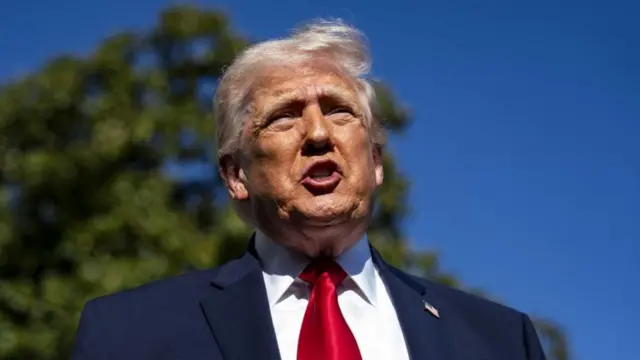
    Donald Trump stands outside speakingImage source, EPA/Shutterstock

    US President Donald Trump says that the US is going to start "BLOCKADING any and all Ships trying to enter, or leave, the Strait of Hormuz".

    In a lengthy new post on Truth Social, he says that "the meeting went well, most points were agreed to, but the only point that really mattered, NUCLEAR, was not".

    He says that "at some point" an agreement on free passage will be reached, but "Iran has not allowed that to happen by merely saying, 'There may be a mine out there somewhere,' that nobody knows about but them."

    In the same post Trump also says that he's "instructed our Navy to seek and interdict every vessel in International Waters that has paid a toll to Iran", and that the US Navy is going to start " destroying the mines the Iranians laid in the Straits".

    "No one who pays an illegal toll will have safe passage on the high seas," he says, adding "any Iranian who fires at us, or at peaceful vessels, will be BLOWN TO HELL!"

    "The Blockade will begin shortly," he says.

  10. Strait of Hormuz not Iran's to close, says UAE ministerpublished at 13:48 BST 12 April

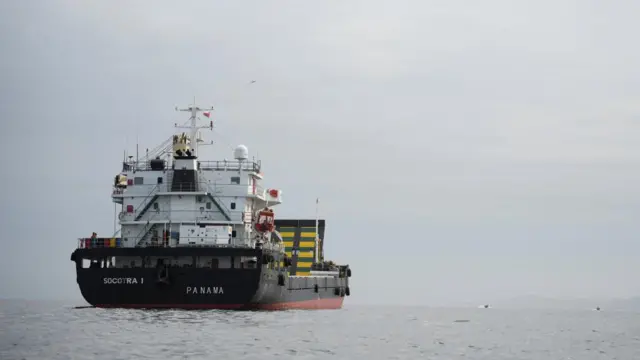
    A vessel at the Strait of Hormuz, off the coast of Oman’s Musandam provinceImage source, Reuters

    The United Arab Emirates (UAE) is pushing back against Iran's near-closure of the Strait of Hormuz, stating that the key shipping route for oil and gas "has never been Iran’s to close or restrict".

    Sultan Ahmed Al Jaber, the UAE's minister of industry and boss of Abu Dhabi state-owned oil company, says on social media: "Any attempt to do so is not a regional issue; it is the disruption of a global economic lifeline and a direct threat to the energy, food and health security of every nation."

    Since the US and Israel launched military action against Iran on 28 February, Tehran has threatened to set vessels "ablaze" if they attempt to use the waterway. This has brought shipments to a virtual halt and driven up global oil and gas prices.

    Al Jaber says: "Setting such a precedent is illegal, dangerous, and unacceptable. The world simply cannot afford it and must not allow it."

  11. Vance pictured travelling home from Islamabadpublished at 13:29 BST 12 April

    Having left Islamabad, US Vice-President JD Vance has been pictured on his way back to the United States.

    These are the latest pictures coming in to us from Ramstein Air Base, in Germany, where his plane has touched down for a refuelling stop.

    JD Vance in a grey zip up sweatshirt with a coffeeImage source, Reuters
    JD Vance in a grey zip up sweatshirt with a coffee and two aidesImage source, Reuters
  12. Analysis

    Door for back-channel negotiations may still be openpublished at 13:07 BST 12 April

    Azadeh Moshiri
    South Asia correspondent, reporting from Islamabad

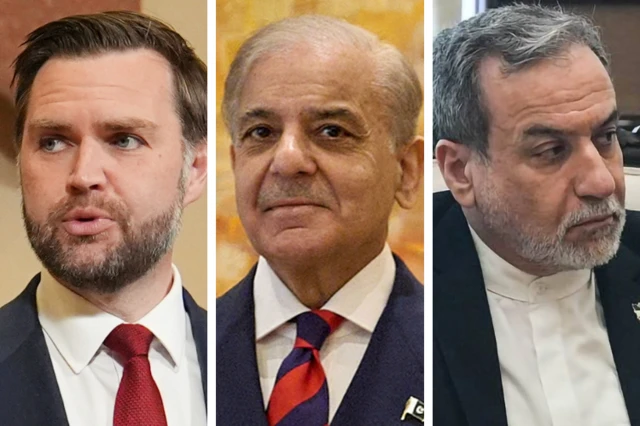
    a split images shows JD vance, Iran's Araghchi, and Pakistani PM shehbaz sharif.Image source, Reuters

    We know he's left Pakistan, and US Vice-President JD Vance says America had presented its "best and final" offer.

    But since then, we have heard indirect talks between the Americans and Iranians did continue through Pakistan.

    That hasn't been officially confirmed by the United States nor the Iranians, and, as in years past, it's always been difficult to understand the nature of any discussions between intermediaries.

    But it could suggest the door to mediation and back-channel discussions is not fully closed.

    A spokesperson for Iran's foreign ministry said Iran never expected they would reach an agreement "in a single session".

    It's also a reminder of how difficult it is to separate fact from the narrative each side is spinning for their domestic audiences.

    In the meantime, the future of a fragile ceasefire, global disruption, and lives caught up in the war hang in the balance.

  13. Smoke rises over southern Lebanon after Israeli strikespublished at 12:55 BST 12 April

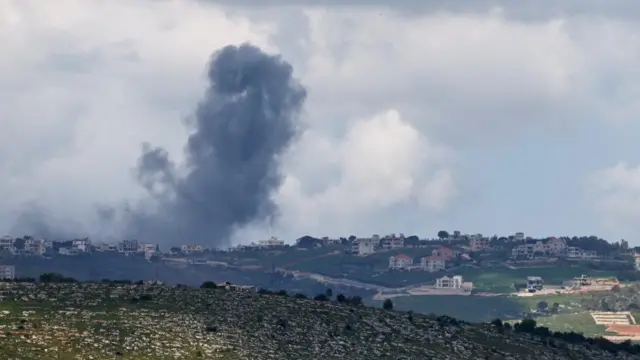
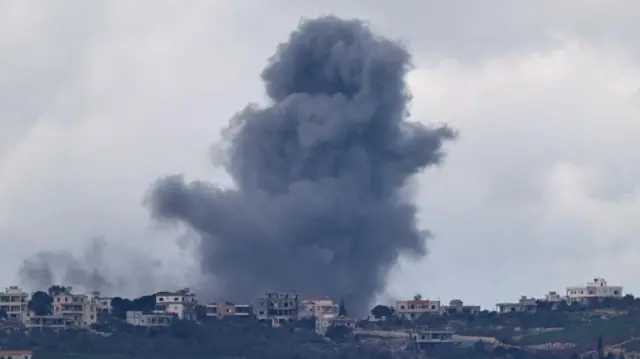
    Pictures show a thick plume of black smoke rising in southern Lebanon, close to the northern Israel border following strikes by Israel earlier.

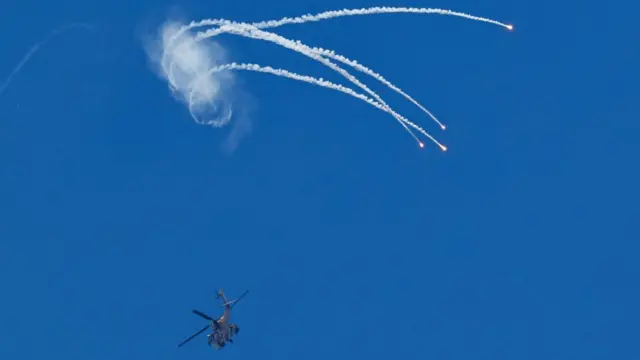
    An Israeli Apache helicopter was also photographed releasing flares as it flies over Lebanon.

    It comes after our Middle East correspondent reports that there has been no respite from strikes in southern Lebanon.

    A thick cloud of black smokes rises behind a hill decorated with housingImage source, Reuters
    Image caption,

    Smoke rises in Lebanon close to the northern Israeli border

    Several flares produce long trails of white smoke near an Israeli Apache helicopterImage source, Reuters
    Image caption,

    An Israeli Apache helicopter releases flares as it flies over Lebanon, as seen from Israeli side of the border

    A large cloud of dark smoke rises above a row of houses in Lebanon close to the northern Israel borderImage source, Reuters
    Image caption,

    Smoke was seen rising following a strike in Lebanon, as seen from northern Israel

  14. Iran says more than 3,300 people killed during warpublished at 12:40 BST 12 April

    Iran says that more than 3,300 people have been killed in the country since strikes by the US and Israel began.

    An update from Iran's Legal Medicine Organisation - which is run by the Iranian judicial branch - says that the bodies of 3,375 people have been identified.

    It says that 2,875 were men and 496 were women, with the Tehran, Hormozgan and Isfahan provinces seeing the highest death tolls.

    Hundreds of children have been killed, according to the update. It reports that seven deaths were of babies under the age of one, 255 were aged between one and 12, and 121 were between 13 and 18.

    Among those killed were Afghan, Syrian, Turkish, Pakistani, Chinese, Iraqi and Lebanese nationals, it says.

  15. Who is Iran's parliament speaker, Mohammad Bagher Ghalibaf?published at 12:08 BST 12 April

    Ghoncheh Habibiazad
    Senior reporter, BBC Persian

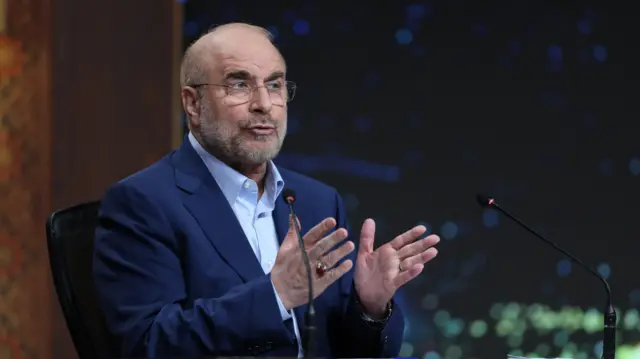
    Mohammad Bagher Ghalibaf pictured during the Iranian presidential election in 2024Image source, EPA
    Image caption,

    Mohammad Bagher Ghalibaf pictured during the Iranian presidential election in 2024

    Mohammad Bagher Ghalibaf is a conservative Iranian politician with a military background, who has been the speaker of Iran’s parliament since May 2020.

    He led the Iranian delegation in the discussions with the US in Pakistan. Born in 1961, Ghalibaf joined the Islamic Revolutionary Guard Corps (IRGC) in 1980 and became one of its commanders during the Iran-Iraq War.

    Ghalibaf is known as Tehran’s longest-serving mayor. He held the post for 12 years from 2005. He is credited for infrastructure projects in the city, but he has also been accused of financial impropriety.

    He ran unsuccessfully for president four times, coming fourth in 2005 and second in 2013. He withdrew his candidacy in 2017 before the election and came third in the 2024 early election.

    His account on X has remained active recently, despite a government-imposed internet outage across Iran since the start of the war on 28 February which is still ongoing.

  16. Analysis

    Vance's comments leave little room for optimismpublished at 11:44 BST 12 April

    Kasra Naji
    Special Correspondent, BBC Persian TV

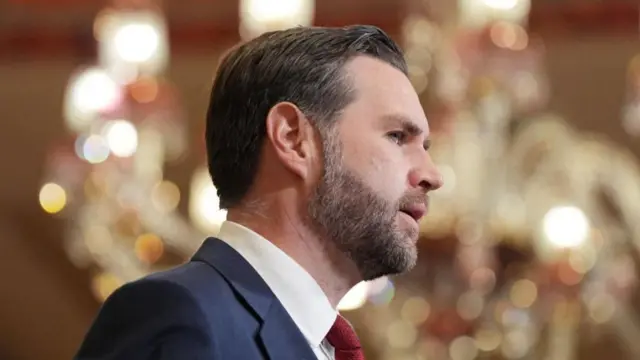
    JD Vance speaks from IslamabadImage source, Reuters

    The fact that Saturday's talks have ended without the two sides making any headway will raise fears of the resumption of the war both among many in Iran, and also among Iran's southern neighbours.

    The Strait of Hormuz might prove the first flash point as the United States has begun operations to clear the strait from mines without coordination with the Iranians, who are controlling the passage of ships through the strait.

    But all is not lost.

    The head of the Iranian delegation at the talks, Mohammad Bagher Ghalibaf, has tweeted, blaming the US side for failing to win the trust of the Iranian delegation "during this round of talks", holding out the possibility of more talks.

    Certainly the Pakistanis hosting the talks on Saturday are hoping that both sides will respect the ceasefire that is supposed to remain in place for 10 more days.

    This might provide an opportunity for at least another round.

    But the remarks of the US Vice-President JD Vance before leaving Islamabad left little room for optimism.

    He said Iranians had failed to agree to the US terms. And he added: “We leave here with a very simple proposal - a method of understanding. This is our final and best proposal. We will see if the Iranians will accept it.”

  17. How lead negotiators view the talkspublished at 11:24 BST 12 April

    We've just heard from Mohammad Bagher Ghalibaf, Iran's parliamentary speaker and the chief negotiator in the talks with US in Pakistan.

    It is the first time that someone from Iran, who was actually in the room for the discussions, has spoken - so how does his reaction compare to that of US Vice-President JD Vance?

    Ghalibaf says that prior to talks, Iran had "no trust in the opposing side" because of "the two previous wars".

    He says that while the US has "understood our logic and principles", it is now time for America to decide if it "can earn our trust".

    He adds: "We will not for a moment cease our efforts to consolidate the achievements of the 40 days of Iran's national defence."

    Earlier on Sunday, Vance said the US had come to the negotiations "in good faith".

    "I think we were quite flexible, we were quite accommodating," he said, but added: "We just could not get to a situation where the Iranians would accept our terms."

  18. Analysis

    No deal in Islamabad - but could negotiations resume in future?published at 10:59 BST 12 April

    Sebastian Usher
    Global affairs correspondent

    Hopes that had been raised during the marathon talks in Islamabad have for now been put on hold.

    The trust needed between the two long-time enemies has not been established, it seems. The key sticking points have not been overcome.

    But as the Iranian foreign ministry spokesperson has pointed out, no one realistically expected a deal to be done in one session, no matter how serious, high level and lengthy it was.

    What is unknown for now is whether any kind of foundation has been laid for continuing the negotiations during the remaining time of the two week ceasefire - as well as how far each side may be prepared to make concessions to secure a deal that still appears to be in the interests of both, as well as that of the rest of the world.

  19. UK PM Starmer calls for US and Iran to 'find a way through' after failed talkspublished at 10:42 BST 12 April

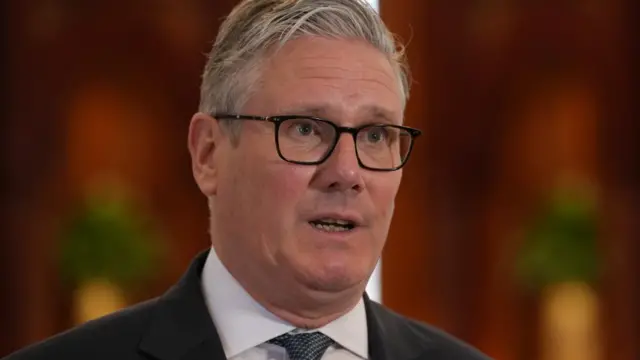
    Keir Starmer speaks during an interviewImage source, PA Media

    UK Prime Minister Keir Starmer urges both Iran and the US to "find a way through" following failed talks in Pakistan, Downing Street says.

    In a conversation with the Sultan of Oman Starmer says a continuation of the ceasefire is "vital" and that "all parties avoided any further escalation".

    It comes after UK Health Secretary Wes Streeting told the BBC's Sunday with Laura Kuenssberg programme it is "disappointing" initial talks to end the war in Iran had broken down without a deal.

    Streeting defended the UK's decision not to join the conflict.

  20. US 'failed to gain the trust of Iranian delegation,' says head of negotiating teampublished at 10:15 BST 12 April
    Breaking

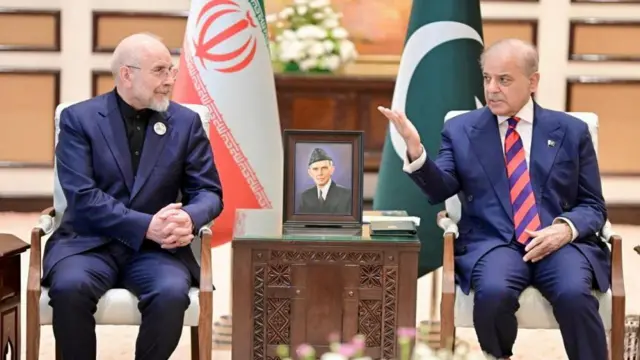
    Pakistani Prime Minister Shehbaz Sharif holds his arm up and speaks as he sits to the right of  Iranian Parliament Speaker Mohammad Bagher GhalibafImage source, Reuters/ Pakistan’s Prime Minister Office
    Image caption,

    Pakistani Prime Minister Shehbaz Sharif meets with Iranian Parliament Speaker Mohammad Bagher Ghalibaf (L)

    Iranian Parliament Speaker Mohammad Bagher Ghalibaf, who led Tehran's delegation in the Pakistan talks, says now is the time for the US "to decide whether it can earn our trust or not".

    In a post on X, Ghalibaf says he emphasised before the negotiations that Iran had "good faith and will" but due to its experiences of two previous wars it had "no trust in the opposing side".

    He says the Iranian delegation "raised forward-looking initiatives, but the opposing side ultimately failed to gain the trust of the Iranian delegation in this round of negotiations".

    He continues: "We will not for a moment cease our efforts to consolidate the achievements of the forty days of Iran's national defense."

    He adds that the negotiations were "intense" and thanks Pakistan for facilitating them.