Summary

  1. Vance says halting Iran's nuclear capabilities a 'core goal'published at 02:43 BST 12 April

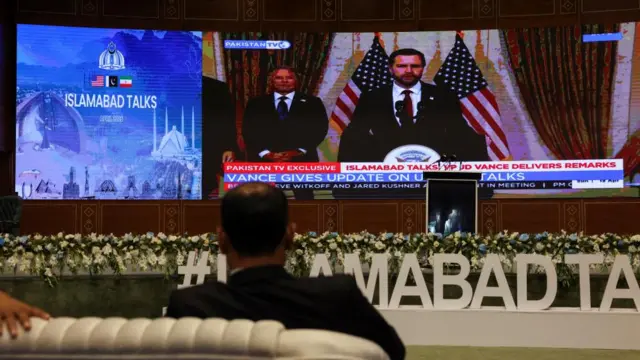
    Vance took on some questions and answers one on Iran's nuclear capacity.

    "The simple fact is that we need to see an affirmative commitment that they will not seek a nuclear weapon and they will not seek the tools that will enable them to quickly achieve a nuclear weapon."

    He describes this as Trump's "core goal".

    Vance says their nuclear programme has "been destroyed" but stresses that there's a need for a "fundamental commitment of will" against Iran developing a nuclear weapon in the future.

    "We haven't seen that yet. We hope we will."
  2. US 'came in good faith', Vance sayspublished at 02:40 BST 12 April

    Vance adds that the US came to the talks flexible and "in good faith", but it was unfortunate that the two sides couldn't come to an agreement.

    "We leave here with a very simple proposal, a method of understanding that this is our final and best offer. We'll see if the Iranians accept it."

    JD Vance speaks in IslamabadImage source, Reuters
  3. Vance says US to leave Pakistan after not coming to agreement with Iranpublished at 02:37 BST 12 April

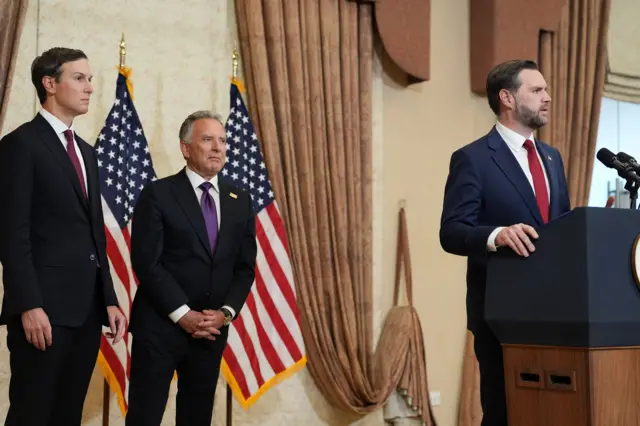
    JD Vance stands at a podium, with Trump’s son-in-law White House advisor Jared Kushner and US Special Envoy to the Middle East Steve Witkoff behind himImage source, Reuters

    JD Vance says "we have been at it now for 21 hours" but adds, "the bad news is that we have not reached an agreement". He says the US is now planning to leave Pakistan.

    Standing behind Vance at the news conference are Trump’s son-in-law and White House advisor Jared Kushner and US Special Envoy to the Middle East Steve Witkoff, who made up the US delegation negotiating with Iran.

    Vance shares his appreciation to the prime minister of Pakistan and Field Marshal Munir.

    "Whatever shortcomings of the negotiation, it wasn't because of the Pakistanis who did an amazing job."

    Return to the latest post
  4. Iran has not agreed to US terms, Vance sayspublished at 02:36 BST 12 April

    US Vice-President JD Vance is now briefing reporters after the historic peace talks but he says the US has made its "red lines" clear, but Iran "has not agreed to our terms".

    "We just could not get to a situation where the Iranians would accept our terms," he adds.

  5. Iran says US should refrain from 'excessive demands' in statement after peace talkspublished at 02:27 BST 12 April

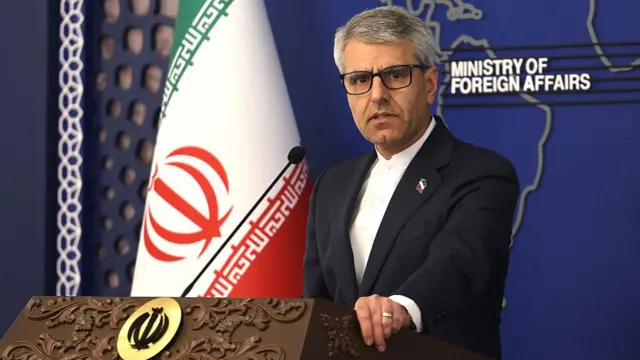
    Iranian foreign ministry spokesperson Esmaeil BaqaeiImage source, Atta Kenare via Getty Images

    The spokesperson for Iran’s Ministry of Foreign Affairs, Esmail Baghaei, has just issued a statement on the status of the peace talks with the US.

    In a post on social media, Baghaei describes the talks as "intensive", but says the success of ongoing negotiations "depends on the seriousness and good faith of the opposing side".

    Baghaei also calls on Washington to refrain from "excessive demands and unlawful requests" and to accept Iran's "legitimate rights and interests".

    Among the topics he says are being discussed, are the Strait of Hormuz, Iran's nuclear program, and "a complete end to the war in Iran".

    We will hear from the US side on the status of the talks shortly as US Vice President JD Vance is planning to offer remarks at a news conference in Islamabad.

  6. JD Vance to speak shortlypublished at 01:56 BST 12 April

    We have just heard that US Vice-President JD Vance will give a news conference in a few minutes.

    His remarks will come after about 16 hours of discussions between the Iranian delegation and Pakistani officials - who have acted as mediators for the historic talks in Islamabad, Pakistan.

    Stay with us as we bring you his comments live.

  7. Netanyahu says Israel's campaign against Iran 'not over yet'published at 01:45 BST 12 April

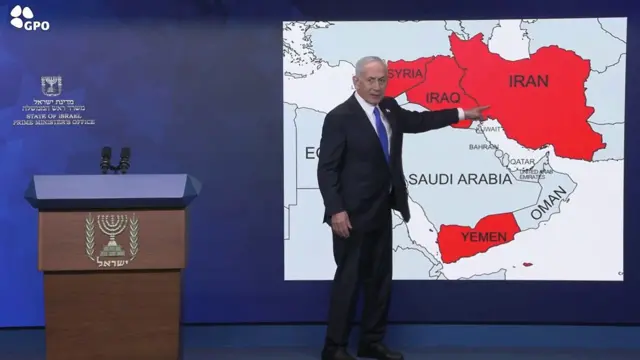
    Benjamin Netanyahu pointing to a map of the Middle EastImage source, Israeli Prime Minister's Office

    We reported earlier on a statement from Israeli Prime Minister Benjamin Netanyahu that he has given his "approval" for peace talks with Lebanon.

    In the same message, though, he also signals that the campaign against Iran "is not over yet" and says "we are still fighting them". He adds that there is "still more to do".

    The statement was issued as the US and Iran were deep in peace talks being negotiated in Pakistan.

    Netanyahu also lists a number of "achievements" accomplished in Israel's military campaign, including eliminating Iran's nuclear program.

    "These achievements are not yet finished. There is still enriched material in Iran. And as President Trump said, it needs to be removed. Either it will be removed by agreement, or it will come out in other ways," he says.

  8. White House says peace talks have surpassed 15 hourspublished at 00:51 BST 12 April

    Christal Hayes
    US reporter

    It's currently 04:50 in Islamabad, Pakistan (23:50 GMT), where delegations from the US and Iran - with Pakistan acting as a mediator - have been deep in discussions to broker a possible peace deal.

    Asked about the status of those discussions, a senior White House official tells me that they are ongoing: "15 hours and counting!"

  9. How did Pakistan broker peace talks between Iran and the US?published at 00:27 BST 12 April

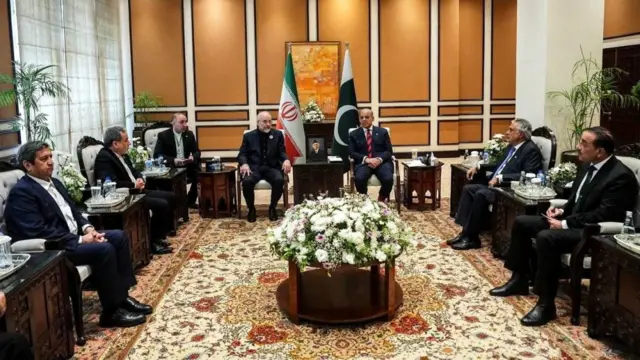
    The prime minister of Pakistan and Iranian parliament speaker sit in chairs in front of their country's flags. Delegates sit on either side of them and a small table decorated with flowers fills the gap between themImage source, Reuters
    Image caption,

    Pakistan's Prime Minister Shehbaz Sharif meets with Iranian Parliament Speaker Mohammad Bagher Ghalibaf and delegates

    Pakistan has acted as an intermediary between Iran and the US over the last few weeks, passing messages between the two, and ultimately brokering a two-week ceasefire.

    The peace talks taking place right now in Islamabad, which Pakistan are mediating and hosting, are an off-shoot of that truce.

    Pakistan's PM Shehbaz Sharif said the talks were "to further negotiate for a conclusive agreement to settle all disputes".

    Before the ceasefire was agreed, Pakistan reportedly relayed a 15-point US peace plan to Iran, which was rejected by Tehran.

    It then took the lead again, when its foreign minister Ishaq Dar flew to Beijing to seek Chinese backing for a five-point peace plan to end the conflict.

    Pakistan's efforts appear to have paid off - at least for now - and Dar greeted both the US and Iranian delegations in Islamabad on Saturday before the peace talks began.

  10. Tight grip on information during talkspublished at 23:29 BST 11 April

    Azadeh Moshiri
    South Asia correspondent, in Islamabad

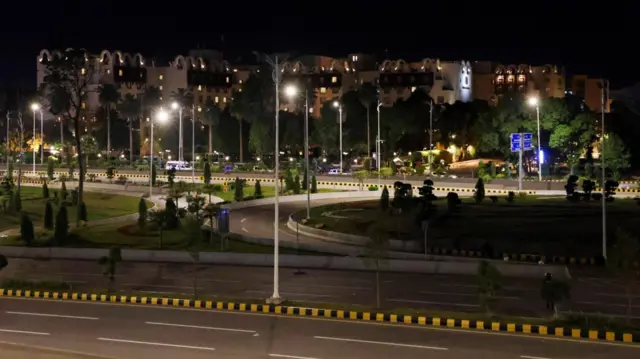
    The Serena hotel stands in the background as U.S. and Iran hold peace talks in Islamabad.Image source, reuters

    It's after 3am and the two sides are still locked in negotiations. Before Saturday, we weren't even sure whether the US and Iranian delegations would turn up.

    It's a sign there has been significant progress and points they want to work through, but unsurprisingly sticking points that are hard to overcome.

    Throughout the day, there has been a tight grip on information, though some updates have leaked from various sources. It's still unclear whether delegations will break and return for a second day of negotiations.

    Another question is what, if anything, senior officials will bring back home when they do return to their respective countries. Both the United States and the Islamic Republic of Iran have been eager to project strength and claim victory throughout the war, and it's been difficult to separate fact from political bluster.

    For now, a day that looked like it might not happen, is stretching long past the night. Journalists like us are debating when the right time is to take a few hours sleep and wait for the drip of information all over again.

  11. Trump says he doesn't 'care' about peace deal as Islamabad talks stretch into nightpublished at 22:57 BST 11 April

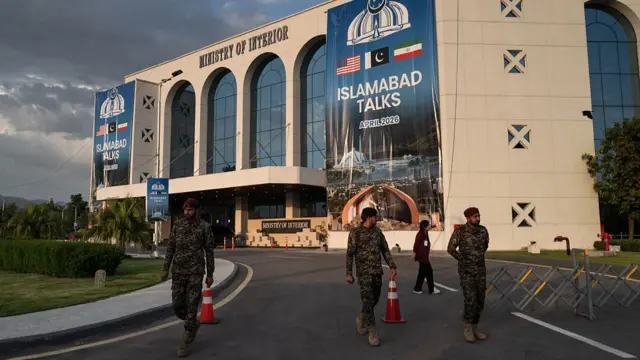
    Pakistani security personnel stand outside a government building in Islamabad with banners that say 'Islamabad talks'.Image source, Getty Images

    Peace talks between high-ranking US and Iranian delegations in Islamabad are continuing into the night.

    The face-to-face talks joined by Pakistani officials are a significant breakthrough, our chief international correspondent Lyse Doucet writes, only possible because of the high level of both delegations, their authority to negotiate, and what seems to be a commitment by both Washington and Tehran to talk.

    But in remarks on the White House lawn, US President Donald Trump says America wins "regardless", and that he doesn't care about the outcome of negotiations, telling media that whether or not a deal is reached with Iran "makes no difference to me".

    Earlier US Central Command said in a statement that two navy destroyers had sailed through the Strait of Hormuz as part of an operation to begin clearing sea mines from the international shipping route, but Iran's military headquarters spokesman has "firmly denied" this, according to Iran's Fars news agency.

    Israel has continued to hit Hezbollah targets in Lebanon, with Lebanon’s deputy prime minister telling the BBC that for talks to be “meaningful” Israel should stop its strikes on his country.

    With Washington slated to host talks between Israel and Lebanon next week, Israeli Prime Minister says he has given his "approval" for negotiations, calling for Hezbollah's weapons to be dismantled and "a real peace agreement that will last for generations".

  12. Trump says 'makes no difference to me' whether deal is reachedpublished at 22:08 BST 11 April

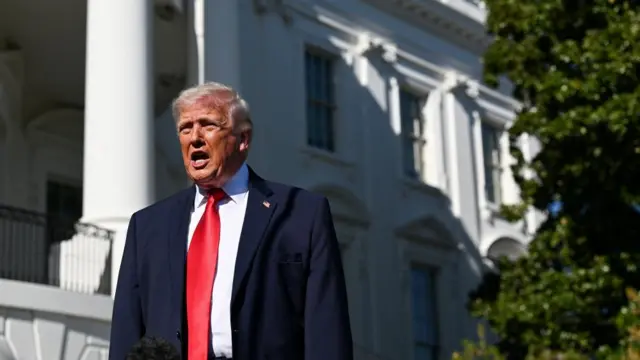
    Donald Trump speaking to reporters at the White House on Saturday, he is wearing a dark suit and a red tieImage source, Reuters

    Trump continues by telling reporters that whether or not a deal is reached with Iran "makes no difference to me".

    He repeats previous assertions the US has taken out Iran's air force, navy and leadership, and is now working to open up the Strait of Hormuz, which he says the US is doing on behalf countries who are either "afraid or weak or cheap".

    "We were not helped by Nato," he says.

    Coming back to the talks, Trump says: "Let's see what happens, but from my standpoint I don't care."

  13. 'Regardless what happens, we win,' Trump sayspublished at 22:00 BST 11 April

    While talks continue in Pakistan, US President Donald Trump is now delivering remarks to media on the White House lawn.

    He says he's "getting a lot of reports" from the talks in Islamabad which he says have been going on for many hours.

    "Regardless what happens, we win," he says. "We've totally defeated that country."

  14. Iran denies US destroyers sailed through Strait of Hormuzpublished at 21:44 BST 11 April

    Iran has denied a US claim that two US Navy destroyers have sailed through the Strait of Hormuz.

    "The claim by the CENTCOM commander regarding American vessels approaching and entering the Strait of Hormuz is firmly denied," Iran's Fars news agency is reporting a spokesperson for the armed forces headquarters as saying.

    "The initiative for the passage of any vessel lies with the armed forces of the Islamic Republic of Iran."

    Earlier today, Centcom posted a message on X saying US forces had begun "setting conditions for clearing mines in the Strait of Hormuz" and that two vessels "transited the Strait of Hormuz... as part of a broader mission to ensure the strait is fully clear of sea mines".

  15. Netanyahu says he wants peace deal with Lebanon that 'will last'published at 21:10 BST 11 April

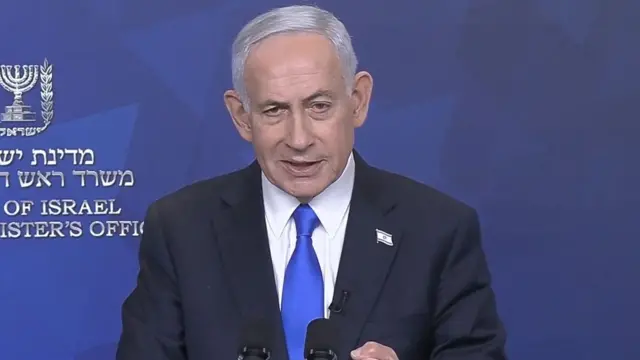
    Israeli Prime Minister Benjamin Netanyahu in a dark suit and blue tie against a blue background.Image source, Prime Minister of Israel's Office

    While talks in Pakistan have been taking place tonight Israeli Prime Minister Benjamin Netanyahu has given a statement saying he has given his "approval" for peace talks with Lebanon.

    He says Lebanon has reached out several times in the past month to begin direct talks.

    "I have given my approval, but on two conditions: we want the dismantling of Hezbollah's weapons, and we want a real peace agreement that will last for generations," Netanyahu says, according to a translation by AFP news agency.

    The countries' ambassadors to the US have agreed to meet in Washington next week as they look to seek an announcement on a ceasefire, the Lebanese presidency announced on Friday.

  16. 'Meaningful' talks need 'cessation of hostilities,' Lebanese deputy PM tells BBCpublished at 20:48 BST 11 April

    Lebanon’s deputy prime minister tells the BBC that for talks to be “meaningful” Israel should stop its strikes on his country.

    The ambassadors to the US from Israel and Lebanon are due to meet in Washington DC on Tuesday.

    Dr Tarek Mitri, speaking to Victoria Derbyshire for Sunday with Laura Kuenssberg says: “I am not using the word conditional, but I think for those meetings to be meaningful, we’ve got to see some sort of cessation of hostilities, no matter if provisional.”

    He adds: “How could you engage in meaningful discussions, preparing true negotiations to talk about all issues, how can you do that while tens and hundreds of people are being killed or injured?

    “You’ve got to put a stop to this, to put this on hold, to be able to have a constructive conversation, but we are going to the meeting on Tuesday that will be held at the State Department.”

  17. The US and Iran sit for talks after almost half a century of hostilitypublished at 20:33 BST 11 April

    Lyse Doucet
    Chief international correspondent in Islamabad

    After nearly a half century of hostility including two wars in two years, Iran and America are sitting for face-to-face for talks - for hours. And they’re not done yet.

    The meeting between technical experts goes on too.

    It’s a significant breakthrough – only possible because of the high level of both delegations, their authority to negotiate, and what seems to be a commitment by both Washington and Tehran to talk.

    Iran came to Islamabad emphasising its deep distrust of diplomacy – its discussions last year and this year with the US were both shattered by war.

    That’s why it insisted it would only deal with a more senior US official, and in particular the Vice President JD Vance who is seen as the strongest opponent of costly military engagements in President Donald Trump’s team.

    In 2015, when Iran and world powers reached a successful nuclear deal, it took 18 months of breakthroughs and breakdowns; Trump is known to prefer quick successes.

    Today is just a start. But with the risk of another dangerous escalation in an already dangerous war, even a start matters.

  18. Islamabad talks continuing late into nightpublished at 19:57 BST 11 April

    The BBC understands talks are continuing late into the night in Islamabad, where it is approaching midnight.

    The trilateral negotiations involving the US, Iran and Pakistani mediators have already been under way for several hours.

  19. 'Seize opportunity for deescalation,' Macron tells Iranian presidentpublished at 19:49 BST 11 April

    French President Emmanuel Macron, a middle-aged man in a suit.Image source, Getty Images

    French President Emmanuel Macron says he has urged his Iranian counterpart to "seize the opportunity" to "pave the way for a lasting deescalation".

    Macron says in a post on X he spoke to Masoud Pezeshkian and pushed for an an agreement providing regional security guarantees, with all countries involved.

    He says that he pressed the need for Iran to reopen the Strait of Hormuz, and also stressed the importance of a ceasefire, including in Lebanon.

  20. Thousands of Hezbollah supporters demonstrate in Beirutpublished at 19:16 BST 11 April

    Hugo Bachega
    Middle East correspondent in Beirut

    Media caption,

    BBC's Hugo Bachega sees thousands of Hezbollah supporters demonstrating in Beirut

    Outside the Lebanese prime minister’s office in central Beirut, Hezbollah supporters gathered to protest against the prospect of direct talks with Israel, an offer by the Lebanese government to try to put an end to the war and pave the way for, many hope, lasting peace.

    The crowd chanted revolutionary slogans, carried Hezbollah’s yellow flag, the flag of Iran - the group’s main supporter - and pictures of the late Hezbollah leader, Hassan Nasrallah.

    Sara, who was waving a Lebanese flag, told me: “I'm proud to be here because Hezbollah, it's the only resistance against these evil ones, this [Israeli Prime Minister Benjamin] Netanyahu, one who is stealing our country, killing our people.”

    Followers see Hezbollah, who they call “the resistance”, as the only force able to protect them against Israel, which they say is intent on seizing Lebanese land.

    Israel says Hezbollah is a threat and that it aims to create a so-called security buffer zone along the border to protect its northern communities. In Lebanon, there are fears that this could lead to an occupation of parts of the country.

    Opponents blame Hezbollah for dragging Lebanon into conflicts, want the group to be disarmed, and support negotiating with Israel. Lebanon has demanded a ceasefire before any talks, but Israel says the war will continue.