Full programme transcript >> Full programme transcript >>
Varicose Veins
In this week's edition of Check Up, Barbara Myers will be putting your questions about varicose veins to Prof. Bruce Campbell, Consultant Vascular Surgeon at the Royal Devon and Exeter Hospital.
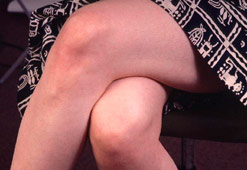
Varicose veins appear when the valves in the vein become weak, causing blood to collect in the vein instead of being pumped back towards the heart. When a significant amount of blood has collected the vein becomes distended and swollen.
Varicose veins are most common in the legs, but they can also be present in the oesophagus, pelvis, uterus, and rectum - haemorrhoids are a type of varicose veins.
For a small proportion of sufferers, they can cause serious problems such as ulcers and blood clots. For others, their legs become achy and painful. However, for most people they are a cosmetic problem.
There are some simple self-help measures which can help to prevent varicose veins or stop them getting worse. These include avoiding long periods of standing or sitting, avoiding high-heels or tight clothing, taking extended rests with the legs elevated and losing weight.
If medical intervention is required, one treatment available is sclerotherapy, where a chemical irritant is injected into the vein which causes the vein walls to swell, stick together and seal shut. Eventually the vein will disappear. Alternative treatments include laser therapy or surgery.
Contact the Programme
Check Up is your opportunity to ask an expert about the condition. If you have a question, contact us by calling 0870 010 0444 from 1.30pm - 3.30pm on the day of broadcast or by emailing the programme - see 'Contact Check Up' link above.
Next Week
Next week’s topic is children's health problems. |





 30 min