Summary

  1. Removing enriched uranium from Iran will be a 'long and difficult' process, says Trumppublished at 06:01 BST
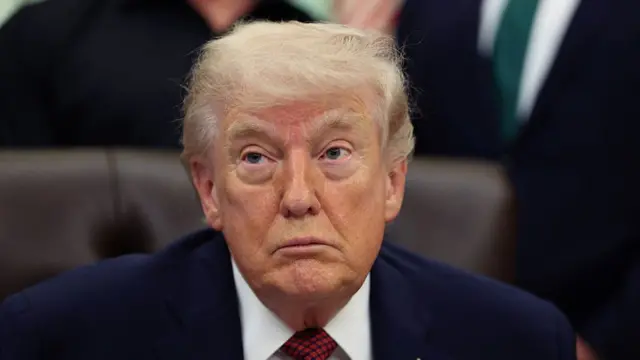
    Donald Trump speaks in the Oval Office after signing an Executive Order April 18, 2026 in Washington DC.Image source, Getty Images

    A short while ago, US President Donald Trump has made a post to Truth Social, addressing the recovery of enriched uranium from Iran.

    "Operation Midnight Hammer was a complete and total obliteration of the Nuclear Dust sites in Iran. Therefore, digging it out will be a long and difficult process," the president wrote.

    Operation Midnight Hammer is the codename for an operation carried out by the US last June, and saw 125 US military aircraft target three Iranian nuclear facilities: Fordo, Natanz and Isfahan.

    He went on: "Fake News CNN, and other corrupt Media Networks and Platforms, fail to give our great aviators the credit they deserve - Always trying to demean and belittle - LOSERS!!!"

  2. Vice-President JD Vance travelling to Pakistan today, US media reportspublished at 05:44 BST

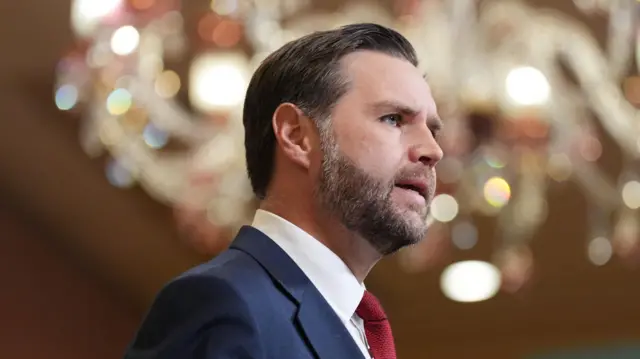
    JD Vance speaks during a news conference after meeting with representatives from Pakistan and Iran on 12 April.Image source, Reuters

    US media are reporting that Vice President JD Vance will leave the US on Tuesday for talks in Pakistan.

    Axios, citing three US sources, reported that Vance would leave by Tuesday morning.

    Sources told CNN that a second round of talks between the US and Iranian delegations is currently planned for Wednesday in Islamabad.

    As we reported earlier, there is still no confirmation from Iran as to whether it will attend negotiations, but a source told the BBC on Monday that a US delegation headed by Vance will travel to Pakistan "soon"

  3. With talks up in the air, this is what Iran's officials are sayingpublished at 05:25 BST

    Ghoncheh Habibiazad
    Senior reporter, BBC Persian

    While there is much uncertainty about the next round of talks between Iran and the US in Islamabad, we can take a look at what Iranian officials have been saying.

    Most of them have talked about their scepticism of the US, but this is nothing new.

    While Iranian Foreign Minister Abbas Araghchi told his Pakistani counterpart yesterday that US actions, statements and "excessive demands" signal Washington’s "lack of seriousness for diplomacy," it wasn’t him who said today that Iran has "no plans for the next round" - that was the foreign ministry’s spokesperson.

    After Trump announced the next round of talks, we’re yet to hear from Iran’s parliamentary speaker Mohammad Bagher Ghalibaf, who was leading the delegation during the talks in Islamabad, on whether the talks are going ahead or not.

    Meanwhile, Iranian President Masoud Pezeshkian said today that diplomacy "should be used to reduce tensions," but there's a question over how much power he actually comparatively holds.

    There are voices inside the establishment who oppose the talks, including hardline clerics. But it is yet to be seen if these voices can stop the talks altogether or not.

  4. Growing sense that Islamabad talks will take place, but concerns remainpublished at 05:15 BST

    Lyse Doucet
    Chief international correspondent, in Iran

    There's still radio silence from Iranian officials as to whether they will go to Islamabad for a second round of high-level, high-stakes negotiations.

    But with every hour that passes, there is a growing sense that the talks will take place. Iranians had to make their point, even before US marines intercepted an Iranian-flagged cargo ship.

    When we speak to officials here they say they have their reservations about this negotiating process, even though President Trump continues to talk about great progress, a deal within days even.

    There is still concern here that the way the negotiations are taking place tend to be demands made of the Iranians that they are not ready to meet.

    But they do want this process to continue, so at the end of the day there may well be talks in Islamabad this week - we just have to wait for that confirmation from both sides.

    • The BBC's chief international correspondent Lyse Doucet is reporting from Tehran on condition that none of her material is used on the BBC's Persian Service. These restrictions apply to all international media organisations operating in Iran
  5. Trump is offering a very optimistic view of America's negotiating positionpublished at 05:15 BST

    Sarah Smith
    North America editor

    President Trump did not appear in front of any TV cameras or microphones on Monday. But that did not stopped him keeping us well informed as to how he is feeling about peace talks with Iran, scheduled to begin in Pakistan this week.

    He posted a dozen times on his social media site, Truth Social, about the conflict with Iran, insisting he has the upper hand in any negotiations.

    "I’m winning a War, BY A LOT, things are going very well," he said in one post.

    "The DEAL that we are making with Iran will be FAR BETTER than the JCPOA," he said in another, referring to the deal President Obama struck in 2015.

    He also insisted he is not in a hurry to do a deal - "I read the Fake News saying that I am under 'pressure' to make a Deal. THIS IS NOT TRUE! I am under no pressure whatsoever, although, it will all happen, relatively quickly!"

    Trump did not offer much evidence or explanation of why he is so optimistic that a deal is in sight when it's not even certain right now if the two sides will even meet for talks.

    Other than to say - in another post - that the US naval blockade of the Strait of Hormuz is costing Iran $500m a day, which Trump says is destroying Iran.

    Trump is also under economic pressure to get the strait opened and allow international shipping to resume. And there is little appetite among the American public to resume the war on Iran.

    But in his posts that are untroubled by any inconvenient news or facts, Trump is offering a very optimistic view of America's negotiating position.

  6. Iran says it is preparing 'new cards' for the battlefieldpublished at 05:14 BST

    As the clock ticks down on a ceasefire declared between the US and Israel with Iran, as yet there is no confirmation of further peace talks.

    Iran's parliamentary speaker posted on X to say that Iran has been "preparing to show new cards on the battlefield" in the last two weeks and would "not accept negotiations under the shadow of threats".

    Meanwhile, President Donald Trump has denied he is under pressure to make a deal, while US media report that Vice-President JD Vance will travel to Pakistan on Tuesday for talks. Trump adds that it is "highly unlikely" a two-week ceasefire between the US and Iran, due to expire on Wednesday, will be extended.

    In the Gulf, the US continues to blockade the Strait of Hormuz after seizing an Iranian-flagged cargo ship on Sunday and both sides are accusing each other of ceasefire violations.

    Elsewhere, a second round of talks between Israel and Lebanon is set to take place on Thursday - according to a US official.

    Stay with us.

    Return to the latest post