Summary

  1. Rise in food costs as US-Israeli war with Iran continues - UN agencypublished at 12:46 BST

    A woman with a basket picks up an egg tray at the supermarketImage source, Getty Images

    Food prices across the globe have been driven up by the US-Israeli war with Iran, says the United Nations food agency.

    The UN's Food and Agriculture Organization (FAO) says its monthly Food Price Index - which measures international prices of a basket of food commodities - has increased by 2.4% from February to March.

    The index has now risen for the second time in a row, says the FAO, largely due to higher energy prices linked to conflict in the Middle East.

  2. Analysis

    Trump has sidelined rules of international orderpublished at 12:28 BST

    Jeremy Bowen
    International Editor

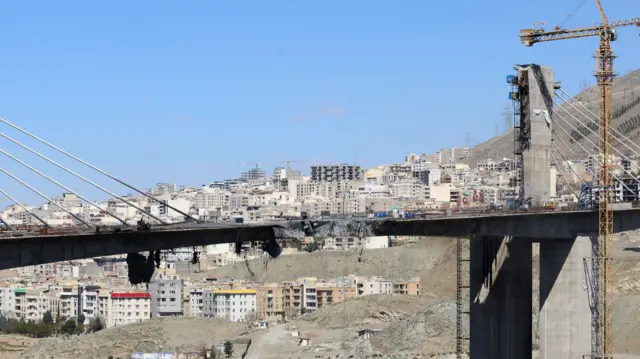
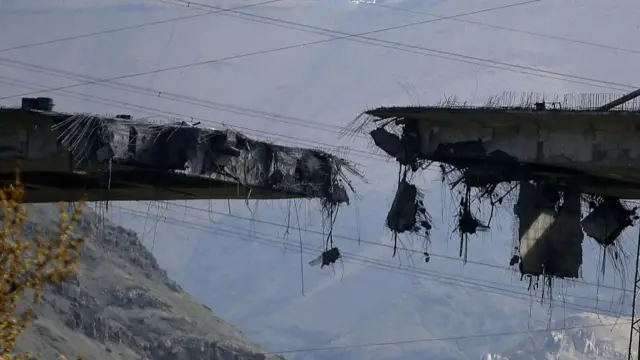
    A view of the destruction at the B1 suspension bridge by a US airstrike in the city of Karaj, Alborz province, Iran, 3 April 2026.Image source, EPA
    Image caption,

    A view of the suspension bridge in Karaj that was damaged in a strike, killing eight people and injuring nearly 100, according to local officials

    Some will say this war of choice started in highly dubious legal circumstances, with no imminent threat to the US or Israel.

    Donald Trump's recent language - including the remark about taking Iran back to the "Stone Age" - is overtly the language of war crimes.

    Actions in war need to protect civilians and be proportionate to the threat faced.

    Of course, the specific circumstances of a US strike on an Iranian bridge connecting Karaj to Tehran would need to be looked at before any conclusions could be reached.

    The whole idea of having rules to international order has been pushed to the sidelines under Trump. He believes might is right.

    But the US president faces hard choices going forward. His language whipsaws around - you could see it in his 19-minute speech the night before last - showing his strategic uncertainty.

    It's clear he wants to find a way out - but no deal is looking at all possible at the moment.

    One possibility is ground troops, but in some ways this would play into Iran's hands. They would like to engage the US in a long war and can take more pain than Trump can politically.

    Iran has demonstrated that, in asymmetric warfare, weak countries can fight strong countries. And in a connected world, the Strait of Hormuz is an extraordinarily potent weapon.

  3. Analysis

    How Iran is using executions and arrests to suppress dissentpublished at 12:12 BST

    Ghoncheh Habibiazad
    Senior reporter, BBC Persian

    Iran has executed yet another individual in connection with the deadly anti-establishment protests in January.

    The man, identified as Amirhossein Hatami, was accused by Iran’s judiciary of “attacking a military site in the capital, Tehran, and setting fire to it during the nationwide protests”.

    So far, reports suggest that Iran has executed at least nine political prisoners since the war began on 28 February, and there are some who are at risk of execution.

    This appears to be one of several tactics being used to prevent further protests from happening.

    Since the war began, Iranian outlets have reported daily on arrests in different parts of the country. Many of those detained have been accused of collaborating with opposition media and foreign intelligence services, with warnings coming from Iranian officials and outlets to those who might step out of line.

    There have been no signs of mass anti-establishment protests like those seen in January. During that wave, at least 6,508 protesters were killed and 53,000 arrested, according to the US-based Human Rights Activists News Agency (HRANA).

    The scale of that crackdown, combined with current measures, may be contributing to the absence of large-scale demonstrations.

    From what I have heard from the capital, on some nights, aside from the sound of strikes and explosions, there is another noise that prevents people from sleeping. It is the sound of patrols moving through the streets with the Islamic Republic’s flag and loudspeakers during the night which can reinforce a constant sense of control.

    Other tactics have also been used, including checkpoints appearing across cities, internet blackout, and mass text warnings sent to residents.

    These measures limit communication, making it more difficult for protests to form and spread.

    Since the war started, Iranian officials and state TV have been promoting nightly pro-establishment rallies held in major squares of cities, where some anti-establishment protests also happened during January.

  4. Catholic churches in Dubai cancel masses, citing government directivespublished at 11:35 BST

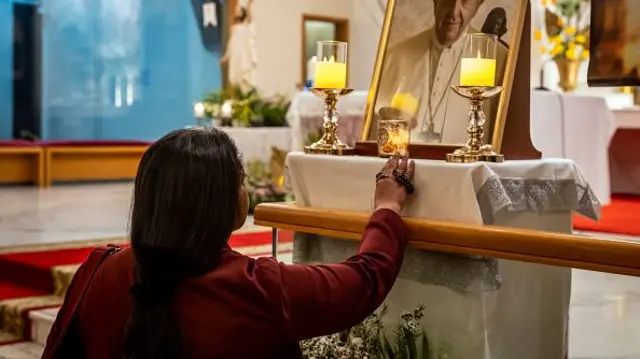
    A woman holds a candle up to a photograph of the late Pope FrancisImage source, AFP via Getty Images
    Image caption,

    File photo of the St Francis of Assissi Church in Dubai, taken in April 2025

    Catholic churches in Dubai say they have cancelled masses ahead of the Easter weekend on the instructions of the government.

    "As per directives of the Government Regulatory Authorities, all Masses at our Church are cancelled until further notice," says the St Frances of Assissi Church in Dubai.

    It asks parishioners to stay away from the church for "safety and community well-being".

    A similar update has been given by St Mary's Catholic Church, which says it is cancelling its services on government instructions and will instead live stream its Friday service.

  5. Starmer discusses air defences with Kuwait and condemns 'reckless' drone strikepublished at 11:15 BST

    Jack Fenwick
    Political correspondent

    Prime Minister Keir Starmer pictured earlier this week wearing a suit and tie with dark-rimmed glasses. A union jack and wood panelling are behind himImage source, Reuters

    PM Keir Starmer held a call with the Crown Prince of Kuwait this morning to discuss the deployment of UK air defence systems to the country.

    Downing Street says the prime minister condemned the “reckless” overnight drone attack on a Kuwaiti oil refinery and the two agreed to work together on try to reopen the Strait of Hormuz.

    A Downing Street spokesperson said Starmer "reiterated that the UK stands with Kuwait and all our allies in the Gulf".

    The air defences "will protect Kuwaiti and British personnel and interests in the region, while avoiding escalation into wider conflict", they added.

    Starmer and the Crown Prince also "welcomed the meeting convened by the Foreign Secretary yesterday on a viable plan to reopen the Strait [of Hormuz]," the spokesperson said.

    It follows Defence Secretary John Healey’s announcement on Tuesday that a Rapid Sentry air defence missile system has arrived in Kuwait, to support Kuwait’s defences against strikes.

  6. Thousands of seafarers stranded in Gulf regionpublished at 10:55 BST

    Lorna Gordon
    Reporting from Dubai

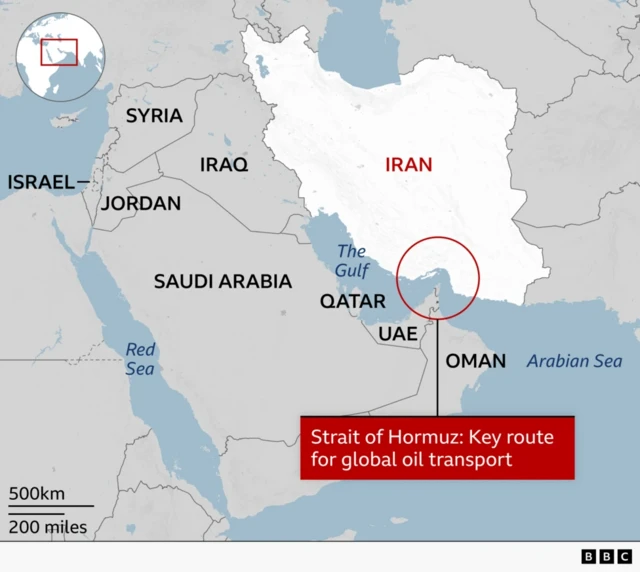
    Map of Strait of Hormuz

    There has been plenty of talk about the impact the near shut down on the movement of ships through the Strait of Hormuz is having on global supplies of oil, gas and fertiliser, but far less is known about the conditions facing the many thousands of seafarers trapped on board 2000 vessels waiting to transit the narrow stretch of water between Iran and Oman.

    Since the start of the conflict there have 21 confirmed strikes on commercial shipping in the Gulf.

    The International Maritime Organisation (IMO) says 10 seafarers have died in the attacks and that several more have been severely injured.

    More than 20,000 seafarers are onboard vessels currently at anchor in the waters off Gulf states. The IMO says crews are grappling with dwindling supplies, fatigue and severe stress.

    The organisation’s Secretary General Arsenio Dominguez says the “fragmented responses to the crisis are no longer sufficient to resolve the crisis”. He has called for diplomatic help to secure the evacuation of crews and to help set up humanitarian corridors to get urgently needed assistance to stranded ships and seafarers.

  7. 'Even those who aren't displaced are afraid,' says Lebanese social workerpublished at 10:33 BST

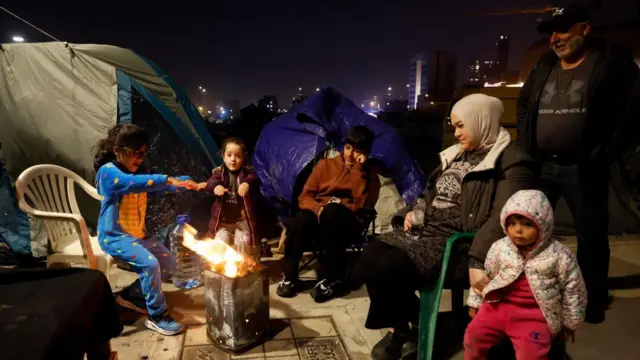
    Internally displaced Lebanese residents warm themselves around a fire at a makeshift camp in the waterfront area of BeirutImage source, WAEL HAMZEH/EPA/Shutterstock
    Image caption,

    A displaced family gather around a fire at a makeshift camp on Beirut's waterfront

    In Lebanon, approximately 1.1 million people have been displaced from their homes because of Israeli strikes, according to the United Nations. Israel says it is targeting Hezbollah and its infrastructure.

    The BBC's Newsday has been speaking to social worker Rabab Khaddaj, who has been volunteering at a displacement centre in Mount Lebanon - an area located east of Beirut.

    "Many people have already lost businesses, homes and sources of income," she tells the BBC'S Newsday.

    Khaddaj says people use the displacement centres to ask for food, drinking water, hygiene supplies and clothes. Many of these essentials, she says, are supplied through national government, local municipalities, and NGOs.

    "One key pillar of the Lebanese society as always is social solidarity," she says, explaining that "several individuals" have been raising donations to provide needs on the ground.

    But Khaddaj says she doesn't think these personal initiatives will last for long.

    "There's an increased need and fear of not being able to sustain this need for a long time because people don't know whether they'll be able to go back," says Khaddaj.

    "Even those who are not displaced are afraid of the uncertainty of the situation," she adds.

  8. Analysis

    Strikes on desalination plants could make arid Gulf unlivablepublished at 10:08 BST

    Katy Watson
    Australia correspondent, reporting from Doha

    First an oil refinery, now a power and desalination plant, both in Kuwait.

    That worries people here because as we’ve seen since this war started, the Gulf has suffered from retaliation by Iran.

    This part of Middle East is so arid, it relies on power and desalination plants to run - around 90% of drinking water is from processed seawater and without the ability to desalinate, the Gulf fast becomes unlivable. It’s a huge worry for leaders across the region.

    For so long, these small states have thrived on not being a part of conflict elsewhere in the Middle East - that is no longer the case.

  9. Fire burning at Abu Dhabi gas facility hit by falling debris, authorities saypublished at 09:55 BST

    Authorities in Abu Dhabi say they are responding to an incident of falling debris.

    The debris fell on the Habshan gas facility "following successful interception" of missiles by air defence systems, says the update from the Abu Dhabi media office.

    "Operations have been suspended while authorities respond to a fire", it says, adding that no injuries have been reported.

    The United Arab Emirates earlier said it was working to counter missile and drone attacks "originating from Iran" and has separately reported another instance of falling debris in the city's Ajban region.

  10. Iran hit power and water desalination plant in Kuwait, officials saypublished at 09:46 BST

    Kuwait's Ministry of Electricity and Water says a power and water desalination plant has been attacked by Iran, resulting in "material damage" to some components.

    Technical and emergency teams began work "immediately" to "maintain operational efficiency", it says in a statement on X.

    "The safety and stability of the electricity and water system is a top priority," the statement adds.

  11. What happened around the Middle East overnight?published at 09:31 BST

    Freya Scott-Turner
    Live reporter

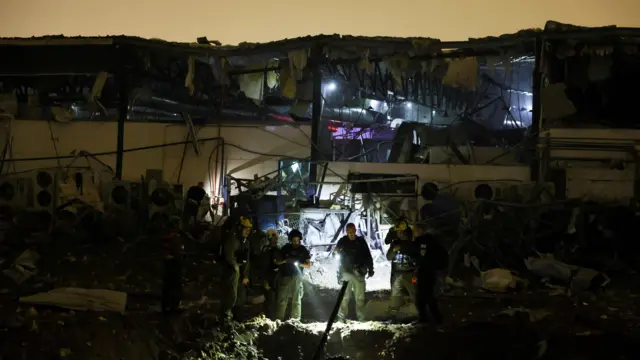
    Emergency personnel work at the site of damage after a barrage of Iranian missiles was launched at Israel, amid the U.S.-Israel conflict with Iran, in Petah Tikva, Israel, April 2, 2026.Image source, Reuters
    Image caption,

    Israeli emergency personnel in Petah Tikva survey the damage following a barrage of Iranian missiles overnight

    Sirens sounded across the Middle East overnight. Here's a quick round-up of where attacks have been recorded so far today, as Iran, the US and Israel continue to trade fire on the war's 35th day.

    Lebanon: The Israel Defense Forces (IDF) reports that it has completed a "targeted attack in southern Lebanon", which it says killed 15 members of Hezbollah. It has also issued new evacuation orders for residents in the southern suburbs of Beirut.

    Iran: People in Tehran have spoken to the BBC of their distress after a bridge near the capital was struck on Thursday.

    Israel: The IDF said that missiles were fired towards it from Iran overnight, while the military spokesperson for the Iran-backed Houthi rebels in Yemen said the group has fired a "barrage of ballistic missiles" at Israeli targets.

    Kuwait: Emergency services have been responding to fires at an oil refinery in Kuwait after it was hit by Iranian drones. Separately, a power and water desalination plant has been attacked.

    UAE: The country reported an incident of falling debris in Abu Dhabi, following an update that its air defences were "engaging with missile and drone attacks originating from Iran".

    Saudi Arabia: Saudi Arabia's Ministry of Defence says it has intercepted and destroyed several drones on Friday.

    Bahrain: Has asked people to shelter in safe locations, after alarms were sounded.

  12. Iran internet blackout enters 35th daypublished at 09:18 BST

    Ghoncheh Habibiazad
    Senior reporter, BBC Persian

    Iran's internet blackout has now entered day 35, with most users cut off from the outside world for over 816 hours, according to internet monitoring group NetBlocks.

    Connectivity to the outside world remains at 1% of normal levels.

    Netblocks has said that the “general public remain cut off from the world without vital updates and without a voice as the incident closes its fifth week.”

    Meanwhile, the BBC understands that some officials, pro-establishment users, and journalists still have unrestricted access, while others are paying large sums to get online.

    A few people have managed to connect using satellite internet such as Starlink and other methods, but it comes at a high cost.

    In Iran, using or possessing Starlink can lead to up to two years in prison, and authorities are trying to crack down on it. Iranian outlets have reported that “hundreds” of Starlink devices have been confiscated since the war started.

  13. Security Council vote on Middle East no longer on UN schedulepublished at 08:56 BST

    A vote by the United Nations Security Council (UNSC) on a resolution on the Strait of Hormuz, which had been put forward by Bahrain, appears to have been removed from the UNSC's daily schedule.

    A schedule published on Thursday 2 April showed a vote on a Middle East resolution scheduled for 11:00 local time (15:00 GMT). That vote is no longer showing on the UN website, external under Friday 3 April.

    No reason has been given for the removal of the meeting, and the UN has not announced a new date for the vote as of the time of this post. When we find out more about when it will take place, we will update you right here.

  14. Pakistan raises fuel prices by 43%published at 08:42 BST

    Carrie Davies
    BBC Pakistan correspondent

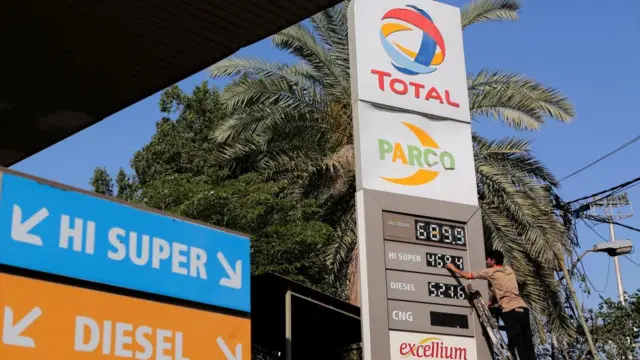
    A man works to change the numbers on a price board at a petrol stationImage source, Reuters

    Pakistan’s government has raised petrol prices by 43% and high speed diesel by 55% overnight, saying it was due to increasing oil prices caused by the war in Iran.

    The country's petrol minister says the government has “limited resources and there is currently no end in sight to the war”.

    Pakistan is highly dependent on imported oil and gets large quantities through the Strait of Hormuz. Recently, Pakistan said it has been able to arrange safe passage for some Pakistan flagged ships through the Strait with Iran, which has effectively closed the route.

    This is the second increase in prices since the war began; petrol is now 77% more expensive and diesel 87% more than before the conflict began. There will be some subsidies for certain users. Motorcyclists will receive a subsidy of Rs100 per litre on up to 20 litres of petrol per month for the next three months.

    Intercity public transport operators will get Rs100 per litre subsidy on diesel, while passenger bus services will be eligible for up to Rs100,000 per month. Farmers with smaller plots will be given a one time payment of 1,500 rupees per acre during harvest season.

    For goods transport, including trucks, a monthly fuel subsidy of up to Rs70,000 will be given. In addition, the government will extend support to Pakistan Railways to help keep fares under control.

    Finance Minister Muhammad Aurangzeb said the government’s ability to offer relief is limited due to financial constraints, adding that any concessions can only go to a certain extent. He added that the measures will be reviewed on a weekly basis, and adjustments will be made accordingly.

  15. More than 100 international law experts sign open letter expressing 'profound concern' over Iran warpublished at 08:16 BST

    Tom Bateman
    US State Department correspondent

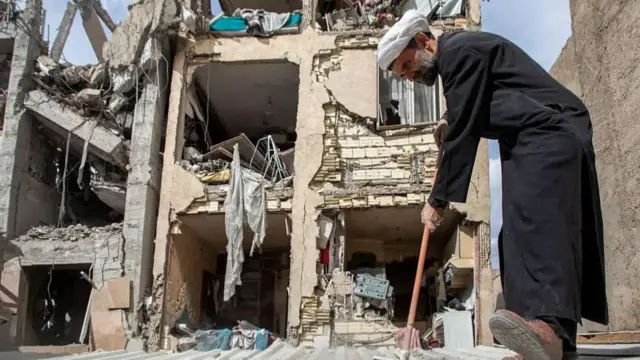
    A man in a white turban and black clothes brushes the area in front of a bombed out buildingImage source, Getty Images
    Image caption,

    Tehran has faced waves of US-Israeli strikes since the war began in February, and Iran has retaliated by targeting Gulf states

    An open letter has been signed by more than 100 experts on international law, expressing "profound concern" about what they see as serious violations of international law by the US, Israel and Iran with the war in the Middle East.

    The academics and former government officials say, due to their connection with the United States, their focus is on the conduct of the US.

    The law experts say both the conduct and rhetoric of the US in the war is profoundly concerning and in some cases amounts to violations of international law. They say the attack on Iran was a clear breach of the United Nations Charter, which prohibits the use of force outside of self-defence or when authorised by the UN Security Council.

    The experts include former US government officials and professors in international law. They point to “alarming rhetoric” being used by US officials, including President Trump’s threats to “obliterate” Iran’s power plants.

    They also highlight the attack on a school in Minab on the war’s first day, which evidence suggests was the result of a US strike, saying it could amount to a war crime if evidence is found that those responsible were reckless. The Pentagon has said it is investigating the attack.

    In response to the open letter, a White House spokesperson told the BBC that Trump was "making the entire region safer and more stable".

    The spokesperson added: "The president does not make these incredibly important national security decisions based on the opinions of these so-called ‘experts’, but on the best interest of the American people.”

  16. Third time Kuwait oil refinery hit since war startedpublished at 08:05 BST

    Lorna Gordon
    Reporting from Dubai

    After it was attacked by multiple drones in the early hours of Friday morning, fires broke out in parts of a key oil refinery in Kuwait.

    No injuries have been reported.

    The Mina al-Ahmadi port refinery, which is one of the largest in the Middle East, can refine up to 346,000 barrels of oil a day.

    Kuwait has three major oil refineries. Its Mina al-Ahmadi refinery has been targeted by Iranian drones twice before during the five week-long conflict.

    The Kuwait Petroleum Corporation says emergency and firefighting teams have been working to contain the fires in some of the refinery’s 39 operating units and prevent them from spreading.

    It adds that air quality in the affected area is being monitored, and that so far there has been no impact on the local environment.

  17. No injuries after 'malicious drone attack' on Kuwait oil refinery, KPC sayspublished at 07:42 BST

    A little earlier we reported that an oil refinery in Kuwait had been attacked by drones on Friday, according to the country's state-owned oil company, Kuwait Petroleum Corporation (KPC).

    We've just seen an update from the company, which says there have been "no injuries reported" after what it describes as a "malicious drone attack early Friday". It adds that "emergency response teams acted immediately to contain the situation" at the Mina al-Ahmadi refinery.

    KPC also says that, following "fires in several operational units", air quality is being closely monitored in co-ordination with Kuwait's public environmental body, and "no negative impact" has been recorded yet.

  18. Missiles launched from Iran towards Israel overnight - IDFpublished at 07:30 BST

    The Israel Defense Forces (IDF) says missiles were launched from Iran towards Israel last night.

    The IDF says their defensive systems were in operation overnight "to intercept the threat".

    A train station in Tel Aviv was damaged by shrapnel, according to Israeli military radio, the AFP news agency reports.

  19. US and Israel step up attacks on Iranian infrastructurepublished at 07:12 BST

    Yolande Knell
    Middle East correspondent, in Jerusalem

    ignificant sections of the B1 Bridge are seen destroyed after an airstrike attributed to the United States and Israel targeted the site near Tehran, in Karaj, Iran, on April 03, 2026.Image source, Getty Images
    Image caption,

    A US strike on Iran's B1 bridge partially destroyed the structure and caused at least eight deaths, and nearly 100 injuries, according to local officials

    Iranian state media says many people were picnicking near the B1 suspension bridge for the end of the Persian New Year holidays when it was hit by US warplanes.

    In a post on his Truth Social platform, President Trump wrote “much more to follow”, and later suggested electric power plants could be next.

    Iran has continued to show its ability to strike its neighbours overnight.

    A drone attack on Kuwait’s national oil company is said to have caused several fires.

    An Iranian missile with a cluster warhead was fired at central Israel – damaging property at a number of sites but with no reports of injuries.

  20. 'Be serious... don't speak every day': Macron criticises Trump approach to Iran warpublished at 06:50 BST

    Media caption,

    Watch: Macron calls Trump's remarks on his marriage 'inelegant'

    French President Emmanuel Macron has said that the war in Iran requires a "serious" approach, that doesn't change every day.

    Speaking to reporters on a trip to South Korea, Macron says that "this is not a show. We are talking about war and peace and the lives of men and women".

    "When you want to be serious you don't say every day the opposite of what you said the day before," he says, seemingly in reference to the Trump administration's mixed messages throughout the conflict.

    At various times the Trump administration has suggested that a ceasefire was near, that the war had already been won or that the US was going to fight on.

    "And maybe you shouldn't be speaking every day. You should just let things quieten down," he adds.