Summary

  1. Strikes continue across region for 34th day of conflictpublished at 23:18 BST

    On Thursday, the US struck a bridge in Iran, one of the largest in the Middle East, as the Israeli military launched dozens of strikes against Iran and oil prices continue to rise.

    Here's a recap of developments in the US-Israeli war with Iran:

    We're pausing our live coverage now, but will continue to bring you the latest news and analysis from our teams across the Middle East and around the world as the conflict nears the end of its fifth week.

    Here's some of our other coverage:

    'I haven't slept for days': Iranians describe mounting desperation after a month of war

    Iran's focus on survival means same regime still firmly in place

    UK and allies discuss sanctions to stop Iran blocking Strait of Hormuz
  2. Today in picturespublished at 23:06 BST

    In addition to the strike on the bridge in the Iranian city of Karaj that has dominated our coverage on Thursday, we've collated pictures of other moments from across the region.

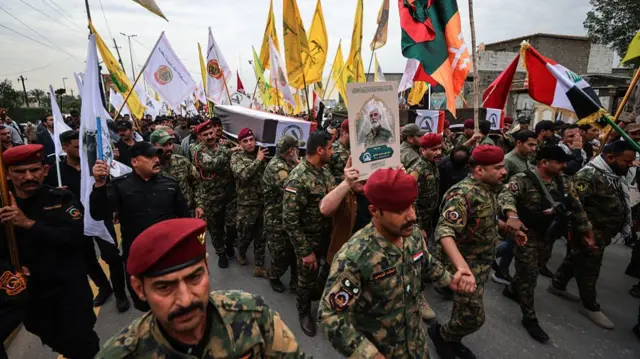
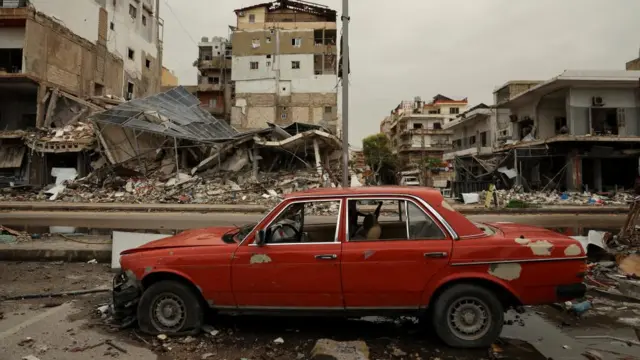
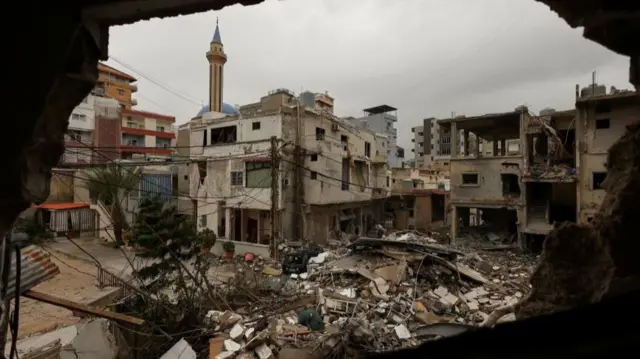
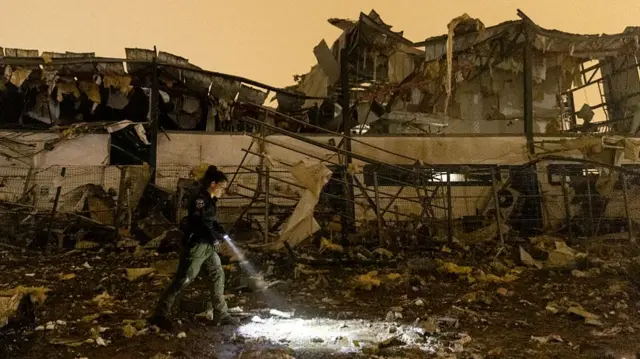
    These include Iraqi service members holding a funeral for colleagues killed in the conflict, parts of Israel were damaged by Iranian strikes, and the continuing bombardment of southern Lebanon by Israel.

    worker holding flashlight while walking through rubble of destroyed buildingImage source, Getty Images
    Image caption,

    An Israeli emergency responder inspects the scene of a direct ballistic hit, launched by Iran on Petach Tikva, Israel on 2 April

    men in camo uniforms carry coffins through a street while flying flagsImage source, AFP via Getty Images
    Image caption,

    During a funeral ceremony in Baghdad, Iraqi service members carry the coffins of a former paramilitary commander and several comrades reportedly killed earlier in the day in a strike in Tal Afar

    red car, slightly damaged, in front of collapsed and destroyed buildingsImage source, Reuters
    Image caption,

    A damaged car in front of the rubble of a building destroyed by an Israeli strike in Tyre, Lebanon

    damaged buildings surround collapsed building of rubbleImage source, Reuters
    Image caption,

    The rubble of a destroyed building in Tyre, Lebanon

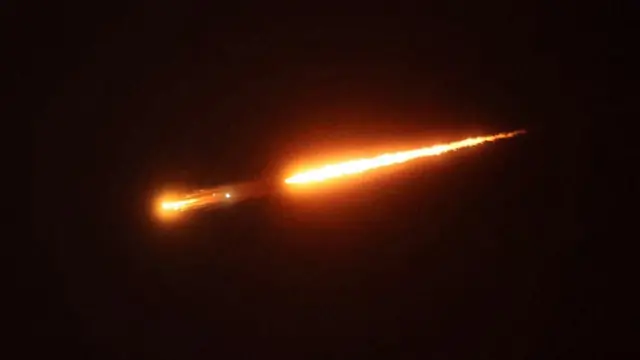
    two bright red missiles crossing through the night skyImage source, EPA/Shutterstock
    Image caption,

    Projectile trails cross the sky above Jerusalem today as sirens alerting of incoming ballistic missiles sound across Israel

  3. Analysis

    The Hormuz headachepublished at 22:48 BST

    Frank Gardner
    Security correspondent

    Sorting out the mess that this war has left the Strait of Hormuz in will be, by necessity, a delicate and complex task.

    Iran controls the majority of the coastline opposite the Strait. That means it can, if it chooses, hide any number of low-tech weapons with which to ambush shipping.

    There’s a reason why navies don’t want to send their warships too close to that coastline: they fear being attacked.

    So most military analysts agree that force alone will not work in reopening the Strait. It will have to be by negotiation, possibly through a third party like Pakistan and then ultimately it will need a green light from Tehran.

    That will be a bitter pill for Iran’s enemies to swallow.

    But 34 days of devastating US and Israeli airstrikes have failed to topple the Islamic Republic and every day that it survives deepens its resolve.

    With Iran in no mood to make concessions it may decide to hold out for a higher price - either financially or strategically - before agreeing to allow all shipping safe passage once more.

  4. How much is the US spending?published at 22:40 BST

    Media caption,

    Ros Atkins on…the cost of the Iran war

    The war in Iran has already come with a hefty price tag for the US.

    Six days into the war last month, the Pentagon reported to lawmakers that the war had already cost them $11.3bn (£8.5bn).

    As the war has drags on, the daily costs to the US have varied. US officials say costs have gone down due to Iran's weakening defence systems. But experts estimate the conflict is still coming with a bill of $385m (£291m) per day.

    Take a listen to find out how that compares to the US's previous wars.

  5. 'Striking civilian structures' will not 'compel Iranians to surrender' - Iran Foreign Ministerpublished at 22:30 BST

    Ghoncheh Habibiazad
    Senior reporter, BBC Persian

    Iranian Foreign Minister Abbas Araghchi has said on his account on X that "striking civilian structures, including unfinished bridges, will not compel Iranians to surrender".

    Araghchi has said that the strike on a bridge in Karaj, "only conveys the defeat and moral collapse of an enemy in disarray" and what will "never recover" is "damage to America's standing".

    Araghchi has said in a separate post on X that with regards to Donald Trump’s remark of taking Iran back to the "Stone Age", that the difference between then and now is "there was no oil or gas being pumped in the Middle East back then".

    "Are POTUS and Americans who put him in office sure that they want to turn back the clock?" Araghchi said.

  6. 'We’ll end up with a ruined country': Iranians react to bridge strikepublished at 22:16 BST

    Ghoncheh Habibiazad
    Senior reporter, BBC Persian

    Media caption,

    Footage shows smoke rising from Karaj bridge

    It's still very difficult to contact people inside Iran amid the internet outage, but some have managed to connect using satellite internet such as Starlink and other methods, though it comes at a high cost. Using or possessing Starlink can lead to up to two years in prison.

    All of those that I speak to inside Iran are against the current establishment.

    I asked a woman in her 20s in Tehran how she feels about the attack on a bridge in Karaj. She started crying midway through the voice message.

    "I feel helpless. [Trump] posts shamelessly about attacking our bridge. I don’t know how much further this is going to go. Why is no one standing up to him? He’s really taking us back to the Stone Age," she said.

    A Tehran resident in his 20s said: "We’ll end up with a ruined country. I am more disappointed and saddened that I am in the middle of a situation where I see Iran being destroyed and I can’t do anything. My country is being destroyed more and more every day."

    The strike on the bridge in Karaj has worried one local resident, a man in his 20s who says he's "pro-war".

    "That bridge could have reduced the traffic in the city… it was destroyed in the second strike. This strike has got me worried. I don’t know why they hit it," he said.

    A woman in her 40s in Tehran, who is also pro-war, said: "I was really surprised that they hit a bridge… but I think they must have a reason for it."

  7. Bridge destroyed in strike was going to be a major highway linkpublished at 21:58 BST

    A few hours ago, US President Donald Trump announced a strike on Iran's B1 bridge, a recently-constructed overpass that connected the city of Karaj to capital Tehran.

    Video shows fire and smoke rising from the bridge, and then a large chunk missing from the middle.

    The B1 Bridge, which was yet to open to traffic, has been called one of the tallest in the Middle East. It spans 1,050 meters with 136 meter-high columns, according to a report on the bridge's completion by Iran's state-run media.

    The bridge appeared to still be under construction at the time of the strikes, and Iranian state media reported that eight people were killed and several others injured.

  8. Strikes have reportedly killed and injured multiple in Iran over the last daypublished at 21:50 BST

    BBC Monitoring

    Iranian media and officials have said a series of US-Israeli attacks struck multiple locations across the country on 2 April.

    One of the most serious incidents was in Karaj, west of the capital, where the IRGC‑linked Tasnim News Agency said eight people were killed and multiple injured when a strike hit the B1 bridge construction site.

    It reported the site was hit again shortly after the initial blast, prompting road closures and the deployment of emergency services.

    Alongside the incident in Karaj, Iranian media reported casualties and widespread infrastructure damage.

    Tasnim said two students were killed in Fars Province late on 1 April. Several other incidents caused injuries but no fatalities, including one involving port workers in the south.

    Another attack on a southern port injured 14 workers. Medical and research facilities were also reportedly hit.

    Iranian President Massoud Pezeshkian urged international medical bodies, including the World Health Organization, to respond to attacks on hospitals and health facilities, calling them a "crime against humanity".

    The reported attacks have been accompanied by a tightening of internal security operations. The Intelligence Ministry, quoted by the state‑linked Mehr News Agency, said it had arrested three people accused of links to Israel's intelligence agency Mossad, along with four others it described as members of "takfiri militant groups".

  9. Hegseth asks US army chief of staff to step down, sources tell BBC's partnerpublished at 21:32 BST

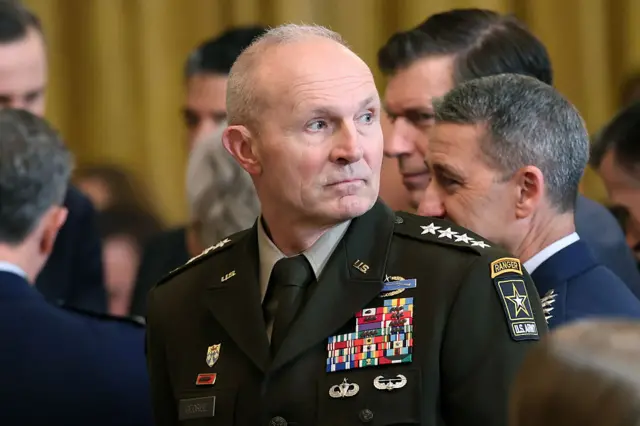
    Chief of Staff of the Army General Randy George attends a Medal of Honor Ceremony in the East Room of the White HouseImage source, Getty Images

    We will keep bringing you the latest on the war in Iran, but here's what we are just learning in Washington DC.

    Sources have told CBS News, the BBC's US partner, that Defense Secretary Pete Hegseth has asked Army Chief of Staff Gen Randy George to step down,

    One of the sources told CBS News, external that Hegseth wants someone to replace George who will implement his and President Donald Trump's vision for the American army.

    Hegseth has fired over a dozen senior military officers, according to CBS, and George was expected to hold his position until 2027.

    He was nominated for the position by former president Joe Biden and confirmed by the senate in 2023.

  10. US oil prices rise as traders worry about prolonged disruptionpublished at 21:11 BST

    The US stock markets have closed for the day.

    US oil prices settled more than 11% higher and Brent soared nearly 8% on Thursday, as traders worried about prolonged disruptions to oil supply due to the conflict in the Middle East.

    Reuters reports that Brent crude futures closed at $7.87, or 7.78%, higher at $109.03 a barrel.

    US West Texas Intermediate crude futures rose $11.42, or 11.41%, at $111.54 per barrel, settling at their biggest absolute price rise since 2020.

    Earlier in the conflict the cost of a barrel had nearly reached $120.

    It comes after US President Donald Trump vowed the US would hit the Iranians extremely hard over the next two to three weeks

  11. Houthis fire at Israel as part of joint operation with Iran and Hezbollah - spokesmanpublished at 20:57 BST

    Yemen's Houthi rebels say they have fired missiles towards Israel as part of a joint operation with Iran and Hezbollah in Lebanon.

    Yahya Saree, spokesperson for the Yemeni Armed Forces - the Houthi faction of Yemen's military - says the group fired a "barrage of ballistic missiles targeting vital Israeli enemy targets".

    It comes after the Israel Defense Forces (IDF) said a missile had been launched at its territory from Yemen and said it was working to intercept the threat.

  12. Death toll from bridge strike increases to eightpublished at 20:41 BST
    Breaking

    Ghoncheh Habibiazad
    Senior reporter, BBC Persian

    The death toll following strikes on a bridge in Karaj, a city near Tehran located in Alborz province has increased to eight, according to the deputy of security and political affairs at the Alborz Governor’s Office.

    Ghodratollah Seyf added that 95 have been injured in the strikes and has called it a “horrific crime”.

  13. IRGC commander hits back at US war secretary's 'Stone Age' commentpublished at 20:32 BST

    During his primetime address to the United States on Wednesday, Donald Trump said the US military was nearing completion of its mission while also reinforced his threats to bomb Iran "back to the Stone Age where it belongs".

    Within hours the "back to the Stone Age" remark was posted by US Defence Secretary Pete Hegseth and in the last few moments the commander of the Islamic Revolutionary Guard Corps (IRGC) Aerospace Force has mocked the Trump administration.

    Quoting Hegseth's social media post, Seyed Majid Mousavi writes: "It is you who are taking your soldiers to their graves, not Iran, whom you seek to drag back to the Stone Age.

    "Hollywood delusions have so poisoned your minds that, with your paltry 250-year history, you threaten a civilisation over 6,000 years old."

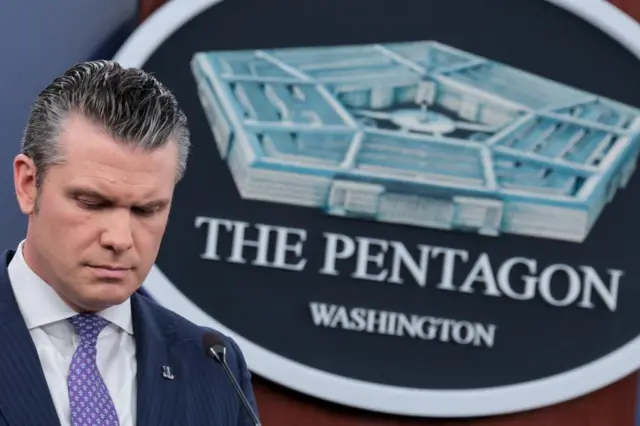
    Pete Hegseth stands in front of a large seal of the Pentagon and looks downImage source, Reuters
    Image caption,

    US Secretary of War Pete Hegseth

  14. Iranian-Americans question ultimate goals of US and Israelpublished at 20:20 BST

    Bahman Kalbasi
    BBC Persian

    Sahar, an Iranian-American school teacher living in New York City says it has become increasingly clear that the war in Iran is only serving the interests of the US and Israel, not the Iranian people.

    "This is not about freedom, democracy, or independence for the people of Iran," Sahar says. "Israel wants a broken Iran. The US has not been very clear about what it wants from this war, but it has generally been about power, money, and oil."

    Another Iranian-American says that, after today's bombing of the Pasteur Institute in Iran - a century-old public health and research centre - she believes that what the US and Israel really want is to destroy the Iranian civilisation completely.

    "I became even more convinced that these newly risen countries are determined to destroy one of the world’s oldest civilisations—a civilisation whose contributions in science, art, and culture have benefited not only itself but the world at large," Goli, a nonprofit employee living in New York City, says.

  15. EU official floats beefing up naval force to help ships pass through Strait of Hormuzpublished at 20:04 BST

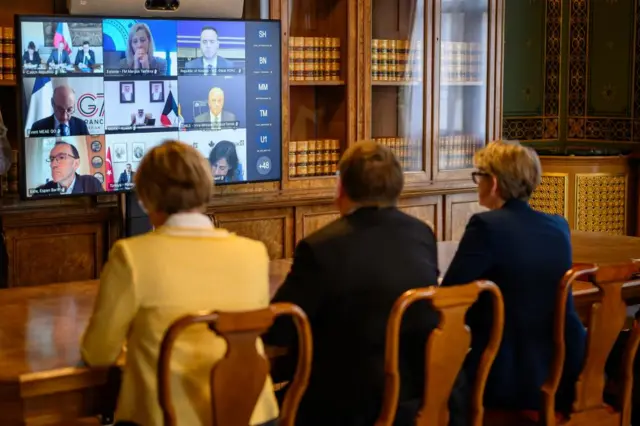
    Three people sit facing a large TV screen displaying other members of a virtual meeting in an ornate panelled roomImage source, PA Media
    Image caption,

    UK Foreign Minister Yvette Cooper organised a 40-nation call to discuss shipping routes disrupted by the war

    The European Union may be scaling up its naval force to protect shipping routes disrupted by the war.

    After a 40-nation call organised by UK Foreign Minister Yvette Cooper, EU foreign policy chief Kaja Kallas said that efforts must be made to restore safe maritime passage in the Strait of Hormuz.

    "This waterway is a global public good. Iran cannot be allowed to charge countries a bounty to let ships pass. International law doesn’t recognise pay-to-pass schemes," Kallas wrote on social media.

    She called for the EU's Aspides naval mission, launched two years ago to protect Red Sea shipping, to be beefed up in the wake of the war.

    "The EU’s Aspides naval mission has already assisted 1,700 ships in the Red Sea and must be scaled up. We cannot afford to lose another critical trade route," she said, adding that the UN has already been working to get food and fertilisers out of the strait.

    "The EU has tools to track and facilitate transit that could help with that," she said.

  16. IDF says it launched dozens of airstrikes in last daypublished at 19:55 BST

    In the past 24 hours, the Israel Defense Forces says it has struck more than 50 ballistic missile targets in Iran.

    Israel's air force also conducted over 20 strikes in central and western Tehran, including "dozens of launch sites and ballistic missile storage sites with 140+ munitions", the IDF says.

    Israel has also continued its barrage of Hezbollah targets in Lebanon.

  17. Iranian and Russian foreign ministers discuss Strait of Hormuzpublished at 19:43 BST

    Russian foreign minister Sergei Lavrov and his Iranian counterpart Abbas Araqchi discussed the safety of navigation in the Strait of Hormuz in a phone call on Thursday, BBC Monitoring reports.

    The ministers also discussed the efforts taken by a number of states to de-escalate tensions in the region, the Russian foreign ministry says in a statement.

    The ministers also "exchanged views on the progress of discussions in the UN Security Council on ways to ensure the safety of navigation in the Strait of Hormuz and overcome other consequences of the unprovoked aggression of the United States and Israel against the Islamic Republic of Iran," the statement adds.

  18. Death toll rises to 1,345 in Lebanonpublished at 19:23 BST

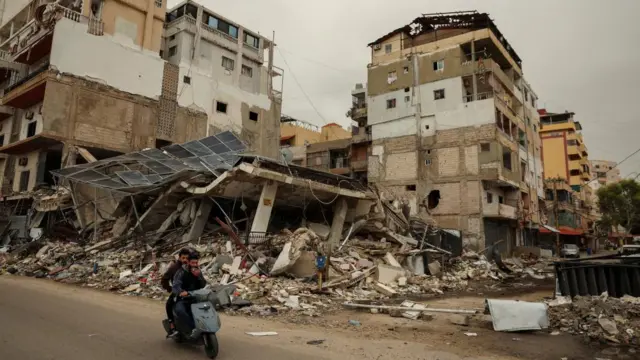
    Two men on a scooter drive past a building that has been reduced to rubble by an Israeli strike in Tyre, LebanonImage source, Reuters
    Image caption,

    Men ride a scooter past the rubble of a building destroyed by an Israeli strike in Tyre, Lebanon

    The number of people killed in Lebanon since the start of the conflict in the Middle East has risen to 1,345 - the Lebanese health ministry says.

    In its latest report it says 125 children and 53 health sector workers have been killed.

    A further 4,040 people have also been injured between 2 March and 2 April.

  19. US-Israeli targeting of medical centres 'crime against humanity', Iran president sayspublished at 19:12 BST

    Iranian President Masoud Pezeshkian is calling attacks on Iranian medical institutions a "crime against humanity".

    "What message does attacking hospitals, pharmaceutical companies and the Pasteur Institute as a medical research center in Iran convey? As a specialist physician, I urge WHO, the Red Cross, Doctors Without Borders and physicians worldwide to respond to this crime against humanity," Pezeshkian writes on social media.

    The Pasteur Institute in Tehran, Iran - a century-old public health and research centre - was heavily damaged in strikes on Thursday, according to Iranian authorities.

  20. Mixed messaging this week from Trump on Iran dealpublished at 18:53 BST

    Bernd Debusmann Jr
    Reporting from the White House

    Just a few moments ago, Donald Trump posted a video appearing to show the aftermath of a strike on what he termed Iran's "biggest bridge" and threatening the country's government to "make a deal before it is too late".

    BBC Verify has confirmed it to be the B1 Bridge near the city of Karaj, part of a major road infrastructure project in that part of the country.

    In yesterday's address, Trump vowed to hit Iran "extremely hard" in the coming weeks, and threatening to attack "key targets" if no deal is reached, including electric facilities.

    But the day before, Trump said he was willing to "leave" Iran if no deal is reached - leaving many wondering where exactly Trump stands on a deal.

    As a reminder, it is still unclear who the administration is negotiating with in Iran, which has denied any claims that it has asked for a ceasefire.

    Trump, however, has repeatedly said that the country's surviving leadership is more reasonable and willing to negotiate than those who were killed earlier in the war.