Summary

  • Our live coverage of the Iran war continues on a new live page. Follow this link for the latest updates.

  • In Jerusalem, sirens sounded and there were booms in the skies above, as families celebrated the first night of Eid - Iranian state TV has confirmed it fired four salvos of missiles in quick succession, writes our correspondent there

  • Elsewhere in the region, Saudi Arabia and Bahrain both say they have intercepted and destroyed drones

  • Iran's foreign minister earlier warned that Tehran would act with "zero restraint" if there were further attacks on its infrastructure

  • Prime Minister Benjamin Netanyahu has said Israel "acted alone" in strikes on Iran's South Pars, part of the world's largest natural gas field. He added Trump was not "dragged" into the war with Iran - here's the context

  1. Netanyahu says Israel 'acted alone' in strikes on Iranian gas fieldspublished at 05:41 GMT 20 March

    In his press conference on Thursday night, Israeli Prime Minister Benjamin Netanyahu stressed that Israel "acted alone" in attacking Iranian gas fields - and told reporters his military had agreed to "hold off on future attacks" after a request from Donald Trump

    Our White House reporter offered analysis on how Netanyahu sought to show that he and Trump remain in sync.

    The global shipping of oil and gas remains constrained due to instabiity around the Strait of Hormuz - through which about 20% of the world's oil and liquefied natural gas (LNG) usually passes. US allies signed a joint statement on Thursday where they expressed a "readiness to contribute to appropriate efforts to ensure safe passage through the Strait".

    We are wrapping up our coverage here. For all the latest developments on the conflict in the Middle East, head over to our new live page.

  2. US allies express 'readiness to contribute' to securing Strait of Hormuzpublished at 04:39 GMT 20 March

    We're now going to bring you details of a statement from the leaders of the UK, France, Germany, Italy, the Netherlands, Japan and Canada, which was issued a few hours ago.

    The statement urges Iran to "cease immediately its threats, laying of mines, drone and missile attacks and other attempts to block" the Strait of Hormuz, and expresses a "readiness to contribute to appropriate efforts to ensure safe passage through the Strait".

    It comes after US President Donald Trump accused Nato countries of making a "foolish mistake" by refusing to help Washington secure the waterway. All of the signatories of the joint statement are Nato member states, with the exception of Japan.

    The leaders called for "an immediate comprehensive moratorium on attacks on civilian infrastructure, including oil and gas installations", and say Iran's "interference" with international shipping through the strait constitutes a "threat to international peace and security".

    It is not yet clear what the efforts to secure the waterway would entail. But in a post on X, Italian Defence Minister Guido Crosetto said that it is "not a war mission".

  3. Are the US and Israel aligned on Iran war?published at 04:01 GMT 20 March

    Paul Adams
    Diplomatic correspondent

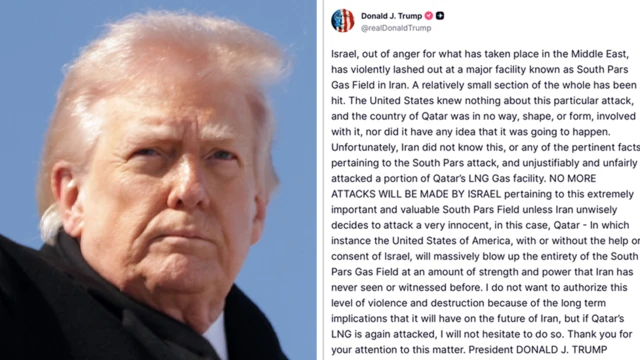
    Composite image showing a face of Donald Trump on the left, and his Truth social post on the left, which reads 'Israel, out of anger for what has taken place in the Middle East, has violently lashed out at a major facility known as South Pars Gas Field in Iran. A relatively small section of the whole has been hit. The United States knew nothing about this particular attack, and the country of Qatar was in no way, shape, or form, involved with it, nor did it have any idea that it was going to happen. Unfortunately, Iran did not know this, or any of the pertinent facts pertaining to the South Pars attack, and unjustifiably and unfairly attacked a portion of Qatar’s LNG Gas facility. NO MORE ATTACKS WILL BE MADE BY ISRAEL pertaining to this extremely important and valuable South Pars Field unless Iran unwisely decides to attack a very innocent, in this case, Qatar - In which instance the United States of America, with or without the help or consent of Israel, will massively blow up the entirety of the South Pars Gas Field at an amount of strength and power that Iran has never seen or witnessed before. I do not want to authorize this level of violence and destruction because of the long term implications that it will have on the future of Iran, but if Qatar’s LNG is again attacked, I will not hesitate to do so. Thank you for your attention to this matter. President DONALD J. TRUMP'Image source, Getty Images / Truth Social

    On Thursday, US President Donald Trump issued a typically strongly worded statement after attacks on a major gas field shared by Iran and Qatar the previous day.

    In a mess of strikes, Israel hit Iran's South Pars, and Iran retaliated by striking an energy complex in Qatar.

    In a long post on Truth Social, Trump threatened Iran and said he didn't know about Israel's plans for the attack, which Israeli Prime Minister Benjamin Netanyahu has backed up.

    But multiple Israeli newspaper reports have said the strike "was co-ordinated in advance with the United States".

    Israel and the US are close military allies, but this is the first time they've fought a war together, and Trump's description of the Israeli attack - that "out of anger" it "violently lashed out" against the gas field - is telling.

    Read the BBC diplomatic correspondent's analysis on what Trump's language indicates about the course of the war and the extent to which the US and Israel are strategically aligned.

  4. Death toll in Iran surpasses 3100, human rights agency sayspublished at 03:28 GMT 20 March

    The US-based Human Rights Activists News Agency (Hrana) has issued an update on the death toll in Iran, which it says has reached 3,186 people since war began on 28 February.

    Of the dead, 1,394 were civilian casualties, including at least 210 children, Hrana says.

    It classed 1,153 as military fatalities, while 639 deaths remain undetermined.

  5. Gulf nations responding to missile and drone attackspublished at 02:54 GMT 20 March

    The United Arab Emirates, Kuwait, Saudi Arabia and Bahrain have all reported missile and drone attacks in the last few hours.

    The UAE's Ministry of Defense says it is currently responding to incoming threats from Iran, and told citizens they might hear air defence systems intercepting attacks.

    Kuwait also warned of explosions as a result of its air defence system, and asked citizens to adhere to safety instructions from authorities.

    Saudi Arabia's Ministry of Defense reported the interception and destruction of five more drones in the eastern region of the country.

    While Bahrain's Ministry of Interior asked residents to head to their nearest safe location after sirens were activated. Later, officials said the attack was a result of "Iranian aggression", and that falling shrapnel had caused a fire at a warehouse.

  6. FBI seize four websites used by Iran-based hacking grouppublished at 02:28 GMT 20 March

    The FBI has seized four website domains for an Iran-based hacking group that claimed credit for a cyberattack against a US-based company.

    The US Justice Department said the seizure is part of an "ongoing effort to disrupt hacking and transnational repression schemes conducted by the Islamic Republic of Iran’s Ministry of Intelligence and Security (MOIS)".

    The seized domains were used to call for the killing of journalists, regime dissidents, and Israeli people, according to the Justice Department.

    "Iran thought they could hide behind fake websites and keyboard threats to terrorise Americans and silence dissidents,” said FBI Director Kash Patel.

    “We took down four of their operation's pillars and we're not done.

    "This FBI will hunt down every actor behind these cowardly death threats and cyberattacks and will bring the full force of American law enforcement down on them", Patel added.

  7. Qatar denounces Ras Laffan strike as 'dangerous escalation'published at 01:56 GMT 20 March

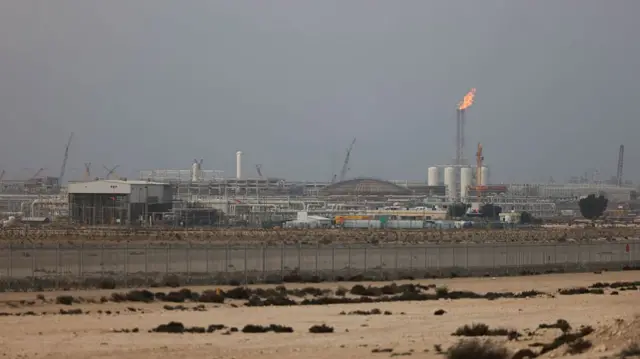
    A picture of Qatar Energy's operating facilities on March 3, 2026 in Ras Laffan Industrial City, Qatar.Image source, Getty Images
    Image caption,

    Ras Laffan pictured earlier this month

    Qatar's foreign ministry denounced Iran's attack on Ras Laffan - a major liquefied natural gas export facility - as a "dangerous escalation" and an "unacceptable violation" that threatens regional stability.

    Qatar's Ministry of Foreign Affairs said in a social media post that Iranian attacks on Qatar represent "ongoing Iranian attempts to drag the region into this conflict".

    Sheikh Mohammed bin Abdulrahman Al Thani, who is both prime minister and foreign minister, said "such hostile acts, their continuation, and the expansion of war will only lead to a greater escalation in the region". He added that security of the region is "a collective responsibility".

    After Israel hit Iran's South Pars - one of the world's largest natural gas field - on Wednesday, Tehran retaliated by striking the energy complex in Qatar. The attacks led to a spike in energy prices.

    A large portion of the attack on the Qatari complex was intercepted, according to the ministry, but some facilities were hit. The extent of the damage is being assessed.

  8. Explosions heard in Tehran, sources tell BBCpublished at 01:31 GMT 20 March

    Ghoncheh Habibiazad
    Senior reporter, BBC Persian

    Three sources based in Tehran have told the BBC they were woken up by explosions a short while ago.

    The blasts came just after Israel said it had launched a new wave of strikes on Iran's capital. In a statement, the Israeli military said it is targeting "infrastructure" of the Iranian government.

    Iranian outlets are reporting that air defence systems have been activated in the city.

  9. Photos show latest scenes from the regionpublished at 00:54 GMT 20 March

    For weeks, Israel has been striking much of southern Lebanon, while parts of Israel have been hit by Iranian attacks.

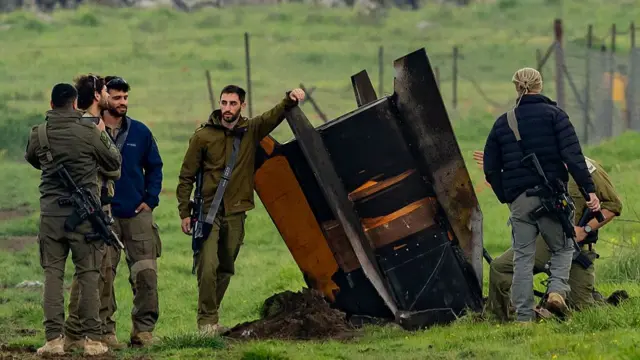
    security officers standing beside large rocket, as tall as them, in a field of grassImage source, AFP via Getty Images
    Image caption,

    Israeli security personnel secure an area around a rocket in the Israeli-annexed Golan Heights bordering Lebanon

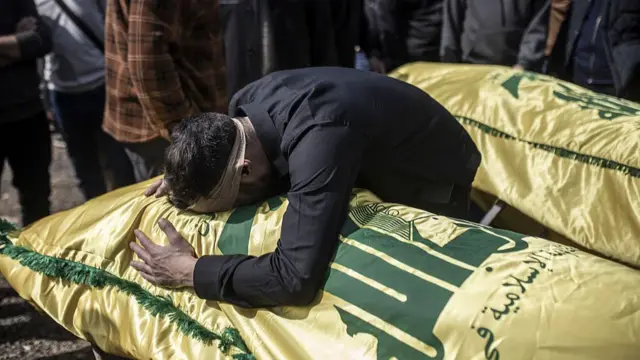
    man bent over a coffin draped in yellow silkImage source, Anadolu via Getty Images
    Image caption,

    A man crying over the coffin of a paramedic who died in Bir al-Salasel in Lebanon

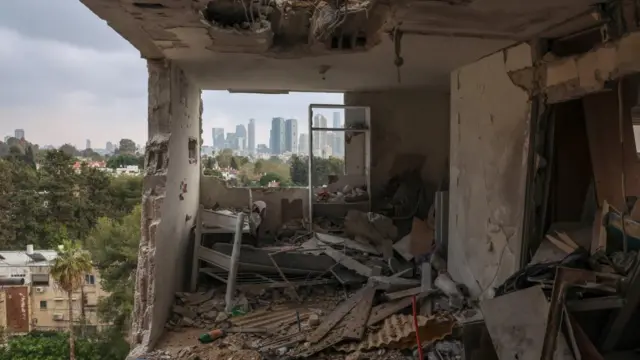
    a destroyed room in an apartment building, with walls blasted out, looking out over trees and skylineImage source, EPA/Shutterstock
    Image caption,

    The Tel Aviv skyline is framed by the ruins of an apartment building destroyed by an overnight Iranian missile strike

    a destroyed house surrounded by rubble, where a man standsImage source, Getty Images
    Image caption,

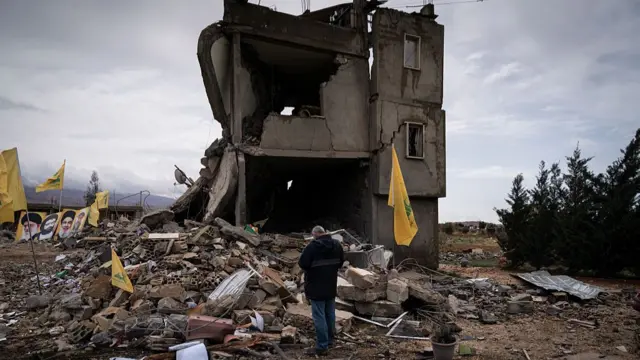
    Debris from a house at the site of a reported IDF air strike which killed 6 members of the same family in Baalbek, Lebanon

    a young boy holding a kitchen pot as he stands amid a mountain of rubbleImage source, Getty Images
    Image caption,

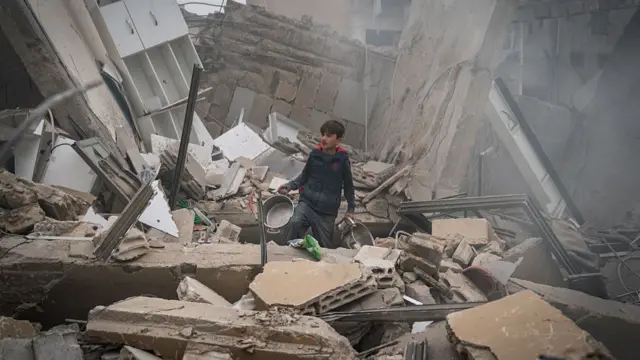
    A child searches for kitchen tools amongst the debris of a building that has collapsed after an IDF airstrike in Beirut

  10. European Commission to propose tax cuts on electricity to combat soaring energy costspublished at 00:41 GMT 20 March

    The European Commission will propose that countries in the EU cut taxes on electricity as a way to soften sky rocketing energy prices, Reuters reports.

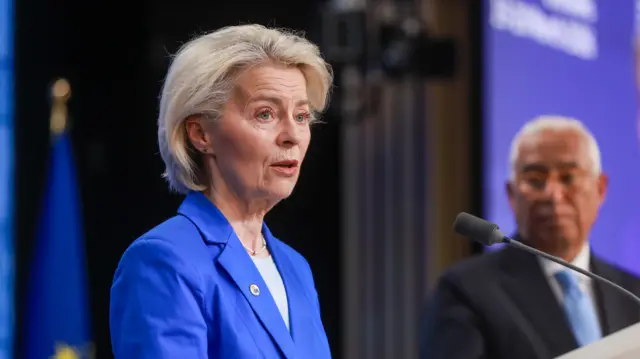
    "In some cases, electricity is taxed much more than gas, up to 15 times more. And this cannot be so. We will propose to lower tax rates on electricity and to make sure that electricity is taxed less than fossil fuels," said Ursula von der Leyen, president of the commission.

    She said she had also proposed to leaders a form of financial support to the industry through investments that would help companies move away from fossil fuels.

    The price of gas in Europe is more than double the level seen before the conflict in Iran began.

    European Commission President Ursula von der Leyen speaks from behind a podium, wearing a royal blue jacket and a pearl necklace.Image source, EPA
  11. Former Nato commander asserts Iran needs to recognise it is in a 'no win position at this time'published at 00:27 GMT 20 March

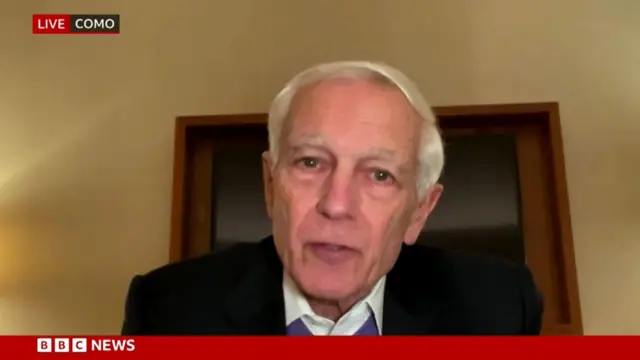
    Former Nato supreme allied commander General Wesley Clark

    "It's plausible that Israel could have acted on its own" in its attack on Iran's South Pars gas field, General Wesley Clark says.

    The former Nato supreme allied commander tells BBC News that things are moving very quickly in this war and "it could have slipped through".

    He says that the Iranians need to recognise that they're in a "no win position at this time" and an agreement needs to be reached to cut off heavy investment in ballistic missiles and surrounding regional security.

    "Two and a half weeks is not that long in terms of the way the human mind works in conflict, so I suspect this is going on for a while longer", he says.

    He adds that the leaders of the Iranian regime need to realise that "the majority of their own people are not supporting them and will not support them".

  12. Here's the latest on the war in the Middle Eastpublished at 00:15 GMT 20 March

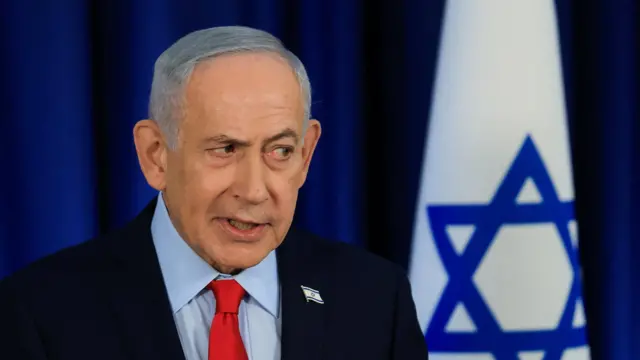
    Israeli Prime Minister Benjamin Netanyahu speaks during a press conference, in front of a blue and white Israeli flag.Image source, Reuters
    • For those just joining our live coverage, sirens have sounded in Jerusalem amid Eid celebrations after booms were heard above the city
    • Fresh strikes have also been reported in Tehran, Iran's capital city - Iran's foreign minister had earlier warned that there would be "zero restraint" if Iranian infrastructure was struck again, following yesterday's attacks on the South Pars gas field
    • The energy crisis has continued to be a key topic of discussion, as prices continue to soar around the globe - the Strait of Hormuz remains at a standstill, but the chair of the International Maritime Organisation has told the BBC that he is confident that negotiations to re-open the channel will start soon
    • A couple of hours ago, Israeli Prime Minister Benjamin Netanyahu held a press conference, where he said that "Israel acted alone" in regards to the attack on the Iranian gas field
    • He also explicitly stated the three goals of the US-Israeli operation in Iran - to remove the nuclear threat from Iran, eliminate the ballistic-missile threat, and create conditions that enable Iranians to "grasp their freedom"
  13. Bahrain says it has destroyed hundreds of dronespublished at 00:03 GMT 20 March

    Bahrain's defence force says it has intercepted and destroyed 139 missiles and 238 drones since the start of the conflict.

  14. Netanyahu wants to sell this war as a battle against an existential threat - not just to Israel, but to the whole worldpublished at 23:59 GMT 19 March

    Sebastian Usher
    Global affairs correspondent

    Part of what Netanyahu did in his press conference was restate - from his perspective - what this war was meant to achieve.

    The Israeli prime minister started with a long speech in Hebrew, very much directed at the Israeli people, in which he praised them for their resilience, their steadfastness - and suggested that they will need that for some time to come.

    He gave a similar message to the world in the English part of his speech, saying it is a mistake to be short-sighted about this, you need to be steadfast.

    He said that if this military action were not taken, nuclear warheads on missiles fire from Iran could be a possibility. And he tried to bring it home to people in the US, saying: you would be hit.

    That's a stretch, there's no doubt about it.

    But this is about selling this war, not just as dealing with Iran as an existential threat to Israel, but as an existential threat to the world.

    Netanyahu was also very intent on giving a sense that there's no daylight between Israel and the United States on this, and that it's "fake news" to say there's any divergence between them.

  15. Analysis

    Deeply embedded military alliance shores up Trump-Netanyahu relationspublished at 23:46 GMT 19 March

    Tom Bateman
    US State Department correspondent

    In his news conference, Netanyahu rebuffed claims about the US-Israel relationship, which he knows are causing Trump problems with his own base. Namely that Israel dragged the US into war and that the two allies aren’t aligned on goals.

    Netanyahu said this was nonsense as Trump had himself warned for decades about the existential risk he said Iran posed. He brushed aside questions about Trump’s social media post last night, which said Israel didn’t tell him before it bombed Iran’s South Pars gas field (Israeli officials say they did).

    There’s a temptation with all this to draw out the differences, to highlight tensions between the leaders. To be clear, these do matter because they could become critical if and when Trump wants to pull out, potentially against Israeli objections.

    But they can also get overplayed because a focus on them sometimes misses a more fundamental reality about the US-Israel relationship - which involves a deeply embedded military-to-military alliance underpinned in US law by Congress. This has seen America pay for more weapons for Israel than for any other country it arms since World War Two, making Israel militarily dominant in the region.

    Just about every previous president has (usually privately) lost their temper at some point with an Israeli leader. The big picture here is that Trump decided to become the first to join one in launching a war with Iran. And it’s clear Trump is still allowing Netanyahu considerable latitude in how Israel conducts it.

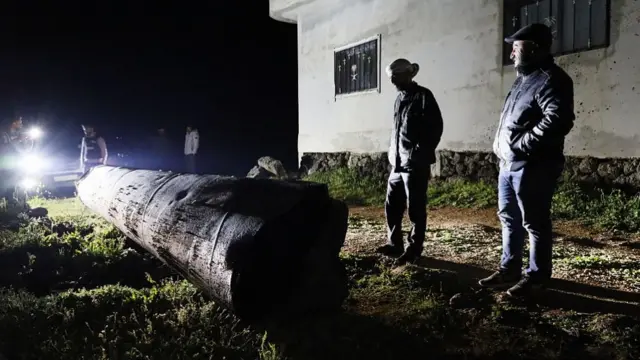
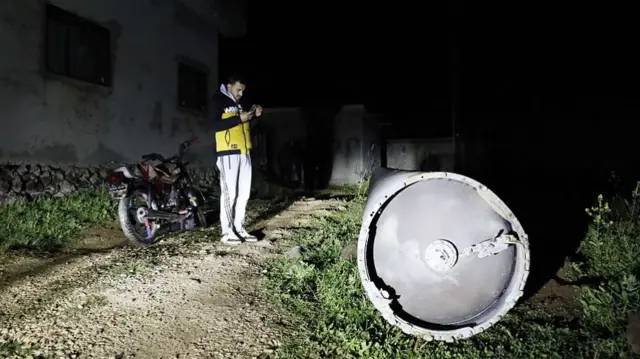
  16. Downed Iranian missile lands in Syrian villagepublished at 23:29 GMT 19 March

    An Iranian missile has landed in Ayn Farh, a village in southern Syria, after it was destroyed by the country's air defence systems.

    A general view of the Iranian missile that fell in the village of Ayn Farha after being destroyed by air defense systems in the Quneitra province of southern Syria.Image source, Anadolu via Getty Images
    A general view of the Iranian missile that fell in the village of Ayn Farha after being destroyed by air defense systems in the Quneitra province of southern Syria.Image source, Anadolu via Getty Images
  17. Strait of Hormuz re-opening negotiations could start soon, International Maritime Organisation sayspublished at 23:07 GMT 19 March

    The International Maritime Organisation (IMO) ended three days of meetings today.

    IMO chair, Victor Jimenez Fernandez, told the BBC he is confident that the organisation, over the next week, will start negotiations with Iran and regional powers to find a solution to re-open the Strait of Hormuz and a framework for safe passage.

    "No regional country can be outside of these negotiations," Fernandez said.

    "All (of) the region needs to come to gather to find a solution to allow the safety and secure transit of commercial vessels through the Strait of Hormuz."

  18. Urgent alerts followed by booms in the skies above Jerusalempublished at 22:38 GMT 19 March
    Breaking

    Sebastian Usher
    Global affairs correspondent, in Jerusalem

    As families have been celebrating the first night of Eid out on streets jammed with traffic in East Jerusalem, there's been a series of sirens followed by booms in the skies above.

    For an hour, the urgent alerts on mobile phones came one after another just before and after midnight.

    The sirens then followed sounding over a city that has been experiencing a heavy storm for several hours.

    Then one or two dull thuds could be heard in the sky. People here have become habituated to it and don't feel as endangered as in many other parts of Israel.

    But the speed of the sirens and alerts have come as something of a surprise.

    Iranian state television has confirmed that four salvos of missiles were fired in quick succession.

    It comes after the Israeli Prime Minister Benjamin Netanyahu gave a lengthy news conference in which he asserted that Tehran's ability to manufacture ballistic missiles had essentially been destroyed in the first twenty days of the war.

  19. Saudi Arabia intercepts two drones - reportspublished at 22:21 GMT 19 March

    Saudi Arabian media reports two drones have been intercepted and destroyed in the country's eastern region, citing the Saudi defence ministry.

  20. Cyprus' intention to discuss UK bases acknowledged by European Councilpublished at 22:08 GMT 19 March

    We can now bring you more from the statement issued by the European Council regarding the conflict in the Middle East.

    The European Union "stands firmly and unequivocally in support of member states close to the region", it says.

    The council adds that it also "acknowledges the intention of Cyprus to initiate a discussion with the UK on the UK bases in Cyprus, and stands ready to provide assistance as needed".

    It comes after Cypriot President Nikos Christodoulides told the BBC the UK's two military bases on Cyprus are a "colonial consequence" on the island and talks on their status and future need to take place.

    "When the situation is over in the Middle East we are going to have an open and frank discussion with the British government," he said as he arrived for an EU leaders' summit in Brussels.

    RAF Akrotiri was targeted by drones this month shortly after the start of the US-Israeli war with Iran and the UK has faced some criticism for its response to the attack.