Summary

  1. 'We hope the Iranian people take advantage of this incredible opportunity'published at 13:17 GMT 2 March

    Hegseth goes on to say that the US "set the terms of this war, from start to finish", and adds, "we hope the Iranian people take advantage of this incredible opportunity".

    He also urges the Iranian security forces to "choose wisely".

    "We fight to win and we don't waste time or lives," he emphasises.
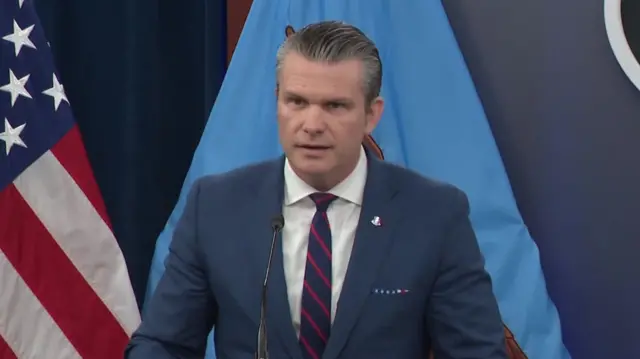
  2. Hegseth says Iran was using talks with US to 'restart nuclear ambitions'published at 13:15 GMT 2 March

    Pete Hegseth mid speech

    Pete Hegseth now says that peaceful nuclear ambitions "do not need to be buried underneath mountains".

    He references last year's Operation Midnight Hammer, which he says saw the US obliterate Iran's nuclear sites.

    The US defense secretary then accuses Tehran of refusing to negotiate a "peaceful and sensible" deal with the US.

    "They were stalling, buying time to reload their missile stockpiles and restart their nuclear ambitions," he continues.

    "President Trump doesn't play those games."

  3. Hegseth: Ongoing Iran operation won't lead to 'endless war'published at 13:14 GMT 2 March

    The US defense secretary continues by saying that Iran has a "conventional gun to our head as they tried to lie their way to a nuclear bomb", and "it almost worked" under Obama and his "terrible deal".

    He says the Iran regime was "gifted death from America and death from Israel".

    It's "not a so-called regime change war", but the regime "surely changed and the world is better off for it".

    Hegseth also says that the operation against Iran will not lead to an "endless war". Instead, he says, the US's aim is to destroy Tehran's missiles and other security infrastructure.

  4. Regimes like Iran cannot have nuclear weapons, says US defense secretarypublished at 13:11 GMT 2 March

    Hegseth says that Donald Trump has drawn the line "after 47 years of Iranian belligerence".

    He warns that anyone who kills or threatens Americans will be hunted down by the US "without apology and without hesitation".

    Hegseth says it is common sense that regimes like Iran must not have nuclear weapons, and Trump has the "guts" needed to enforce this.

  5. We didn't start the war but we're finishing it - Hegsethpublished at 13:10 GMT 2 March

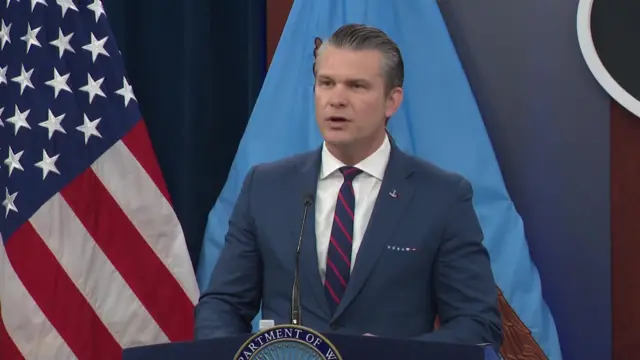
    Hegseth

    US Secretary of Defense Pete Hegseth is now speaking.

    He starts by saying that the operation on Iran, under direct orders of Donald Trump, is the most lethal, most complex and most precise aerial operation in history.

    "We didn't start the war, but under President Trump, we are finishing it," he says.

  6. US Defense Secretary Pete Hegseth set for briefing - watch livepublished at 13:00 GMT 2 March

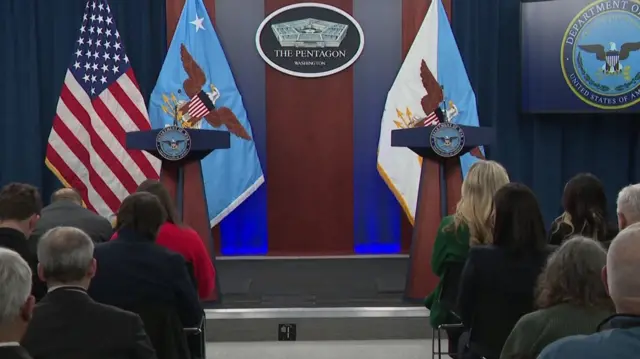
    Reporters sitting in front of a stage with two lecterns bearing the US sigil in the Pentagon

    We're expecting to hear from US Defense Secretary Pete Hegseth in the next few minutes.

    He'll be joined by US Chief of Staff Dan Caine, and you'll be able to watch live at the top of the page as the pair provide an update on US operations against Iran.

    We'll be listening in and will bring you all the key news lines here.

  7. Hezbollah intelligence chief killed in Beirut strike - IDFpublished at 12:53 GMT 2 March

    The Israel Defense Forces (IDF) has just released a statement saying a Hezbollah leader was killed in a strike in Beirut on Sunday.

    "The IDF now confirms that in a precise strike in Beirut last night (Sunday), the terrorist Hussein Makled, who served as the head of Hezbollah’s intelligence headquarters, has been eliminated," the statement reads.

  8. Analysis

    A wider conflict erupts in the Middle East - exactly as regional powers feared it wouldpublished at 12:44 GMT 2 March

    Hugo Bachega
    Middle East correspondent in Tel Aviv

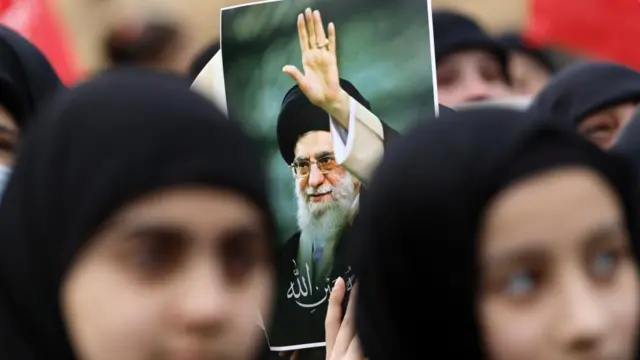
    A Hezbollah supporter carries a portrait of the late Iranian Supreme Leader Ayatollah Ali Khamenei during a gathering in solidarity with the Islamic Republic of Iran in the Dahieh suburb of Beirut, Lebanon, 01 March 2026Image source, EPA/Shutterstock
    Image caption,

    Hezbollah supporters gathered in solidarity of the Iranian regime on Sunday

    The US-Israel attack on Iran has turned into a wider conflict, a fear that regional powers had shared as President Trump deployed what he described as an “armada” to the Middle East.

    Iran has responded by attacking Israel and other countries. Now, Lebanon is being dragged into it too, after Hezbollah launched rockets and drones at Israel to avenge the killing of Supreme Leader Ayatollah Ali Khamenei.

    For opponents, Hezbollah’s actions will be seen as reckless. And it is possible that even some supporters will be critical, fearing further domestic isolation and destruction.

    Israel said it had launched an “offensive” campaign against the group, warning Israelis to “prepare for many prolonged days of combat”.

    For months, there has been speculation that Israel could expand its attacks amid claims Hezbollah was attempting to rebuild its capabilities. It appears that time may have come.

    Khamenei led a repressive regime for almost four decades and many are happy to see him dead. But neither Trump nor Netanyahu have laid out a clear justification for the attacks, as there was no known imminent threat from Iran, or explained what they are trying to achieve.

  9. US says fourth service member dies after Iranian attackspublished at 12:38 GMT 2 March
    Breaking

    A fourth US service member who was wounded during Iran's initial attacks has "succumbed to their injuries", the US Central Command says.

    Apparent Iranian strikes have been reported across the region. The US does not say where the attack in which this service member was injured took place.

  10. Analysis

    Gas prices rise sharply on international marketspublished at 12:36 GMT 2 March

    Theo Leggett
    International business correspondent

    Gas prices have risen sharply on international markets in response to the tensions in the Middle East.

    In the UK just after midday, natural gas for delivery in April was trading up 42%, at just over 112p per therm.

    Qatar is a major exporter of liquefied natural gas, accounting for about a fifth of global supplies – and most of this is transported by sea through the Strait of Hormuz.

    While Qatar’s main customers are in South and East Asia, any interruption to the trade is likely to lead to price increases on global markets, because it increases competition for shipments coming from elsewhere.

    The situation has been exacerbated by the closure of some gas-producing facilities in Israel as a security precaution.

    Analysts say this could represent a serious problem for Europe, as although winter is coming to an end and consumption is slowing down, the region’s gas stocks are running low and will need to be refilled over the summer.

  11. Qatar pauses production of liquefied natural gas after attackspublished at 12:22 GMT 2 March
    Breaking

    Qatar's state-owned energy company, QatarEnergy, says it has halted the production of liquefied natural gas (LNG) after Iranian attacks on some of its facilities.

    It says the attacked facilities were Ras Laffan - an onshore gas processing base - and Mesaieed - another key site for Qatar's natural gas production.

    The Gulf state is one of the world's top liquefied natural gas producers, alongside the US, Australia and Russia.

    Return to the latest post
  12. IDF issues new evacuation order for buildings in southern Beirutpublished at 12:17 GMT 2 March

    The Israel Defense Forces (IDF) has issued an "urgent" evacuation warning for buildings in the south of Beirut, Lebanon.

    Arabic spokesperson Avichai Adraee says the military will soon strike infrastructure which is says belongs to the Hezbollah-linked group Al-Qard Al-Hassan Association (AQAH).

    "You must evacuate immediately," he warns.

    Israel says AQAH finances Hezbollah’s military activities - something the group denies. AQAH says it only provides small, interest-free loans to ordinary Lebanese.

  13. 'We could hear the bombardment around us'published at 12:09 GMT 2 March

    Alice Cuddy
    Reporting from Beirut

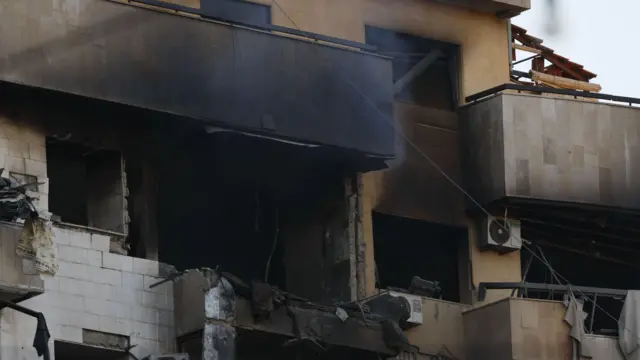
    A damaged building is seen after an Israeli airstrike in southern LebanonImage source, EPA
    Image caption,

    A damaged building after an Israeli airstrike in southern Lebanon

    I’ve just heard from a 38-year-old business owner who fled from his home in southern Lebanon today.

    “I woke up to a phone call from my friend shouting ‘get up, get up - pack your bags. Rockets were fired from Lebanon,'” he says.

    “Soon after, we heard the [Israeli] strikes hitting… we could hear the bombardment around us.”

    The man, who asked not to be named because of fears for his safety, said he tried to return to sleep but got calls through the night from friends telling him to leave.

    “I decided I would leave in the morning - in daylight, not at night. I didn’t want to drive in the chaos, in the traffic, in the dark.”

    He says he “packed as many essential things as I could, put them in a car and left - my mother, my sister and me".

    The Lebanese health ministry says Israeli attacks in Beirut and southern Lebanon have killed at least 31 people, with 149 injured.

  14. What is Hezbollah and why is it involved?published at 11:56 GMT 2 March

    Raffi Berg
    Middle East digital editor

    Smoke and dust rise amid explosions in Lebanon, as seen from Israel, after Lebanon's Iran-backed Hezbollah and Israel exchanged fire amid the U.S.-Israel conflict with Iran, March 2, 2026Image source, AFP via Getty Images
    Image caption,

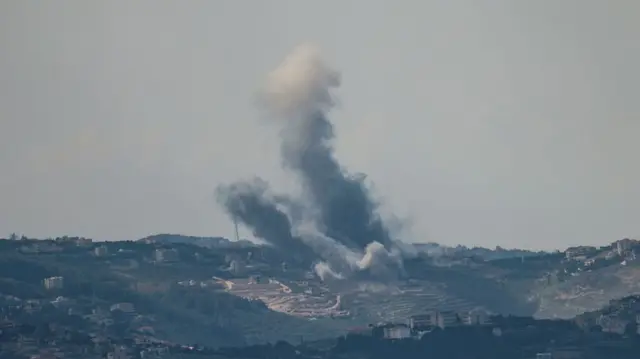
    Explosions in Lebanon, as seen from Israel, after Lebanon's Iran-backed Hezbollah and Israel exchanged fire

    The entry of Hezbollah in the conflict threatens to reopen a devastating year-long war between Israel and the Lebanese group which ended in a ceasefire 15 months ago.

    Hezbollah – a Shia Islamist organisation – is one of the most powerful of the armed groups across the region which are loyal to Iran. The Islamic republic has spent billions of dollars funding, training and equipping it to oppose Israel for decades.

    Hezbollah and Israel have repeatedly attacked one another since the group was formed in the 1980s. They fought a deadly war in 2006, and again in 2023-24, triggered by Hezbollah rocketing Israeli positions in support of Palestinians a day after Hamas’s deadly attack on Israel on 7 October and the start of Israel’s military campaign in Gaza.

    During the last war with Hezbollah, Israeli attacks killed about 4,000 people in Lebanon and left more than 1.2 million displaced, Lebanon said. Israeli authorities said more than 80 of its soldiers and 47 of its civilians were killed.

    Hezbollah was significantly weakened in the war and its firepower degraded. As part of the November 2024 ceasefire agreement, it agreed to withdraw extensively from southern Lebanon, although Israel has continued to attack Hezbollah targets which it says pose a threat.

    The group’s rocket and drone attack on Monday and the Israeli response puts the ceasefire in jeopardy, leaving the populations of Lebanon and northern Israel anxiously wondering if the renewed hostilities will be limited or spiral once again into all-out war.

  15. Lebanese government bans Hezbollah's armed activitiespublished at 11:52 GMT 2 March

    Samantha Granville
    Reporting from Beirut

    The Lebanese government has banned Hezbollah’s armed activities throughout the country, the prime minister said.

    The decision marks one of the clearest challenges yet to the movement’s long-standing parallel authority.

    The move follows Hezbollah’s rocket launches toward Israel on Monday, carried out without state consultation, which directly undercut the government’s declared policy of avoiding regional escalation.

    Both President Joseph Aoun and Prime Minister Nawaf Salam framed the action as a violation of Lebanese sovereignty, warning it risked dragging the country into a broader war and providing Israel justification for retaliation.

    How this plays out practically is still unclear as Hezbollah remains armed despite recent conflict with Israel.

  16. Heavy security, empty streets: The mood in Tehran and Karajpublished at 11:44 GMT 2 March

    Ghoncheh Habibiazad
    Senior reporter, BBC Persian

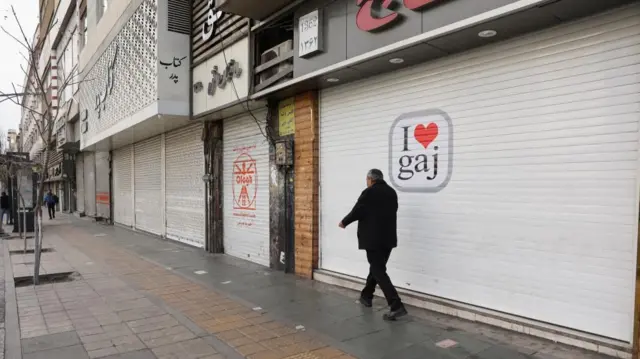
    A man walks near closed shops following the killing of Iran's late Supreme Leader Ayatollah Ali Khamenei in Israeli and U.S. strikes on Saturday, in Tehran, Iran, March 2, 2026.Image source, Reuters

    Access to those in Iran is difficult in the best of times. International news organisations are often refused visas, which severely limits their ability to gather information there.

    From afar, what I'm hearing today about the current situation on the ground from two sources is that there is a heavy security presence on the streets during the night in Tehran and a nearby city, Karaj.

    One person tells me prices have increased since the start of escalations and streets are mostly empty.

    People are also angry about the current internet outage - which according to internet monitoring group NetBlocks has been ongoing for more than 48 hours.

    Although streets are quiet, bakeries and petrol stations are busy.

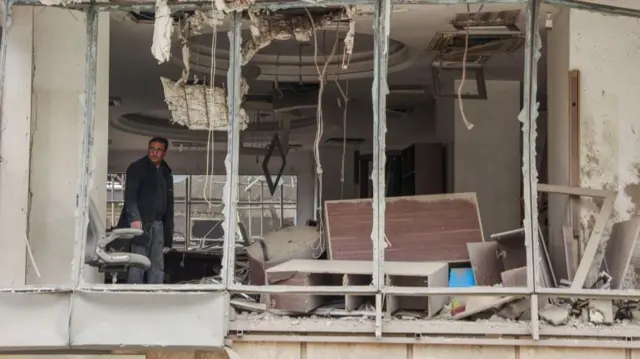
    Meanwhile, the Israel Defense Forces says it has received reports that a hospital in Tehran has sustained "minor collateral damage" following an attack on Sunday on nearby military infrastructure.

    It says the hospital was not the target of the attack.

    A person walks amid debris following an Israeli and the U.S. strike on Gandhi Hotel Hospital, amid the U.S.-Israel conflict with Iran, in Tehran, Iran, March 2, 2026Image source, Reuters
    Image caption,

    New images show damage to Tehran's Gandhi Hotel Hospital after what Israeli said was an attack on military infrastructure

  17. Two drones heading to RAF Akrotiri intercepted - Cypruspublished at 11:35 GMT 2 March
    Breaking

    As we just reported, sirens have sounded at the UK base in southern Cyprus.

    Now, a Cypriot government spokesperson says two drones heading towards RAF Akrotiri have been intercepted.

    This comes after an Iranian drone crashed into the UK military base last night, "causing minor material damage".

  18. Fighter jets leave Cyprus RAF base, as sirens ring againpublished at 11:33 GMT 2 March

    Nikos Papanikolaou
    BBC News

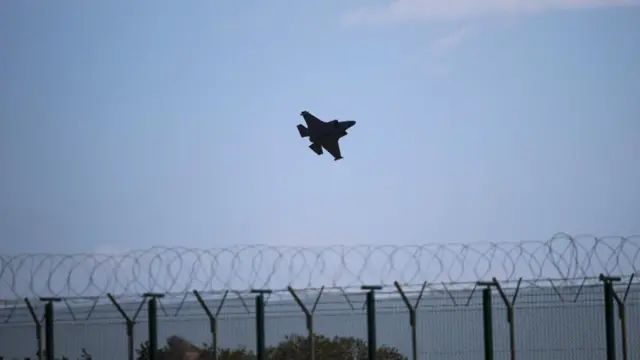
    A jet leaving an RAF baseImage source, Reuters
    Image caption,

    Aircraft seen leaving the British RAF base in Cyprus on Monday

    Sirens are sounding again in Akrotiri, according to local reports, and British fighter jets have taken off.

    A message sent to employees warned of an "ongoing security threat" and urged people to return home and remain indoors until further notice.

    "Stay away from windows and take shelter behind or under sturdy, solid furniture. Please await further instructions," the alert said.

    According to information received, the Cypriot interior minister has instructed the mayor of Kourion, near the UK base, to proceed with a mandatory evacuation.

    Meanwhile, Cypriot media reports that an alarm was raised at Paphos Airport after a suspected drone was detected in its airspace.

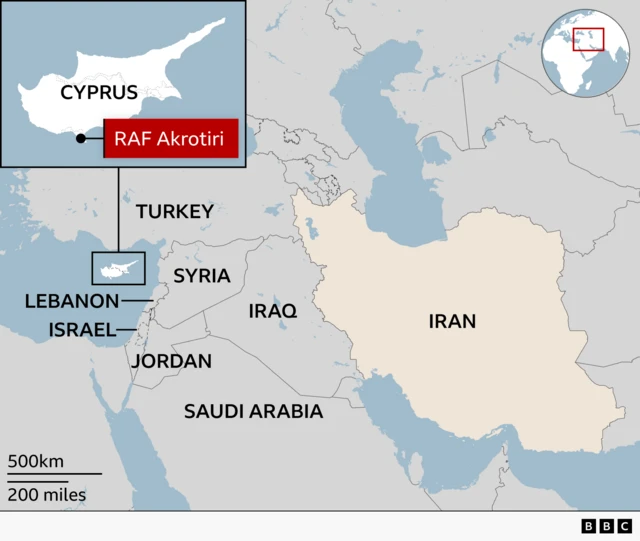
    Map showing the eastern Mediterranean and Middle East. Cyprus is highlighted with an inset zooming in on the island, marking the location of RAF Akrotiri in the south. Surrounding countries labelled include Turkey to the north, Syria and Lebanon to the east, Israel and Jordan further south, and Iraq, Saudi Arabia, and Iran to the east. A scale bar indicates 500km and 200 miles. A small globe in the corner shows the region’s location.
  19. US says three jets downed in 'apparent friendly fire' incident in Kuwaitpublished at 11:11 GMT 2 March
    Breaking

    Earlier, the Kuwaiti military said "several" US fighter planes had crashed in Kuwait - and that the circumstances of the incident were under investigation.

    US Central Command has just now said three of its F-15 jets "flying in support of Operation Epic Fury" - the US operation against Iran - "went down over Kuwait due to an apparent friendly fire incident".

    All six crew ejected safely and have been recovered, it says.

    Footage verified by the BBC earlier shows the apparent moment a fighter jet was downed near Kuwait City - watch it below:

    Media caption,

    Video appears to show F-15 fighter jet crashing in Kuwait

  20. IDF says it has begun additional strikes on Tehranpublished at 11:04 GMT 2 March

    In a new update, the Israel Defense Forces (IDF) says it has "begun an additional broad strike" on the Iranian capital, Tehran.

    This is targeting what it describes as "Iranian terror regime targets".