Summary

Media caption,

'Putin showing no signs of compromise', says BBC's Steve Rosenberg

  1. Kremlin says it's wrong to say Putin rejected US peace planpublished at 10:05 GMT 3 December 2025

    Vitaliy Shevchenko
    Russia editor, BBC Monitoring
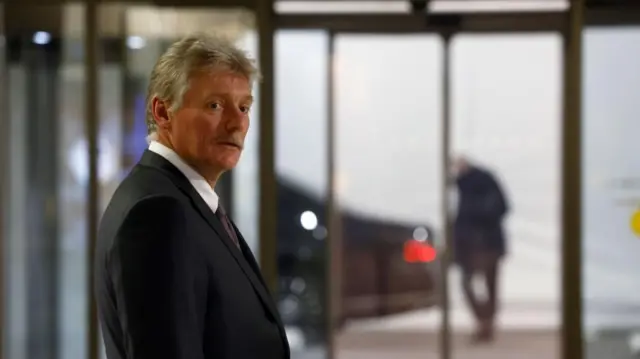
    Kremlin spokesman Dmitry PeskovImage source, EPA

    Kremlin spokesman Dmitry Peskov says that "it wouldn't be correct" to say that President Putin rejected US proposals for peace during talks with Steve Witkoff and Jared Kushner yesterday.

    Answering a question at a daily press briefing, Peskov says: "Yesterday was the first time that a direct exchange of opinions took place. Something was accepted, something was marked as unacceptable. This is a normal working process and a search for compromise."

    Peskov also refused to disclose any details of the five-hour negotiations in the Kremlin: "There's an understanding that the more quiet surrounds these negotiations, the more productive they are. We'll stick to this principle and we're hoping that our American counterparts will, too."

    Last week saw a string of media leaks suggesting that the Americans attempted to present a maximalist list of demands compiled by Russia as their own "peace plan", that the US has been involved in secret business talks with Russia, and that Witkoff advised the Russians on how to approach Donald Trump.


    Return to the latest post
  2. Analysis

    Europe is not united on how best to support Ukrainepublished at 09:55 GMT 3 December 2025

    Nick Beake
    Reporting from Brussels

    Nato's foreign ministers are meeting in the comfort of the alliance’s HQ in Brussels far from the Ukrainian battlefield.

    They’re also far from the ongoing US-led attempt to stop the fighting and make a peace deal.

    That’s because President Trump and his team have been making overtures to Russia, not European allies.

    Instead, Europe has been scrambling time and again to try to placate Trump whenever his sympathies have swung back in Moscow’s favour.

    For all the military prowess of the European countries represented today, you could argue their lack of power and influence is reflected in the lack of any very senior US official in attendance at the meeting.

    There is no Marco Rubio or Pete Hegseth, America’s secretary of state and secretary of defence respectively.

    Despite the resolute language we’ve heard this morning, Europe is not united on how best to support and fund Ukraine - and it finds itself largely frozen out of the US’s thinking.

  3. 'So-called peace talks' and 'no serious willingness from Russia' - Nato ministers reactpublished at 09:49 GMT 3 December 2025

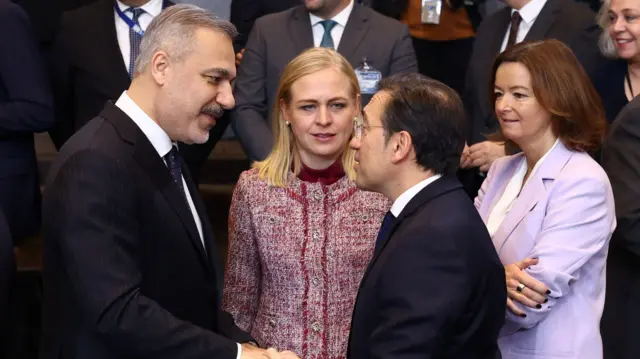
    Turkish Foreign Minister Hakan Fidan speaks with Spanish Foreign Minister Jose Manuel Albares Bueno next to Finland's Foreign Minister Elina Valtonen and Slovenia's Foreign Minister Tanja FajonImage source, REUTERS/Yves Herman
    Image caption,

    Nato foreign ministers - including those from Turkey, Finland, Spain and Slovenia, as pictured above - are meeting in Brussels

    As we've been reporting, Nato foreign ministers are in Brussels to discuss the ongoing talks to end the war in Ukraine.

    Ahead of their meeting, German Foreign Minister Johann Wadephul said he welcomed "all talks" aimed at ending the war, but saw "no serious willingness on the Russian side to enter into negotiations".

    Also reflecting on the overnight US-Russia talks, Estonian Foreign Minister Margus Tsahkna said Europe must decide what will happen in the continent, adding: "Putin cannot decide over us [...] the US cannot make decisions instead of us."

    His Latvian counterpart, Baiba Braze, warned that "Russia is trying to split Nato" through what she described as "so-called peace talks".

    Finland's Elina Valtonen pushed back on Putin's earlier comments that his country did not want conflict with Europe but was "ready" for war, saying Russia was using this "rhetoric" to "intimidate us".

    The UK's Foreign Secretary, Yvette Cooper, called on the Russian president to "end the bluster and bloodshed", while Norway's Espen Barth Eide said Ukraine "needs to stay strong" and Nato needs to "stay committed".

  4. Zelensky critic says Ukraine 'not in the best position' to negotiatepublished at 09:39 GMT 3 December 2025

    Joel Gunter
    Reporting from Kyiv

    The Ukrainian opposition MP Oleksiy Goncharenko told me this morning that Ukraine was “not in the best position” in negotiations over an end to the war and would need to accept tough compromises to secure a much needed peace.

    He pointed out that the US had stopped the de-facto free military support Ukraine benefited from under the Biden administration, and while the EU was “more supportive politically” it was “unable to come to a decision on frozen assets”, he said.

    Goncharenko, a frequent critic of President Volodymyr Zelensky, was referring to the roughly $300bn in Russian assets frozen by Europe, which Ukraine has pushed to be released to fund its war effort.

    There were red lines for Ukraine though, Goncharenko said - above all the country should refuse to cede any additional territory in eastern Ukraine that Russia had not yet captured.

    “They want to take in negotiations what they have failed to take during 12 years of war,” he said. “This is not acceptable.”

    Another red line was security guarantees, according to Goncharenko. A pathway to Nato membership was “the best guarantee possible”, he said, “but if the US is not ready for this, we cannot do anything about it. We cannot make them accept it".

  5. EU agrees deal to phase out Russian gas imports by 2027published at 09:23 GMT 3 December 2025

    EU Commission President Ursula von der LeyenImage source, EPA
    Image caption,

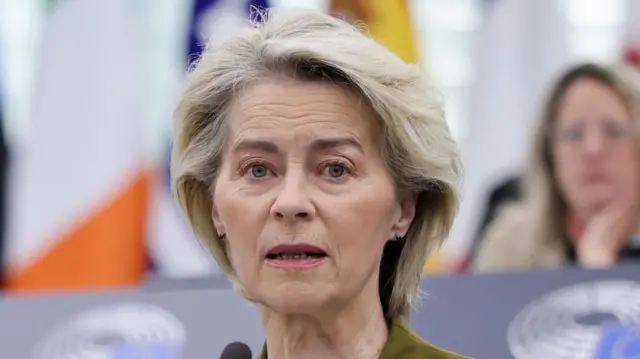
    EU Commission President Ursula von der Leyen calls it "the dawn of a new era"

    The European Council and the European Parliament have reached a provisional agreement to phase out imports of Russian gas by 2027.

    "This is the dawn of a new era, the era of Europe's full energy independence from Russia," says EU Commission President Ursula von der Leyen.

    Von der Leyen says that Russian gas imports or LNG and pipeline are "down from 45% at the beginning of the war to 13". Coal imports are down from 51% at the beginning of the war to now zero, she adds, and crude oil imports are down from 26% to 2%.

    The European Council said the aim is to end dependence on Russian energy supplies "after Russia weaponised gas supplies, which had a significant impact on the European energy market".

    In May, the European Commission published its "roadmap" outlining its plans to end Europe's reliance on Russian energy, after which Kremlin spokesperson Dmitry Peskov told Reuters news agency that Europe was "shooting itself in the foot".

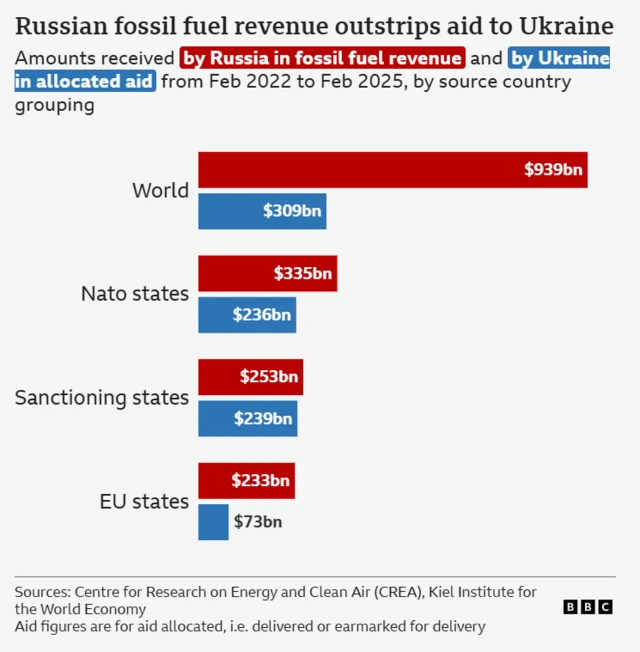
    A chart showing the amounts received by Russia in fossil fuel revenue and by Ukraine in allocated aid
    Image caption,

    Russia has made billions from fossil fuel exports to the West, data shows, helping to finance its full-scale invasion of Ukraine

  6. Putin and Trump envoy talks could be longest yetpublished at 09:08 GMT 3 December 2025

    Will Vernon
    BBC News

    The late-night discussions in the Kremlin between President Putin and Donald Trump’s envoy Steve Witkoff lasted for five hours but failed to achieve any tangible results.

    But they could claim to be the longest talks between the two men since Steve Witkoff began meeting Putin - this was his sixth visit to Russia this year.

    In February 2025, Witkoff and Putin met for three and a half hours, according to the US envoy.

    In March, the Russian President reportedly kept the American waiting for eight hours. It wasn’t clear how long the talks lasted, but they were rumoured to be short.

    Their third meeting, in the city of St Petersburg on 11 April, lasted four-and-a-half hours. The two men spoke again in the Kremlin for three hours on 25 April.

    Another meeting on 6 August went on for just under three hours, according to Russian media.

  7. UK pledges extra £10m to support Ukrainian energy infrastructurepublished at 09:00 GMT 3 December 2025

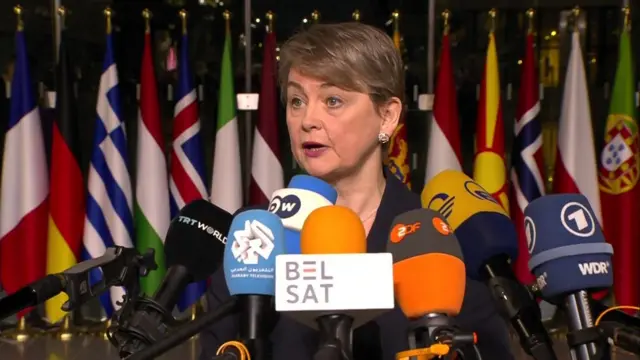
    Yvette Cooper speaking infront of Nato flags and microphonesImage source, AFP

    As UK Foreign Secretary Yvette Cooper arrived in Brussels earlier, she announced an additional £10m to support energy infrastructure in Ukraine.

    "We will continue to work to switch the lights back on," she told reporters. It comes after Russian strikes caused power outages for more than 600,000 Ukrainians over the weekend.

    Cooper said Putin was seeking to escalate the war, and she added that the UK was in Brussels to "affirm our strong support for the people of Ukraine and for the process to secure a just and lasting peace for Ukraine".

  8. Ukraine and Russia report overnight strikes after Moscow talkspublished at 08:52 GMT 3 December 2025

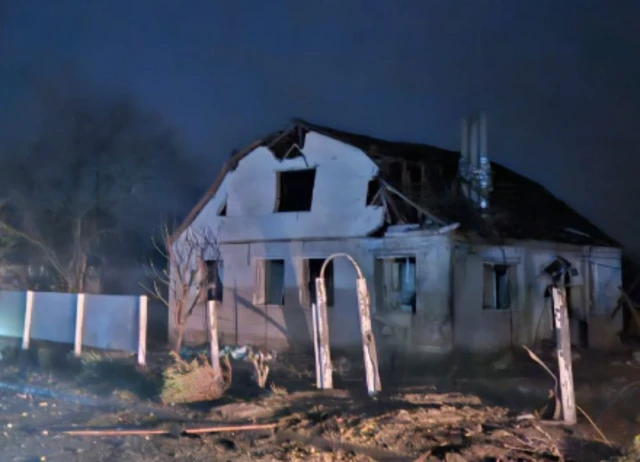
    A damaged home in nighttimeImage source, Vladislav Gayvanenko / Dnipropetrovsk Regional State Administration/ Telegram
    Image caption,

    The result of a drone attack in the town of Ternovka in Ukraine's Dnipropetrovsk region

    Strikes have reportedly continued between Russia and Ukraine overnight following the talks in Moscow.

    In Ukraine:

    Two men were killed and two seriously injured Ternovka, in the Dnipropetrovsk region, as a result of a drone attack, its regional head says. Damage to homes and civilian infrastructure was reported in the Dnipropetrovsk, Zaporizhzhia, Kharkiv, and Odesa regions.

    A drone attack in Ukraine's Odessa region caused a fire at an energy facility, with one employee in a serious condition in hospital, the head of the regional military administration Oleg Kiper says. The Russian military did not comment on the attack.

    In Russia:

    Russia's defence ministry says 102 Ukrainian drones were intercepted and destroyed by its air defence systems overnight, and in Russia's Tambov region, a fire broke out at an oil depot after a Ukrainian drone attack, its regional governor Yevgeny Pervysho reports.

  9. Russia 'preparing for long-term confrontation', says Ruttepublished at 08:32 GMT 3 December 2025

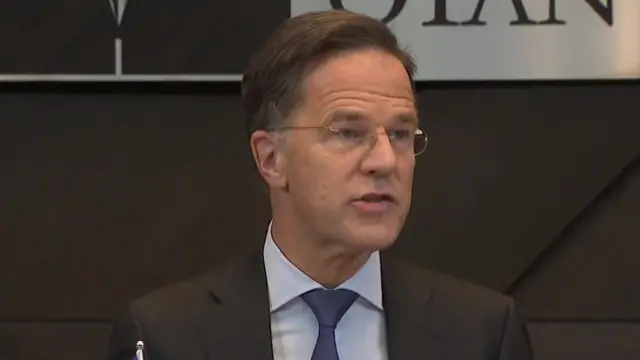
    Mark RutteImage source, AFP

    In his opening remarks at the round table, Nato chief Mark Rutte says Russia "continues to test our deterrence", and "we face real and lasting dangers".

    Rutte goes on to say that Russia has violated its airspace with jets and drones, conducted sabotage and sent spy ships into its waters.

    These actions are "reckless and dangerous", he adds.

    Russia is "working closely" with China, North Korea and Iran "to disrupt our societies and tear up the global rules", he says, and are "preparing for long-term confrontation".

    Rutte says Nato countries are "stepping up our defence investments but we all need to pull our weight".

    He adds that Ukraine "needs our support more than ever", as winter is coming and the Russian attacks continue.

  10. Nato round table beginspublished at 08:21 GMT 3 December 2025

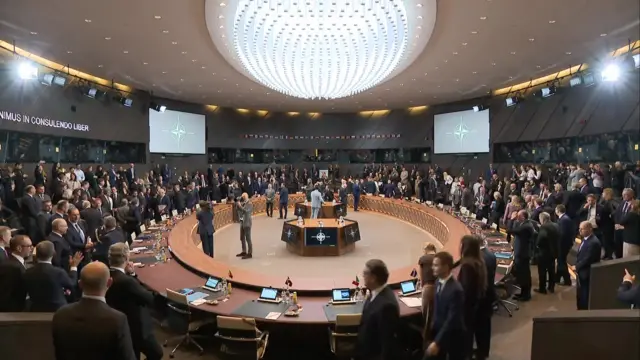
    Round table at Nato with large group of smart people gathered around itImage source, AFP

    A round table meeting of Nato foreign minsters has just begun, where they're expected to speak about ongoing peace talks, as well as defence issues.

    We're hearing opening remarks from the organisation's chief Mark Rutte - which we'll bring to you shortly.

    After this, there will be a working lunch with Ukrainian Foreign Minister Andrii Sybiha and EU High Representative Kaja Kallas.

    That will be followed by a press conference fronted by Rutte - which is expected at 15:30 local time (14:30 GMT).

  11. Talks are good but Ukraine must be in strongest possible position, says Nato chiefpublished at 08:13 GMT 3 December 2025

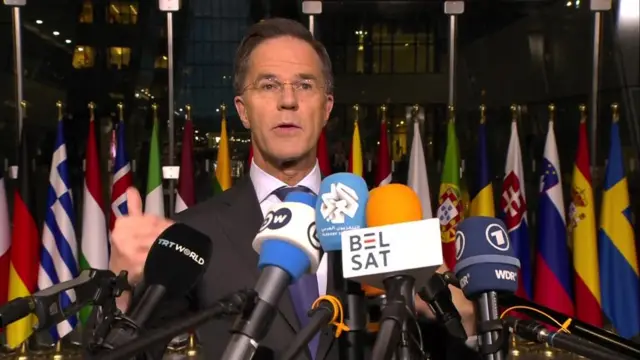
    Rutte speaking into microphones in front of Nato flagsImage source, AFP

    Nato foreign ministers are arriving for a meeting in Brussels to discuss the ongoing talks to end the war in Ukraine.

    Speaking briefly to the press on arrival, Nato chief Mark Rutte says that while it's good the peace talks are ongoing, Nato has to make sure Ukraine is in the strongest possible position.

    He says officials will discuss "keeping Ukraine as strong as possible in the fight today", but also "to be in the strongest possible position when peace talks really start to happen in a way where this could lead to results."

    Rutte adds that the best way to put pressure on Russia is to make sure weapons continue to flow into Ukraine, and that Russia feels the "bite" from effective economic sanctions.

  12. Talks 'constructive' but no compromise reached, say Russian officialspublished at 07:56 GMT 3 December 2025

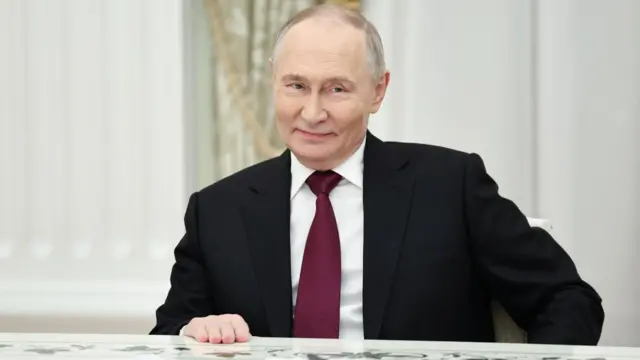
    Vladimir Putin smiling wearing a black suit and burgundy tieImage source, Alexander Kazakov/Sputnik/Kremlin Pool/EPA/Shutterstock

    After the Moscow meeting, Putin aide Yuri Ushakov described the talks as "constructive".

    Speaking in a media briefing, he said the Kremlin "agreed with some points… but some things we criticised".

    But, he added, "we have not come up with a compromise version yet... a lot of work lies ahead."

    Earlier in the day, Putin said changes proposed by Kyiv and Europe to the initial 28-point peace plan - which had been pushed by the US - were unacceptable.

    His country "wasn't planning to go to war with Europe," he said, "but if Europe suddenly wants to go to war and starts one, we are ready right now".

  13. Nato foreign ministers meet after Moscow talks fail to achieve breakthroughpublished at 07:42 GMT 3 December 2025

    Alex Smith
    Live editor

    Yesterday's talks between US and Russian officials in Moscow appear to have failed to achieve a breakthrough on a possible deal to end the war in Ukraine.

    A spokesperson for the Kremlin said a meeting between Russian President Vladimir Putin and Trump's special envoy Steve Witkoff was "constructive". There's been no comment from the US.

    It all comes after the US pushed for a 28-point peace plan - widely seen as favourable to Russia - following consultation with Moscow.

    Ukraine and its European allies proposed changes to that proposal, but speaking yesterday Putin said those changes were unacceptable.

    If Europe "wants to go to war and starts one, we are ready right now", he said.

    Today, a number of Western foreign ministers are arriving for a meeting at the Nato headquarters in Brussels - here it's expected they'll discuss security in the region and the ongoing peace discussions in Ukraine.

    We're restarting our live coverage here, stick with us.

  14. Putin aide says talks 'useful', but little sign of progress - a recappublished at 02:01 GMT 3 December 2025

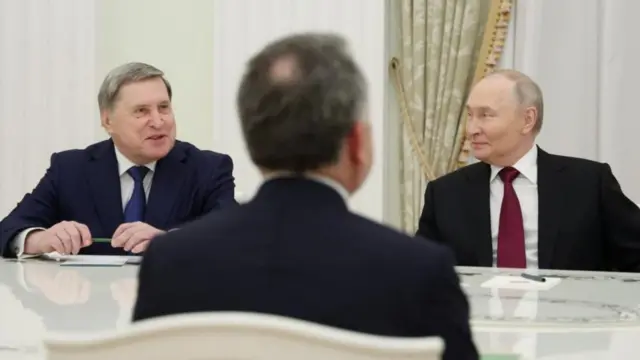
    two men in suits at a white tableImage source, Reuters
    Image caption,

    Yuri Ushakov to the left of Russian President Vladimir Putin during the day's talks

    The US-Russia talks rumbled on for around five hours, wrapping up after midnight Moscow-time.

    Our main source of information about the meeting has come from a media briefing given shortly after the talks wrapped, by Putin aide Yuri Ushakov - who was at the table:

    • Ushakov described the talks as "constructive, very useful, and substantive"
    • But he also said that "no compromise" plan was reached in the meeting and that a "lot of work" lay ahead
    • The idea of Ukrainian territorial concessions and Russia-US economic cooperation were points of discussion in the meeting, he said
    • Ushakov added that - beyond a revised 28-point plan for peace, which we haven't seen - Russia received four additional documents from the US side for discussion
    • He also told media that the US and Russia had agreed not to disclose further details of the talks

    We are now ending our live coverage of the latest round of peace talks. You can read more here for a recap of what we know so far.

    Thanks for joining us.

  15. The plans to end the war in Ukraine: What was on the agenda in Moscow?published at 00:48 GMT 3 December 2025

    It all started with a leaked peace plan two weeks ago, in which the US set out 28 points it believed would help secure a lasting peace between Russia and Ukraine. The draft document proposed:

    • The recognition of Crimea and the regions of Donetsk and Luhansk as Russian by the US and others
    • Ukraine's sovereignty would be confirmed - but Kyiv would have to hand over the remaining land it controls in Donetsk and Luhansk
    • No Nato membership for Ukraine but a possibility to become a EU member, with "short-term preferred market access to the European market while the issue is being evaluated"
    • Members of the Ukrainian Armed Forces would be capped at 600,000
    • Russia would be reintegrated into the global economy

    The plan was seen as favourable to Moscow and sparked a flurry of talks between the US, Ukraine and its European allies. In Geneva last week, Washington and Kyiv agreed to a new version of the proposal - which is not publicly available but reports since have highlighted some of the potential changes:

    • Ukraine commits to not recover occupied sovereign territory through military means, but through negotiations
    • The size of the Ukrainian Armed Forces would be limited to 800,000 personnel
    • Ukraine's Nato membership will depend on the consensus of the alliance's members - which they say doesn't exist at this point in time
    • Nato also agrees not to station troops in Ukraine
    • Ukraine would be provided with security guarantees mirroring Article 5 of the Nato Treaty - this means that an attack on Ukraine would be treated as an attack against members of the alliance

    However, as we've been reporting, further talks between the US and Ukraine have taken place in Florida this week - and the details of the proposal Witkoff and Kushner discussed today with Putin remain unclear.

  16. Where has Zelensky been this week?published at 00:23 GMT 3 December 2025

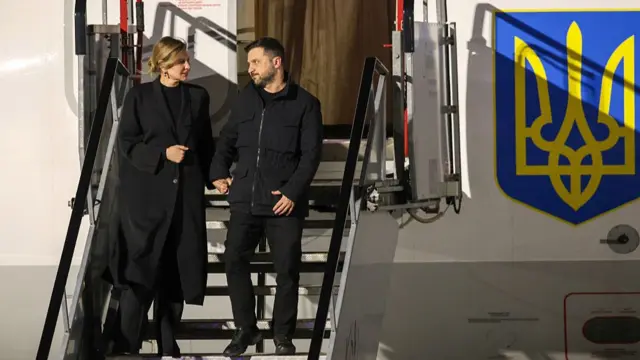
    Zelensky and his wife, Zelenska, descend the stairs coming from their official plane, which bears the Ukrainian crestImage source, AFP via Getty Images
    Image caption,

    Ukrainian President Zelensky with the First Lady, Olena Zelenska, arriving in Dublin on Monday night

    Ahead of Tuesday's talks in Moscow between the US and Russia, Ukrainian President Zelensky met with multiple multiple European powers.

    On Monday, he met French President Emmanuel Macron in Paris, where he joined a call with European leaders including those of the UK, Germany, Poland, and Italy.

    This came after Ukrainian and US negotiators finished two days of meetings in Florida at which they worked to revise a peace plan viewed as favouring Russia.

    As Witkoff and Kushner sat down at the Kremlin, Zelensky was meeting Irish Prime Minister Micheál Martin and President Catherine Connolly in Ukraine's first official state visit to the country.

  17. Witkoff departs Moscow, report sayspublished at 23:57 GMT 2 December 2025

    An aircraft thought to be carrying Witkoff departed Moscow in the early hours of Wednesday, Reuters reports, citing TASS news agency.

    A Bombardier jet that brought Witkoff to the Russian capital on Tuesday left Vnukovo airport at 02:02 local time (23:02 GMT), according to aviation sources.

    We do not know where he is headed next.

  18. No word yet from US, Ukraine or western alliespublished at 23:44 GMT 2 December 2025

    While we have heard from Russian officials on their thoughts following talks with US envoys Steve Witkoff and Jared Kushner, we are yet to hear any comments from the US or Ukraine.

    There has also been no word so far from Kyiv's allies in Europe, including the UK, France and other members of the Coalition of the Willing.

    Stay with us and will bring you any initial reactions from Washington and across Europe following today's crucial meeting.

  19. What led to the latest peace talks?published at 23:36 GMT 2 December 2025

    In recent weeks there has been renewed momentum in efforts to negotiate an end to the war in Ukraine. Here's a timeline of some of the key moments:

    19 November: Details of a 28-point US plan are leaked after reports surfaced that the US and Russia had prepared a new proposed framework to end the war, requiring major concessions from Ukraine.

    21 November: Zelensky warns his country "might face a very difficult choice: either losing dignity, or risk losing a key partner". Putin says the plan could form the basis of a peace agreement, and describes it as a ”modernised” version of a plan discussed with Trump at a summit in Alaska in August.

    22 November: Trump says the plan is not his “final offer” after Ukrainian allies express concern.

    23-24 November: Senior Ukrainian and US officials meet in Geneva and hold what both sides describe as “highly productive” talks. Reports emerge of a counter proposal from Ukraine’s European allies.

    26 November: Trump defends Witkoff after a leaked recording appears to show him advising a Russian official on how to appeal to the US president.

    27 November: A US deadline for Ukraine to accept the plan passes without incident or agreement. Putin doubles down on his core demands, and Zelensky accuses Russia of having “scorned” efforts to “truly end the war”.

    28 November: Zelensky’s chief of staff, Andriy Yermak, who had played a leading role in the negotiations, resigns following an anti-corruption raid on his home.

    30 November: The US, including Witkoff and Kushner, hold talks with Ukraine’s new lead negotiator, Rustem Umerov, in Florida.

    2 December: Witkoff and Kushner hold talks with Putin, Yuri Ushakov and Kirill Dmitriev at the Kremlin.

  20. No concessions and no compromise found yetpublished at 22:50 GMT 2 December 2025

    Laura Gozzi
    Europe reporter

    The progress made by the US and Russian negotiating teams appears to have been minimal.

    Not much has emerged beyond vague comments about ideas looking "acceptable" and the discussion on the "essence" rather than specific decisions.

    In other words, even five hours at the Kremlin have yielded little to no substance. The only thing we know for sure is what Ushakov spelled out: no compromise has been found yet.

    Many, in Kyiv and around Europe, have warned that Russia's best option is to play for time so that it can keep making its grinding advance on the battlefield and wear down Ukrainian resources and defences.

    Short of being forced into surrender, it seems that tonight's outcome will have been one the very worst ones for Ukraine: no concessions whatsoever by Russia and no indication that the US is ready to adopt a tougher tone against Moscow's unwillingness to budge - but a clear impression that the US-Russia relationship is growing ever more cordial, while Kyiv and its European partners risk being left out of negotiations they would most be impacted by.