Summary

  1. BBC Verify

    Images show smoke and fire at Iran heavy water nuclear facilitypublished at 18:26 GMT 27 March
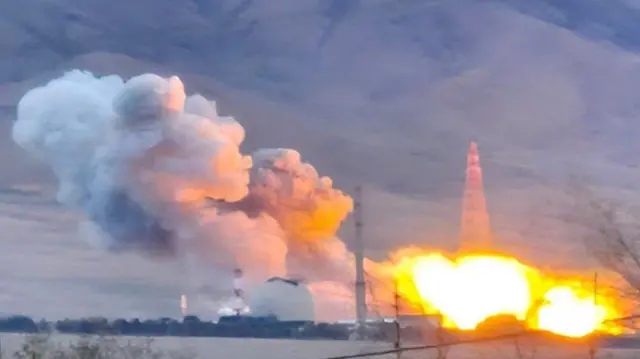
    Iranian heavey water nuclear complex on fire. A yellow ball of fire can be ssen on the right hand side with a plume of smoke coming out of it.Image source, X/Mamlekate

    By Shayan Sardarizadeh

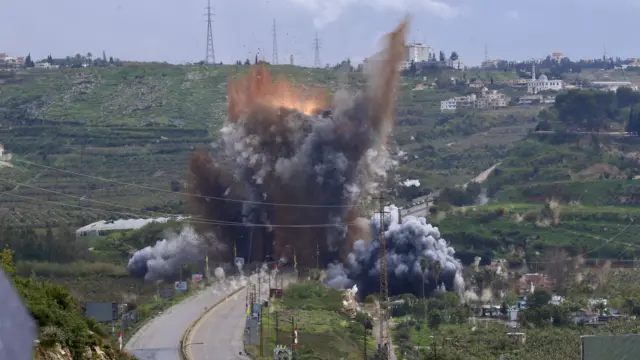
    Newly published photos show the moment of an Israeli strike targeting Iran’s Khondab heavy water nuclear complex near the city of Arak.

    The images, authenticated by BBC Verify, show a ball of fire and smoke rising near the reactor within the facility.

    While it’s difficult to pinpoint the precise target of the strike, it appears buildings were struck adjacent to the reactor, seen in the image above as a white-domed structure.

    Israel had issued an evacuation order for the entire facility earlier.

    Iran's Atomic Energy Organisation has confirmed that the Arak nuclear facility was targeted twice today, adding that no casualties or contamination has been reported.

    Israel targeted the same complex last year during the 12-day war. Images released in the aftermath of that attack showed a visible hole in the roof of the reactor.
    Return to the latest post
  2. Iranian foreign minister accuses US and Israel of targeting civilian centrespublished at 18:10 GMT 27 March

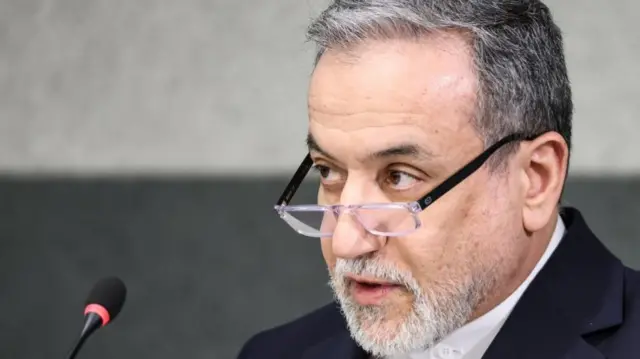
    Abbas Araghchi speaking into a microphone with glasses onImage source, Reuters

    Iranian Foreign Minister Abbas Araghchi has accused the US and Israel of "continued illegal attacks" on "civilian targets and centers", including schools, hospitals, historical and cultural buildings and residential areas, according to Iranian state media.

    He adds that the country will continue resolutely "defending the Iranian nation".

    In a post on Telegram, the Iranian Revolutionary Guard Corps-affiliated news agency IRNA also says Araghchi had discussed the war during a phone conversation with Russian Foreign Minister Sergei Lavrov.

    According to the IRNA, Araghchi says the insecurity of the Strait of Hormuz is the result of the US and Israel's military action and that Iran has a legal right to prevent the passage of ships through the strait.

  3. IDF says it has 'significant plans' to continue operation in southern Lebanonpublished at 17:51 GMT 27 March

    Smoke and flames rise after an Israeli strike targeting the Qasmiya Bridge near Tyre, in southern Lebanon, 22 March 2026.Image source, EPA
    Image caption,

    Smoke and flames rise after an Israeli strike on 22 March targeting a bridge near Tyre, southern Lebanon

    A spokesperson from the Israel Defense Forces (IDF) says it has "significant plans" to continue its operation in southern Lebanon.

    "We are at a historic crossroads," says Chief of General Staff Eyal Zamir in a post on Telegram. He adds that the plan is to "fundamentally change the security reality - from Tehran to Beirut".

    "The communities of the north rely on you," Zamir says.

    It follows previous comments from Israeli Defence Minister Israel Katz, who has spoken about creating a "defensive buffer" in the region, with Israeli troops controlling a large swathe of southern Lebanon.

    Israeli officials say the aim is to protect communities in northern Israel from Hezbollah attacks.

    Previous IDF operations in the region have included blowing up bridges on the Litani River, about 30km (19 miles) from the Lebanon-Israel border.

  4. UN establishes task force to move raw materials from Iranpublished at 17:24 GMT 27 March

    Nada Tawfik
    Reporting from New York

    The UN Secretary General’s spokesperson Stephane Dujarric just gave an update on their efforts to help with the disruptions in the Strait of Hormuz, which he says risks creating ripple effects on humanitarian needs and agriculture production in the coming months.

    Antonio Guterres has established a dedicated Task Force, aiming for example to facilitate fertiliser trade and the movement of raw materials, though not crude oil.

    Dujarric says the UN has a lot of experience developing these types of mechanisms in conflict zones – including from Ukraine and the Black Sea Grain Initiative – but they don’t know what it will look like yet.

    The secretary general has consulted on this over the last couple of days with leaders such as the Foreign Ministers of Iran, Egypt and Pakistan and the American and Bahraini Ambassadors to the UN.

    If successful, the UN feels this could help towards a wider political settlement.

  5. Trump makes passing mention of Iran at White House eventpublished at 17:10 GMT 27 March

    Bernd Debusmann Jr
    Reporting from the White House

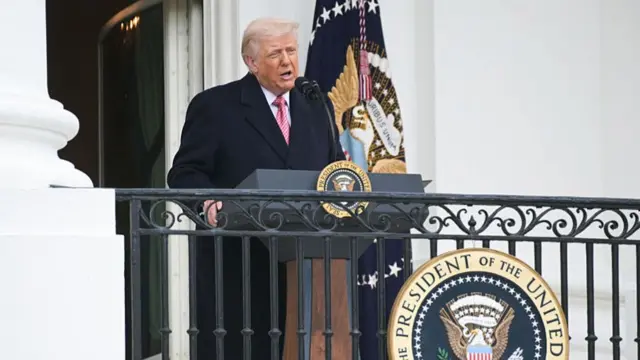
    US President Donald Trump delivers remarks to farmers from the Truman balcony of the White House in Washington, DC.Image source, Getty Images

    Donald Trump is currently on the balcony of the White House, addressing hundreds of US farmers - many wearing cowboy hats - on the South Lawn of the property.

    Trump's remarks, as expected, have been heavy on domestic policy.

    This event, after all, is aimed at promoting the various steps that Trump administration has taken to help farmers, a key voting block in the US.

    The war in Iran, however, garnered a brief mention, when Trump interjected to briefly mention that "we're doing really well in Iran".

    "How good is our military?" he asked the crowd, to applause.

    We're continuing to listen across to Trump's comments, and will bring you any key developments.

  6. Iranian tolling system in Strait of Hormuz would be unacceptable, Rubio sayspublished at 17:07 GMT 27 March

    In response to another question, Rubio says: "we're not asking for anybody's help with this war".

    He says Iran may decide to set up a tolling system for the Strait of Hormuz

    He calls it "unacceptable" and says the whole world should be "outraged", but adds that countries most impacted by a possible tolling system in the key shipping route "should do something".

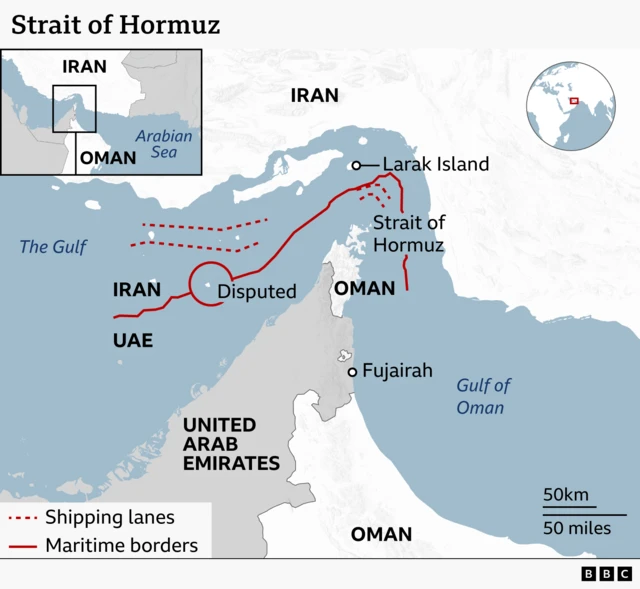
    About 20% of the world's oil and liquefied natural gas (LNG) usually passes through the Strait of Hormuz and the war has sent global fuel prices soaring.

    The Strait of Hormuz, a narrow shipping route in the Gulf region, is one of the world's most important shipping routes. Bounded to the north by Iran and to the south by Oman and the United Arab Emirates (UAE), the Strait of Hormuz connects the Gulf with the Arabian Sea. The strait is deep enough for the world's biggest crude oil tankers, and is used by the major oil and gas producers in the Middle East - and their customers.
  7. Iran's response to US peace plan 'could happen at any moment' - Rubiopublished at 16:57 GMT 27 March

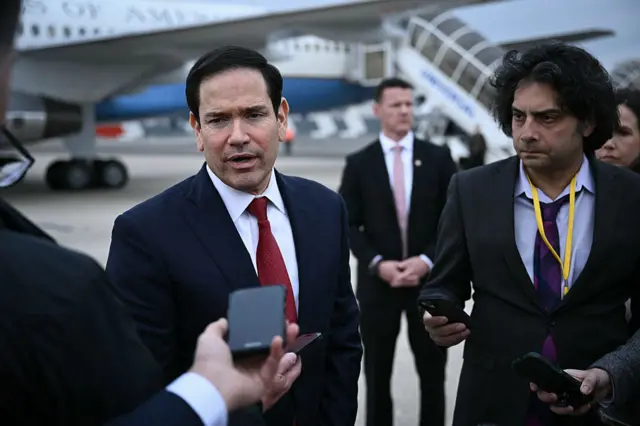
    Marco Rubio.Image source, Getty Images

    Rubio is now asked whether he is expecting Iran to respond to the US's 15-point plan today.

    The BBC's US partner CBS News reported earlier, citing sources, that the Iranian response is expected on Friday.

    "We haven't gotten it yet," he says.

    Pushed on the expected timing, he adds that it "could happen at any moment" and refuses to make a prediction.

    "In the meantime, we continue with our operation," he says.

    Elsewhere, US President Donald Trump is speaking at an event at the White House - we're listening across in case he makes mention of the conflict in the Middle East.

  8. Rubio says US can achieve goals in Iran 'without any ground troops'published at 16:52 GMT 27 March

    Rubio continues, telling reporters this is "not going to be a prolonged conflict".

    When asked again about deploying ground troops in Iran, he says the US can achieve its goals "without any ground troops".

  9. US operation in Iran to last weeks, not months, Rubio sayspublished at 16:42 GMT 27 March
    Breaking

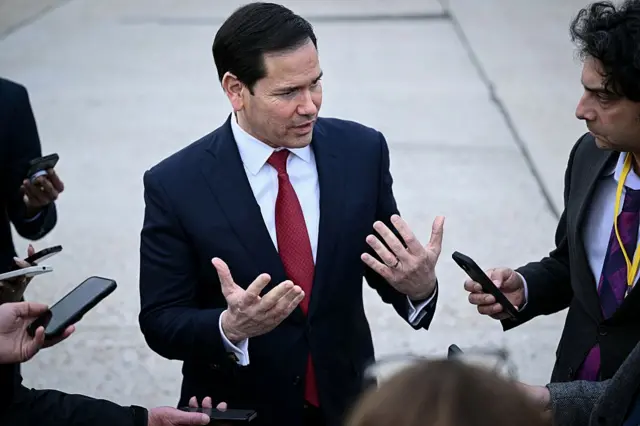
    US Secretary of State Marco Rubio (C) speaks to the press following a G7 Foreign Ministers' meeting.Image source, Getty Images

    US Secretary of State Marco Rubio is speaking to reporters following his meeting with other foreign ministers at a G7 meeting in France earlier today.

    Asked about whether the US is considering deploying troops to the Middle East as part of its efforts to neutralise Iran, Rubio says he won't discuss military tactics.

    He does, however, say that the US has clear objectives and "we are very confident we are on the verge of achieving them very soon".

    On how long the US operation is expected to last in Iran, Rubio says "we are talking weeks, not months".

  10. Iran says two nuclear facilities attackedpublished at 16:34 GMT 27 March

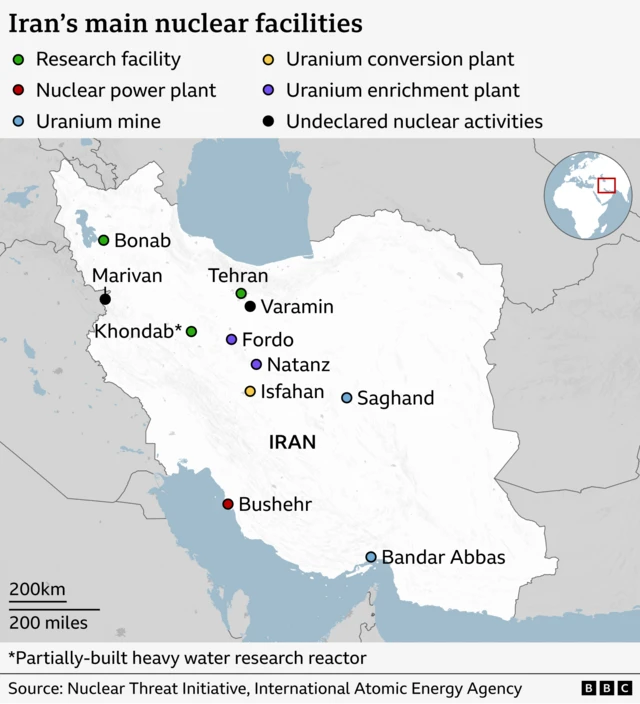
    Two nuclear-related facilities have been attacked in Iran, but there has been no release of radioactive material, Iranian state media says.

    The Islamic Republic News Agency (IRNA) say in a statement on Telegram that the Khondab heavy water complex in north west Iran had been attacked by US-Israeli forces. The IRNA quote an official from Markazi Province as saying there were no casualties.

    A second strike hit the Yellowcake production facility in Ardakan, Yazd, with authorities reporting no release of radioactive material beyond the site, according to IRGC-affiliated news agency Fars News.

    Map of Iran showing the locations of its main nuclear facilities. Sites are marked with coloured dots representing different facility types: research facilities (green), nuclear power plant (red), uranium mines (blue), uranium conversion plant (yellow), uranium enrichment plants (purple), and sites of undeclared nuclear activities (black). Key locations include Natanz and Fordo (enrichment plants), Arak (research reactor), Bushehr (power plant), Isfahan (conversion plant), and others such as Tehran, Marivan, Varamin, and Saghand. A small inset map shows Iran’s location within the region. Source: Nuclear Threat Initiative and International Atomic Energy Agency.
  11. Iran's response to US 15-point peace deal expected today, CBS News reportspublished at 16:25 GMT 27 March

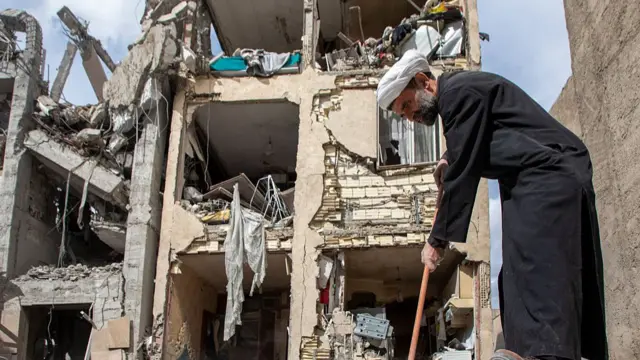
    A man sweeps up debris near a residential building that was hit in an airstrike in the early hours of March 27, 2026 in Tehran, Iran.Image source, Getty Images
    Image caption,

    As the US and Iran trade blows over negotiations, strikes continue to hit Iran's capital Tehran

    The BBC's US partner CBS News reports Iran will be responding, external to the US 15-point peace deal today, citing sources.

    US President Donald Trump and top White House officials have been informed that an Iranian counter-proposal would likely arrive today, they say.

    It comes after US Secretary of State Marco Rubio said yesterday that "intermediary countries" are passing messages, claiming that "some concrete progress has been made".

    Details of a proposed US 15-point plan, published by Israel's Channel 12 network, include an end to Iran's nuclear programme, an end to its ballistic missile programme, and an end to Iran's support for "proxy militias" like the Houthis in Yemen and Hezbollah in Lebanon.

    Initially, Iran flatly rejected the US 15-point plan, calling it "excessive". Iran's Foreign Minister Abbas Araghchi later told state TV that "some ideas" had been proposed to the country's senior leaders - and "if a position needs to be taken, it will certainly be determined".

    Iran's state media listed five conditions for ending the war, which include the payment of war reparations, international recognition of Iran's "sovereign right to exercise authority over the Strait of Hormuz", and a guarantee that Iran will not be attacked again.

  12. Israel launches strikes on southern Lebanon, IDF spokesperson sayspublished at 16:07 GMT 27 March

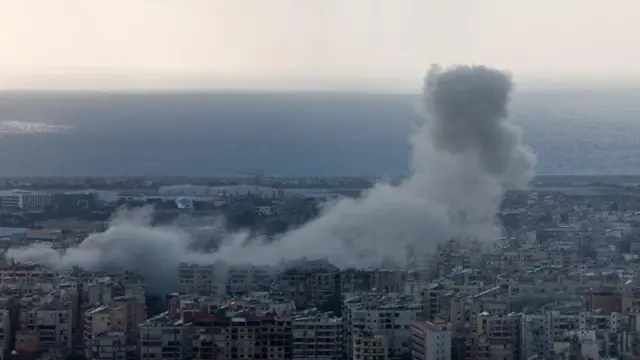
    A large plume of smoke billows towards the right and upwards from the urban city of Beirut, near the coast where the sea can be seen in the distanceImage source, Reuters
    Image caption,

    Smoke rises over southern Beirut after an Israeli airstrike

    Israel says it has begun launching strikes on southern Beirut, targeting "Hezbollah terrorist infrastructure", according to IDF spokesperson Avichay Adraee.

    In a statement on X, Adraee urges residents of several neighbours to "evacuate immediately", they include: Haret Hreik, Ghobeiri, Laylaki, Hadath, Burj al-Barajneh, Tahwita al-Ghadir and Chiyah.

    Separately, the IDF posts on its Persian language Telegram account that it has simultaneously begun attacking infrastructure in three different regions in Iran.

  13. Yvette Cooper: Iran cannot hold global economy hostage by blocking straitpublished at 15:51 GMT 27 March

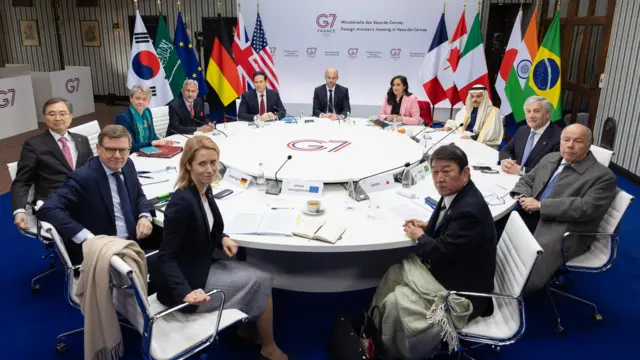
    A round table at the G7 with various leaders sitting round itImage source, EPA/Shutterstock
    Image caption,

    Cooper attended a G7 meeting in France on Friday

    UK Foreign Secretary Yvette Cooper, who was involved in a meeting of G7 foreign ministers today, has called for a "swift resolution" to the conflict in the Middle East.

    She adds that Iran "cannot be able to just hold the global economy hostage" by blocking the Strait of Hormuz.

    "More than 30 countries" came together to discuss how to open the strait and protect international shipping, Cooper says.

    Iran has effectively blocked the Strait of Hormuz, one of the world's busiest oil shipping channels, since the US and Israel attacked the country on 28 February.

    About 20% of the world's oil and liquefied natural gas (LNG) usually passes through the strait and the war has sent global fuel prices soaring.

  14. G7 calls for attacks on civilians to stop and commits to securing Strait of Hormuzpublished at 15:43 GMT 27 March
    Breaking

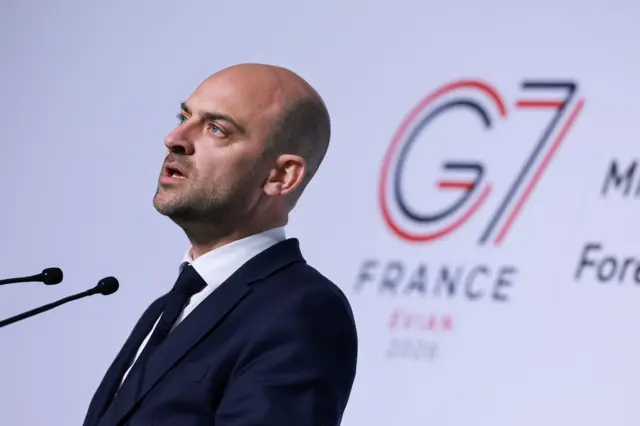
    Jean Noel Barrot mid speech. He's in a black suit, speaking into two thin mics, behind him a wall bearing the G7 France Evian 2026 logoImage source, Reuters

    France's minister of foreign affairs says the G7 remains "exceptionally committed" to minimise the impact of the war in Iran.

    The group, an organisation of the world's seven largest so-called "advanced" economies, calls for an "immediate cessation of attacks on civilian infrastructure and civilians", Jean-Noël Barrot says.

    Following a meeting with his counterparts in Vaux-de-Cernay, northern France, he adds "nothing permits" the attacks, and civilians need to be "clearly protected".

    In his comments, he also renews the G7's efforts to ensure "free and safe movement of ships" in the Strait of Hormuz.

    Barrot says US Secretary of State Marco Rubio has agreed to brief the EU's Council of Foreign Affairs and to work together to find a solution to resolve the impasse in the Strait.

  15. Iran war looms over a busy day for Trumppublished at 15:20 GMT 27 March

    Bernd Debusmann Jr
    Reporting from the White House

    It's a rainy and unpleasant day at the White House, where President Trump has a busy day ahead of him.

    At 12:30 local time (16:30 GMT), Trump will be delivering remarks to farmers at the White House, which will mark the first time we see him on-camera today.

    That event is domestic in focus, and will centre on the Trump administration laying out its plan to help farmers hit hard bit both by tariffs, and by the war in Iran.

    The outbreak of hostilities in the Middle East and disrupted shipping traffic in the Strait of Hormuz has spiked the price of nitrogen fertiliser, adding to uncertainty felt more broadly by Americans paying more for petrol at the pumps.

    Later on, the president will leave the White House en route to Miami, where he will deliver remarks at Saudi Arabia's Future Investment Initiative, the second consecutive year he has attended the event.

    It's very likely he addresses, at least briefly, the war in Iran at this event. Saudi Arabia, like other countries in the region, has faced economic uncertainty as a result of the war in nearby Iran.

  16. Steel factories in Isfahan and Khuzestan damaged in attacks - reportspublished at 15:11 GMT 27 March

    Iran's major steel company has been attacked and teams assessing the damage, according to Iranian state media.

    The Islamic Republic News Agency (IRNA) says Mobarakeh Steel had been attacked in Isfahan, as well as Khuzestan Steel in the south-west.

    The IRNA quoted the spokesperson for the Ministry of Industry, Mine and Trade in a post on Telegram as saying that some of the facilities at these sites have been damaged.

    The spokesperson reportedly said "there is "a possibility of casualties and injuries", but none had been reported so far.

  17. Drone strikes and interceptions: Gulf nations report attackspublished at 14:41 GMT 27 March

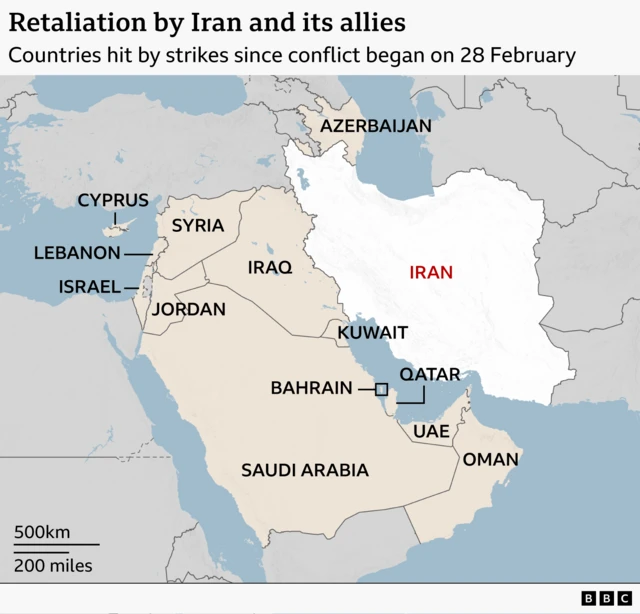
    Gulf nations report strikes are continuing across the region, here's what we've heard from some of them this morning:

    Saudi Arabia's defence ministry says six ballistic missiles were launched towards the capital Riyadh. They add two were intercepted and four fell in the Gulf and uninhabited areas.

    Kuwait reports attacks this morning on its main commercial port, Shuwaikh. The country's ports authority says there was "material damage but no human casualties".

    The UAE's defence ministry says its air defences engaged six ballistic missiles and nine drones launched from Iran today.

    Bahrain's defence force says it has intercepted 362 drones and 154 missiles since the start of the conflict, an increase of 12 drones since the same announcement yesterday.

    Iran's Islamic Revolutionary Guard Corps (IRGC) earlier warned people across the Middle East to leave areas where US forces are stationed, but it did not specify exact locations.

    A regional map highlighting Iran in white with its name in black. Countries that have come under fire from Iran and its allies are labelled - Israel, Cyprus, Lebanon, Iraq, Kuwait, Jordan, Bahrain, Qatar, UAE, Oman, Saudi Arabia, Azerbaijan, Syria. Surrounding countries are grey.
  18. BBC answers your questions: Who sets the price of oil and gas?published at 14:21 GMT 27 March

    Mitchell Labiak
    BBC Business reporter

    A red banner with the words ‘Your Voice’ written in white with a lighter red graphic paintbrush effect behind it

    The short answer is that the market does. By "the market", we mean countries and companies who produce oil, as well as oil traders.

    The first group is heavily influenced by Opec+, a cartel of 23 oil-producing countries who try to control the price of oil by deciding together how much they should produce.

    If they want the price to go up, they agree to drill less. If they want the price to go down, they agree to drill more.

    Opec+ produced about 59% the world’s oil in 2022, according to official US figures. So, what it does matters, but it does not control the price completely.

    Giant oil firms such as Shell and BP make their own choices as do other oil-producing nations outside of Opec+, such as the US.

    The second group, the oil traders, is made up of individual people and investment companies or funds who buy and sell oil on markets. These traders tend to purchase what are known as futures, which are contracts to buy a certain amount of oil at an agreed price at an agreed point in the future. In other words, a bet on what the oil price will be.

    The picture is much the same with gas prices, with the gas-producing countries and companies controlling production and traders in gas futures buying and selling contracts.

    The BBC, as well as several other media outlets and economists, tend to refer to the one month futures as the benchmark for oil and gas prices as they are seen less volatile than other measures.

  19. 'Our entire daily routine has been disturbed': Workers tell BBC about impact of Iran warpublished at 14:01 GMT 27 March

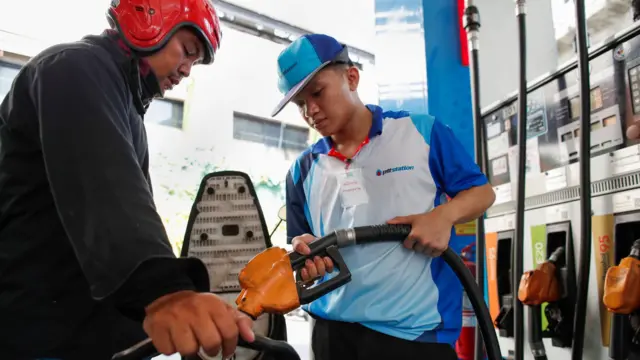
    A worker refuels a motorcycle at a petrol station in Bangkok, ThailandImage source, EPA/Shutterstock

    The BBC has been speaking to workers about the impact the war is having on their daily lives, amid the effective closure of the Strait of Hormuz and its impact on oil prices.

    In Thailand, taxi bike rider Ball says the cost of fares remain the same. The company he works for regulates a saver fare for passengers, but Ball says: "For us riders, there's no measure to help us for saving money" as oil price rises.

    In Delhi, one restaurant owner says he had to keep the shop closed for two days due to rising costs, the first time since the coronavirus pandemic. "Our entire daily routine has been disturbed", he adds.

    In Nigeria, one woman who works as a creative entrepreneur, says what she spends on fuel "has almost doubled if not tripled. It's becoming very difficult for me to keep up", she says.

    In South Korea, Woo Jeongsuk, a 32-year-old journalist living in Seoul says "it feels like trying to put out a forest fire with a water pistol". He says the South Korean government has issued energy conservation guidelines, by Woo says "voluntarily cut back is a tough sell".

  20. IDF issues immediate evacuation warning in Arak, central Iranpublished at 13:56 GMT 27 March

    The Israel Defense Forces (IDF) has issued an urgent warning to people in parts of Arak, the capital of the Markazi province in central Iran.

    It says it will conduct operations in several areas in the region "in the coming hours".

    The Israeli military says their operation will focus on "attacking the Iranian regime's military infrastructure".

    "For the sake of your safety and well-being, we kindly request that you immediately evacuate," it says on its Farsi account on X, adding: "Your presence in these areas endangers your life."