Summary

  1. Iran talks expected as Rubio meets other G7 members in France todaypublished at 08:21 GMT 27 March
    Marco Rubio walks alongside  French foreign minister Jean-Noel Barrot in a French village with a French flag in frame.Image source, Reuters
    Image caption,

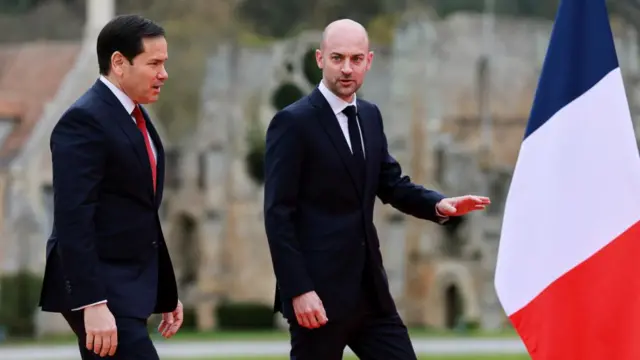
    Rubio, left, walks alongside French foreign minister Jean-Noel Barrot at the G7 meeting outside Paris

    US Secretary of State Marco Rubio is in France today for a G7 meeting, where discussions on the Iran war are expected to take place.

    The meeting follows Donald Trump's repeated criticism of Nato member countries - who include the G7's UK, France, Germany, and Italy - over their refusal to join the conflict, including by sending ships to help secure the Strait of Hormuz.

    Before departing the US on Thursday night, Rubio said it was in the "interest" of all G7 nations to push for the reopening of the strait, according to a report by the AFP news agency.

    Germany's foreign minister Johann Wadephul said on Thursday it was important for Nato countries to develop a "common position" with the US on Iran.
  2. The crucial exports blocked by closure of Strait of Hormuzpublished at 08:05 GMT 27 March

    A docked ship being loaded with fertiliser by two cranesImage source, Getty Images

    Ben Chu

    The interruption of oil and gas supplied through the Strait of Hormuz due to the US-Israel war with Iran has dramatically pushed up global energy prices.

    Petrol has gone up already and UK domestic heating bills are almost certain to follow.

    But it's not just fuel that's been impacted by the conflict. A host of other vitally important chemicals, gases and other products normally enter international supply chains via the Hormuz Strait.

    BBC Verify has found that the price of a host of goods - ranging from food, to smartphones, to medicines - could be affected, as the number of ships passing through the Hormuz Strait has dropped from well over 100 a day before the war to just a handful.

    Read BBC Verify's analysis of which goods could be impacted here.

  3. Strikes continued overnight across the regionpublished at 07:46 GMT 27 March

    Rocket trails in the night sky in Israeli coastal city of Netanya.Image source, Getty Images
    • Israel continued strikes across Iran overnight, with its military saying this morning it struck missile production sites in Tehran and a facility for making sea mines facility in Yazd
    • Strikes against Israel also continued - images show what appear to be rocket trails in the sky over the coastal city of Netanya
    • Meanwhile an Israeli strike hit Beirut's southern suburbs early this morning, according to Lebanese media
    • Kuwait's main commercial port has been attacked by "hostile" drones - the ports authority says there has been "material damage" but no reports of casualties
    • And Saudi Arabia has reported multiple drones have been intercepted overnight
    • Also overnight, the Wall Street Journal has reported Donald Trump is considering sending 10,000 additional ground troops to the Middle East

  4. Israeli military says it's struck Iran's 'primary' production site for sea minespublished at 07:35 GMT 27 March

    The Israeli military says it has struck Iran's "primary facility for the production of missiles and sea mines".

    The Israel Defense Forces says the Air Force hit a site in Yazd, in central Iran, where it says the Iranian Navy develops the "majority" of its missiles and sea mines.

    Iran is believed to have thousands of sea mines, and although it's unclear whether they have been deployed, their potential to damage commercial vessels have contributed to the safety fears that have effectively closed the Strait of Hormuz.

  5. German foreign minister says preparations made for direct US-Iran talks - Reuterspublished at 07:16 GMT 27 March

    Germany's foreign minister Johann Wadephul says representatives from the US and Iran are planning to meet for talks in Pakistan, the Reuters news agency reports.

    Speaking to Deutschlandfunk radio, Wadephul says there have been "indirect contacts" between both countries and "preparations have been made to meet directly", which he believes will be "very soon in Pakistan".

  6. Kuwait port attacked by 'hostile' dronespublished at 06:57 GMT 27 March
    Breaking

    Kuwait says its main commercial port has been attacked by "hostile" drones.

    In a statement, the Kuwait Ports Authority says Shuwaikh port has been attacked, adding "initial reports indicate material damage but no human casualties".

    It says emergency procedures at the port are now in place.

  7. Israel says it struck air defences and missile sites across Iran overnightpublished at 06:33 GMT 27 March

    The Israeli military has released fresh details of overnight strikes on Iran, which it says struck missiles and air defence systems across the country.

    Strikes in the Iranian capital, Tehran, targeted sites it says were used to produce weapons, primarily ballistic missile.

    The Israel Defense Forces (IDF) says in western Iran the Air Force hit "missile launchers and missile storage sites".

    Return to the latest post
  8. Hundreds of petrol stations in Australia report fuel shortagespublished at 06:03 GMT 27 March

    Simon Atkinson
    Reporting from Cairns, in Queensland

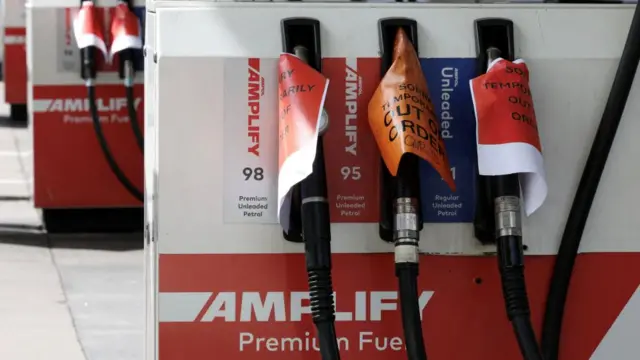
    'Out of order' signs are displayed on empty fuel pumps at an Ampol petrol station after it ran out of fuel in SydneyImage source, Reu

    I'm at a petrol station in Cairns, in Queensland, and this small independent garage tells a pretty typical story in Australia.

    It's out of unleaded petrol and the price of diesel is 85% higher than it was before the war in Iran started.

    Hundreds of Australian fuel stations are reporting running out of petrol or diesel as demand from motorists surges.

    Fears of shortages and rapid price rises are driving the trend, despite the government urging people not to panic buy.

    Some petrol retailers have put limits on how much can be spent, or banned customers from filling up jerry cans.

    In New South Wales, Australia's most populous state, one in seven retailers say they are out of at least one type of fuel.

    The government insists supplies haven't fallen and the shortfalls are actually the result of panic buying, with demand up a quarter in the past fortnight.

    Prime Minister Anthony Albanese has warned the longer the war goes on, the greater the impact will be.

    Read more about Australia's fuel crisis here.

  9. What did Trump say on Thursday?published at 05:29 GMT 27 March

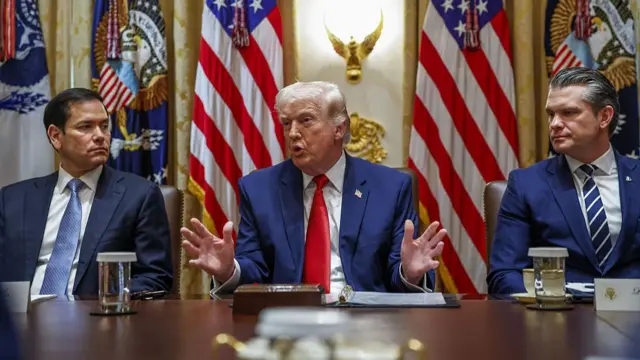
    Marco Rubio, US secretary of state, from left, US President Donald Trump, and Pete Hegseth, US secretary of defense,Image source, Getty Images

    Trump has said he will hold off targeting Iranian energy sites for another 10 days as he says talks with Tehran are "ongoing".

    His remarks came after a cabinet meeting in the White House on Thursday - his first since the start of the war. Here's a recap of what else he said:

    • The US leader said Washington had wiped out Iran's navy and air force "completely" and knocked out "close to 90%" of Iran's missile launchers and "probably more than 90%" of the missiles themselves
    • He also said Iran was begging to make a deal and that the US would keep "blowing them away" if Tehran does not negotiate. He added that they were "lousy fighters but great negotiators", though Iran has repeatedly said that it is not negotiating with the US
    • US special envoy Steve Witkoff, who was also at the meeting, said the US had sent a 15-point list to Iran through Pakistan
    • Trump said that if Iran does not agree to a ceasefire, the US will be "their worst nightmare", adding "we'll just keep blowing them away"
  10. As fuel prices bite, what measures are Asian countries rolling out?published at 04:58 GMT 27 March

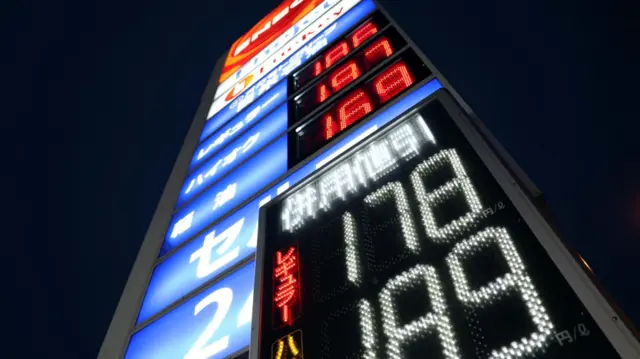
    A signboard displays fuel prices outside a gas station, amid the U.S.-Israel conflict with Iran.Image source, Reuters

    With nearly 90% of the oil and gas passing through the Strait of Hormuz typically going to Asian countries - the continent has found itself at the frontlines of the fuel crisis.

    Here's what some of them are doing in a bid to combat it:

    • South Korea has banned exports of naphtha - a key feedstock widely used in petrochemicals. Seoul typically imports around half of its naphtha from the strait. The country's presidential building has also said it will turn off half its hallway lights, in a symbolic measure to cut back on energy use
    • Japan plans to temporarily lift restrictions on coal-fired power plants, according to local reports. Power suppliers have previously been required to keep the operating rate of coal-fired thermal power stations that emit large amounts of carbon dioxide at or below 50%. But the government now intends to allow full operation of older, less efficient coal-fired plants, according to news site Jiji
    • Vietnam has temporarily waived an environmental tax on fuel to cut soaring petrol prices by a quarter on Friday, said its trade ministry. The waiver is due to last until 15 April
    • Singapore has also delayed a green jet fuel levy on flights departing the country, postponing it to January 2027
    • A second day of a transport strike is continuing in Manila, the capital of the Philippines. Transport workers are striking over rising fuel costs and say they are struggling to make ends meet. The country has declared a national energy emergency

    Read more on the effects of the war here.

  11. IAEA warns of 'major radiological accident' if strikes near nuclear plant continuepublished at 04:18 GMT 27 March

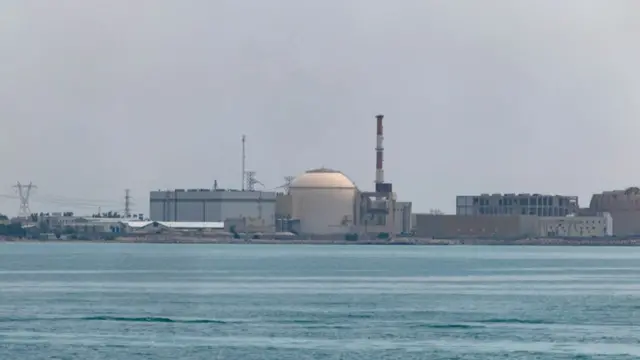
    A view of the Bushehr nuclear power plant is seen from the Persian GulfImage source, NurPhoto via Getty Images
    Image caption,

    Bushehr Nuclear Power Plant in 2024

    The International Atomic Energy Agency (IAEA) is urging "maximum restraint" to avoid a nuclear accident in Iran.

    The warning comes after a reported strike near the Bushehr Nuclear Power Plant in southwest Iran on Tuesday.

    "Given that it is an operating nuclear power plant with a large amount of nuclear material, [Director General] Rafael Mariano Grossi warns that damage to the facility could result in a major radiological accident affecting a large area in Iran and beyond," the UN agency says in a statement.

  12. The crucial exports blocked by Hormuz closurepublished at 03:43 GMT 27 March

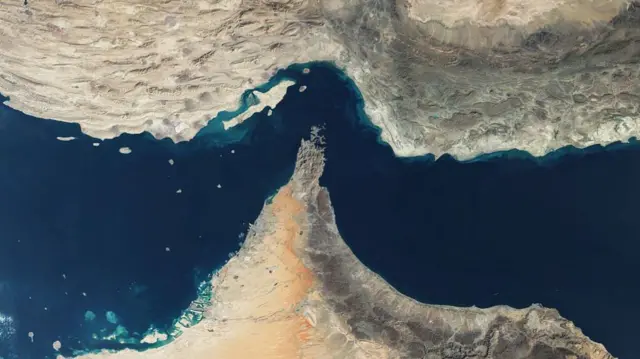
    A satellite view of the Strait of Hormuz, a strategic waterway between Iran and Oman that links the Persian Gulf to the Arabian Sea.Image source, Getty Images

    The interruption of oil and gas supplied through the Strait of Hormuz has dramatically pushed up global energy prices.

    But it's not just fuel that's been impacted by the conflict. A host of other vitally important chemicals, gases and other products normally enter international supply chains via the Strait of Hormuz.

    BBC Verify has found that the price of a host of goods - ranging from food, to smartphones, to medicines - could be affected, as the number of ships passing through the waterway has dropped from well over 100 a day before the war to just a handful.

    You can find out more about which goods are affected here.

  13. Trump weighs sending 10,000 more troops to Middle East, WSJ reportspublished at 03:14 GMT 27 March

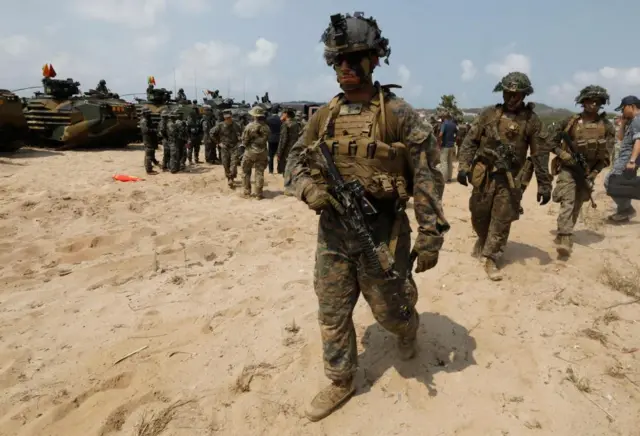
    US Marines can be seen on sandImage source, EPA

    The Wall Street Journal is reporting that US President Donald Trump is considering sending 10,000 additional ground troops to the Middle East.

    The potential deployment is to give Trump "more military options even as he weighs peace talks with Tehran", it adds.

    The force would likely include infantry and armoured vehicles, the outlet reports, and would come on top of the 5,000 US Marines that have already been deployed to the region.

    It is not clear where exactly the troops would be deployed.

    The BBC has contacted the White House and the Pentagon for comment.

  14. Oil dips after Trump extends pause on power plant strikespublished at 02:39 GMT 27 March

    Peter Hoskins
    Business reporter, Singapore

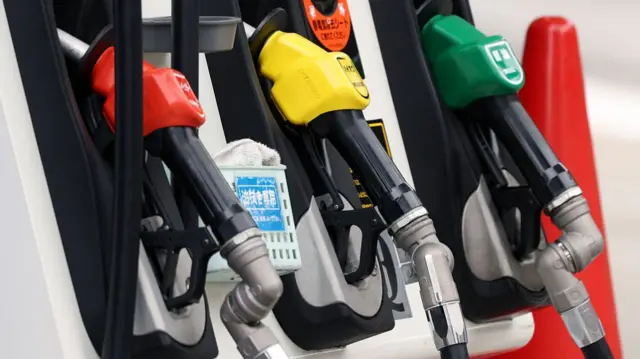
    Fuel pumps in Japan.Image source, Bloomberg via Getty Images

    Global oil prices are a little lower in morning trade in Asia after Trump extended a pause on striking Iranian power plants from five days to two weeks.

    Brent crude is 1.2% lower at $106.76 (£80.04), while West Texas Intermediate is down 1.1% at $93.41.

    On the financial markets, Asian stocks followed the US lower after Wall Street saw its worst day since the war began.

    Japan's Nikkei 225 is 1.6% lower, while the Kospi in South Korea is down by 4.2%.

    Both Japan and South Korea are particularly reliant on oil and gas that normally passes through the Strait of Hormuz. The crucial waterway has been effectively shut due to the conflict in the Middle East.

  15. Analysis

    Warning signs flashing for Trump on Iran warpublished at 02:12 GMT 27 March

    Anthony Zurcher
    North America correspondent

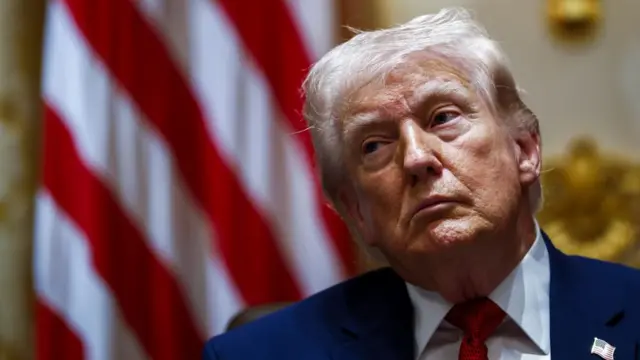
    Donald Trump, with the American flag behind, looks to the rightImage source, EPA

    Trump's popularity among the American public has been eroding steadily since he returned to the White House last January.

    Three weeks into the Iran war, gas prices have surged to an average near $4 a gallon. Trump's economic approval rating, meanwhile, has fallen to 29%.

    By 28 February, at the start of the Iran war, only 42% of Americans had a positive view of president. This week, that mark had sagged to 40%.

    That the president's approval rating hasn't had a more precipitous drop could be because while a majority of the public opposed the US military intervention from the beginning, Trump's political base has continued to back him, according to figures tabulated by the Pew Research Center.

    A recent Quinnipiac poll found 86% of Republicans support the US military action in Iran and 80% approve of how Trump is handling it. Among all registered voters, those numbers drop to 39% and 34%, respectively.

    You can read the rest of Anthony Zurcher's analysis here.

  16. IDF says it struck infrastructure in Tehranpublished at 01:44 GMT 27 March
    Breaking

    The Israel Defense Forces (IDF) says it has completed a "wide-scale wave of strikes" in the "heart of Tehran", targeting government infrastructure. State media in Iran had reported explosions were heard in the capital and that air defences were "confronting hostile targets".

    We will bring you more details as they come in.

  17. Explosions heard in Beirutpublished at 01:15 GMT 27 March

    We're just hearing of some new explosions in Lebanon's capital.

    An Israeli strike hit Beirut's southern suburbs early on Friday, according to Lebanese media, while AFP correspondents heard several explosions in the same area, a Hezbollah stronghold. Footage showed smoke billowing from the area.

    An airstrike with three missiles targeted a building in the area, Reuters reported, citing security sources. No further details were available and Israel provided no specific warning in advance of the latest strike.

    Earlier this week, Israeli Defence Minister Israel Katz said Israeli troops would control a large swathe of southern Lebanon as part of their campaign against Hezbollah.

    The latest escalation began after Iranian-backed Hezbollah fired rockets into northern Israel in retaliation for the killing of Iran's supreme leader and near-daily strikes on Hezbollah despite the November 2024 ceasefire.

  18. Thai ship has run aground off Iranian island, state media sayspublished at 00:44 GMT 27 March

    The Thai ship that was hit in the Strait of HormuzImage source, EPA

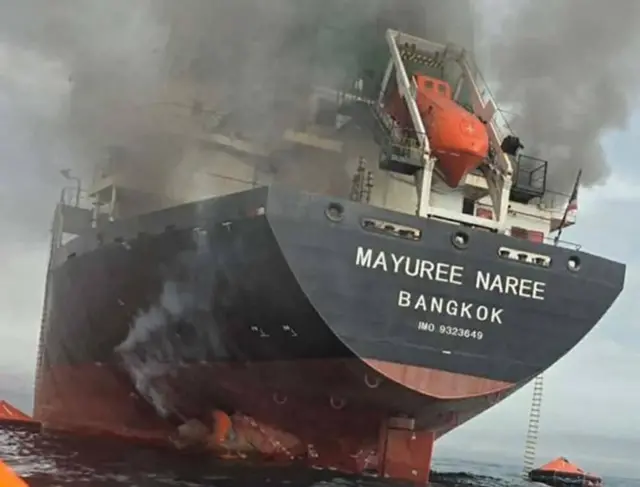
    A Thai-flagged cargo ship that was hit while transiting through the Strait of Hormuz two weeks ago has run aground off Iran's Qeshm Island, according to Tasnim news, a semi-official news agency associated with Iran's Revolutionary Guard Corps (IRGC).

    Thailand said 20 crew members were rescued by the Omani navy after the ship was struck on March 11, while three more were missing.

    The vessel, named Mayuree Naree, was one of about 20 commercial vessels attacked off the Iranian coast, not all of them in the direct vicinity of the Strait of Hormuz.

  19. Pause extension 'doesn't mean' talks taking place, says former US envoy to Iranpublished at 00:20 GMT 27 March

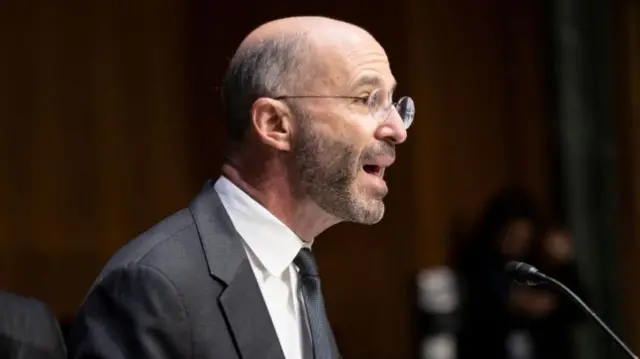
    Robert Malley, Biden administration special envoy for Iran, testifies about the JCPOA (Joint Comprehensive Plan of Action) during a hearing of the Senate Foreign Relations on Capitol Hill.Image source, Getty Images

    Robert Malley, a former US special envoy to Iran during the Biden administration, was talking to the BBC News channel a short while ago.

    Malley says President Trump's 10-day extension of a pause on striking Iran's energy plants "doesn't mean that he's not going to order a land incursion" before that time is up.

    He adds that Trump saying the pause is justified by progress in talks "doesn't mean that there's even talks taking place".

    The Pentagon this week deployed more ground troops to the region, at the same time as the US said it had delivered a 15-point peace plan to Iran.

    The most likely outcome of the conflict, Malley says, is not a "grand deal" between the US and Iran, but when Trump "decides he's had enough... and he's suffering both politically and economically".

  20. Explosions heard in Tehran, state media sayspublished at 00:00 GMT 27 March

    Explosions have been heard in Tehran and air defences are "confronting hostile targets", according to Iran's semi-official Mehr news agency.

    While Israel has not announced a fresh wave of attacks, Avichai Adraee, an IDF spokesperson, wrote on X in the last couple of hours that Israel was "intensifying its strikes against the Iranian regime's weapons production industries, targeting over 1,000 production facilities".