Summary

  1. Trump accuses Iran of violating ceasefire agreementpublished at 13:29 BST

    More from Donald Trump's social media post, where he accuses Iran of a "Violation of our Ceasefire Agreement" after it "decided to fire bullets yesterday in the Strait of Hormuz".

    "That wasn’t nice, was it?" Trump writes, saying the shots were "aimed at a French Ship, and a Freighter from the United Kingdom".

    The US president calls Iran's decision to close the strait "strange", as he says the US blockade has "already closed it".

    "They’re helping us without knowing, and they are the ones that lose with the closed passage, $500 Million Dollars a day! The United States loses nothing," he suggests.

    Note: Iran's closure of the Strait of Hormuz and the US naval blockade are different - we will explain more in our next post.
  2. Trump: US team heading to Pakistan for talks with Iranpublished at 13:21 BST
    Breaking

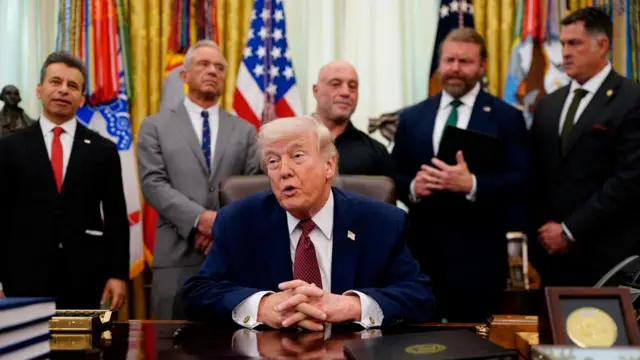
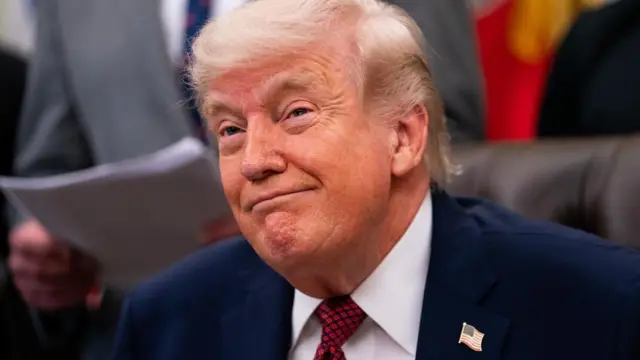
    US President Donald TrumpImage source, EPA

    We've just had an update from US President Donald Trump.

    "My Representatives are going to Islamabad, Pakistan - They will be there tomorrow evening, for Negotiations," he writes on social media.

    "We’re offering a very fair and reasonable DEAL, and I hope they take it because, if they don’t, the United States is going to knock out every single Power Plant, and every single Bridge, in Iran," he adds.

    Warning there will be "NO MORE MR NICE GUY" if talks fail, Trump says these bridges and power plants will "come down fast, they’ll come down easy".

    We’ll bring you more from his social media post soon.

  3. Traffic in Strait of Hormuz remains at standstillpublished at 13:12 BST

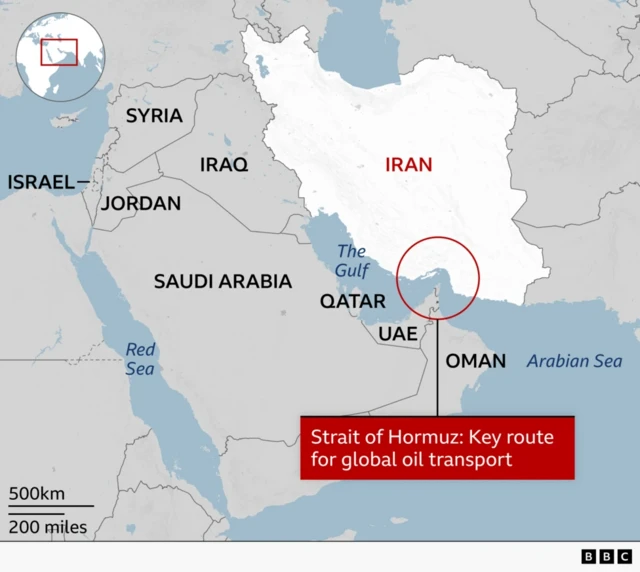
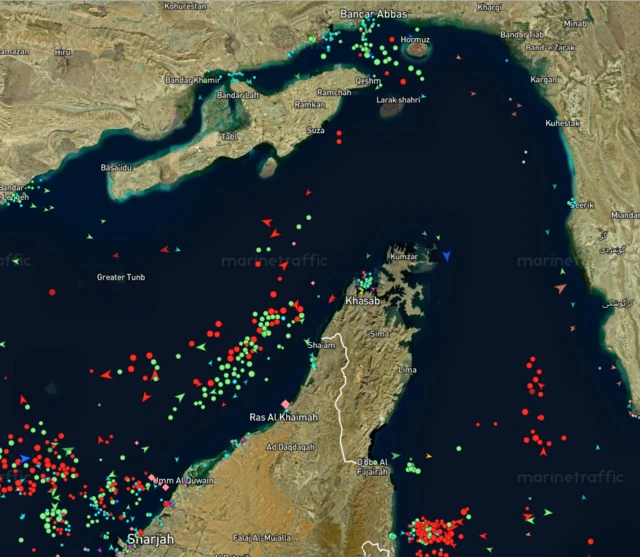
    A snapshot of the Marine Traffic website taken just before 12:00 GMT (13:00 BST) shows no traffic moving through the Strait of Hormuz.

    About 20% of the world's oil and liquefied natural gas (LNG) usually passes through the strait, but the number of ships transporting this has dramatically decreased during the recent hostilities in the Middle East.

    On Friday Iran's foreign minister said the Strait of Hormuz had reopened for commercial vessels, but this decision was reversed a day later.

    Iran now says the strait will remain closed until the US ends its blockade on Iranian ports.

    A map showing boat traffic through the Strait of Hormuz shows little sign of boats movingImage source, MarineTraffic
  4. Academics to be reconnected to the internet in Iran, reports BBC Persianpublished at 12:41 BST

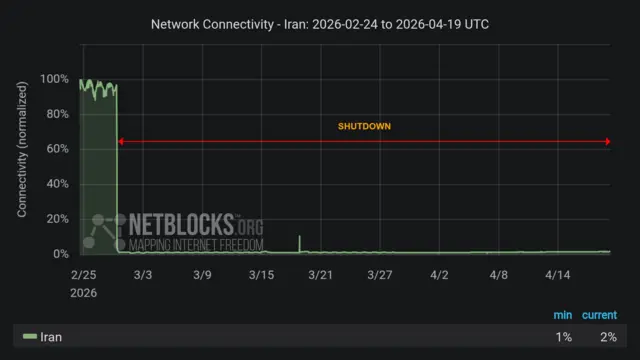
    A graph shows the internet connectivity in Iran dropping from nearly 100% to just over 0% at the start of the conflict at the end of February. A green line shows the internet has reamained at just over 0% sinceImage source, NetBlocks

    Academics will be reconnected to the international internet in Iran, the country's science ministry has said.

    Mehdi Abtahi, the deputy minister for science and research, says that a list of names of university professors has been provided to the Ministry of Communications and they will gradually be connected, BBC Persian reports.

    A government imposed internet blackout has been in place in Iran for 51 days, according to internet monitoring site NetBlocks.

    Currently, only a small group known as white SIM card holders, along with some government supporters, have access to the internet.

    BBC Persian is the Persian language service of BBC News, used by 24 million people around the world - the majority in Iran - despite being blocked and routinely jammed by Iranian authorities.

  5. Analysis

    Strait of Hormuz at a standstill until the US and Iran agree on talkspublished at 12:13 BST

    Frank Gardner
    Security correspondent

    There is in effect a double blockade in the Strait of Hormuz.

    The Iranians say they are targeting any shipping trying to get through the vital waterway while the Americans are imposing their naval blockade on all Iran’s Gulf ports.

    In normal times you have about 140 ships passing both ways through the Strait to collect oil, gas, fertiliser and other products.

    But only a trickle of ships has been getting through since the conflict started.Iran is insisting all maritime traffic goes up a new route set by them to be inspected by the Islamic Revolutionary Guard Corps Navy and in some cases pay a toll.

    That is unacceptable to the international shipping community.

    It would be like imposing a toll on the English Channel so any ships coming down from the North Sea would have to stop off at Folkestone or Calais and be inspected.

    The distance of the waterway is the same as the English Channel at the shortest navigable part of the Strait of Hormuz.

    Everything has ground to a standstill until the US and Iran agree on talks.

  6. Iran turns two oil tankers back from the Strait of Hormuz - Iranian media reportspublished at 11:46 BST

    Ghoncheh Habibiazad
    Senior reporter, BBC Persian

    The IRGC (Islamic Revolutionary Guard Corps) affiliated Tasnim News Agency has said that “following the continuation of Iran’s naval blockade, Iranian armed forces today turned back two additional oil tankers from passing through the Strait of Hormuz” on Sunday.

    Tasnim says that these two tankers, “sailing under the flags of Botswana and Angola”, wanted to transit through Hormuz but were “forced to change course and retreat due to the timely action of the armed forces of Iran”.

    It follows the Iranian announcement that the Strait of Hormuz will remain closed until the US lifts its blockade on Iranian ports.

  7. Analysis

    Iran's nuclear enrichment remains a sticking point in talkspublished at 11:23 BST

    Frank Gardner
    Security correspondent

    Iran wants sanctions lifted. Its economy is in dire straits and it is in an even worse condition now that it can’t get its exports out from its ports in the Gulf.

    Time is not on Iran’s side.

    The US and Iran have been negotiating over two things:

    There has been lots of fanciful talk about sending in a special US military operation to try and get it out, but forget about that. Iran would surround the place with troops.

    You can not do that without its permission. It’s going to be a very delicate operation to get down into the bombed out tunnels.

    The United Nations' nuclear watchdog - the International Atomic Energy Agency - is prepared to do that but not under fire. It may be a joint mission with the US but only when Iran agrees.

  8. Body of French peacekeeper killed in Lebanon to return to Paris todaypublished at 11:00 BST

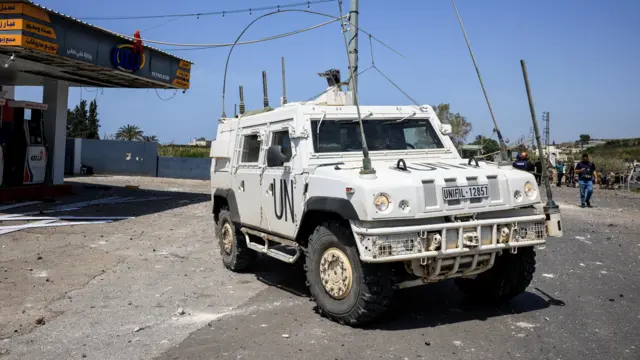
    A white Unifil van at a site in southern LebanonImage source, Reuters
    Image caption,

    A file photo of a Unifil vehicle in southern Lebanon

    The body of a French peacekeeper killed in southern Lebanon is to be returned to Paris this evening, the United Nations Interim Force in Lebanon (Unifil) tells the BBC.

    French President Emmanuel Macron has blamed Hezbollah after a French soldier serving with Unifil died when their patrol came under small arms fire on Saturday.

    In Sunday's update, Unifil says that two of the three other peacekeepers who were "severely injured in the attack" are still receiving treatment in Beirut.

    A third peacekeeper is being treated for "moderate injuries" in a southern Lebanon Unifil facility, it adds.

    Hezbollah has issued a statement denying it was responsible for the attack, describing the accusations as "rushed".

  9. No sign of ships passing through the Strait of Hormuzpublished at 10:40 BST

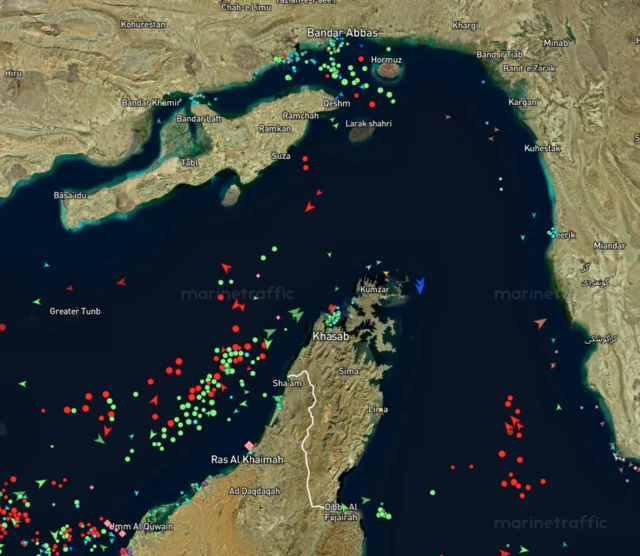
    Strait of Hormuz pictured on a satellite map, showing the Iranian coast and the coasts of Oman and the UAE.Image source, MarineTraffic
    Image caption,

    The latest satellite map from ship tracking website MarineTraffic showing the locations of vessels around the Strait of Hormuz

    As we've been reporting, Iran has again closed the Strait of Hormuz in response to the continued US blockade of Iranian ports.

    Ship tracking website MarineTraffic appears to show no vessels currently crossing the strait, although many seem to be anchored around the Gulf - particularly off the coasts of Oman and the UAE.

    Some marine traffic had moved through the crucial shipping corridor yesterday, but slowed dramatically as Tehran announced that it would close the waterway.

    Several vessels reported being hit by projectiles and one tanker reported being fired upon by Iranian gunboats on Saturday.

    Return to the latest post
  10. ‘The only bit of light in this dark… mediators are still exchanging messages’published at 10:18 BST

    The closure of the Strait of Hormuz is dominating the diplomatic messages from both the Iranian and US sides, who both blame each other for the crisis, the BBC's chief international correspondent Lyse Doucet says.

    Reporting from inside Iran, she says there is little sign of the peace deal that President Trump keeps hinting at, and even an extension to the current ceasefire, which expires in just a few days, is yet to be decided.

    Lyse Doucet is reporting from Tehran on condition that none of her material is used on the BBC's Persian Service. These restrictions apply to all international media organisations operating in Iran.

  11. IDF says it struck more than 150 Hezbollah members in 24 hours before ceasefire startedpublished at 09:33 BST

    The Israel Defense Forces (IDF) has just posted on messaging app Telegram saying it "eliminated" more than 150 "Hezbollah terrorists" in 24 hours "prior to the ceasefire understandings taking effect".

    The IDF also says it hit about 300 military sites in the strikes, such as command centres and weapons storage facilities, across several areas in Lebanon.

    It claims to have killed several Hezbollah commanders and says it will continue to remove any threat to Israeli civilians and soldiers.

  12. BBC reports from Lebanese border town as residents try to return homepublished at 09:06 BST

    Media caption,

    Watch: BBC Arabic's Carine Torbey reports from Khiam in southern Lebanon

    The ceasefire in Lebanon is allowing authorities there to continue their work to reopen and repair infrastructure in the south of the country.

    The Lebanese military says it has "fully reopened" a road linking the city of Nabatieh with the Khardali area, and had "partially reopened the Burj Rahal-Tyre bridge", in an update this morning.

    Yesterday, BBC Arabic's correspondent Carine Torbey sent a report from the border town of Khiam, where the Lebanese army set up a barrier to prevent residents from returning to their homes as loud explosions continued to be heard in areas that were partly under Israeli occupation.

  13. Deaths reported in Lebanon over the weekend despite ceasefirepublished at 08:31 BST

    The ceasefire between the US and Iran, and the one between Israel and Lebanon, both appear to be holding, but there have been a number of incidents reported that have resulted in deaths.

    In southern Lebanon, the Israel Defense Forces says that two soldiers have died since the ceasefire was implemented. Israeli media report that Sgt Maj (Res) Barak Kalfon died in an explosion while clearing buildings on Friday, which also injured three other soldiers.

    Sgt First Class (Res) Lidor Porat was killed in an incident which also resulted in nine others needing hospital treatment, the Israeli military announced today. Local media say that the armoured vehicle the troops were travelling in hit a landmine, and Israel would be investigating to ascertain when the explosive was placed, as a possible breach of ceasefire terms.

    Separately, a French peacekeeper serving with the United Nations Interim Force in Lebanon (Unifil) was also killed in Lebanon in an attack blamed on Hezbollah by President Macron. The Iranian-backed armed group denied being behind the incident.

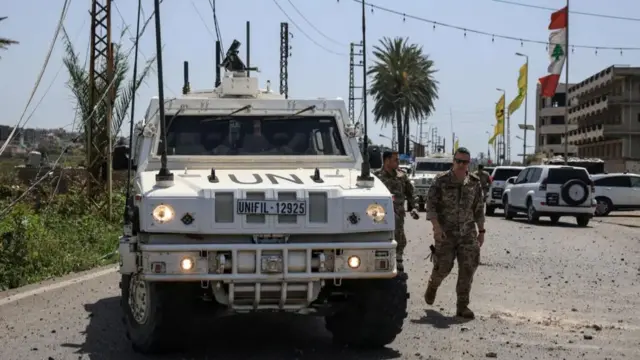
    United Nations Interim Force in Lebanon (UNIFIL) peacekeepers in Lebanon.Image source, Reuters
    Image caption,

    File photo of Unifil peacekeepers in southern Lebanon on 16 April

  14. What ceasefires are currently in place?published at 08:07 BST

    Here's a reminder of the different ceasefire deals currently in place in the war in the Middle East:

    US and Iran

    • Started: 8 April
    • Due to last: 14 days (22 April)

    Pakistan, which had mediated talks between Iran and the US, has said Lebanon is included in the ceasefire. Iran agrees, but the US and Israel dispute this.

    Israel and Lebanon

    • Started: 16 April 17:00 EST (21:00 GMT; midnight local time)
    • Due to last: 10 days (26 April)

    The deal was subsequently agreed by the two countries and announced by the US.

    Israel and Lebanon's leaders have both welcomed the truce and Trump has urged the the Iran-backed group Hezbollah in Lebanon to abide by it.

    Hezbollah has also signalled a willingness to participate in the ceasefire but said it must include "a comprehensive halt to attacks" across Lebanon and "no freedom of movement for Israeli forces".

    Israeli Prime Minister Benjamin Netanyahu has meanwhile said troops will remain stationed 10km-deep (6.2 miles) into southern Lebanon, despite the ceasefire.

  15. US and Iran continue to make uncompromising pronouncementspublished at 07:37 BST

    Nick Beake
    Europe correspondent reporting from Jerusalem

    Mohammad Bagher Ghalibaf, who's Iran's chief negotiator and parliamentary speaker, has said its closure of the Strait of Hormuz would not end so long as the US naval blockade remains in place.

    But he also notes there are “just” one or two issues on which the two sides disagreed - without saying what they are, nor explaining their significance.

    President Trump has remained supremely positive - in public at least - that an agreement will happen, announcing there had been “very good conversations”.

    But this was hours after a ship in the strait reported being fired on by Iranian gunboats.

    Trump says blackmail will not be tolerated.

    A map showing the location of the Strait of Hormuz
  16. US blockade a 'breach of ceasefire conditions', Iran sayspublished at 06:58 BST

    Earlier, Iran's navy said that the continuing US blockade on Iranian ports is a "breach of ceasefire conditions".

    As a reminder, earlier this month Iran and the US agreed to a conditional two-week ceasefire, during which they agreed shipping traffic will be allowed through the Strait of Hormuz.

    The vital shipping lane has been closed again by Iran and Iran's navy says it will remain shut until the US blockade of Iranian vessels and ports is lifted.

    In its latest statement, the Islamic Revolutionary Guard Corps Navy says statements made by Trump on the Strait of Hormuz "carry no validity".

    It is not clear if the statement is referring to specific comments made by the US president.

    Trump told reporters in the Oval Office on Saturday that Iran's leaders want to close the strait, but the US won't let them "blackmail us".

  17. What has the US said about its blockade of Iranian ports?published at 06:27 BST

    Media caption,

    The US military has published a video showing one of its helicopters above a tanker at sea

    The US naval blockade of maritime traffic entering and leaving Iranian ports has been continuing this weekend.

    Donald Trump announced the blockade a week ago - less than a day after lengthy talks between the US and Iran in Pakistan failed to reach a deal.

    American forces said they would intercept or turn back vessels travelling to or from Iran's coast, regardless of nationality.

    The US hopes to put pressure on Iran by restricting its ability to profit from oil exports.

    US Central Command (Centcom) said this weekend that it has forced 23 ships to turn around near the Strait of Hormuz since the blockade began.

    In a social media post published just an hour ago, Centcom says "the blockade has completely halted economic trade going in to and out of Iran by sea".

    However, BBC Verify tracked at least four vessels from Iranian ports that appeared to have crossed the US blockade line.

  18. A timeline of US-Iran talkspublished at 05:31 BST

    Here’s an overview of negotiations between the US and Iran so far:

    28 February: Conflict breaks out after the US and Israel launch strikes on Iran, as diplomatic talks collapse

    6 March: Donald Trump says there will be no deal "except unconditional surrender" of Iran.

    21 March: Trump sets a deadline, threatening to target Iran’s energy infrastructure unless it agrees to open the Strait of Hormuz.

    23 March: Trump postpones his deadline, citing "productive conversations" - this is followed by a series of further postponements.

    7 April: Trump warns “a whole civilisation will die” if the strait is not opened before another deadline.

    8 April: Pakistan, acting as mediator, announces a two-week ceasefire between the US and Iran for further talks.

    11 April: Senior US and Iranian officials, including Vice-President JD Vance and Iranian Foreign Minister Abbas Araghchi, meet in Pakistan. After 21 hours of back and forth, Washington and Tehran remain far apart on key sticking points.

    12 April: Trump announces a blockade of Iranian ports.

    17 April: Iran’s Araghchi says the strait will remain open for the rest of the ceasefire. Trump says the US blockade will continue.

    18 April: Iran’s Islamic Revolutionary Guard Corps says it will block the strait again. Trump says “very good conversations” are happening but the US will not be “blackmailed” over the waterway.

  19. Trump says he won't let Iran 'blackmail' USpublished at 05:13 BST

    U.S. President Donald Trump speaks about research into mental health treatments in the Oval Office.Image source, Reuters

    Speaking to reporters in the Oval Office on Saturday, US President Donald Trump said that "very good conversations" are happening with Iran, but that he won't let Tehran "blackmail" the US over the Strait of Hormuz.

    He described them as acting "a little cute as they have for 47 years".

    As a reminder, Trump had earlier said that the US blockade of Iranian ports would continue until "our transaction with Iran is 100% complete".

  20. 'We control the strait,' Iranian senior negotiator sayspublished at 04:48 BST

    Mohammad Bagher Ghalibaf, Iran's parliamentary speaker, says that while "progress has been made" in negotiations to end the war with the US, the two sides are "far from final discussion".

    One of Iran's negotiators, Ghalibaf was in Pakistan last week for peace talks with US envoys, including Vice-President JD Vance.

    No date has been set for the next round of talks.