Summary

  • We've ended our live coverage of the Iran war on this page. You can follow all the latest updates on our new page here

  • Israeli military spokesperson Effie Defrin says there are still , hours after to include areas in western and central Iran

  • Iranian Foreign Minister Abbas Araghchi says Tehran has not asked the US "for a ceasefire"

  • In an interview with CBS News, the BBC's US media partner, Araghchi also says Iran doesn't "see any reason why we should talk with [the] Americans, because we were talking with them when they decided to attack us"

  • US President Donald Trump had said on Saturday Iran wanted to make a deal, but that he felt the terms were "not good enough"

  • Meanwhile, - the UK government says the pair spoke about the "importance of to end the disruption to global shipping"

  1. Starmer and Trump discuss ongoing war, including Strait of Hormuz, on phone - UK governmentpublished at 20:10 GMT 15 March
    Breaking

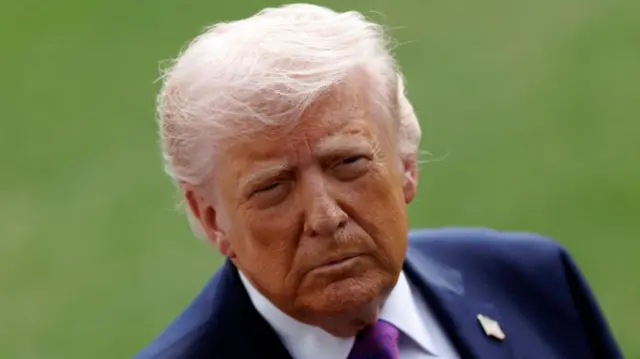
    Donald Trump stands on some grassImage source, EPA

    UK Prime Minister Keir Starmer and US President Donald Trump have discussed "the ongoing situation in the Middle East and the importance of reopening the Strait of Hormuz to end the disruption to global shipping", in a call on Sunday, No 10 says.

    We'll bring you more on this in our next post.
  2. We have thousands more targets to hit in Iran, says Israeli military spokespersonpublished at 20:02 GMT 15 March
    Breaking

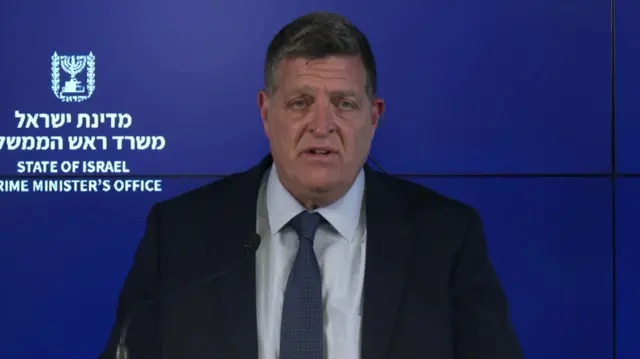
    Effie Defrin, a spokesperson for the Israeli military, has given a televised briefing.

    During it, he says the Israeli military still has "thousands" of targets to hit in Iran.

    Defrin's quoted by Reuters news agency as saying: "We are identifying new targets every day."

    Further translation from Reuters cites him as saying the Israeli military will "continue to strike in Iran and against Hezbollah until we remove the threats and achieve the objectives of the operation".

  3. Netanyahu adviser: No talks between Israel and Lebanon until Hezbollah disarmedpublished at 19:52 GMT 15 March

    Ophir Falk

    Earlier, a foreign policy adviser to Israeli Prime Minister Benjamin Netanyahu dismissed suggestions that Lebanon-Israeli peace talks could soon take place - echoing earlier comments from the country's foreign minister.

    "Well talks are nice, but action is much more important," Dr Ophir Falk told the BBC News channel.

    He said Israel has an agreement in place from November 2024 "that the Lebanese government needs to dismantle Hezbollah".

    "They should disarm Hezbollah and they should do that immediately," he added. "If there's a will there's a way."

  4. UN 'peacekeepers' shot at in Lebanonpublished at 19:03 GMT 15 March

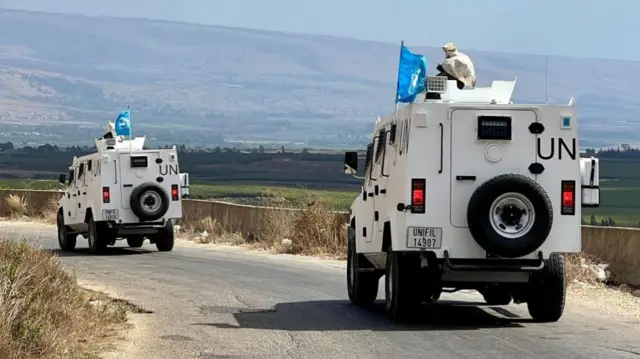
    Two white vans drive along a roadImage source, REX
    Image caption,

    File photo of United Nations Interim Force (Unifil) vehicles in southern Lebanon

    "Peacekeepers were fired upon, likely by non-state armed groups" in Lebanon, the UN says.

    The attacks happened at three different UN bases, in Yatar, Dayr Kifa and Qallaqiyah, according to the United Nations Interim Force in Lebanon (Unifil).

    The shots were as close as five metres from peacekeepers in one of the locations, it says, adding none were injured.

    Unifil is a peacekeeping mission which was created in 1978 to monitor hostilities and help ensure humanitarian access to civilians.

    • For context: UN peacekeepers can be military, police and civilians, according to the UN's website. It adds that peacekeeping operations have "developed from simply monitoring ceasefires to protecting civilians, disarming ex-combatants, protecting human rights, promoting the rule of law, supporting free and fair elections, minimizing the risk of land-mines and much more".
  5. Israeli military says it has 'eliminated' Palestinian man who worked with Iranpublished at 18:55 GMT 15 March

    The Israeli military says it has eliminated Muhammad Majid Abdul Salam Tawfiq Zaydan, who it describes as a Palestinian "terrorist" working for the Iranian regime, in a strike on Lebanon.

    Israel Defense Forces (IDF) spokesman Avichay Adraee says the strike, which occurred on Friday, was carried out as a joint operation between the IDF and Israel's domestic intelligence agency Shin Bet.

    We have not heard any acknowledgement of the death from Iran.

  6. 'I'm willing to die on these streets': Iranians caught between hope and fearpublished at 18:40 GMT 15 March

    Azadeh Moshiri
    South Asia correspondent, reporting from Dubai

    In the first days of the war, I’d spoken to a man in his 40s who’d fled to the countryside the moment he heard bombings in Tehran. Despite his fear, he had hope. It’s now waning.

    "As a general rule, I always expect the worst case scenario," he tells me. After years of disappointment, he finds it difficult to imagine this war leading to a toppled regime and a new future for the country.

    "I think the US will declare victory soon, and Iran will enter a sad year of super inflation, unrest, bloodshed, lack of food and drugs."

    He says the people he speaks to are less afraid of the bombings, but terrified of a bleak and dangerous future for Iranians. "But there are people who don’t believe the US will abandon Iran. They say he’s spent too much money to leave without an absolute victory," he adds.

    It’s extremely difficult to speak to people inside Iran, amid an internet blackout and landlines residents fear are monitored.

    But someone else managed to get in touch, and he refuses to let go of hope.

    "It’s only a few days until Norouz [Persian New Year], and we are in great difficulty. But I’m so desperate I’m willing to die on these streets. That’s how bad it’s gotten. Long live Iran."

  7. Analysis

    Iran is usually bustling this time of year, but the streets are quiet nowpublished at 17:28 GMT 15 March

    Behrang Tajdin
    BBC Persian

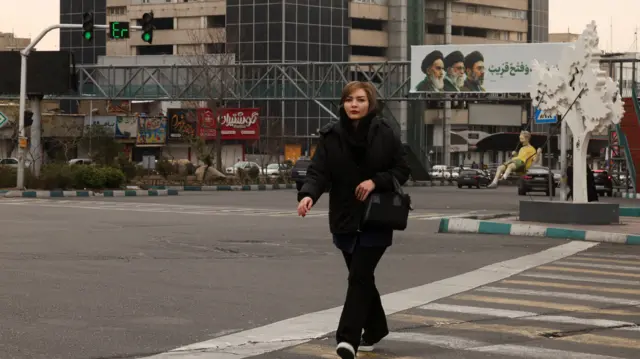
    A woman walks across the street, with a banner of all three leaders of Iran, late Ruhollah Khomeini, late Ayatollah Ali Khamenei, and Mojtaba Khamenei in the backgrounImage source, Reuters

    In Iran, the streets are very quiet, and many people avoid going outside after sunset.

    This is despite the fact that this Friday (20 March) is Nowruz, the Persian New Year, and usually at this time of the year, the streets and markets are buzzing right across the country, as people prepare for the celebrations.

    However, many shops are closed and people avoid spending money on anything other than the essentials.

    Some are questioning whether the war could result in a regime change in Iran.

    Mina, a 28-year-old teacher from a northern town, tells the BBC that "if we are left with the ruins of the war and this regime remains and becomes even more repressive? What should we do then?"

  8. Iran nuclear programme 'unacceptable threat to world' - US ambassador to the UNpublished at 17:11 GMT 15 March

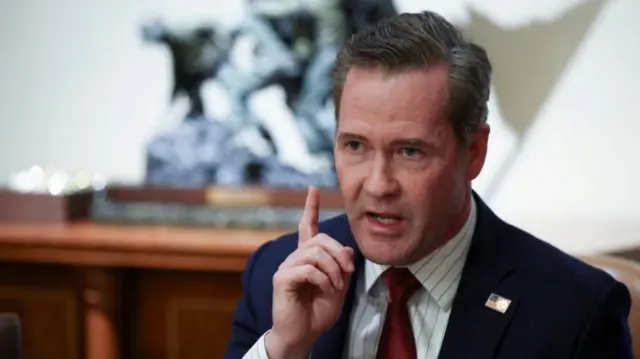
    Mike WaltzImage source, Reuters

    The US "has never been in such a position of strength" over Iran, says Mike Waltz, Donald Trump's ambassador to the UN.

    The possibility of Iran having a nuclear weapon is "an unacceptable threat to the United States and the world", he tells Fox News. "Look at what they're doing to global energy supplies."

    "We have seen Iran's behaviour, and shooting in all directions", he says. "One can only imagine if they were doing that under their own nuclear umbrella."

    And speaking separately to CNN, Waltz says he won't comment on suggestions that Russia is sharing intelligence with Tehran to help its war effort, but adds that if it is, "it certainly hasn't been effective".

  9. US-Italy base in Kuwait hit by drone, says Italian militarypublished at 16:54 GMT 15 March

    A US-Italian army base in Kuwait has been struck by a drone attack, the Italian military says.

    "This morning, Ali Al Salem base in Kuwait was the target of a drone attack that hit a shelter housing a remotely piloted aircraft of the Italian Task Force Air (TFA), which was destroyed," Chief of the Defence General Staff, General Luciano Portolano, says in a statement posted by Italy's Ministry of Defence on X.

    Portolano adds that all personnel were safe and were not involved.

    The statement adds that the Italian contingent of TFA had been scaled back in recent days "as part of measures adopted in response to the evolving security situation in the area".

  10. Will Pentagon need to ask Congress for more money to fund Iran war?published at 16:40 GMT 15 March

    Donald Trump's top economic adviser, Kevin HassettImage source, EPA

    Donald Trump's top economic adviser, Kevin Hassett, has been asked about the financial cost of the war - and whether the Pentagon will need to ask Congress for more money.

    “Right now, we’ve got what we need," he tells the BBC's US partner CBS News, adding that the US has spent $12bn so far.

    Energy prices are the "big problem right now", he says, but there will be a "boom in oil production" if Iran stops being a "disruptive terrorist force".

    "We expect that the global economy is going to have a big positive shock as soon as this is over," he adds.

    On the duration of the war, Hassett says: "We're still being briefed that it would be four-six weeks from the beginning, and that we're ahead of schedule."

  11. US denies Iranian claim that it is behind drone attacks on Gulf nationspublished at 16:30 GMT 15 March

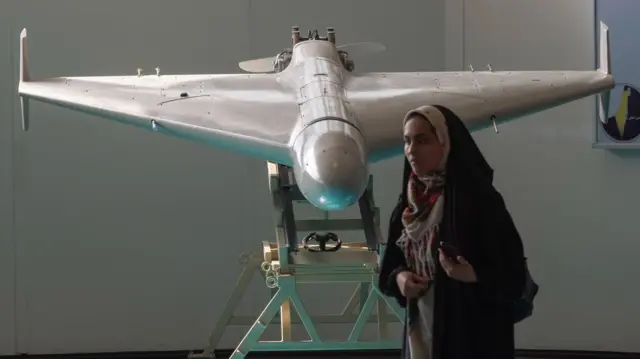
    A veiled Iranian schoolgirl stands in front of Iran's Shahed-136 unmanned aerial vehicle while visiting of Iran's Islamic Revolutionary Guard Corps (IRGC) National Aerospace Park in western Tehran, October 11, 2023Image source, Getty Images
    Image caption,

    An Iranian Shahed drone on display in Tehran in 2023

    The United States has branded Iranian claims that the US and Israel are behind drone attacks on Gulf states as a "lie".

    Earlier today, Iranian Foreign Minister Abbas Araghchi suggested that the two countries could be responsible for the attacks while blaming Iran, according to the IRGC-affiliated Fars News Agency.

    Araghchi said the US' Lucas drone is a "perfect match" for the Iranian Shahed, and that it is possible these drones are being used against Arab nations to "sabotage the relations of these countries with Iran".

    The Lucas drone, which stands for low-cost uncrewed combat attack system, was used for the first time in combat during the current war with Iran, and was described by the US Central Command (Centcom) chief, Admiral Brad Cooper, as a Shahed drone "made better" and fired "right back at Iran”.

    Responding to these claims, Centcom says Iran has launched "thousands of drones AND missiles" at its neighbours.

    "US attack drones are only targeting Iranian military capabilities to eliminate threats posed to the region," it continues in a statement on X.

  12. Analysis

    Iranians are paying a high price to stay connectedpublished at 16:14 GMT 15 March

    Ghoncheh Habibiazad
    Senior reporter, BBC Persian

    It is still very difficult to contact those inside Iran amid the internet outage imposed by the government at the start of the war, but tech-savvy residents have been using Starlink devices and sharing their connection with others.

    "I was supposed to get married in these days. The flights have been cancelled, and the situation isn’t clear at all. My partner lives in Canada, he had a ticket to come to Tehran so we could have the ceremony," a woman in her 20s in Tehran tells me.

    "I’m paying a huge amount of money to be able to connect to the internet to talk to him right now."

    Internet access is being sold on the Telegram messaging app for around $6 (£4.50) for 1GB of data - a high price in a country where the average monthly salary is estimated to be between $200 (£151) and $300 (£226).

    I asked what she wants to do if the war continues. "If the war doesn’t end, I’ll go by land to the Turkish border and then to Istanbul, so he can come there as well," she says.

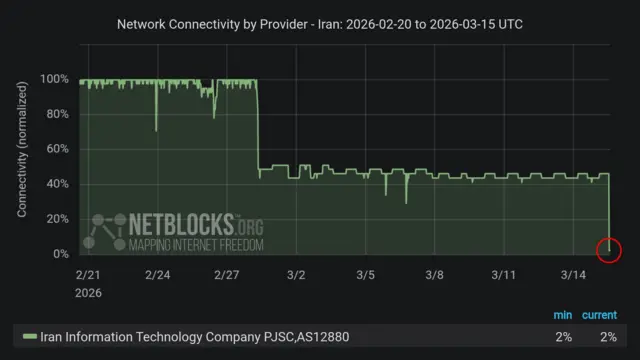
  13. Key Iranian telecoms network collapsespublished at 16:00 GMT 15 March

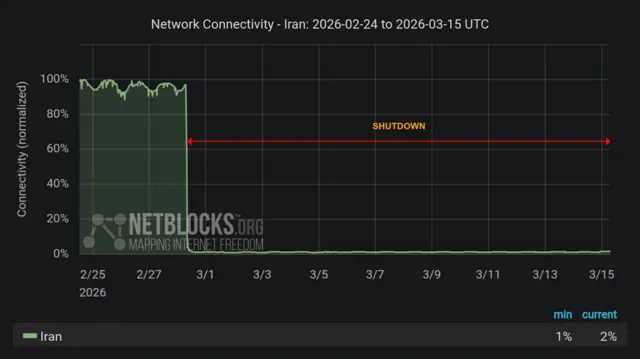
    Connectivity on a key Iranian telecommunications network has collapsed, according to independent monitoring service NetBlocks.

    The network, AS12880, had so far remained partially online, it adds.

    The government in Iran continues to impose a near-total internet blackout and there has been virtually no connectivity for 16 days.

    A graph by netblocks shows the connectivity of Iranain provider AS12880 since February 21. It drops by around half at around the start of March and has now dropped to around 1%.Image source, Netblocks
  14. Emergency oil reserves 'will soon start flowing', says International Energy Agencypublished at 15:48 GMT 15 March

    Someone fills up a car with a petrol pumpImage source, EPA

    The International Energy Agency (IEA) says that oil "will soon start flowing" to global markets after announcing it would release 400 million barrels of oil from its emergency reserves.

    It says that stocks should be available "immediately" in Asia-Oceania, and available from the end of March in the Americas and Europe.

    All 32 IEA members - including the UK, the US, and many of the world's richest nations - agreed to the release on Wednesday to combat challenges "unprecedented in scale".

    The release is more than double the previous record amount released by the IEA's members after Russia launched its full-scale invasion of Ukraine in February 2022.

    The price of oil is nearly a quarter higher than when war began in the Middle East two weeks ago.

  15. What is the situation in the Strait of Hormuz?published at 15:34 GMT 15 March

    US President Donald Trump has threatened to open the Strait of Hormuz "one way or another" and has called on countries including China, France and the UK to send warships to the shipping channel.

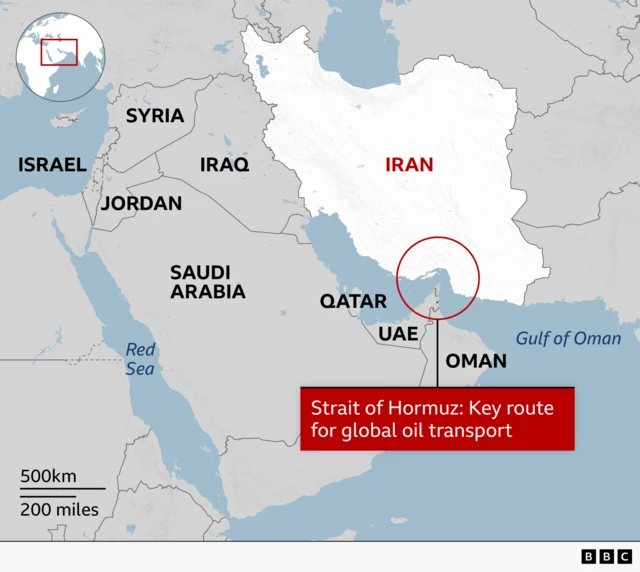
    Around 20% of the world's oil usually passes through the Strait - making it one of the world's most vital oil transit choke points.

    The Strait has been all but closed by Iran putting significant pressure on global supply chains and energy prices.

    Iran's Foreign Minister Abbas Araghchi yesterday said the route is only closed to tankers and ships belonging to its enemies. And this morning, he added that Tehran is "open to countries who want to talk" about the safe passage of vessels.

    A number of ships have been attacked as they attempt to navigate the narrow strait and there are also concerns Iran has placed mines in the passage as part of its attempts to hinder shipping.

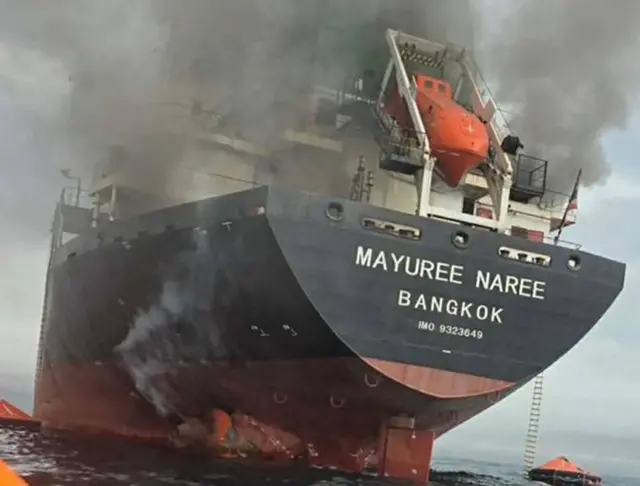
    These include the Thai-flagged Mayuree Naree, was hit while transiting through the Strait of Hormuz on Wednesday morning, the ship's owner told BBC Verify.

    Map showing where the Strait of Hormuz is in the Gulf of Oman, a key route for global oil transport. The strait lies between Iran and the peninsula of the United Arab Emirates and Oman. The map also shows countries in the wider Middle East region including Saudi Arabia, Iraq, Jordan and Israel
  16. Iran 'open to countries who want to talk' about safe passage through Strait of Hormuzpublished at 15:15 GMT 15 March

    A cargo ship named Mayuree Naree Bangkok in the see, clouds of smoke originating at the top of the veselImage source, Royal Thai Navy
    Image caption,

    Traffic in the Strait of Hormuz has dropped drastically after multiple reports of Iranian attacks

    More now from Abbas Araghchi, Iran's foreign minister, who has been speaking to the BBC's US partner, CBS News, this morning.

    He says that Iran is "open to countries who want to talk" about the safe passage of vessels through the Strait of Hormuz - where Iranian attacks on boats have seen traffic through the shipping lane grind to a halt.

    Not naming specific countries, Araghchi says Iran has "been approached by a number of countries" who want safe passage through the Strait.

    Iran's nuclear facilities are all under rubble, he adds, and "for the time being, there is no programme, no plan, to recover them".

    Araghchi says that when Iran-US talks about a nuclear deal were still ongoing, Iran had offered to "dilute the enriched material into a lower percentage".

    "That was a big concession," he says. The conflict has changed this: "There is nothing on the table right now, everything depends on the future."

  17. Iran 'never asked' for a ceasefire or negotations, says foreign ministerpublished at 14:56 GMT 15 March

    Iranian Foreign Minister Abbas AraghchiImage source, Reuters

    Iranian Foreign Minister Abbas Araghchi says that Tehran has "never asked for a ceasefire, we have never asked even for negotiation".

    This follows earlier comments from Donald Trump that Iran wanted a deal, but he was unwilling to agree to one "because the terms are not good enough yet".

    "We don't see any reason why we should talk with Americans, because we were talking with them when they decided to attack us," he tells CBS News' Face the Nation programme.

    "This is a war of choice by President Trump and the United States, and we are going to continue our self defence."

    Return to the latest post
  18. Israeli military expanding scope of its strikes on Iran, IDF sayspublished at 14:47 GMT 15 March

    The Israel Defense Forces (IDF) says it is expanding the scope of its strikes against the Iranian regime's infrastructure to include more areas in western and central Iran.

    The IDF says it aims to degrade the regime's "command and control capabilities".

    At the same time, it announces the Israeli Air Force completed a wave of strikes targeting the Iranian regime's headquarters in Hamedan, western Iran, earlier on Sunday.

    The IDF says it struck several key headquarters belonging to the Islamic Revolution Guard Corps and the Basij Forces.

    It says the strikes are part of "an ongoing effort focused on deepening the damage to the core operational systems and foundations of the Iranian regime".

  19. Iranians tell BBC of intensifying repressionpublished at 14:26 GMT 15 March

    Behrang Tajdin
    BBC Persian

    Reports, messages and occasional videos that BBC Persian has received paints a picture of intensifying repression in the country.

    People say more and more security checkpoints are being set up, and some of them are being moved under bridges and inside road tunnels, external, after reports of some being targeted from the air.

    Many of the check-points are manned by armed Basij members (the hard-line, state-aligned volunteer militia force controlled by the Iranian Revolution Guard Corps), and there are reports of people’s mobile phones being confiscated and checked.

    After the judiciary announced that anyone sending pictures or videos of areas targeted by the US and Israel to foreign media, or publishing them on social media, will be prosecuted fewer people share them with the outside world.

    The vast majority of people have had no access to the internet for 16 days now, apart from some domestic websites, and this has especially impacted the hundreds of thousands of small and micro-businesses, many of them run by women from their homes, that relied on Instagram to communicate with their customers.

  20. Sixteenth day of internet blackout in Iranpublished at 14:21 GMT 15 March

    Chart shows internet access being cut off 16 days ago, and remaining at virtually 0% sinceImage source, Netblocks

    The government in Iran continues to impose a near-total internet blackout.

    An update from the monitoring service Netblocks shows there has been virtually no connectivity for 16 days.

    This makes it difficult for journalists to gain access to people in Iran, but some have been using Starlink devices.