Summary

  • We've ended our live coverage of the Iran war on this page. You can follow all the latest updates on our new page here

  • Israeli military spokesperson Effie Defrin says there are still , hours after to include areas in western and central Iran

  • Iranian Foreign Minister Abbas Araghchi says Tehran has not asked the US "for a ceasefire"

  • In an interview with CBS News, the BBC's US media partner, Araghchi also says Iran doesn't "see any reason why we should talk with [the] Americans, because we were talking with them when they decided to attack us"

  • US President Donald Trump had said on Saturday Iran wanted to make a deal, but that he felt the terms were "not good enough"

  • Meanwhile, - the UK government says the pair spoke about the "importance of to end the disruption to global shipping"

  1. Analysis

    Lebanon is being forced to live a war that not all its people wantpublished at 19:13 GMT 14 March

    Lina Sinjab
    Middle East correspondent, reporting from Beirut
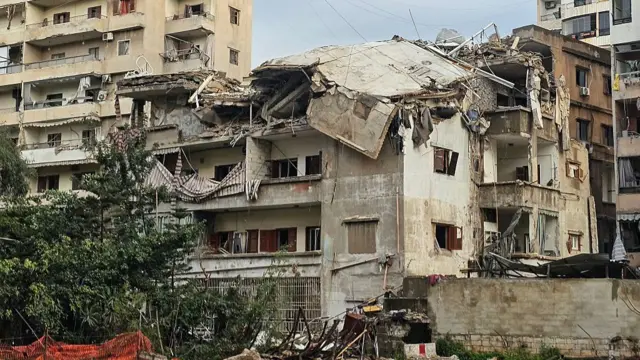
    A several story building that has taken extensive damage, with the roof caved in and walls falling down. Rubble is strewn on the ground outsideImage source, AFP via Getty Images

    Israel's strikes continue to hit the south of Lebanon, Beirut's southern suburbs and other neighbourhoods.

    Hezbollah is adamant it will continue fighting until the end, ignoring constant calls from the government to end the war and stop its military activities.

    Diplomatic efforts are under way to put an end to the war. As French President Emmanuel Macron offered to host direct talks between the Lebanese and Israelis, UN Secretary General Antonio Guterres travelled to Lebanon on Saturday to show solidarity with the country and call on all parties to respect international law.

    But the warring parties are not adhering to this approach.

    Israel appears to want to finish what it started in 2024 - that is to eliminate Hezbollah.

    On the other hand, many see Hezbollah as acting under the order of Iran, which now says they are co-co-ordinating strikes on Israel.

    This co-operation has put Lebanon and its government under immense pressure, as people are forced to live a war they don’t want.

  2. Analysis

    As strikes continue in Lebanon, there is pressure for direct talks to take place with Israelpublished at 18:53 GMT 14 March

    Wyre Davies
    Reporting from Beirut

    Israeli air strikes in Lebanon, which began after Hezbollah began firing rockets towards northern Israel in support of Iran, have killed more than 800 people, says the Lebanese health ministry - and more than 800,000 have been displaced from their homes.

    Thus far there have been few serious diplomatic efforts to end the conflict and after launching a £230m humanitarian appeal for Lebanon, UN Secretary General Antonio Guterres said an expansion of the war would be good for no one.

    "The Lebanese people did not choose this war. They were dragged into it. And my message to the warring partners is clear - stop the fighting. Stop the bombing," he said.

    Israel is striking several parts of Lebanon, including the eastern Bekaa valley where it accuses Hezbollah of organising campaigns and storing weapons.

    We saw the aftermath of a strike on a house that had been completely destroyed. Eight people were killed, including several children. Yellow flags and pictures of Iran's late Supreme Leader Ayatollah Ali Khamenei indicated it was a Hezbollah-supporting home, and where Israel later said there were Hezbollah operatives present.

    But a surviving uncle, Hassan Tahan, said that nothing could justify such an action: "Israel is wrong if they think that killing children and civilians will separate us from the resistance. On the contrary, it makes us more loyal to them. I'm even more steadfast in my support now than I was before."

    Previous full-scale invasions of Lebanon have ended in disaster for Israel and, if it were to try to create a big buffer zone in southern Lebanon, there's no indication for how long an Israeli occupation would last.

    There is pressure for direct talks between the Israeli and Lebanese governments - but if they happen, they won't include Hezbollah, which says it is determined to carry on its fight against Israel which it says had also repeatedly breached a previous ceasefire agreement.

  3. American citizens urged to leave Iraq 'immediately'published at 18:40 GMT 14 March

    The US embassy in Baghdad has warned its citizens to leave Iraq "immediately". It also urges anyone who is thinking about staying put to "reconsider".

    "Iran and its aligned terrorist militias pose a major threat to public safety in Iraq. Attacks have occurred against US citizens, US interests, and critical infrastructure," it writes on X.

    As we reported earlier, the embassy building was hit in an attack on Saturday - watch our video of thick smoke rising from the site below.

    "Do not attempt to come to the Embassy in Baghdad or the Consulate General in Erbil due to the ongoing risk of rockets, drones, and mortars in Iraqi airspace," the embassy says.

    Media caption,

    Fire and smoke at US embassy in Iraq after Iranian strike

    Return to the latest post
  4. Iran's foreign minister gives update on new supreme leader and Strait of Hormuzpublished at 18:13 GMT 14 March

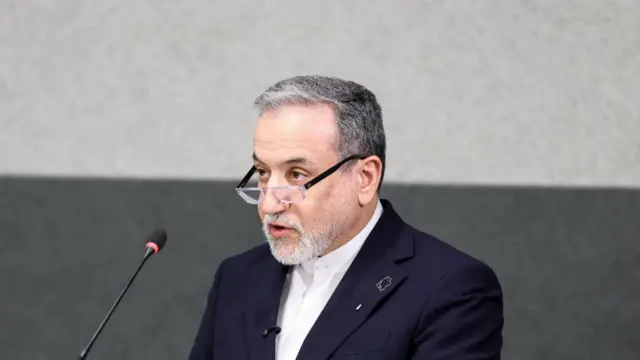
    Araghchi speaking into a small microphone that's on a stand in front of him. Only his shoulders up are visible. He wears a suit and glasses. The background is two tones of grey.Image source, Reuters

    Iran's Foreign Minister Abbas Araghchi has spoken to US news outlet MS Now, touching on several points about the ongoing war between Iran, and the US and Israel.

    We've listened in - here are the key takeaways:

    On the new supreme leader: When asked about reports that Mojtaba Khamenei is injured, Araghchi says: "They will see soon that there is no problem with the new supreme leader. He is performing his duties... and he will continue to do that".

    Strait of Hormuz: The key oil shipping channel is "open", Araghchi says, adding it's only closed to the tankers and ships belonging to Iran's "enemies". All others are free to pass, he says.

    On civilian buildings being targeted: Araghchi says Iran is targeting American bases and assets, which are "unfortunately located in the territory of our neighbours". He then accuses the US of attacking civilian targets in Iran - something the US has repeatedly denied since the start of the war.

    On Russia and China: They are Iran's "strategy partners", Araghchi says.

  5. At least 15 killed after strikes hit central Iran - reportpublished at 18:02 GMT 14 March

    Ghoncheh Habibiazad
    Senior reporter, BBC Persian

    At least 15 people have been killed in Iran following strikes on an industrial zone in the central province of Isfahan, IRGC-affiliated Fars News Agency reports.

    The attack, which happened earlier, is reported to have hit a "factory producing cooling and heating equipment" at a time when "a number of workers in the factory were working".

    Fars adds that a number have been injured, without specifying how many.

  6. Kuwait dealing with 'missile and drone attacks'published at 18:02 GMT 14 March

    Kuwait's army says its defence systems are currently confronting both missile and drone attacks.

    Any explosions are the result of interceptions, it says in a statement.

    We'll bring you more on this when we hear it.

  7. Drones hit Kuwait air base, injuring military, defence ministry sayspublished at 17:35 GMT 14 March

    Kuwait's defence ministry says its air defence systems have detected seven hostile drones on Saturday, two of which struck the Ahmed Al-Jaber Air Base, causing some material damage in the base's vicinity.

    Three members of the armed forces were injured in the incident, the statement adds.

    Three of the drones were shot down and the remaining two fell outside of the threat area and posed no danger, the ministry says.

  8. Iran launches another wave of strikes at Israelpublished at 17:27 GMT 14 March
    Breaking

    The Israel Defense Forces (IDF) warns that another round of Iranian missiles has been detected - the sixth wave of strikes targeting the country on Saturday.

    Three rounds came within less than two hours earlier this afternoon.

    Defensive systems are operating to intercept the threat, the IDF says, before asking the public in affected areas to seek shelter.

  9. Strikes continue as war enters third week - here's what you need to knowpublished at 17:22 GMT 14 March

    Imogen James
    Live reporter

    Strait of Hormuz:

    • US President Donald Trump has asked for a host of nations, including the UK and China, to send warships to the Strait of Hormuz, a key oil shipping channel through which about 20% of the world's oil usually passes
    • A number of ships - 16, according to the UK Maritime Trade Operations - have been attacked while operating in or near the passage since the war started on 28 February
    • On Thursday, Iran's new supreme leader Mojtaba Khamenei vowed to keep blocking the strait. On Saturday, Trump said "one way or the other, we will soon get the Hormuz Strait OPEN, SAFE, and FREE!"

    Strikes continue:

    • There have been several instances of strikes launched between Israel and Iran throughout Saturday. Sirens and explosions were heard in Jerusalem, with two minor injuries reported from earlier strikes in Eilat
    • In Iran, a woman told the BBC all her thoughts were "focused on survival" - new images show damage to both countries
    • Fatemeh Mohajerani, a spokesperson for the Iranian government, said more than 200 students and teachers have been killed since the start of the war, and that 120 schools have been "severely damaged"
    • In Lebanon, the death toll has risen to 826, according to state media

    Oil facilities:

    • The UAE port of Fujairah was targeted by a strike earlier on Saturday, causing a large fire. It's a key location for the refuelling of ships and one of the largest oil storage facilities in the region
    • Meanwhile, the US has said more than 90 military targets on Iran's Kharg Island have been destroyed. The vital island in the northern Gulf is the terminal for close to 90% of the Iran's oil exports
    • Tehran responded, saying its oil facilities there remain intact, with the country's foreign minister warning his country would respond to attacks on Iranian energy facilities by targeting US companies in the region
  10. UK MoD responds to Trump calling for ships to be sent to Strait of Hormuzpublished at 17:12 GMT 14 March

    "As we've said previously, we are currently discussing with our allies and partners a range of options to ensure the security of shipping in the region," a UK Ministry of Defence spokesperson says.

    • As a reminder: Trump posted on Truth Social earlier, saying he wanted allies - including the UK - to help keep the shipping channel "open and safe". Iran has been threatening certain ships passing through the region, leading to a standstill. Here's why the strait is important.
  11. Analysis

    With no evidence this war is ending yet, Trump's call to send ships to Strait of Hormuz may be prematurepublished at 16:39 GMT 14 March

    Jonathan Beale
    Defence correspondent

    President Trump’s call for allies to send warships to keep the Strait of Hormuz open may be premature - especially as there’s no evidence that this war is ending.

    The reality is that even the US Navy is currently not escorting tankers through this narrow shipping lane.

    At present it appears too dangerous - with a number of tankers trying to transit already having been hit.

    President Macron has said France is willing to send warships to the Gulf as "purely an escort mission". But he also said that would only be after the most "intense phase of the conflict had ended".

    As well as France, Trump suggested Japan, China, South Korea and the UK could send warships to escort shipping.

    Yet only last week, Trump stated that the US did not need the UK to send an aircraft carrier to the region "after we’ve already won".

    The Royal Navy has two aircraft carriers. Though one of them, HMS Prince of Wales, has been placed on high readiness, she’s due to sail to the North Atlantic.

    The Navy has no other warships in the region - though the destroyer HMS Dragon is now on her way to provide additional air defences for Cyprus.

  12. Debris and destruction as Iran and Israel exchange strikespublished at 16:35 GMT 14 March

    Iran and Israel are continuing to fire missiles at one another.

    Earlier, we reported that sirens were sounding in Jerusalem while someone in east Tehran told our BBC Persian colleague more strikes were beginning in the Iranian capital.

    Here are some of the latest images we're seeing come out of both countries:

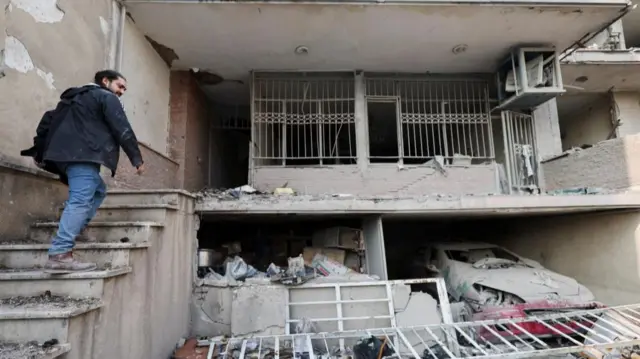
    An Iranian man goes into his house in Tehran which was destroyed by a strikeImage source, Reuters
    Image caption,

    A man in Tehran climbs the stairs in his apartment block, which has been partly reduced to rubble

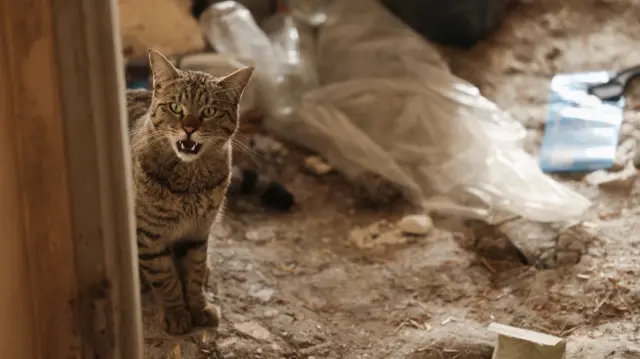
    A cat looks on in a house which was destroyed by a strike in TehranImage source, Reuters
    Image caption,

    Meanwhile, a pet cat looks on from rubble

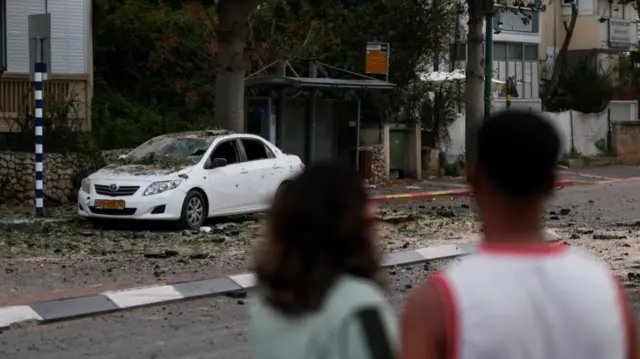
    In central Israel, images show debris on the street and a car damaged by Iranian strikes.

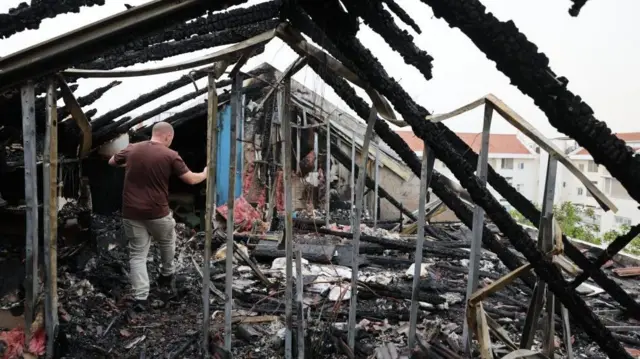
    Earlier today, we also shared photos from the city of Shoham, where strikes took the roof off a building in a residential area.

    Debris lies scattered near a damaged vehicle following an Iranian projectile strikeImage source, Reuters
    Image caption,

    Debris on the street following a strike in central Israel

    People inspect the damage at the site of a reported overnight missile strike in a residential area near the city of Shoham, central IsraelImage source, EPA
    Image caption,

    The site of a strike in Shoham

  13. Iran's foreign minister: We will respond to attacks on our energy facilitiespublished at 16:13 GMT 14 March

    Iran's foreign minister says his country will respond to any attack on Iranian energy facilities by targeting US companies in the region, according to the Tasnim News Agency, which is affiliated with the Islamic Revolution Guards Corps.

    Abbas Araghchi is quoted as saying: "If Iranian facilities are targeted, our forces will target facilities of American companies in the region or companies in which the United States has shares.

    "We will definitely respond to these attacks, while at the same time acting with caution so that densely populated areas are not targeted."

    It comes hours after the US military targeted Kharg Island - critical to Iran as it's thought about 90% of its oil exports pass through the island.

    An Iranian news agency later said the US had targeted air defences, a naval base, an airport control tower and a helicopter hangar - it added there had been no damage to oil infrastructure.

    Media caption,

    Watch: Why Kharg Island is a lifeline for Iran

  14. 'All my thoughts are focused on survival': Iranian woman on life since US-Israeli strikes beganpublished at 15:56 GMT 14 March

    Faren Taghizadeh
    BBC Persian

    I spoke to Sadaf (not her real name) on Friday night. She's from Karaj, Iran.

    She tells me she's mentally and emotionally "wrecked". Most of her day is spent checking the news and trying to get in contact with people she knows. "My life is basically paralysed," she says.

    "Creatively and artistically there’s almost nothing in my mind right now - which I guess is natural, because all my thoughts are focused on survival."

    Physically, she says she feels "okay", other than headaches.

    The war has impacted friends and neighbours, too.

    "Our upstairs neighbour said their relative’s house was in the east, and it got destroyed. They had a bird and a cat - both of them died," she says.

    Meanwhile, a friend with elderly relatives was left with broken windows, and no electricity and gas for several hours after a strike.

    She also knows people in eastern Tehran. "They've had it pretty rough there," she says.

    People gather at the site of an air strike, amid the U.S.-Israeli conflict with Iran, in TehranImage source, Reuters
    Image caption,

    People in Tehran gather at the site of an air strike

  15. Strikes start again in Tehranpublished at 15:37 GMT 14 March
    Breaking

    Ghoncheh Habibiazad
    Senior reporter, BBC Persian

    A source in east Tehran tells me strikes have started again on the Iranian capital.

    We'll bring you further updates on this when we get them.

  16. Initial reports suggest no casualties in Israel after latest wave of Iranian strikes, IDF sayspublished at 15:29 GMT 14 March

    The Israeli military says people can now stop sheltering following the latest round of Iranian strikes.

    A little earlier, the Israeli Defense Forces urged people to take shelter after it detected new attacks.

    Search and Rescue forces are now working in several locations in central Israel after reports of "fallen projectiles", it says.

    "According to initial reports, there are no casualties," a spokesperson from the Fire and Rescue Services says. "Teams are continuing searches at all locations. No trapped individuals have been reported," they add.

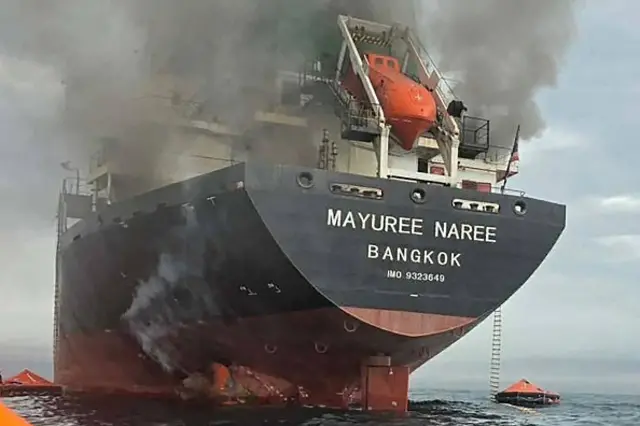
  17. Ships attacked near the Strait of Hormuz - a reminderpublished at 15:14 GMT 14 March

    Smoke rises from a cargo ship with the words "Mayuree Naree Bangkok" written on it.Image source, Royal Thai Navy

    In its latest update on 12 March, the UK Maritime Trade Operations (UKMTO) said, since 28 February, it had received 20 reports of incidents affecting vessels operating in and around the Gulf, Strait of Hormuz, and Gulf of Oman.

    Sixteen of those ships have been attacked, it adds, and four cases of suspicious activity recorded in the area.

    The Thai-flagged Mayuree Naree, was hit while transiting through the Strait of Hormuz on Wednesday morning, the ship's owner told BBC Verify.

    Iran's new supreme leader Mojtaba Khamenei vowed to keep blocking the Strait of Hormuz in his first public statement on Thursday.

    Verified footage showed two tankers on fire in Iraqi waters at the north of the Gulf late on Wednesday and UKMTO reported the ships had been "struck by an unknown projectile".

    Safesea Vishnu, a US-owned vessel heading to India, is one of the most recent boats to have been attacked.

    It was hit by an "unmanned speed boat carrying explosives" which "rammed into it, resulting in a major fire onboard", Indian authorities said.

    • The Strait of Hormuz has become a sticking point in the US-Israel war with Iran. US President Trump vowed a short while ago to get the Strait "open and safe", "one way or the other". He called on the UK and other nations to join the US in sending ships to help secure the shipping lane
  18. Israeli military says more strikes launched from Iranpublished at 14:55 GMT 14 March

    More missiles have been launched towards Israel from Iran, the Israeli Defense Forces say.

    In a recent update, the IDF adds that defence systems are working to intercept the threat and the public has been asked to enter shelters.

    It follows a series of strikes in rapid succession launched from Iran towards Israel a short while ago.

    Sirens sounded in Jerusalem, Israel, and injuries have been reported in Eilat in southern Israel.

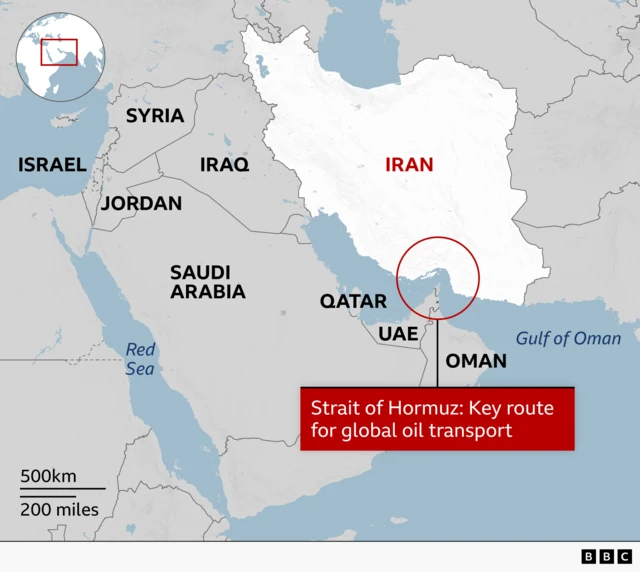
  19. Strait of Hormuz: What is it and why is it important?published at 14:40 GMT 14 March

    Map showing where the Strait of Hormuz is in the Gulf of Oman, a key route for global oil transport. The strait lies between Iran and the peninsula of the United Arab Emirates and Oman. The map also shows countries in the wider Middle East region including Saudi Arabia, Iraq, Jordan and Israel

    As we've just reported, US President Donald Trump says "one way or the other" the US will get the Strait of Hormuz "open and safe".

    The Strait of Hormuz is a key trade artery through which around 20% of the world's oil passes.

    Since the beginning of the conflict, numerous ships have been reported to have come under attack in the area and Iran's new supreme leader on Thursday said that Iran should keep using the "lever of blocking" the Strait.

    About 3,000 or so ships usually sail through the corridor each month. In 2025, about 20 million barrels of oil passed through the Strait per day.

    It is deep enough for the world's biggest crude oil tankers, and is used by the major oil and gas producers in the Middle East – and their customers.

  20. Trump says US will open Strait of Hormuz 'one way or the other'published at 14:22 GMT 14 March
    Breaking

    US President Donald Trump says that "one way or the other, we will soon get the Hormuz Strait OPEN, SAFE, and FREE!"

    In a post on his platform Truth Social, he writes that he hopes China, France, Japan, South Korea and the UK will send warships to the key shipping channel so it can "no longer be a threat" by Iran.

    He adds that many countries will be sending warships to keep the key shipping channel "open and safe".

    In the meantime, he says, the US will be "bombing the hell out of the shoreline and continually shooting Iranian boats and ships out of the water".

    He claims the US has "destroyed 100% of Iran's military capability" but says it's still "easy" for them use drones, mines and close-range missiles.

    Iran's representative in Geneva, Ali Bahrani, said Trump's claims about eliminating Tehran's capabilities are "based on fabricated lies".

    In our next post, we'll bring you a reminder of what you need to know about the Strait of Hormuz.