Summary

  1. Who is Mohammad-Bagher Ghalibaf?published at 10:29 BST 29 March

    Ghoncheh Habibiazad
    Senior reporter, BBC Persian

    Presidential candidate Mohammad Bagher Ghalibaf ​attends an election debate at a television studio in Tehran, Iran June 17, 2024.Image source, Reuters

    As we've reported, Iranian parliament speaker Mohammad Bagher Ghalibaf has posted a message saying Iranian forces are "waiting for American soldiers to enter on the ground so they can rain fire upon them".

    Ghalibaf is a conservative Iranian politician with a military background and has been speaker of Iran’s parliament since May 2020.

    Born in 1961, he joined the Islamic Revolutionary Guard Corps (IRGC) in 1980 and became one of its commanders during the Iran-Iraq War.

    Ghalibaf has run for president four times without success - coming fourth in 2005, second in 2013, withdrawing before the 2017 election, and coming third in the 2024 early election.

    He is a professional pilot and served as commander of the IRGC Air Force from 1997 to 2000, and as chief of Iran's police from 2000 to 2005.

    Ghalibaf has been accused of using his IRGC role to hide corruption scandals during his time as Tehran’s mayor.

    Some unconfirmed reports suggested the Trump administration considered Ghalibaf as a potential partner and possibly even a future leader.

  2. Saudi Arabia intercepted 10 drones - Ministry of Defencepublished at 10:12 BST 29 March

    Saudi Arabia says it has intercepted and destroyed 10 drones in the last few hours, according to its Ministry of Defense on social media.

    Other countries across the Gulf - including the UAE and Kuwait - have also reported strikes overnight.

    The region has faced repeated attacks over the past 24 hours, including on major infrastructure, our correspondent in Dubai reports.

    Return to the latest post
  3. Enemy signals negotiation in public, plots ground attack in secret - Iran parliament speakerpublished at 09:42 BST 29 March

    Ghoncheh Habibiazad
    Senior reporter, BBC Persian

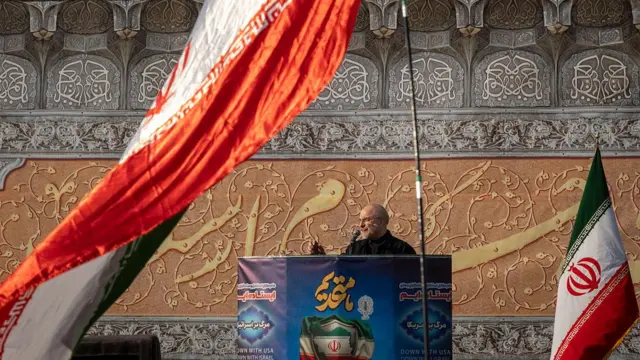
    Iranian Parliament Speaker, Mohammad Bagher Ghalibaf, speaks for protesters while participating in a pro-Government rally in TehranImage source, NurPhoto via Getty Images

    Iranian outlets, including the official IRNA news agency, have published a message from Iranian Parliament Speaker Mohammad Bagher Ghalibaf marking 30 days since the start of the war.

    In the message, Ghalibaf says "the enemy signals negotiation in public, while in secret it plots a ground attack".

    He adds that the US, "with a 15-point list, is setting out its wishes and pursuing what it failed to achieve in the war".

    Ghalibaf also says Iranian forces are "waiting for American soldiers to enter on the ground so they can rain fire upon them".

    On the subject of Iran's surrender, Ghalibaf says in Arabic that Iran's message is "clear" and it will not accept "humiliation".

  4. Many in Iran remain unaware of how the war is unfoldingpublished at 09:22 BST 29 March

    Azadeh Moshiri
    South Asia correspondent, reporting from Dubai

    We haven't heard Donald Trump talk about regime change lately.

    The killing of the Supreme Leader Ali Khamenei, alongside other senior Iranian officials, has led to more hardline figures with a background in the Islamic Revolutionary Guard Corps consolidating power.

    The Iranians I've spoken to fear the consequences. One man in northern Iran warns it could lead to a "potential civil war".

    "Anything less than regime change at this point could lead to a mass exodus and migration of people, depression and suicides," he adds.

    He told me, in his town, people have had very different reactions to the strikes. "A few days ago, our town got hit hard for the first time. Some were reacting as if they were at a football match and their favourite team was scoring."

    He said others were terrified, while a smaller group of regime supporters were furious and defiant.

    Amid conflicting reports of negotiations between the United States and Iran, another man who fled Tehran to the countryside has said many people remain unaware of how the war is unfolding.

    "It depends on how tech savvy you are, and VPNs to access the internet are now very expensive."

    "People who only have access to the regime media and live outside of Tehran or in southern Iran have got a completely different narration of the war. Of course, it’s far from reality," he says.

  5. Internet censorship in Iran enters fifth weekpublished at 09:09 BST 29 March

    Ghoncheh Habibiazad
    Senior reporter, BBC Persian

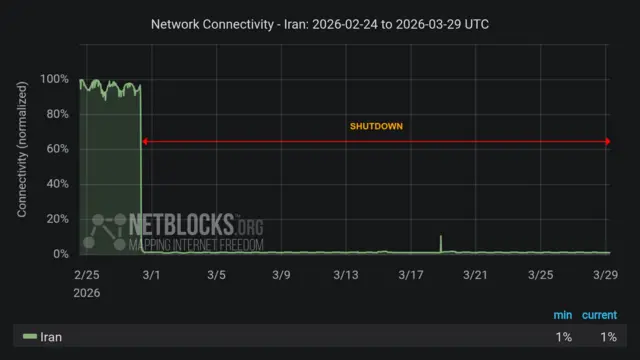
    A graph shows the internet connectivity in Iran plummeting around 28 February when the war began. The graph shows it has remained close to 0% ever sinceImage source, NetBlocks

    Iran's internet blackout has now reached day 30, with nationwide censorship measures continuing into a fifth week after 696 hours, according to internet monitoring group NetBlocks.

    Connectivity to the outside world remains at just 1% of normal levels.

    Some pro-establishment users and journalists still have unrestricted access, while others are paying large sums to get online.

    A few people have managed to connect using satellite internet such as Starlink and other methods, but it comes at a high cost.

    In Iran, using or possessing Starlink can lead to up to two years in prison, and authorities are trying to crack down on it.

    • BBC Persian is the Persian language service of BBC News, used by 24 million people around the world - the majority in Iran - despite being blocked and routinely jammed by Iranian authorities
  6. Qatari television network says Tehran office damaged in strikepublished at 08:57 BST 29 March

    Qatari television network Al Araby says its TV office in Tehran has been damaged by a missile.

    In a post on X, the network shared a video that appears to show debris and shattered glass.

    It is not clear who launched the missile. Israel has not commented.

  7. Iran's foreign minister says journalists' deaths 'a serious wake-up call'published at 08:25 BST 29 March

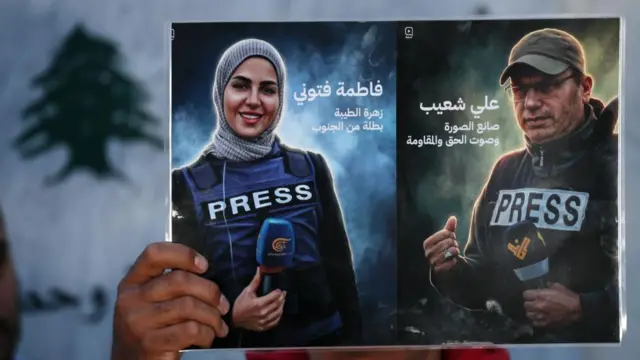
    A hand holds up a poster showing  Hezbollah's Al Manar TV correspondent Ali Shoeib (R) and Beirut-based Al Mayadeen TV reporter Fatima Ftouni (L). Both are pictured holding microphones and wearing press vestsImage source, EPA/Shutterstock
    Image caption,

    A member of the Union of Journalists in Lebanon holds a picture showing Hezbollah's Al Manar TV correspondent Ali Shoeib (right) and Beirut-based Al Mayadeen TV reporter Fatima Fetoni (left)

    Iran's foreign minister Abbas Araghchi says the deaths of three journalists in Lebanon are "not only a deep loss for the media community in the region and the world, but also a serious wake-up call for the global conscience".

    Ali Shoeib, a reporter for Al Manar TV - a network run by the militant group Hezbollah - and Al Mayadeen reporters Fatima and Mohamed Fetoni were killed in an Israeli air strike in the town of Jezzine.

    In a post on social media, Araghchi called the strikes "clearly a targeted assassination" and an attempt to "silence the voices of truth-tellers".

    Israel's military has confirmed it killed Ali Shoeib in a strike, but accuses him of being a Hezbollah operative posing as a journalist.

    This is the second time Israel has been accused of targeting journalists in Lebanon since the war began, writes our Middle East correspondent.

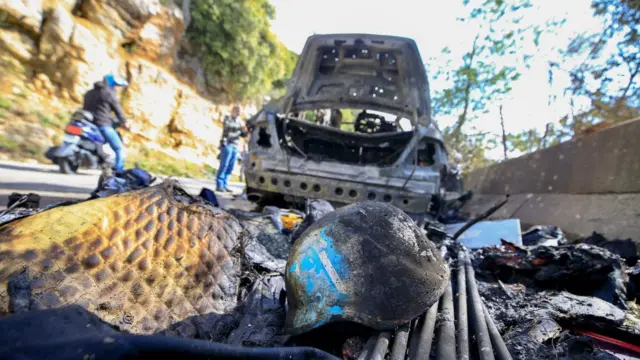
    A burned press helmet is seen next to a destroyed vehicleImage source, Shutterstock
    Image caption,

    A burned press helmet lies next to a destroyed vehicle reportedly carrying Hezbollah's Al Manar TV correspondent Ali Shoeib

  8. Oman investigating 'cowardly attacks' not claimed by any party - foreign ministrypublished at 08:06 BST 29 March

    Oman's Foreign Ministry says it is investigating "treacherous and cowardly attacks" targeting the country, which "have not been claimed by any party".

    The ministry does not mention specific attacks, but a foreign worker was injured on Saturday after two drones targeted the port of Salalah in southern Oman, according to the country's official news agency.

    Earlier this month, Iran attacked fuel storage tanks in the same city.

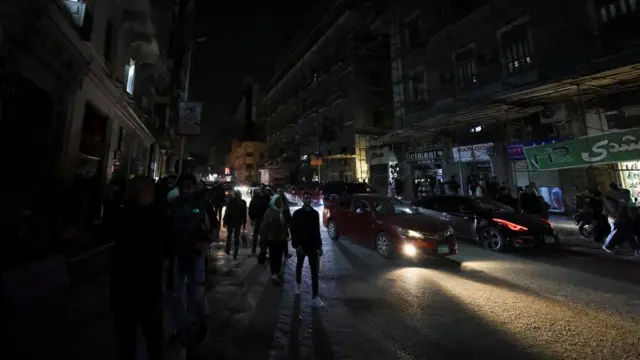
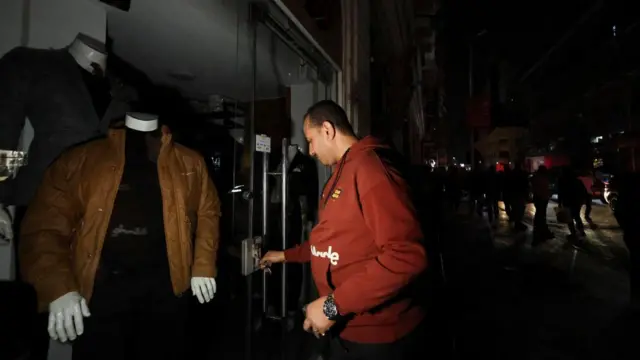
  9. In pictures: Shops and restaurants in Egypt ordered to close to save energypublished at 07:49 BST 29 March

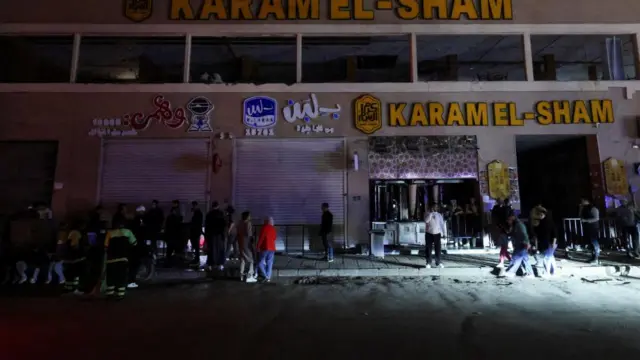
    Egypt has ordered shops, restaurants and shopping centres to close at 21:00 in an effort to conserve energy because of the war in the Middle East.

    Pictures show streets plunged into darkness after the new rules came into effect.

    The "exceptional measures" introduced by the Egyptian government also include dimming street lights and roadside advertising.

    A large crowd stands next to several shuttered shop frontsImage source, Reuters
    Image caption,

    Shops closed in Cairo on Saturday to conserve energy after rising costs due to the war in Iran

    Crowds walk down a dark street in Cairo only lit up by the lights of carsImage source, Reuters
    A man wearing a red hoodie locks the door to his clothes store. In the background several silhouettes can be seen in the darknessImage source, Reuters
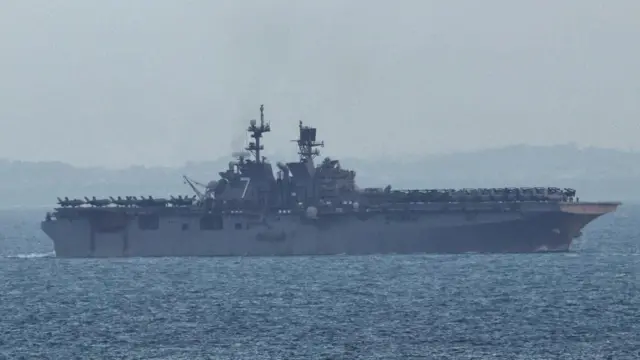
  10. Thousands more US troops arrive in region on Saturdaypublished at 07:33 BST 29 March

    USS Tripoli (LHA-7) amphibious assault ship enters the Singapore StraitImage source, Reuters
    Image caption,

    USS Tripoli amphibious assault ship, pictured on 17 March

    As we mentioned overnight, the Washington Post has reported that the Pentagon is preparing for weeks of ground operations in Iran. It says it’s unclear whether Trump will approve them.

    Separately, US Central Command said on Saturday that the warship USS Tripoli has arrived in the region.

    In a post on social media, it said the ship leads a unit of about 3,500 sailors and marines, along with transport and strike fighter aircraft.

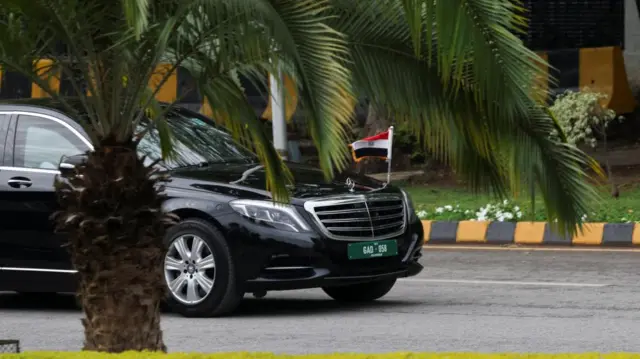
  11. Talks to be held in Pakistan aimed at de-escalating conflictpublished at 07:19 BST 29 March

    As our correspondent just mentioned, countries in the Gulf are keen to have a say in any future peace talks in the Middle East.

    Today, the foreign minister of Saudi Arabia will join his Egyptian, Pakistani and Turkish counterparts in Islamabad for talks aimed at trying to de-escalate tensions in the region.

    The talks are expected to take place on Sunday and Monday.

    A car with an Egyptian flag attached to its bonet drives past a palm treeImage source, Reuters
    Image caption,

    A car believed to be carrying Egypt's Foreign Minister Badr Abdelatty arrives at the Ministry of Foreign Affairs office in Pakistan

  12. Attacks on major infrastructure in Gulf countriespublished at 06:59 BST 29 March

    Azadeh Moshiri
    South Asia correspondent, reporting from Dubai

    The last 24 hours have seen the region face repeated attacks, including on major infrastructure.

    On Saturday, the United Arab Emirates saw the highest number of ballistic missile attacks in weeks. Emirates Global Aluminium says its major plant in Abu Dhabi was hit and significantly damaged, with several employees injured.

    Aluminium Bahrain, one of the world’s largest aluminium producers, was also attacked.

    In Kuwait, the radar system at the international airport has been extensively damaged.

    With their economies and way of life on the line, countries in the Gulf insist they must have a say in any future peace talks.

    But they’re split on the way forward - and on what the region’s relationship with Iran or the United States should look like.

  13. Recap: Conflict widens as Houthis join warpublished at 06:45 BST 29 March

    Katie Williams
    Live reporter

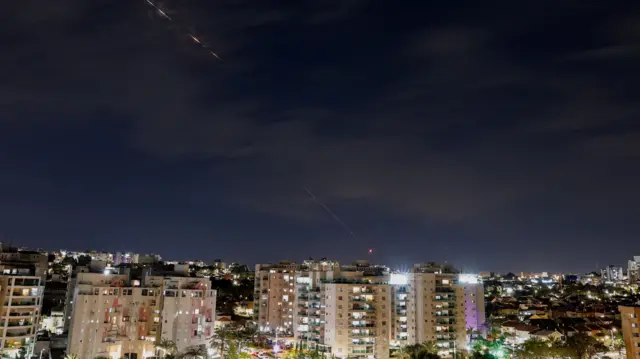
    Streaks of light illuminate the sky during an interception attempt, amid the US-Israeli conflict with Iran, as seen from Ashkelon, Israel, 28 March 2026.Image source, Reuters
    Image caption,

    Streaks of light illuminate the sky as Israeli air defences intercept incoming fire, seen from Ashkelon, Israel

    Good morning to readers in the UK.

    Conflict widens: The war has spread further after Yemen’s Houthis launched missile strikes towards Israel on Saturday. If the Iran-backed group decides to attack ships in the Red Sea, it could add to disruption for shipping.

    US ground troops: The Washington Post reports that the Pentagon is preparing for weeks of ground operations in Iran. It says it’s still unclear whether Donald Trump will approve them.

    In Israel: The Israeli army has confirmed the death of a soldier in southern Lebanon, where it has been carrying out ground operations.

    In Tehran - Israel says it completed another wave of strikes on the capital on Saturday, targeting command centres and weapon sites.

    Across the Gulf - Gulf states have reported further strikes. An aluminium smelter in Bahrain says two workers sustained minor injuries in an Iranian attack. Air defences were activated overnight in the UAE and Kuwait, according to their defence ministry and army.

  14. IDF completes wave of strikes on Tehranpublished at 06:17 BST 29 March

    The Israel Defense Forces (IDF) says it has completed another wave of strikes on Tehran, targeting temporary command centres and weapon production sites.

    According to the IDF, the Iranian regime had moved some command centres to mobile units after previous sites were struck. Several of these have now been dismantled, it says.

    It also says commanders operating in the headquarters were struck.

  15. Life in Tehran in the second month of the warpublished at 06:03 BST 29 March

    Ghoncheh Habibiazad
    Senior reporter, BBC Persian

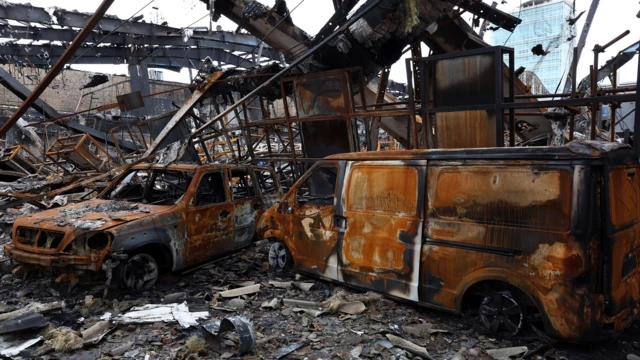
    Wreckage of vehicles at an auto service centre in Tehran, Iran, 28 March 2026Image source, EPA
    Image caption,

    Wreckage of vehicles at an auto service centre in Tehran on Saturday

    It has been just over a month since the war started.

    Iran is still under a government-imposed internet outage, but I’ve managed to reach a few people inside the country.

    Most of the people I've spoken to have paid a lot of money to get online. They are young, tech-savvy people who live mostly in the capital, Tehran, which has seen the heaviest strikes since the war started.

    Each day, I’ve been seeing glimpses of their daily lives: stories of people planning to go out for a run but deciding to stay home instead as they hear the sound of strikes, how windows shake from nearby explosions, and how sleep has been disrupted.

    Sometimes late at night in London, during the early hours of the morning in Tehran, I receive messages about strikes taking place.

    I’ve noticed how their mood and opinions sometimes change with each strike.

    They tell me they are losing their sense of date and time, sometimes not even knowing the day of the week.

    I'm not mentioning their names or ages because the Iranian authorities have arrested people who have spoken to foreign outlets.

    All of those I’ve been speaking to are against the establishment, but they don’t all share the same views on the war - some are still hopeful there is light at the end of the tunnel; some are exhausted and want the war to end now.

    “I’m getting fed up. I want to go back to Tehran sooner. I’d rather be there, with all the stress and irritation…It gives me a greater sense of control than being away from my family,” one woman in her 20s who has moved to a northern province from Tehran tells me tonight.

  16. Bahrain aluminium smelter confirms Iranian attackpublished at 05:31 BST 29 March

    Aluminium Bahrain (Alba) says two of its workers sustained minor injuries in an Iranian attack on its smelter, one of the world's biggest, on Saturday.

    The company was still assessing the extent of the damage, according to a statement reported by the Bahrain News Agency. "The safety and security of Alba's people remain its top priority," Alba said.

    Earlier this month Alba said it had shut down three of its production lines, representing 19% of its total production capacity, in a bid to "preserve business continuity" amid disruption caused by the closure of the Strait of Hormuz.

    Iran's Revolutionary Guards said on Saturday they had targeted Alba and Emirates Global Aluminium in response to attacks on two Iranian steel plants, according to Reuters.

    The UAE company confirmed on Saturday it had sustained "significant damage" in an attack on Saturday and that a number of employees were injured, though none of the injuries were "life threatening".

  17. Israeli army confirms death of soldier in Lebanonpublished at 05:00 BST 29 March
    Breaking

    The Israel Defense Forces (IDF) have confirmed the death of a soldier in southern Lebanon, where it launched a ground invasion almost two weeks ago.

    Another three IDF soldiers were injured in the incident, in which Sgt Moshe Yitzchak HaKohen Katz was killed, and have been taken to hospital, the IDF says in a post on X.

    Katz was originally from New Haven in the US state of Connecticut, the IDF says.

    More than 1,100 civilians, including 120 children and 42 paramedics, have been killed in Lebanon during the conflict so far, according to the Lebanese Ministry of Health.

  18. UAE air defences activated amid Iranian attackpublished at 04:20 BST 29 March

    Not long after Israel and Kuwait reported Iranian attacks, the United Arab Emirates is now saying it has also activated its missile defence systems.

    "The sounds heard in scattered areas of the country are the result of the UAE air defence systems intercepting ballistic missiles, cruise missiles, and drones," the UAE Ministry of Defence says in a post on X.

  19. Australian state to make public transport free as fuel prices soarpublished at 04:00 BST 29 March

    Simon Atkinson
    Australia reporter in Queensland

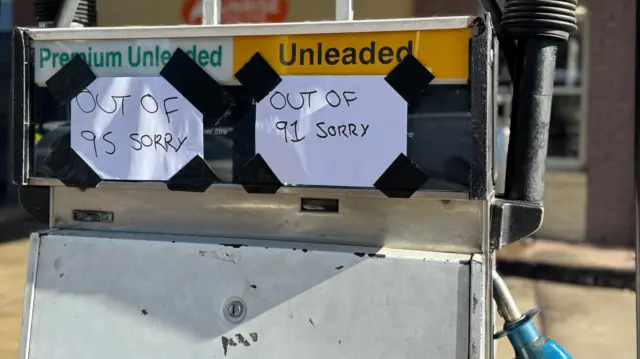
    Fuel pumps in Queensland

    The price - and availability - of fuel is one of the biggest talking points here in Australia right now.

    As we’ve been reporting this week - hundreds of petrol stations are reporting running out of unleaded and diesel. The fuel which is available costs up to 85% more than before the conflict.

    So some welcome news for residents of the state of Victoria today, who’ve been told that public transport will be free throughout April as authorities grapple with how to offer some cost-of-living relief.

    The state premier hopes it’ll encourage more people to use buses, trains and trams and take pressure off demand at the pump. Panic buying has been blamed for the fuel situation - with Canberra insisting supply has not fallen.

    Here in Queensland, most public transport has cost a flat fare of 50 cents (26p) since mid-2024 - it started as a temporary move which became permanent after proving hugely popular and getting more passengers out of their cars.

    In Victoria they are saying the free rides - which will cost A$70m (£36.3m ) - will very much be a temporary measure.

  20. Israel activates air defences as Iranian missiles detectedpublished at 03:30 BST 29 March

    Israel says it has activated its air defences after detecting missiles launched from Iran, and says it has sent alerts to those in the affected areas.

    "Upon receiving an alert, the public is instructed to enter a protected space and remain there until further notice," the Israel Defense Forces says on social media.

    Kuwaiti air defences are meanwhile also "confronting hostile missile and drone attacks", the army says in a post on X.

    "Any explosion sounds heard are the result of air defence systems intercepting the hostile attacks," it says, urging civilians to follow safety instructions from authorities.