Summary

  1. Second UK government charter flight to depart Oman this eveningpublished at 13:22 GMT 6 March

    Harry Farley
    Political correspondent

    A second government charter flight to bring British nationals back from the Middle East is due to depart Oman this evening.

    Downing Street has said more flights are expected in the coming days.

    More than 160,000 British nationals have now registered their presence with the Foreign Office in the region, the prime minister’s official spokesperson says.

    "We are working 24/7 to ensure that those who wish to can return as swiftly and safely as possible," Downing Street has said.

    "Since 3 March, more than 7,500 people have returned to the UK from the UAE. Yesterday alone there were 10 flights to the UK from the UAE carrying more than 3,400 people," No 10 adds.

    British Airways is providing daily commercial flights from Muscat, the government also says.

  2. IDF launches new wave of strikes on Iranpublished at 13:18 GMT 6 March
    Breaking

    The Israel Defense Forces says it has begun the 15th wave of strikes on "Iranian terrorist regime infrastructure in Tehran".

    Return to the latest post
  3. UAE says air defences have intercepted nine ballistic missiles and 109 drones todaypublished at 13:06 GMT 6 March

    Sameer Hashmi
    Reporting from Riyadh

    The UAE’s air defence systems intercepted nine ballistic missiles and 109 drones on Friday, the defence ministry says.

    The ministry says all nine missiles detected today were destroyed.

    Authorities also detected 112 drones. Of these, 109 were intercepted and three fell inside the country.

    Since the war started, three people have been killed and 112 have been injured in attacks on the UAE.

    The defence ministry says the armed forces are fully prepared to deal with any threats, stressing their readiness to confront any attempt to undermine the country’s security and to safeguard its sovereignty, stability and national interests.

  4. Doha remains quiet as people in Qatar told to avoid gathering in outdoor public spacespublished at 13:00 GMT 6 March

    Barbara Plett Usher
    Reporting from Doha

    People in Qatar were awakened by an emergency alert on their phones overnight, after which the ministry of defence announced it had intercepted a drone targeting the al-Udeid airbase, the biggest US military base in the region.

    But since then, there haven’t been any attacks.

    I’ve just been to the supermarket and it’s busy with people doing their Friday morning shopping, although the mall in which it is located is mostly shut.

    The city remains very quiet, with a government advisory in effect for people in Qatar to avoid gathering in outdoor public spaces.

    Qatar’s airspace is still closed but the Hamad International Airport said today that it’s working closely with airline partners to reconnect passengers in Doha with their checked luggage as soon as operationally possible.

    Our hotel does not seem as full of stranded travellers as it was – more people are probably deciding to drive overland to Saudi Arabia to get a flight there, anecdotally we’ve heard that there are lines at the border.

    Schools have been shut all week, the ministry of education has reviewed the move to online learning and said it’s going smoothly, but gave no indication when the remote learning arrangement would end.

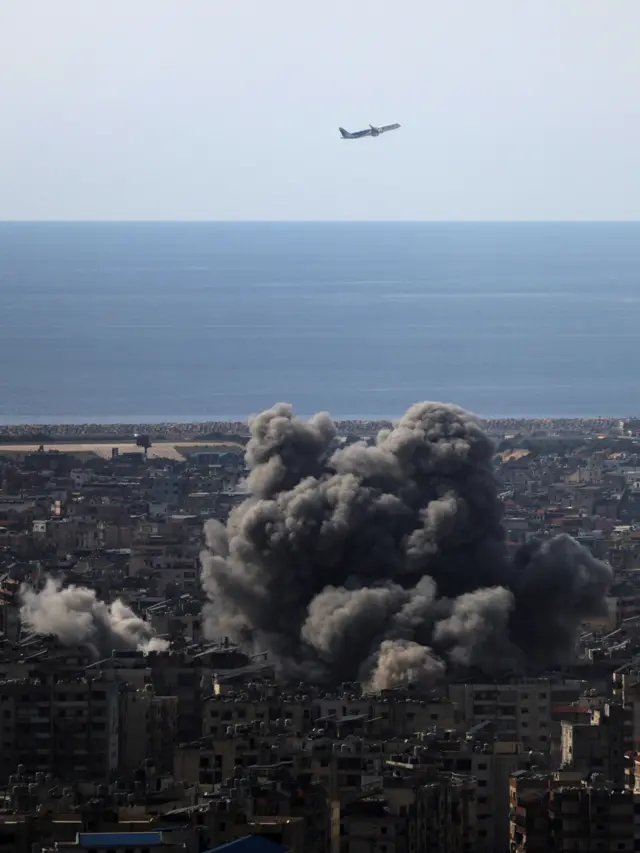
  5. Image appears to show strike hitting Beirut as commercial airliner flies nearbypublished at 12:45 GMT 6 March

    The below image, which appears to show a strike on Beirut's southern suburbs, has come through from the Reuters news agency, which says it was taken this morning.

    Israel has ordered thousands of people to leave the area, saying it is targeting Hezbollah.

    An airplane flies as smoke rises after an Israeli strike on Beirut's southern suburbsImage source, Reuters
  6. 'Some countries have begun mediation efforts' - Iranian presidentpublished at 12:33 GMT 6 March

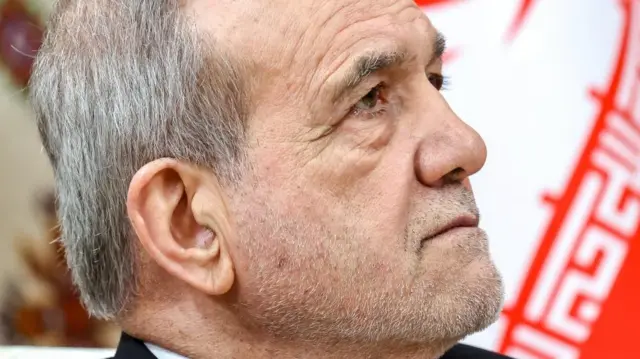
    A close-up file photo of Iranian President Masoud PezeshkianImage source, Reuters

    Iranian President Masoud Pezeshkian says "some countries have begun mediation efforts", without specifying.

    In a post on social media, he says: "Some countries have begun mediation efforts. Let's be clear: we are committed to lasting peace in the region yet we have no hesitation in defending our nation's dignity & sovereignty.

    "Mediation should address those who underestimated the Iranian people and ignited this conflict."

    Pezeshkian's comments come as Iran's Arab neighbours weigh their response to Iranian missile attacks targeting American bases and also civilian and energy infrastructure in their countries.

  7. BBC Verify

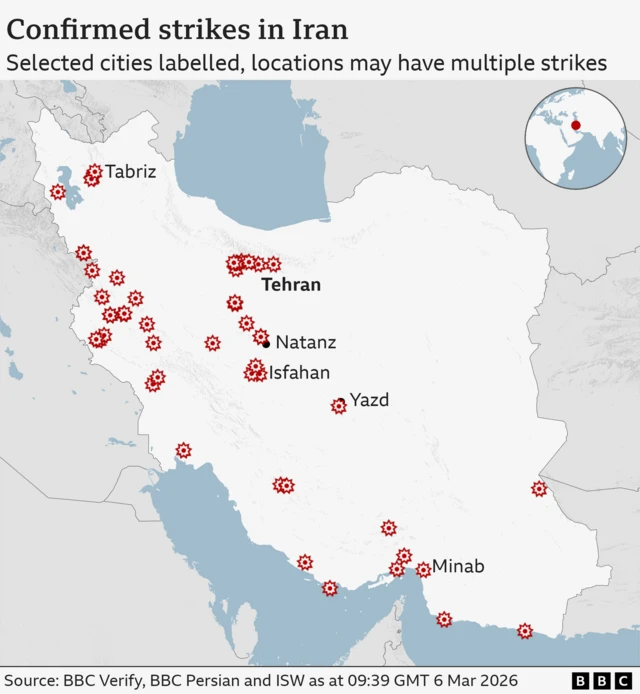
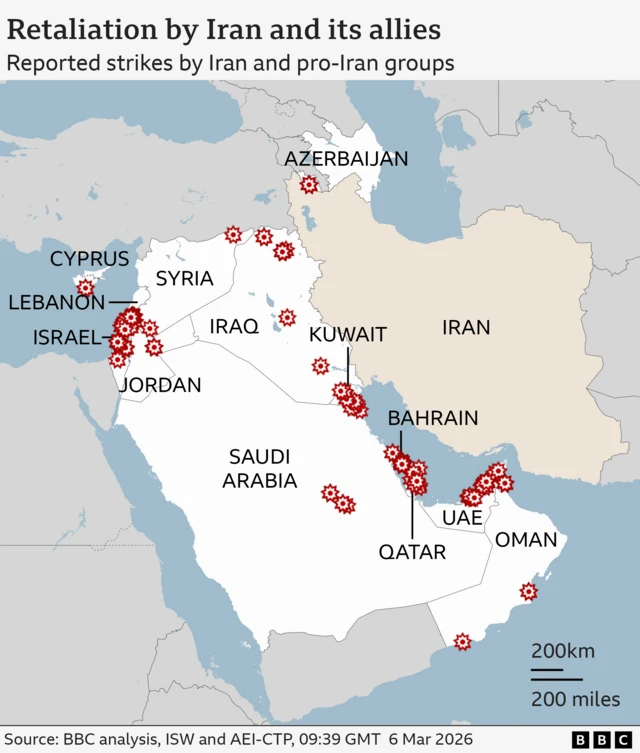
    In maps: Strikes in Iran and across the wider regionpublished at 12:25 GMT 6 March

    BBC Verify has so far confirmed visual evidence of strikes on more than 20 locations in Tehran and attacks in 30 other cities and towns across Iran.

    We also bring you the locations of reported strikes by Iran and pro-Iran groups across the wider region since the start of the conflict.

    BBC maps show strikes across Iran
    Map of Iran and pro-Iran strikes across the Middle East
  8. Dubai airport feels quiet despite the big backlogpublished at 12:15 GMT 6 March

    Nick Beake
    Europe correspondent reporting from Dubai

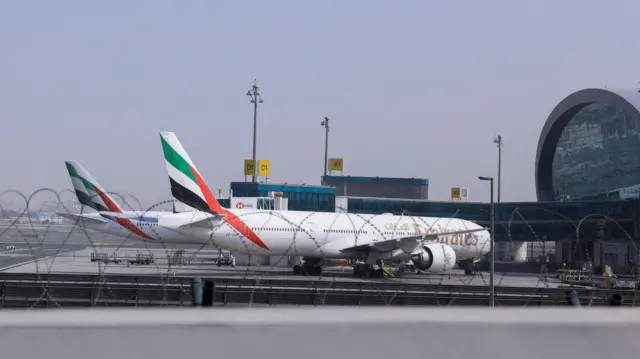
    Planes are parked at Terminal 3 of the Dubai International Airport, following the United States and Israel strikes on Iran, in Dubai, United Arab Emirates, taken on MarchImage source, Reuters

    Dubai airport feels calm and quiet with a steady stream of passengers arriving.

    That’s despite an earlier text alert sent to mobile phones telling people in the city to take cover urgently because of the threat of more incoming Iranian missiles. The warning was later lifted.

    Flights are leaving today, including to London Heathrow, Manchester and Edinburgh.

    But the airport is one of many in the Middle East trying to deal with a big backlog under the ongoing threat of an Iranian aerial attack.

    The Reuters news agency reports nearly 20,000 flights across the region have been cancelled since the weekend when the US and Israel attacked Iran. Most flights that are running in and out of Dubai arrivals are shown to be suffering delays.

    Passengers have been advised not to travel to the airport unless they have received a confirmed departure time directly from their airline.

    There is no visible gathering of expats here trying to leave. Many may have already set off for neighbouring Oman in recent days, where more flights have been able to take off and land.

    Oman's capital Muscat is also where more UK-government arranged evacuation flights are promised to be departing in the coming days.

    Elsewhere in the UAE, more flights are operational in Abu Dhabi, with Etihad Airways saying it’s increasing services to some destinations from today.

    But this is far from normal - and the situation can change quickly - as Iran continues to strike out at neighbours either hosting US airbases or countries that Tehran deems to have links to the Americans and are so deserving of retaliation.

  9. BBC Verify

    Verifying images from Tehran overnightpublished at 12:10 GMT 6 March

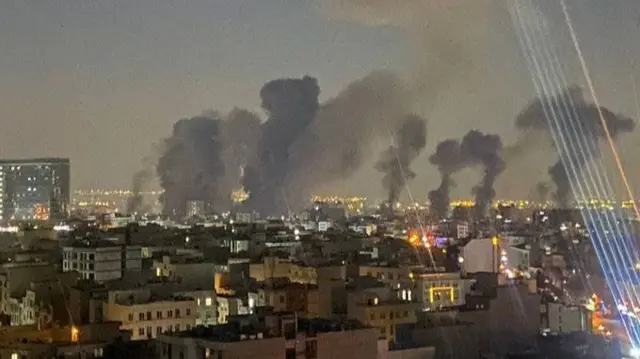
    A screengrab from a verified video showing several smoke plumes after air strikes in TehranImage source, X

    By Richard Irvine-Brown

    BBC Verify has been looking at several images appearing to show overnight air strikes in Iran’s capital Tehran.

    In this image, which we’ve geolocated to north of the centre of the city, we can see at least seven plumes of smoke, in a rough line south of Azadi Street and Enghelab Street.

    BBC Persian has been in contact with Tehran residents, one of whom described it as the “worst night” of attacks so far.

    Reverse image searches indicate that this image first began to appear online today at about 09:00 local time (04:00 GMT).

    There are some indications that this image may be a screenshot from a video, but we have found no signs of AI manipulation.

  10. US oil firm halts production after attack in Iraqi Kurdistan, authorities saypublished at 11:54 GMT 6 March

    Oil production has been halted at a US oil field in Iraqi Kurdistan after an attack there, say authorities.

    An update shared on X by the Kurdistan regional government says the oil field, which is operated by US firm HKN Energy and is in the Dohuk province, was attacked “by outlaw groups in Iraq".

    This has resulted in "material damage to the field and the suspension of production there.”

    Citing a security source, the AFP news agency is separately reporting that the attack was carried out by two drones on Thursday.

    The Kurdistan region is an autonomous area of northern Iraq, run by the Kurdistan regional government.

  11. Israel destroys Iranian military command bunker in Tehran, IDF sayspublished at 11:41 GMT 6 March

    An underground bunker that was planned to be used by the former supreme leader of Iran, Ayatollah Ali Khamenei, has been destroyed following an attack involving 50 Israeli fighter jets, according to the Israel Defense Forces (IDF).

    It says Khamenei was “eliminated” before he could use the bunker - which was intended to function as the supreme leader’s “secure emergency command centre.”

    The IDF says the bunker “spanned multiple streets” in the centre of Tehran and “continued to be used by senior Iranian regime officials.”

  12. A look back on one week of warpublished at 11:25 GMT 6 March

    Jenna Moon
    Live page editor

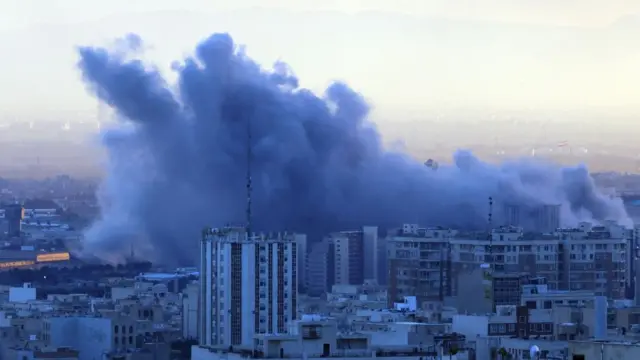
    Thick black smoke rises over apartment buildings in Tehran.Image source, EPA
    Image caption,

    Iran's capital, Tehran, has been hit repeatedly by joint US-Israeli strikes

    The Middle East has been plunged into crisis, following joint US-Israeli attacks on Iran targeting the country's missile infrastructure, military sites and leadership. Tehran, in response, has launched strikes across the region, including on Israel.

    Here's an overview of what to know, one week into the war.

    On Saturday, just before 06:30 GMT, Israel launched strikes on Iran. Within an hour, US President Donald Trump confirmed his country's involvement in an eight-minute video posted to his Truth Social platform. By late Saturday, Trump confirmed that the strikes had killed Iran's Supreme Leader Ayatollah Ali Khamenei and several other top officials.

    On Sunday, Iran launched massive retaliatory attacks on Israel and US allies in the Gulf. Strikes targeted the UAE, Kuwait, Bahrain, Qatar and Oman.

    On Monday, the Israeli operation expanded to Lebanon, with the Israel Defense Forces saying it was targeting Hezbollah, an Iran-backed group. The economic cost of the war also became apparent, with oil prices spiking and airline shares sinking.

    By Tuesday, reports were emerging about the scale of destruction inside Iran, with one journalist inside the country saying "every part" of the capital, Tehran, had been hit.

    On Wednesday, the conflict – largely conducted in the air – expanded to the sea, with US Defense Secretary Pete Hegseth announcing that the US sank "an Iranian warship" in the Indian Ocean.

    By Thursday, the crisis expanded again, with Azerbaijan's foreign ministry saying two Iranian drones struck the country, including an airport.

    And today, Friday, residents in Tehran say they have experienced the "worst night" of Israeli strikes so far – with the US saying attacks are set to intensify.

    Updates have rapidly developed over the past seven days. We'll continue to bring you what we learn right here.

  13. Tehran residents describe worst night of conflict as Iran retaliates in Gulfpublished at 10:55 GMT 6 March

    Katie Williams
    Live reporter

    A yealoow plume of smoke rises up over buildings in TehranImage source, EPA
    Image caption,

    Smoke rises from buildings in Tehran overnight

    It is now the seventh day of the conflict in the Middle East.

    Residents in Tehran have told the BBC last night was "the worst night" of the conflict so far. A fresh wave of strikes was also launched on Beirut, Lebanon overnight, the Israel Defense Forces says.

    Earlier, Israel warned of Iranian strikes on its territory but quickly said the threat had ended. The country’s emergency services has said there are no reports of casualties so far.

    Gulf nations, including Saudi Arabia, Qatar and Bahrain, have also reported intercepting Iranian attacks overnight.

    Evacuation efforts are under way as thousands of people remain stranded in the region. The first UK chartered flight from Oman landed at London Stansted Airport overnight, one man described the experience of getting on the flight as “surreal.”

    It is the government’s “intention and hope to see more charter flights out of Oman and commercial flights out of the region,” UK Deputy Prime Minister David Lammy tells the BBC.

    Speaking to BBC Breakfast, Lammy says the UK had been "very clear" that it did not want to be part of the US and Israel's "original offensive action", but it would "of course" support defensive action.

    Meanwhile, Tory leader Kemi Badenoch has criticised the government's response to attacks on an air base in Cyprus.

    "Our bases are being fired upon and even now HMS Dragon is still in Portsmouth... we should've been there by now," she says, referring to the warship the prime minister has promised to send.

  14. Israel must 'scrape away' Lebanese border villages - opposition leaderpublished at 10:34 GMT 6 March

    Lucy Williamson
    Middle East correspondent, reporting from the Israel-Lebanon border

    Israel’s opposition leader has called for Israel to create a “sterile zone” in southern Lebanon, similar to the Yellow Line in Gaza, by removing Lebanese villages there.

    Yair Lapid, who heads the centrist Yesh Atid party, told a local television channel that Israel would “have no choice” but to create a “sterile zone” in southern Lebanon. “It might be unaesthetic, or unpleasant, to scrape away two or three Lebanese villages,” he said, “but they brought it upon themselves.”

    For days now, the sound of air-strikes and intense sustained bursts of machine-gun fire has echoed along this border, as Israel intensifies its war against Hezbollah.

    A senior military official said yesterday that ground forces were taking additional hilltops inside Lebanon, a couple of kilometres from border, to better defend Israeli communities. But his chief of staff has said the wider objective in Lebanon is disarming Hezbollah, and he won’t let up until that’s done.

    There’s been a significant military build-up along this border – this morning we passed dozens of newly-positioned tanks and armoured bulldozers, amid reports that a full-scale ground invasion is planned.

  15. Maersk suspends two shipping services following 'operational review'published at 10:15 GMT 6 March

    Maersk, one of the world’s biggest container shipping groups, says it has temporarily suspended its FM1 service connecting the Far East to the Middle East, as well as the ME11 service linking the Middle East to Europe, following a “risk assessment and operational review”.

    "This decision has been taken as a precautionary measure to ensure the safety of our personnel and vessels while minimising operational disruption across our wider network," the Danish company said in a statement.

  16. 'There is no mercy,' says Tyre resident after fleeing to Beirutpublished at 10:02 GMT 6 March

    Alice Cuddy
    Reporting from Beirut

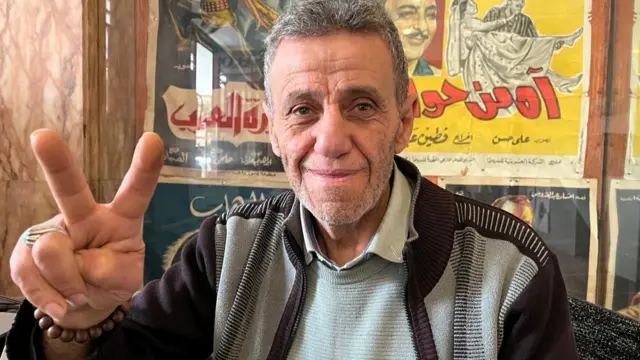
    Mohamed Baydoun throwing up a peace sign at the camera

    Here in the Lebanese capital Beirut, people who have been forced from their homes are looking for anywhere that will give them shelter.

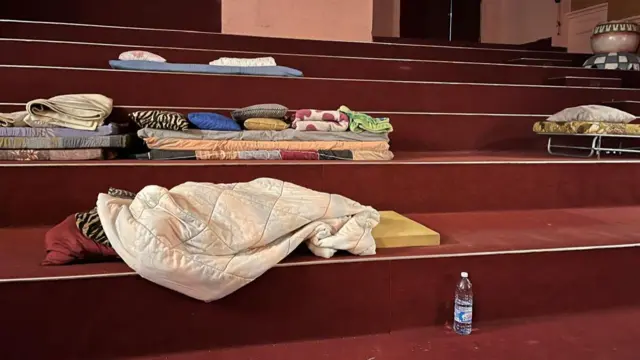
    Inside the National Theatre, two families are sleeping on mattresses overlooking the stage.

    Mohamed Baydoun tells me he fled from his home in the southern city of Tyre.

    “They’re not giving a specific target. These are entire areas they’re telling to leave," the 73-year-old says of the sweeping Israeli evacuation orders.

    "There is no mercy, the enemy doesn’t have mercy," he adds.

    Mohamed says this war “feels different to all of the others” he has lived through, but he says he is not afraid.

    “Everything that happens to you is what God has written for you,” he says.

    People sleeping inside the Beirut national theatre
    Image caption,

    A volunteer at the theatre says they are hoping to take in more displaced people but are waiting for government approval

  17. UK warns risk of 'terrorist attack' in Cyprus 'cannot be ruled out'published at 09:47 GMT 6 March

    Nikos Papanikolaou
    BBC News

    The UK has updated its travel advice for Cyprus, warning that the risk of a terrorist attack cannot be ruled out.

    The Foreign, Commonwealth and Development Office says in its updated guidance: “Terrorist attacks in Cyprus cannot be ruled out.”

    It adds: “There is a high threat of terrorist attack globally affecting UK interests and British nationals, including from groups and individuals who view the UK and British nationals as targets. Stay aware of your surroundings at all times.”

  18. 'I might survive the bombing, but not the stress': Iranians tell BBC of mood in Tehranpublished at 09:38 GMT 6 March

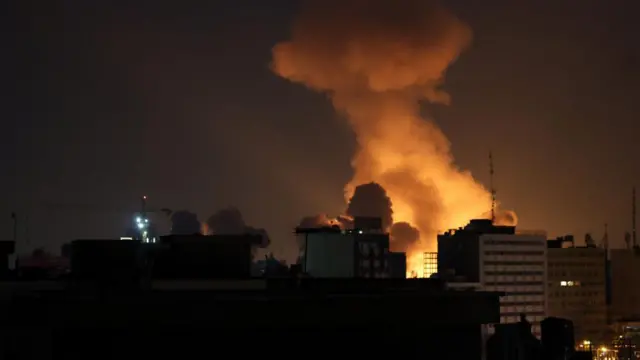
    Smoke rises from an orange fire burning at night over some tower blocksImage source, EPA/Shutterstock
    Image caption,

    Smoke rises after an air strike in central Tehran in the early hours of Friday

    By BBC Persian

    Despite the ongoing internet blackout, the BBC Persian service has managed to contact people inside Iran to find out what it's like inside the country right now. BBC Persian is the Persian language service of BBC News, used by 24 million people around the world - the majority in Iran - despite being blocked and routinely jammed by Iranian authorities.

    Iranians in Tehran have described sleepless nights and stress as the US and Israel continue joint strikes on city.

    One man says that he is "not okay. I barely slept last night because of the constant explosions". He adds that his house was "shaking for five minutes straight".

    "It was terrible", one woman says. "They were hitting so hard that all the windows were shaking. It sounded as if it was a dragon".

    A man who identified himself as Salar says this morning he woke up at 05:00 to the sound of three explosions. "For a week now, my blood pressure hasn’t come down," he told the BBC. "This situation really isn’t good for me. Right now I’m taking nine pills a day, and I’m still stressed!

    "Honestly, I might survive the bombing but not the stress," he says.

  19. Iran under internet blackout for six full days - Netblockspublished at 09:27 GMT 6 March

    Iran has now been in an internet blackout for six full days, says the independent internet monitoring group NetBlocks.

    It says that the country has "1% connectivity at the 144-hour mark".

    Internet blackouts are one of the factors that make it difficult for international news organisations to report on what is happening inside Iran.

    The Iranian state also cut off internet services amid anti-government protests earlier this year.

  20. Badenoch says she would support RAF jets striking Iranian missile launch sitespublished at 09:14 GMT 6 March

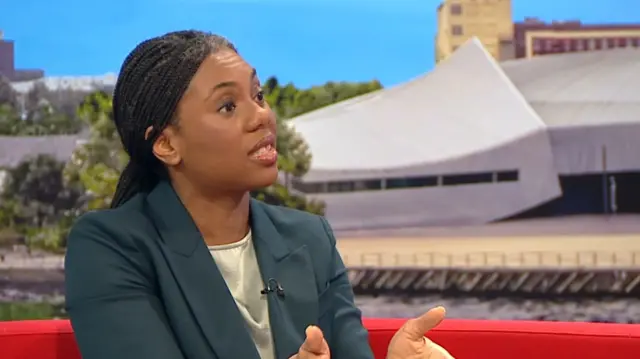
    Kemi Badenoch in a teal blazer speaking to BBC Breakfast on the red sofa with her hands out gesticulatingImage source, BBC Breakfast

    Conservative Party leader Kemi Badenoch says she would support Royal Air Force jets striking Iranian missile launch sites.

    Speaking to BBC Breakfast, she criticises the government's response to Iranian attacks on a British air base in Cyprus, saying the equipment already there is not enough to defend staff stationed on the island.

    "Our bases are being fired upon and even now HMS Dragon is still in Portsmouth... we should've been there by now," she says, referring to the warship the prime minister has promised will travel to Cyprus to bolster air defence.

    She says the government needs to "do more now" to "stop the missile sites" in Iran.

    It comes after Deputy Prime Minister David Lammy earlier told the programme that striking missile sites within Iran to prevent the launch of attacks "would be legal".