Summary

  1. Trump demands 'unconditional surrender' from Iran - here's the latestpublished at 17:35 GMT 6 March
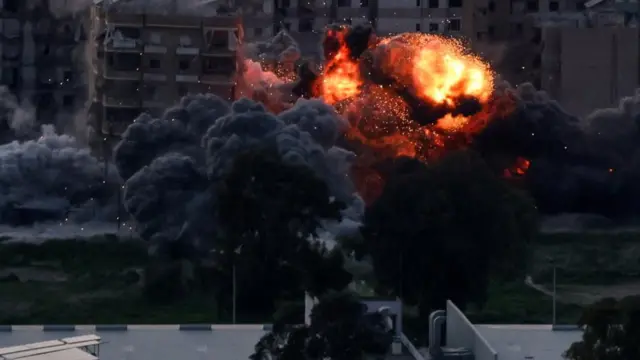
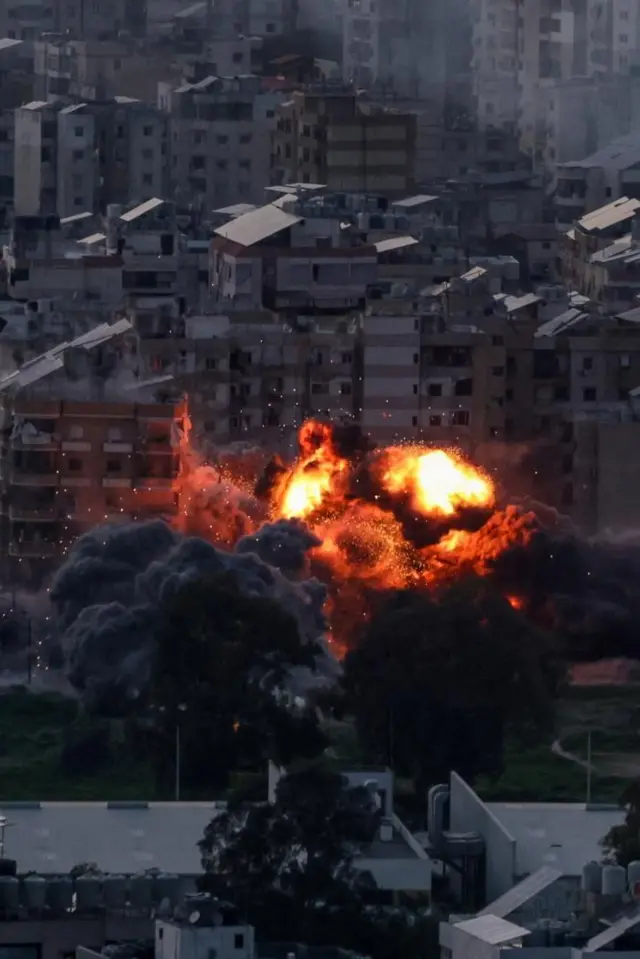
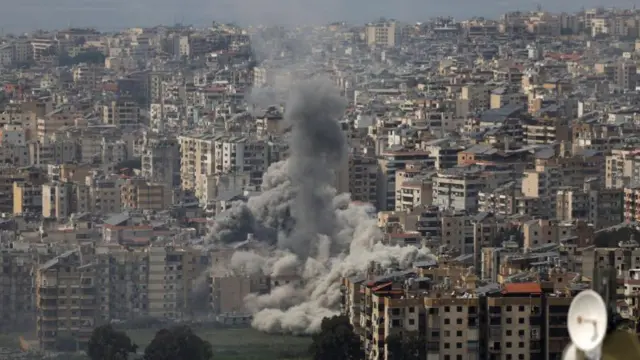
    A fireball is pictured amid buildings, with smoke billowing from the siteImage source, Reuters
    Image caption,

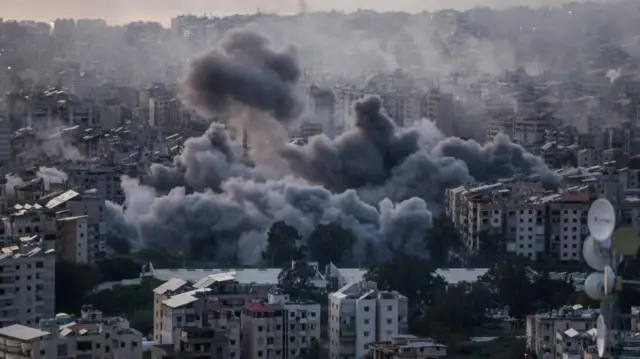
    An explosion in Beirut's southern suburbs, Lebanon

    From the US

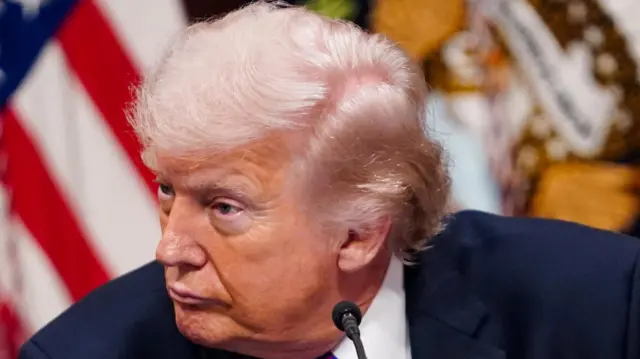
    • President Trump says he won't accept any deal with Iran "except unconditional surrender"
    • The US president also says Iran's next leader has to "treat the United States and Israel well"

    From Israel

    From Iran

    From Lebanon

    From the region

  2. Iranian missiles detected coming towards Israel, IDF sayspublished at 17:24 GMT 6 March

    The Israel Defense Forces says it has detected missiles launched from Iran towards Israel. The military says its defences are operating to intercept the incoming threat.

    Alerts have been sent by Israel's Home Front Command to mobile phones in relevant areas, the IDF says, urging the public to follow directions and enter protected space.

  3. Trump says US has 'already figured out' Strait of Hormuz - reportpublished at 17:18 GMT 6 March

    U.S. President Donald Trump attends a roundtable on the Ratepayer Protection Pledge in the Indian Treaty Room in the Eisenhower Executive Office Building (EEOB) on the White House campus in Washington, D.C., U.S., March 4, 2026.Image source, Reuters

    President Trump has been speaking to CNN today, where he says the US has "already figured out" how to make the Strait of Hormuz - the world's busiest oil shipping channel - safer for boats.

    "We have knocked their navy because, you know, when you knock out the navy they can't do what they wanted to be able to do," he says.

    Trump goes on to say that the US has struck 25 Iranian ships since the start of the war last Saturday.

    Asked about rising oil prices, the president says "it'll be short term".

    "They're up a little bit, not much but it will drop to record lows."

    Asked if he would be open to a new religious leader taking over the leadership in Tehran, Trump says he may be.

    "It depends on who the person is," he says. "I don't mind religious leaders. I deal with a lot religious leaders and they're fantastic. I'm saying there has to be a leader that's going to be fair and just, do a great job, treat the United States and Israel well, and treat other countries in the Middle East [well], they're all our partners."

    On Thursday, Trump reportedly told US-based media outlet Axios that he wants to be "involved" in the appointment of Iran's next leader.

  4. Nearly 24,000 Americans back from Middle East - US State Departmentpublished at 17:05 GMT 6 March

    Since the start of the war, "nearly 24,000 American citizens have safely returned to the United States", a US State Department official says.

    "Several flights have safely returned hundreds of Americans to the United States with additional flights scheduled to take place over the coming days, as security conditions allow," says US Assistant Secretary of State for Global Public Affairs Dylan Johnson.

    Johnson adds that the figure of 24,000 does not include Americans who have safely relocated to other countries, or are currently in transit.

    Trump said earlier that thousands of Americans are being "quietly, but seamlessly" moved out of the Middle East.

  5. US military has enough weapons to demolish Iranian regime - White House press secretarypublished at 16:58 GMT 6 March

    Bernd Debusmann Jr
    Reporting from Washington DC

    White House Press Secretary Karoline Leavitt responds to a question from the news media during the daily briefing at the White House in Washington, DC, USA, 04 March 2026.Image source, EPA
    Image caption,

    Press Secretary Karoline Leavitt pictured during a White House daily briefing earlier this week

    Early this afternoon, US President Donald Trump is scheduled to meet with representatives of some of the country's largest defence firms, including Lockheed Martin, Boeing, Honeywell and L3Harris technologies.

    This meeting was planned long ago, before bombs began falling on targets throughout Iran. But the vast expenditure of munitions has injected a newfound urgency into the meeting,

    Some defence experts have warned that the current scale of the air campaign - as well as the significant demand on air defence capabilities amid continuing Iranian retaliatory strikes - could become difficult to sustain if the operation drags on.

    US officials, including Trump, have sought to push back on any suggestion that weapons and equipment stockpiles could limit their operations.

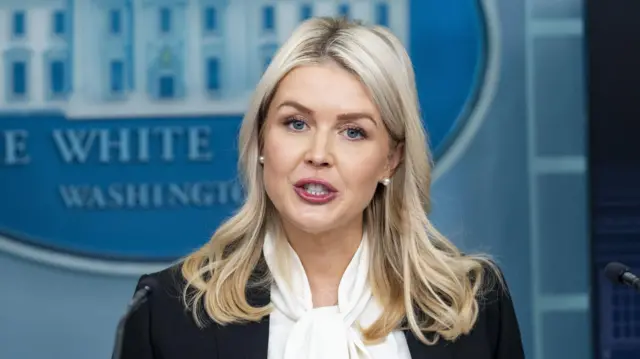
    "The US military has more than enough munitions, ammo, and weapons stockpiles to continue demolishing the Iranian regime," Press Secretary Karoline Leavitt has said in a statement.

    "Nevertheless, President Trump has always been intensely focused on strengthening our military, which is why this meeting with defence contractors was scheduled weeks ago," she also says.

    "The President will continue to call on these US companies to more speedily build American-made weapons, which are the absolute best in the world,” Leavitt adds.

  6. Iranian spokesperson says 200 children killed in strikes on its territorypublished at 16:45 GMT 6 March

    A spokesperson for Iran's health ministry, Hossein Kermanpour, has posted on X, sharing an update about the number of people killed and injured in Iran.

    He says 200 people under 18 have been killed – the youngest an eight-month-old baby. He does not give a figure for the total number of people estimated to have been killed since the war began.

    He says more than 2,000 injured people are in hospital "right now". Among the injured, 552 are under 18, and the youngest is a four-month-old baby girl, he says.

    "The war is also affecting the healthcare system," he says, saying eight healthcare workers have died, 30 have been injured, and 11 hospitals "affected by missiles".

    US officials have denied targeting civilians. Israel has said it is targeting military assets with "precision" to protect civilians, and accuses Iran of targeting civilians.

    Access to Iran is highly restricted with international news organisations often refused visas, which severely limits their ability to gather information there.

  7. BBC Verify

    Iranian Red Crescent says one of its buildings has been damaged by strikespublished at 16:32 GMT 6 March

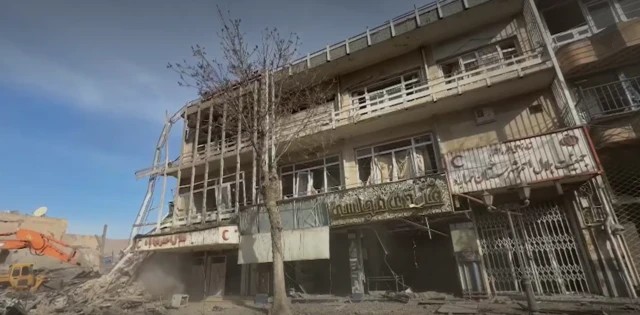
    A screengrab from a video showing the damaged Iranian Red Crescent building in Mahabad, north-western IranImage source, Telegram/Iranian IRCS

    By Farida Elsebai and Thomas Spencer

    The Iranian Red Crescent Society has today posted a video appearing to show significant damage to their building in Mahabad, a city in north-western Iran.

    The video shows one side of the three-storey building reduced to rubble which has spilled over into an adjacent car park. We can see broken glass and debris filling a stairwell inside the building.

    We were able to confirm the location of the building on Talaghani Sharghi Street by matching nearby shops and street layouts to satellite imagery.

    The Iranian Red Crescent Society says the damage was a result of strikes in the city overnight.

    Return to the latest post
  8. Large explosions seen in Beirut as suburbs hit by Israelpublished at 16:22 GMT 6 March

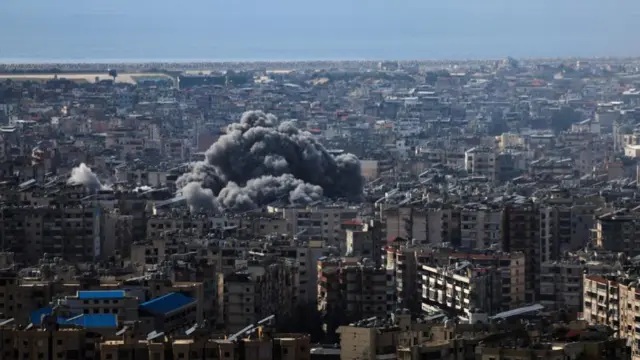
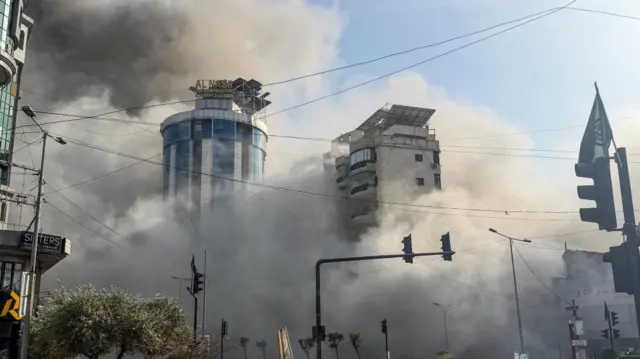
    Thick grey smoke over dense urban areasImage source, Reuters
    Image caption,

    Thick grey smoke rises over Lebanon's capital

    More pictures are coming in to us from the southern suburbs of the Lebanese capital, Beirut, where the Israeli military has been carrying out air strikes.

    Prior to the strikes the Israeli military ordered hundreds of thousands of people to leave the south of the city.

    The Israeli order came after the military also told all residents of a huge swathe of southern Lebanon near the Israeli border to leave on Wednesday, ahead of an anticipated ground incursion.

    Hezbollah has warned Israelis living within 5km of the Lebanese border to leave their homes.

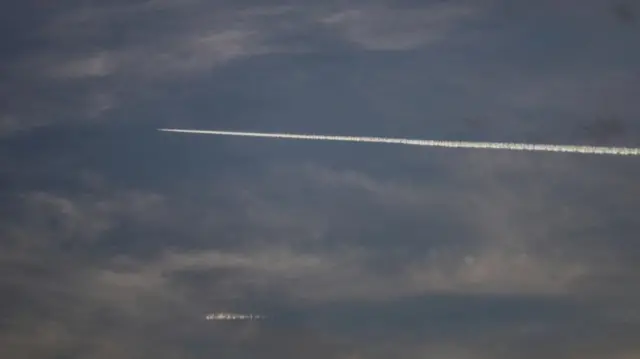
    A white jet line visible in the skyImage source, Reuters
    Image caption,

    An Israeli aircraft flies over Beirut

    A red fiery explosion in Beirut's southern suburbsImage source, Reuters
    Image caption,

    A large blast is seen in Beirut's southern suburbs

  9. Lebanon death toll rises to 217, health ministry sayspublished at 16:11 GMT 6 March

    There have been 217 deaths and 798 people wounded in Lebanon since the beginning of Israeli strikes on Monday, the Lebanese health ministry has said.

    This is an increase from 123 deaths and 683 wounded reported on Thursday.

    As we've been reporting, the Israel Defense Forces launched a fresh wave of strikes on the Lebanese capital, Beirut, overnight, with the Israeli military saying it was attacking infrastructure in the strongholds of the Iran-backed militant group Hezbollah.

  10. Analysis

    Brent crude oil reaches highest price per barrel for yearspublished at 15:53 GMT 6 March

    Marc Ashdown
    Business correspondent

    The Brent crude benchmark oil price has passed $90 (£67) a barrel for the first time since October 2022.

    Back then it was falling from a high of $116 a barrel after the energy crisis caused by Russia launching its full-scale invasion of Ukraine.

    Right now, nobody knows how high it could go this time. Qatar's Energy Minister Saad al-Kaabi spooked the markets this morning, predicting that a prolonged shutdown could result in a high of $150 a barrel, which could in his view "bring down the economies of the world".

    A third of global oil comes from the Gulf states along with 17% of the world's gas. Three hundred or so tankers are currently sitting idle in the region amid Iranian threats to burn anything which dares to move through the crucial Strait of Hormuz pinch point.

    Much will depend on US efforts to reassure: through military escorts or by underwriting insurance policies. The price action suggests traders remain to be convinced.

    A brief spike could probably be ridden out relatively easily, but an impasse of weeks or months could see inflation rise again, risking a rise in the price of everything from food and household goods, to fuel and energy prices - and mortgage rates.

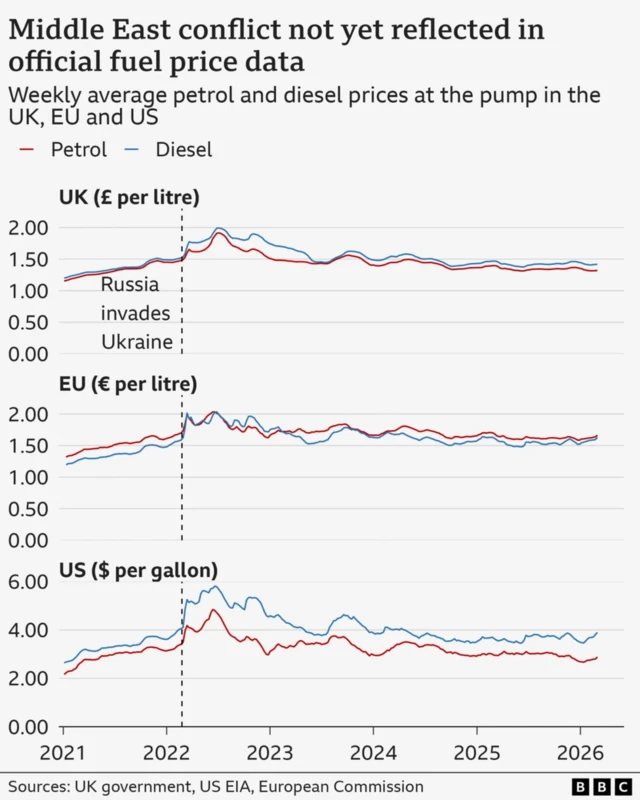
    Three line charts show petrol and diesel prices in the UK, EU and US since 2021. All follow a similar pattern with increases already happening February 2022 but a spike after Russia launched its invasion of Ukraine. In the UK it went from £1.48 per litre of petrol to £1.74 with a similar proportional rise for diesel. Prices did come down again with fluctuations in 2023 and 2024. As of late February 2026, just as the US and Israel began their strikes on Iran, petrol prices had already started to tick up in the US, rising from $2.80 per gallon of petrol on 23 February to $2.88 on 2 March and from $3.81 per gallon of diesel to $3.90. There were slight increases in the UK and EU but it is too early to see the impact yet in weekly data.
  11. Spanish PM calls US-Israel war with Iran an 'extraordinary mistake'published at 15:37 GMT 6 March

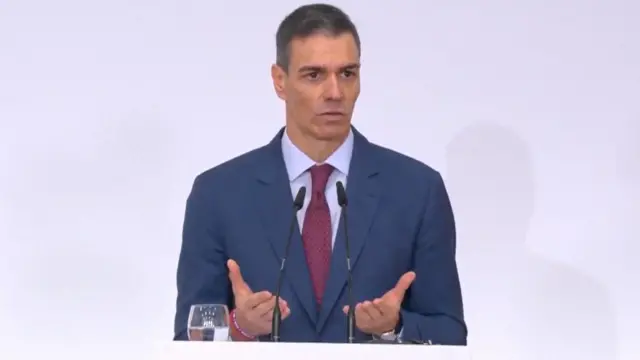
    Spanish Prime Minister Pedro Sánchez talking to the mediaImage source, Spanish Government/AP

    Spain's Prime Minister Pedro Sánchez has called the US-Israel war with Iran "an extraordinary mistake", adding that the conflict is "clearly outside of international legality".

    He continues by saying that he believes "among allied countries, it is good to help when one is right and also to point out when one is wrong or making a mistake, as is the case".

    As a reminder, US President Donald Trump has threatened to impose a full trade embargo on Spain in response to its refusal to allow the US to use the jointly run bases at Morón and Rotafor to strike Iran.

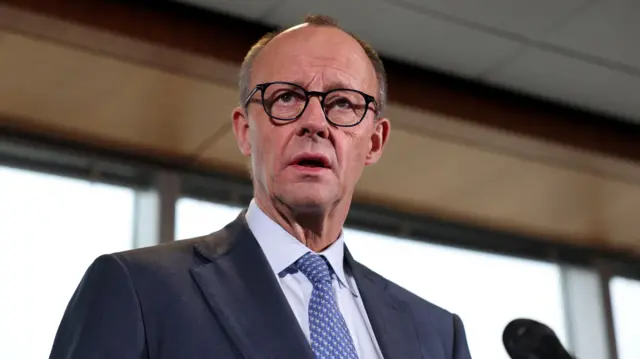
    German Chancellor Friedrich Merz speaks during a press conference following his White House meeting with U.S. President Donald Trump, in Washington, D.C., U.S., March 3, 2026.Image source, Reuters

    Meanwhile, Germany’s Chancellor Friedrich Merz has said the Iranian people "have the right to freely determine their own destiny", warning that Iran "must not become a site for proxy wars".

    That said, Germany are seeing "growing risks" as fighting continues, he says - including "the "territorial integrity" and "statehood" of Israel, and the security of Germany's partners in the region.

  12. US moving thousands of people out of Middle East 'quietly but seamlessly' - Trumppublished at 15:18 GMT 6 March
    Breaking

    In a further update from Trump on the situation in the Middle East, the president says on social media: "We are moving thousands of people out of various Countries throughout the Middle East."

    "It is being done quietly, but seamlessly," he adds, praising Secretary of State Marco Rubio.

  13. Smoke billows over Beirut amid Israeli strikespublished at 15:00 GMT 6 March

    We're continuing to receive pictures from the Lebanese capital Beirut, where the Israel Defense Forces (IDF) says it has been carrying out strikes.

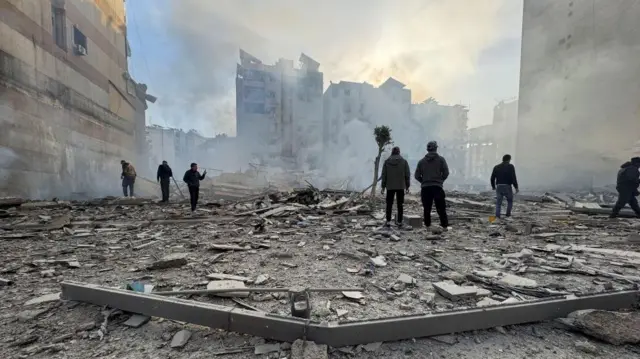
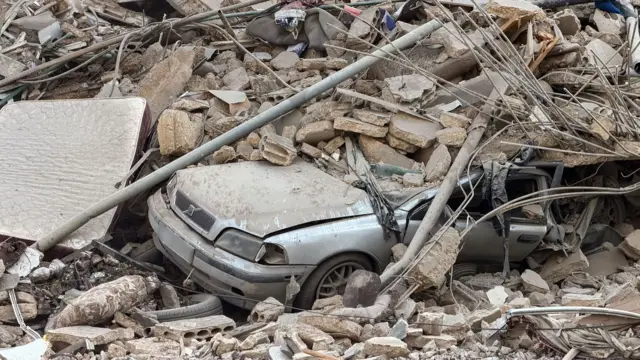
    Some of the latest images we've seen show smoke billowing over the city's southern suburbs and streets filled with rubble.

    Residents in Beirut have been telling the BBC about their fear and confusion amid the strikes, which the Israeli military has said are targeting "Hezbollah command centres" and drone storage facilities.

    Thick smoke rises from an area of tower blocks in BeirutImage source, Reuters
    People inspect rubble on the ground in BeirutImage source, Reuters
    A thick grey smoke plume mushrooms over a dense urban areaImage source, Reuters
    Smoke rises next to several tower blocks in Beirut. A group of men on motorbikes watch on from a nearby roadImage source, Reuters
    A car lies under rubbleImage source, Reuters
  14. Analysis

    Trump appears to cut off possibility of quickly finding an off-ramp to end warpublished at 14:51 GMT 6 March

    Daniel Bush
    Washington correspondent

    With his call for "unconditional surrender" by Iran, President Donald Trump appeared to cut off the possibility of quickly finding an off-ramp to end a war that has spread across the Middle East.

    Trump's social media post signalled a fresh commitment by the US to continue the war until the government in Tehran fully capitulates. Trump didn't mention "regime change" - a term that senior administration officials have avoided since the US launched the attack six days ago.

    But it's hard not to interpret Trump's call for a full surrender as anything other than an end to the Iranian regime as it stands now.

    Trump also reiterated his position that the US should play a role in shaping Iran's political future after the war.

    How Iran responds to this remains to be seen. But so far the regime has shown no signs of capitulating anytime soon.

  15. Reports of vessel hit by 'unknown projectiles' in Strait of Hormuzpublished at 14:18 GMT 6 March

    The United Kingdom Maritime Trade Operations Centre (UKMTO) says a "third party source" has reported a boat has been hit by projectiles in the Strait of Hormuz.

    The UKMTO says it received a report of an incident six nautical miles north of Oman today.

    "A third party source has reported a tug being hit by unknown projectiles in the Straits of Hormuz," it says.

    "Vessels are advised to transit with caution and report any suspicious activity to UKMTO."

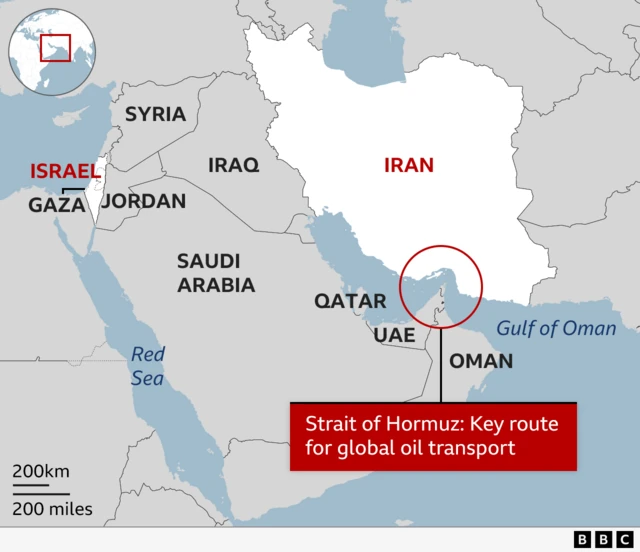
    The Strait of Hormuz is the world's busiest oil shipping channel, and is bounded by Iran to the north and Oman to the South.

    As a result of the US-Israeli attacks on its territory, Iran has warned that it will "set fire" to any ships trying to pass through it.

    Map locating the Strait of Hormuz in between the Persian Gulf and the Gulf of Oman
  16. Second UK government charter flight leaves Omanpublished at 14:03 GMT 6 March
    Breaking

    The Foreign Office says that a second charter flight carrying stranded British nationals back from Oman has taken off.

    Downing Street says more flights are expected in the coming days.

  17. Trump: 'No deal with Iran except unconditional surrender'published at 14:01 GMT 6 March
    Breaking

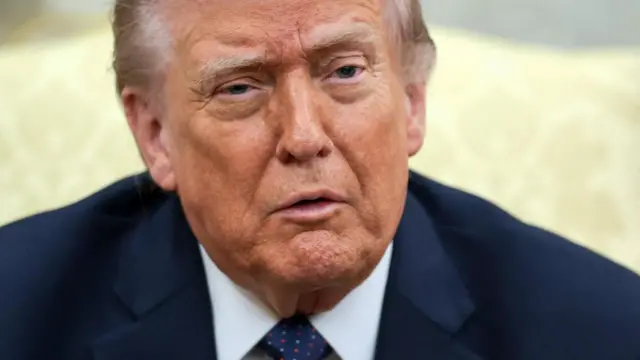
    A file photo of Donald TrumpImage source, Reuters

    US President Donald Trump says "there will be no deal with Iran except UNCONDITIONAL SURRENDER".

    Writing on his social media platform Truth Social, Trump adds: "After that, and the selection of a GREAT & ACCEPTABLE Leader(s), we, and many of our wonderful and very brave allies and partners, will work tirelessly to bring Iran back from the brink of destruction, making it economically bigger, better, and stronger than ever before.

    "IRAN WILL HAVE A GREAT FUTURE. 'MAKE IRAN GREAT AGAIN (MIGA!).'"

  18. Cyprus president ‘rules nothing out’ on future of British basespublished at 13:57 GMT 6 March

    Nikos Papanikolaou
    BBC News

    Nikos Christodoulides has said he “rules nothing out” when asked whether Cyprus could reopen discussions about Britain's sovereign bases on the island once the current crisis ends.

    Speaking to reporters, the Cypriot president says both the government spokesman and the foreign minister have already been asked about the issue.

    “The answer is that I rule nothing out,” he says, referring to the possibility of revisiting the question of the British bases in Cyprus after the crisis.

    The British sovereign base areas at Akrotiri and Dhekelia are both UK-administered territory established under the 1960 independence agreements, meaning any changes to their status would require agreement with London.

    Asked about his earlier meeting with the head of Britain’s foreign intelligence service, MI6, the president says they exchanged views on developments in the region, but adds that there was nothing further that could be said publicly about the discussion.

  19. Wider Middle East feels impact of the US-Israel war with Iranpublished at 13:34 GMT 6 March

    Yolande Knell
    Middle East correspondent, in Jerusalem

    One week into a widening war, even parts of the Middle East that have not come under direct attack are feeling the impact.

    Here’s a quick breakdown of some areas affected:

    Egypt: The war is hitting Egypt’s beleaguered economy. Global shipping companies are now rerouting some vessels away from the Suez Canal – a major source of foreign currency. This is also a big blow to tourism and affects millions of Egyptians who work in Arab Gulf states.

    Although Egypt is a close US ally, and major recipient of its military aid, it has a national security policy of hosting no foreign military bases. That’s a relief to Egyptians right now.

    Syria: The country has sent more troops to its borders with Lebanon and Iraq to block infiltration by Iran-backed armed groups, particularly Hezbollah. This week, several people, including children, have been hurt by debris from Iranian missiles, according to Syria’s state news agency.

    Occupied West Bank: At the start of the Iran war, Israel closed many checkpoints and military gates for Palestinians in the West Bank, citing security concerns.

    While Iranian missile fragments have fallen in Palestinian villages, Palestinians must rely on warning sirens from Israeli settlements or download apps for Israeli civilians to alert them to incoming rocket fire.

    Gaza Strip: In war-torn Gaza, aid is now re-entering through the Kerem Shalom crossing, which Israel had closed for three days saying it could be targeted by Iran.

    The Rafah crossing with Egypt – the main exit point for medical evacuations – remains shut. Talks for Donald Trump's Gaza Board of Peace are said to be on hold, with many members caught up in the new regional conflict.

  20. UK has not changed its position on strikes against Iran, Downing Street sayspublished at 13:29 GMT 6 March

    Harry Farley
    Political correspondent

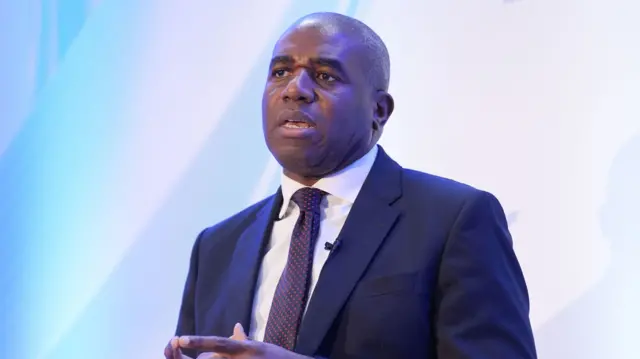
    Deputy Prime Minister David LammyImage source, PA Media

    The UK prime minister’s spokesperson insisted the government had not changed its position after the deputy prime minister said it would be legal for RAF jets to strike Iranian missile sites which could target Britons.

    Downing Street said it would not "speculate on every hypothetical scenario", with the spokesperson saying: "It wouldn’t be responsible to rule out everything in a fast moving conflict.

    "I’m not going to get into hypotheticals on it. Our position has been set out throughout the week. We’ve been very clear that our response has been to allow the US limited, specific and defensive use of our bases to protect British lives, British interests and our allies in the region."

    He added the UK military was focused on shooting down drones in the air, while the US targets missile launch sites in Iran.

    "We have consistently said that we’ll take the necessary steps to prevent future strikes which, as we’ve set out over the course of the week, is allowing the US to take out those missiles at source whilst we are defending the skies."

    "That is a consistent position that we have conveyed throughout the week," they added.

    Asked if this was a U-turn, they responded: "No."