Summary

  1. Trump speaking at trophy presentation after calling Nato allies 'cowards'published at 15:00 GMT 20 March

    Trump is now speaking at the Commander in Chief trophy presentation at the White House.

    You can watch live at the top of the page - and we'll bring you key updates here.

  2. Trump due to speak in the White House shortlypublished at 14:46 GMT 20 March

    Tom Bateman
    US State Department correspondent

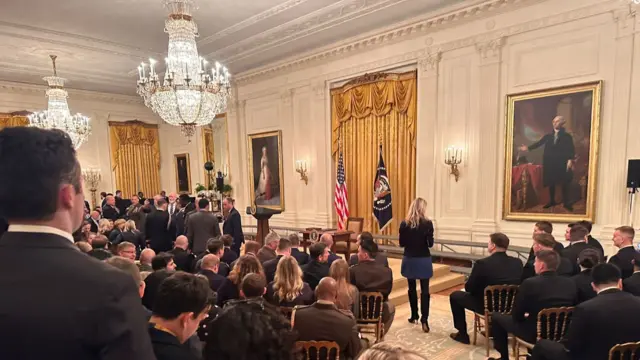
    A view from inside the White House East Room where a crowd waits around a lectern where Trump is due to speak

    This is my current view in the White House East Room where we’re waiting for Trump.

    He’s just sent a diplomatic shudder through the entire Nato alliance with his extraordinary social media post calling America’s allies cowards.

    He’s due here to present a trophy to a military football team.

    As ever, he’s likely to speak more broadly so let’s see what he says about Iran and if he repeats his warnings to the rest of Nato.

    It’s not the first time he’s criticised their reluctance to join any US military operation to open the Strait of Hormuz, but he adds: "we will remember".

  3. What is the Strait of Hormuz and why is it so important?published at 14:25 GMT 20 March

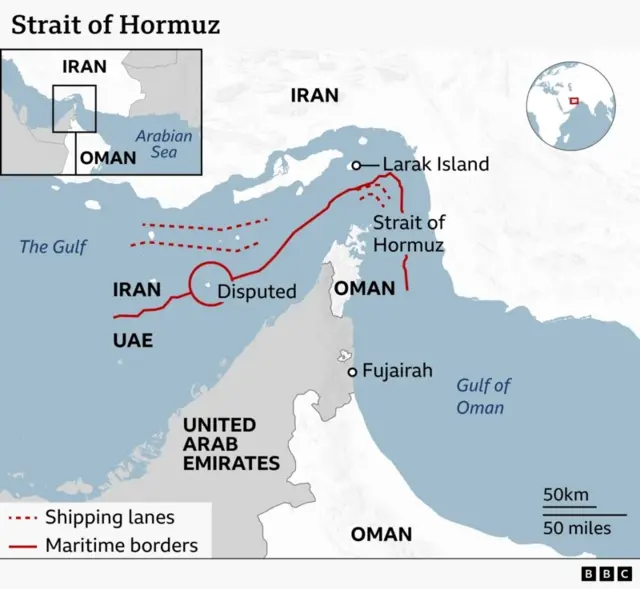
    Strait of Hormuz map

    The Strait of Hormuz is a key trade artery through which around 20% of the world's oil passes.

    Since the beginning of the US-Israel war with Iran, numerous ships have been reported to have come under attack in the area.

    Iran's new supreme leader said last week that Iran should keep using the "lever of blocking" the Strait.

    About 3,000 or so ships usually sail through the corridor each month. In 2025, about 20 million barrels of oil passed through the strait per day.

    It is deep enough for the world's biggest crude oil tankers, and is used by the major oil and gas producers in the Middle East - and their customers.

    Currently, around 20,000 seafarers are stranded in the Gulf west of the strait, the UN's International Maritime Organisation (IMO) has reported, following Iranian threats to attack ships.

  4. Trump calls Nato allies 'cowards', saying it would be 'easy' for them to help open straitpublished at 14:00 GMT 20 March
    Breaking

    We've just heard from US President Donald Trump, who has called Nato allies "cowards" and said it would be "easy" for them to allow ships to safely pass through the Strait of Hormuz.

    Here's his post on Truth Social in full:

    "Without the U.S.A., NATO IS A PAPER TIGER! They didn’t want to join the fight to stop a Nuclear Powered Iran.

    "Now that fight is Militarily WON, with very little danger for them, they complain about the high oil prices they are forced to pay, but don’t want to help open the Strait of Hormuz, a simple military maneuver that is the single reason for the high oil prices.

    "So easy for them to do, with so little risk. COWARDS, and we will REMEMBER!"

  5. IEA chief says it would take 'months and months' for Gulf energy flow to return to pre-war levelspublished at 13:34 GMT 20 March

    Jonathan Josephs
    Business reporter

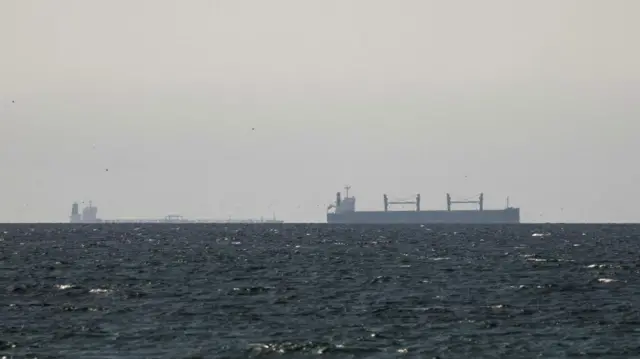
    A cargo ship in the Gulf, near the Strait of HormuzImage source, Reuters
    Image caption,

    A cargo ship in the Gulf, near the Strait of Hormuz

    More now from the BBC interview with the head of the International Energy Agency (IEA) - who says the "single most important solution" to the oil and gas crisis is reopening the Strait of Hormuz.

    Even if that happens, he warns, "the damage to energy infrastructure" is likely to reduce the flow of gas and oil from the Gulf compared to before the war began.

    It will take "months and months" for energy operations to return "to where they were", he says.

    "This will have repercussions for the economy, especially emerging and developing countries, whose economies are much more fragile and the currencies are weaker".

    Birol says it's difficult to give a full assessment of the damage to energy infrastructure so far, "but the reports we are getting indicate that there may be medium to heavy damage on the energy facilities, which are extremely important for the global energy markets and for the global economy".

  6. World faces greatest global energy security challenge in history, says IEA chiefpublished at 13:23 GMT 20 March

    Jonathan Josephs
    Business reporter

    The head of the International Energy Agency (IEA) tells the BBC governments need to "be more vocal" about cutting energy usage, as the world faces the "greatest global energy security challenge in history".

    Fatih Birol references a report released today by the IEA, detailing advice on reducing demand for oil in businesses and households - for example by reducing motorway speed limits and working from home where possible.

    Birol says the incentive for people to take action was financial - "high petrol prices, high energy prices".

    "It will be good for the pockets of the businesses and also for the consumers, for the citizens, because it is going to help their own economies".

    The IEA was created in the aftermath of the 1970s oil shock and a critical part of its role is to ensure there are sufficient supplies for the global economy. But the challenge posed by the US-Israeli war with Iran is "much bigger", he says.

    "It is also bigger than the natural gas price shock we have experienced after the Russia's invasion of Ukraine", with "major problems" facing fertilisers and petrochemicals, as well as oil and gas.

    "I believe the world has not yet well understood the depth of the energy security challenge we are facing today."

    Governments need "to be more vocal but it's only one part of the job that they have to do", he says.

    "The other part is how we can increase the homegrown energy such as renewables, such as nuclear power."

  7. Iranian man arrested trying to enter UK naval base home to nuclear submarinespublished at 12:59 GMT 20 March

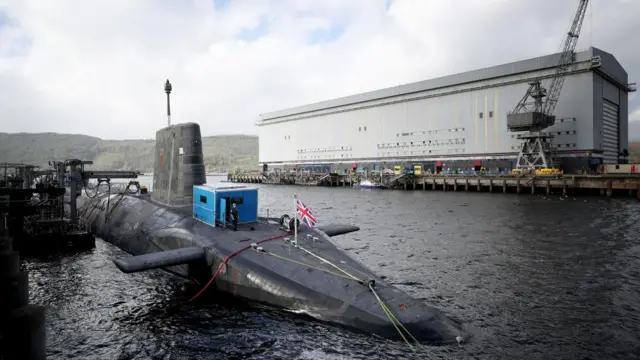
    A submarine with a Union Flag is dockedImage source, PA Media
    Image caption,

    HM Naval Base Clyde, Faslane, is the home of Britain's nuclear deterrent

    An Iranian man has been arrested with a woman after trying to enter the Faslane naval base, home to the UK's nuclear-armed submarines.

    Police Scotland said a 34-year-old man and a 31-year-old woman were arrested at HM Naval Base Clyde at about 17:00 on Thursday.

    A force spokesperson said inquiries were ongoing.

    The Royal Navy said the suspects "unsuccessfully attempted" to enter the base, near Helensburgh, Argyll and Bute.

    A spokesperson added: "As the matter is subject to an ongoing investigation, we will not comment further."

    The woman's nationality is unknown.

    Faslane is the home of all the Royal Navy's nuclear submarines, including the Vanguard-class ballistic missile submarines which carry Trident nuclear missiles.

    The four Vanguard submarines are the sole platforms for the UK's nuclear weapons and are due to be replaced by the new Dreadnought-class submarines after 2030.

  8. Saudi Arabia says 'our patience is not unlimited' - could the Gulf states retaliate?published at 12:49 GMT 20 March

    Frank Gardner
    Security correspondent, in Doha

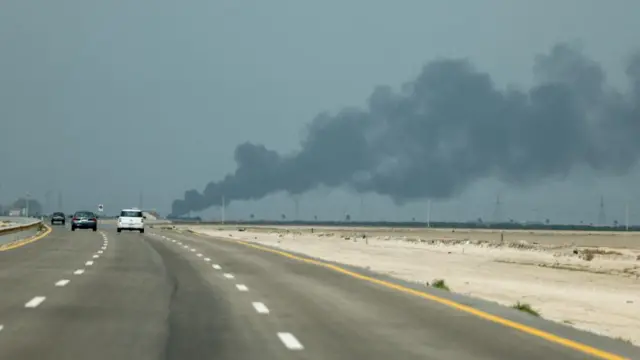
    Smoke billows from the Saudi Ras Tanura oil refinery, cars drive on a road nearby.Image source, Reuters
    Image caption,

    Smoke rising from Ras Tanura oil refinery in Saudi Arabia earlier this month

    Saudi Arabia has given its strongest hint yet that if Iran continues to attack its infrastructure then it may be forced to retaliate.

    "Our patience is not unlimited" said the Saudi Foreign Minister, Faisal bin Farhan, as he warned Iran that his country and its Gulf Arab allies had what he called "significant capabilities they could bring to bear, should they choose to do so".

    The Gulf states do have powerful air forces, purchased at great expense from the US, Britain and France.

    But joining in this combined US-Israeli war against Iran carries considerable risks.

    Iran would almost certainly increase its bombardment of countries across the Gulf, possibly expanding its targeting to sites like government buildings.

    Then there is the domestic population factor. Although Saudis tend to be fiercely patriotic, many would not look favourably on their government in effect siding with Israel in a war against another Muslim-majority country.

  9. UK 'not getting drawn into wider war', Downing Street says after Iran criticises US uses of basespublished at 12:20 GMT 20 March
    Breaking

    Downing Street says the UK is "not getting drawn into the wider war" after Iran's foreign minister says he told his UK counterpart that allowing the US to use UK military bases will be considered "participation in aggression".

    Earlier, the Iranian foreign ministry said Foreign Minister Abbas Araghchi held a call with UK Foreign Secretary Yvette Cooper, in which he said that any assistance provided to the US would lead to "an escalation of the situation".

    The prime minister’s official spokesman says: "So our position is very clear. We didn’t participate in the initial strikes, and we’re not getting drawn into the wider war.

    "We have authorised the US to use our bases for a specific defensive and limited purpose in response to Iran’s continued and outrageous aggression, and we’ve always said that this is the best way to eliminate the urgent threat and restore a path to diplomacy."

    Return to the latest post
  10. Stranded sailors in the Gulf report having to ration food and drinkpublished at 12:06 GMT 20 March

    Seafarers stuck in the Gulf report they are being forced to ration food and water after being stranded since war broke out in the Middle East, according to interviews with the news agency AFP.

    "We don't have enough water on board right now," an Indian worker onboard a refuelling boat off Iraq says.

    "Till yesterday we had proper drinking water and fresh water for baths and stuff. But now since drinking water is over, we have contacted the owner for the drinking water and I hope they get it by today or tomorrow," the sailor, who asked to be identified only by his last name Pereira, adds.

    "Till then, we are boiling the water for drinking,"

    Around 20,000 seafarers are stranded in the Gulf west of the Strait of Hormuz, the UN's International Maritime Organisation (IMO) has reported, following Iranian threats to attack ships travelling through the strait.

    Another ship's captain says his vessel is stuck off Qatar near the major Ras Laffan liquefied natural gas plant, which was hit by an Iranian attack on Wednesday and Thursday.

    The ship's crew has begun rationing food and water onboard, he says, adding that 25 crew members have left the ship, with 95 remaining on board.

    "If the port shuts down completely, then there is no possibility of getting the crew out," he says.

    This Flourish post cannot be displayed in your browser. Please enable Javascript or try a different browser.

  11. 'I don't want this to be our last Nowruz': Iranians mark Persian new yearpublished at 11:39 GMT 20 March

    Ghoncheh Habibiazad
    Senior reporter, BBC Persian

    Shoppers are seen carrying bunches of flowers and looking at market stallsImage source, EPA/Shutterstock
    Image caption,

    People go shopping ahead of Nowruz in the Iranian capital of Tehran on Thursday

    Names of contributors have been changed for safety reasons.

    This year's Persian new year festival Nowruz is the first Iranians have celebrated during wartime since the 1980s.

    "People are losing their jobs with the war. My biggest worry is our country's infrastructure," Amir says. "At this rate, there might not even be much left of Iran. I don't want this to be our last Nowruz."

    To Iranians, Nowruz represents their history, national character and tradition and it has been celebrated for more than 3,000 years.

    Markets, shopping centres and streets across Iran are usually bustling and the celebration marks the point when winter gives way for spring.

    The buzz is not the same this year but still some people are defiantly preparing the festival and its centrepiece - the Haft Sin table.

    "I feel like some are still carrying on despite everything, like me. I was in the salon when a loud explosion went off, and no-one even flinched," Tehran resident Parmis says.

  12. Syria 'working to keep away from conflict', says presidentpublished at 11:32 GMT 20 March

    Syrian President Ahmad al-Sharaa says his country is "carefully calculating our steps and working to keep Syria away from any conflict", according to state news agency SANA.

    Speaking from the presidential palace after prayers marking Eid, he says Syria stands "in full solidarity with the Arab states".

    "What is happening now is a major and rare event in history that we haven't witnessed since World War Two."

    Earlier, the Israel Defense Forces (IDF) said it struck targets in southern Syria overnight.

    It said the strikes were in response to "attacks against the Druze population in As-Suwayda", which is a city in southern Syria. For context, the Druze are an Arabic-speaking ethno-religious minority in Syria, Lebanon, Israel and the Israeli-occupied Golan Heights.

  13. Gulf nations continue to intercept missile and drone strikespublished at 11:23 GMT 20 March

    The UAE, Kuwait, Saudi Arabia and Bahrain have all reported Iranian missile and drone strikes overnight and this morning.

    The United Arab Emirates says it has intercepted four ballistic missiles and 26 drones coming from Iran, according to the country's defence ministry.

    Saudi Arabia's defence ministry says it has destroyed 26 drones over its eastern region and one drone over the Al-Jawf region since around 21:00 GMT on Thursday.

    Kuwait's armed forces also confirmed on Friday morning that explosions heard were as a result of air defence systems intercepting targets.

    In Bahrain, officials said they extinguished a fire that broke out in a company warehouse after shrapnel fell following "Iranian aggression".

  14. UK energy price cap set to rise by more than £300 a year, analysts reportpublished at 10:56 GMT 20 March

    Ben King
    Business reporter

    The Ofgem energy price cap is projected to rise to £1,973 a year for a typical UK dual-fuel household in July, according to the latest forecast from energy analysts Cornwall Insight.

    That would represent an increase of £332 on the current figure for the period April-June.

    The rise is due to higher wholesale energy prices, which have increased substantially following the US-Israel war with Iran.

    This Flourish post cannot be displayed in your browser. Please enable Javascript or try a different browser.

  15. Israeli oil refinery operator says most facilities operational after Iranian attackpublished at 10:49 GMT 20 March

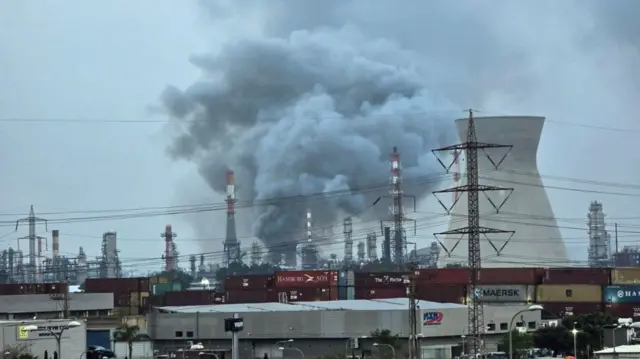
    Smoke rises from an oil refinery that was damaged in an Iranian attack, amid the U.S.-Israel conflict with Iran, in Haifa, Israel March 19, 2026Image source, Reuters

    The operator of an Israeli oil refinery in Haifa says it is has been damaged in an Iranian missile strike on Thursday, but that most of its production facilities remain operating, reports news agency Reuters.

    Oil Refineries Ltd says that essential infrastructure was damaged in "localised hits" in the attack, but reports that there were no injuries or casualties.

    It adds that the production facilities that have stopped operating are currently being restarted.

    The refinery, located in northern Israel's Haifa Bay, is the largest oil processing facility in Israel.

    One of only two refineries in the country, Haifa is a critical facility as it supplies around 60% of Israel's diesel and 50% of its gasoline, according to a report from S&P Global.

  16. Rise in Iranian missile attacks on Jerusalempublished at 10:37 GMT 20 March

    Yolande Knell
    Middle East correspondent

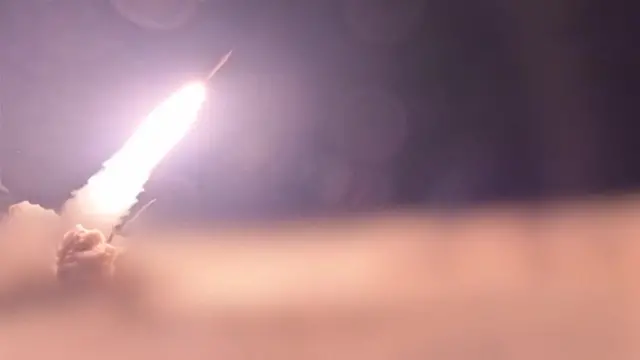
    Missile being fired into the air at night, with a trail of smoke behind itImage source, WANA via Reuters

    There has been an uptick in Iranian rocket attacks on Jerusalem – there were four last night within the space of an hour and a half, and there have been two more this morning, with no reports of casualties.

    Other Iranian salvos have been directed at northern and southern Israel.

    Overnight, Israel struck Tehran, again targeting what it said was the “infrastructure” of the Iranian regime. Israel’s military assesses that Iran still has more than 150 functioning missile launchers and several hundred ballistic missiles.

    Israel’s Kan News reported last night that, since the war began, the Iranians have fired about 900 ballistic missiles - 350 aimed at Israel and nearly all the others at the Arab Gulf states.

    A new video shared by Iran’s WANA news agency appeared to show Iran launching missiles overnight from an undisclosed location.

    Although Israel says it has stopped Iran being able to manufacture new missiles, an Islamic Revolutionary Guards Corps spokesperson said that even during wartime Iran’s missiles industry is performing at a high level, with no concerns over production or stockpiles.

  17. Israeli military says it is striking Iranian region of Nurpublished at 10:34 GMT 20 March

    The Israel Defence Forces says it has begun to strike targets in the area of Nur, near the Iranian capital Tehran.

    Strikes have fired in both directions on Friday - with blasts heard overnight in Jerusalem and heavy explosions in Tehran.

  18. Two US bombers seen returning to RAF base after 15-hour missionpublished at 10:17 GMT 20 March

    Chris Partridge
    BBC News weapons analyst

    Yesterday we reported on the departure of two US B-52 strategic bombers out of RAF Fairford in Gloucestershire. Early this morning they returned after what was a roughly 15 hour mission in total.

    We don't know what the targets were but as they left, I counted 12 AGM-158 JASSM / JASSM-ER cruise missiles under the wings of each aircraft.

    Footage of the B-52s returning this morning showed empty pylons – no weapons under the wings, meaning they had been used.

    These "standoff" weapons are likely to have been launched a few hundred miles from their designated targets.

    One reason to use cruise missiles is so as to not put aircraft in vulnerable positions over "contested airspace", where hostile forces pose a threat either from the air or in this case from the ground with air defences like missiles.

  19. UK's stance on US using its military basespublished at 10:03 GMT 20 March

    Jack Grey
    Live reporter

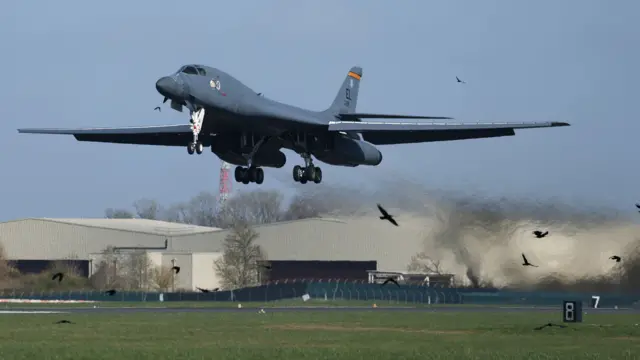
    A USAF B-1 bomber takes off at RAF Fairford airbase, used by United States Air Force (USAF) personnel, amid the U.S.–Israeli conflict with Iran, in Fairford, Gloucestershire, Britain, March 17, 2026.Image source, Reuters
    Image caption,

    US Air Force bombers have been seen taking off from RAF Fairford after the UK allowed use of the base for "defensive" missions

    As we've been reporting, Iran's foreign ministry says it has told the UK that it considers allowing the US using British military bases "participation in aggression".

    The UK has agreed to allow the US to use British military bases, but only for "defensive" strikes on Iranian missile sites.

    PM Keir Starmer said Britain had learned lessons from the "mistakes of Iraq", and was not involved in the initial strikes on Iran.

    We do not know exactly what missions the US has been flying out of RAF Fairford, but since then there has been plenty of US activity at the Gloucestershire air base, with bombers seen arriving and taking off from the base.

  20. Blasts heard in Tehran and Jerusalem as Persian New Year beginspublished at 09:40 GMT 20 March

    Jacob Phillips
    Live reporter

    Israel has been hitting Iran's capital Tehran with air strikes as Iranians mark the Persian New Year, Nowruz.

    Here is the latest update on the war in the Middle East:

    • The loud thuds of interceptions were repeatedly heard through the night in Jerusalem in Israel, reports our Middle East correspondent
    • Meanwhile, an oil refinery in Kuwait has been hit by multiple drone strikes as energy infrastructure continues to be targeted in the Gulf. The UAE, Saudi Arabia and Bahrain have also reported missile and drone attacks
    • Oil and gas prices remain very high but appear to have stabilised somewhat after Thursday's volatility
    • But Qatar's energy minister reports that damage to the world's largest liquefied natural gas plant will cost the country billions
    • Iran's foreign minister says the UK allowing the US to use its military bases will be considered "participation in aggression"