Summary

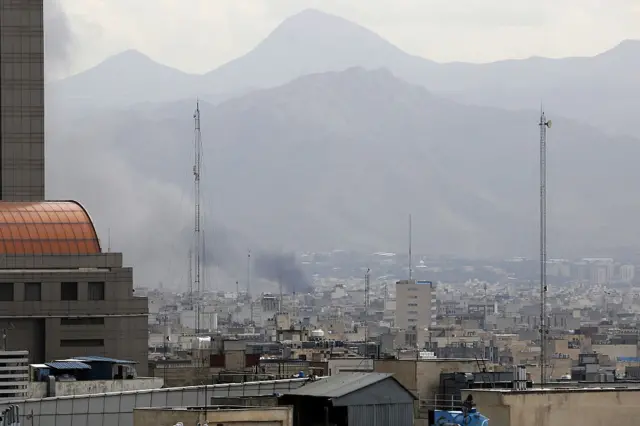
  1. At least 640 strikes carried out on Iran on Friday - human rights organisationpublished at 15:27 GMT 21 March

    At least 640 strikes were carried out across 17 Iranian provinces as of 17:00 EST (21:00 GMT) on Friday, the US-based Human Rights Activists News Agency (Hrana) says.

    Those strikes led to at least 68 casualties, a number which includes people killed or injured and which does not differentiate between civilians or military targets, the organisation adds.

    Hrana says that at least 1,398 people, including 210 children, have been killed since the war began three weeks ago. An additional 1,165 military fatalities are recorded, and 657 people have been killed who have not been classified as either civilian or military.
  2. IDF says missiles launched from Iran towards Israelpublished at 15:07 GMT 21 March

    In the last few minutes, the Israel Defense Forces (IDF) has said it's identified missiles launched towards the country.

    "Defensive systems are operating to intercept the threat," it says in an update on Telegram.

    A "precautionary alert" has been sent to people in the relevant areas, it says, without providing details of the location.

  3. Cluster missile damages kindergarten in central Israelpublished at 14:55 GMT 21 March

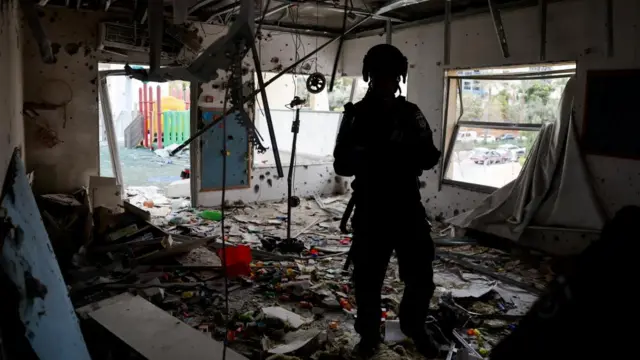
    A member of the Israeli security personnel stands inside damaged kindergarten at an impact site, following a barrage of missiles launched from IranImage source, Reuters

    A kindergarten has been damaged by a cluster missile in Rishon Lezion in central Israel, local media report.

    Shrapnel from the missile has seriously damaged the building housing the kindergarten, but did not strike it directly.

    Cluster munitions split in the air after they are fired, scattering smaller explosives over a wide area.

    Israel's Home Front Command are carrying out search and rescue operations at several impact sites around central Israel.

  4. IDF says it carried out wide scale strikes in Tehranpublished at 14:39 GMT 21 March

    Wide shot of Tehran skyline, a cloud of dark smoke billows from a building after a recent strikeImage source, Getty Images
    Image caption,

    Israel has been carrying out multiple daily strikes on Iran since 28 February

    The Israel Defense Forces (IDF) says it has carried out wide scale air strikes in Tehran, hitting dozens of targets.

    The IDF says overnight, the Israeli Air Force struck sites used to produce critical components for ballistic missiles, including a complex belonging to the Islamic Revolutionary Guard Corps (IRGC).

    A storage site for components used in missile manufacturing and a complex belonging to the Ministry of Defence responsible for producing rocket fuel were also struck. Another site used to produce ballistic missile parts was also hit.

    The IDF adds that it also struck several Iranian defence systems across Tehran.

  5. US forces say they maintain air superiority over Iran - what does it mean?published at 14:22 GMT 21 March

    Chris Partridge
    Weapons analyst

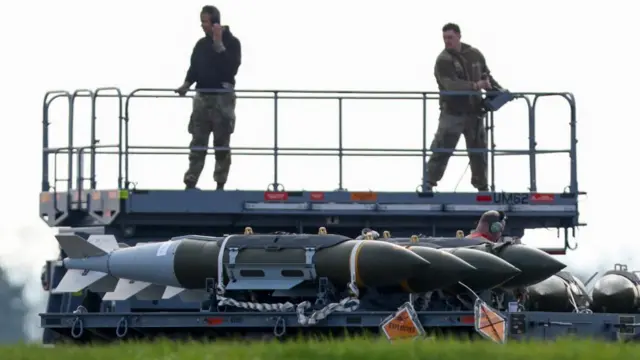
    Two members of ground crew stand on a scissor lift next to a row of missiles at RAF FairfordImage source, Reuters
    Image caption,

    Ground crew personnel handle munitions at RAF Fairford airbase in Gloucestershire

    "US forces maintain air superiority over Iran's skies," says Centcom commander Admiral Brad Cooper in a video released today as more than 8,000 combat flights have now been flown by US forces.

    But what does Air Superiority mean in the context of different layers?

    • Air Denial: Lowest level of effectiveness where friendly aircraft can do enough to stop enemy air dominating. Its role is to deny enemy air power effectiveness. This was pretty much secured last summer
    • Air Superiority: A state where friendly forces can conduct operations “without prohibitive interference by the opposing force” - so it doesn’t mean totally safe skies and it’s not enough to ensure, per se, the “effectiveness of air power”
    • Air Supremacy: Another layer up from superiority, where an opposing air force is incapable of effective interference. This might be argued has been secured for some pockets in the southern and western sectors of Iran
    • Air Dominance: In short, its situation over in air power for the defending force. 100% of friendly bombs hit targets and 0% of enemy bombs hit friendly targets
  6. Iran's ability to threaten ships in Strait of Hormuz 'degraded' after US bombing, says Centcompublished at 13:51 GMT 21 March

    The US military says Iran's ability to threaten the Strait of Hormuz has been "degraded" after the US bombed an underground facility this week where Iran stored cruise missiles and other weapons.

    "We not only took out the facility, but also destroyed intelligence support sites and missile radar relays that were used to monitor ship movements," Admiral Brad Cooper, commander of US Central Command (Centcom) says in video message posted on X.

    "Iran's ability to threaten freedom of navigation in and around the Strait of Hormuz is degraded as a result, and we will not stop pursuing these targets," he added.

    In the same clip he also says that over 8,000 Iranian military targets have been struck by the US, including 130 Iranian vessels.

  7. Could an Iranian missile reach Diego Garcia?published at 13:46 GMT 21 March

    Jonathan Beale
    Defence correspondent

    There are still doubts that Iran has missiles capable of reaching Diego Garcia in the Indian Ocean.

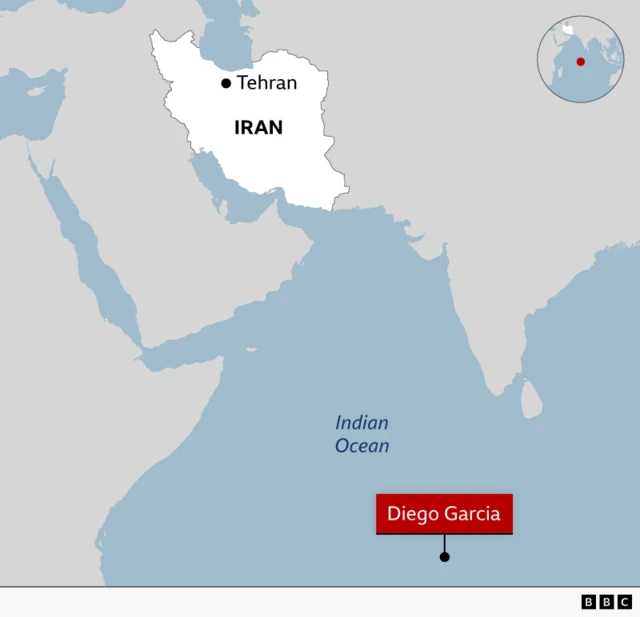
    The British military base, often used by US Air Force long range bombers, is about 3,800 kilometres from Iran.

    Until now Iran was believed to have intermediate range ballistic missiles with a range of 2,000 kilometres.

    However, some military analysts believe its Khorramshahr missile may have a longer range.

    Israel’s Alma Research and Education Center lists Iran’s Khorramshahr as having a range of up to 3,000 kilometres. It's believed to have been developed from a North Korean intermediate missile.

    Iran’s long-range missile production was targeted by the US and Israel in last year alongside its nuclear programme.

    Most of Iran’s remaining missile stocks are shorter range ballistic missiles - the types Iran has been firing over the past few weeks at Israel and neighbouring Gulf countries.

    There is still no definitive proof that Iran has missiles capable of reaching as far as Diego Garcia.

    The fact that two unspecified Iranian missiles were fired toward the military base in the Indian Ocean does not necessarily mean they would have reached their target.

    Return to the latest post
  8. Recap: Iran fires missiles at UK-US Diego Garcia basepublished at 12:58 GMT 21 March

    Jacob Phillips
    Live reporter

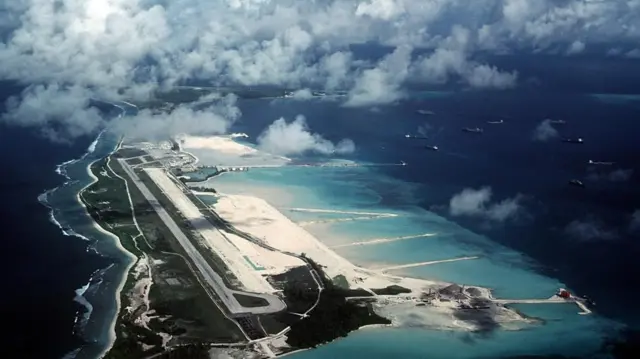
    An aerial view shows a runway next to a beach surrounded by clear blue water on a narrow islandImage source, US National Archives

    Iran launched two missiles at a joint UK-US base on Diego Garcia in the Indian Ocean, the BBC understands.

    It was previously thought that Iran's missiles had a range of 2,000km (1,243 miles) but the base is about 3,800km (2,361 miles) from Iran. Neither missile reached the base.

    The attack happened before the UK announced American forces could use British bases to launch strikes on Iranian sites targeting the Strait of Hormuz.

    Meanwhile, Iran says that the Natanz nuclear facility was targeted in strikes this morning. The UN's nuclear watchdog has urged "military restraint".

    Saturday marks the first day of Iranian new year. One woman in Tehran says she cannot celebrate as “a friend’s home was shattered by the blast wave today," while a man in the city says Saturday is the "first time I’ve heard any music in a long time".

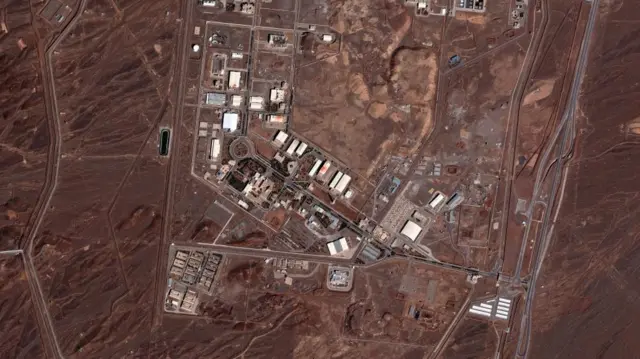
    A satellite image shows a birds eye view of a nuclear facility and includes dozens of buildings amidst red rockImage source, Vantor
    Image caption,

    Satellite image shows a closer view of the Natanz Nuclear Facility in Iran on 1 March 2026

  9. Iranians mark the start of their New Year todaypublished at 12:49 GMT 21 March

    Ghoncheh Habibiazad
    Senior reporter, BBC Persian

    Iranians are marking the start of the year 1405 in the Solar “Hijri” calendar today. The last time Iranians celebrated New Year during wartime was in the 1980s, during the eight-year conflict with Iraq.

    A woman in her 40s in Tehran says: “It doesn’t feel like New Year, it feels different from recent years. It’s gloomy.”

    But this year’s New Year is the first many have experienced during a war.

    “A friend’s home was shattered by the blast wave today. I personally can’t feel the New Year’s vibe,” a woman in her 20s in Tehran says.

    Iran is currently under a government-imposed internet blackout, but some manage to connect to the internet. Some are seeing the New Year in a different way.

    A man in his 30s in Karaj, a city near Tehran, says that he is “full of hope and energy”.

    “It is the first year that the evil king is no more,” he says, referring to the death of Iran’s late Supreme Leader, Ayatollah Ali Khamenei, on the first day of the war.

    “The neighbour had put some happy music on today. I think this was the first time I’ve heard any music in a long time. I think people are starting to believe the year has actually changed,” a man in his 30s in Tehran says.

  10. UN nuclear watchdog urges restraint after Natanz nuclear site reportedly targetedpublished at 12:20 GMT 21 March

    The United Nations' nuclear watchdog has urged "military restraint to avoid any risk of a nuclear accident" after Iran said the Natanz nuclear facility was targeted by strikes this morning.

    The International Atomic Energy Agency (IAEA) says in a statement on X it has been informed by Tehran that the site "was attacked today".

    "No increase in off-site radiation levels reported. IAEA is looking into the report."

    It adds that director general Rafael Grossi "reiterates call for military restraint to avoid any risk of nuclear accident".

  11. What is the Natanz nuclear facility?published at 12:07 GMT 21 March

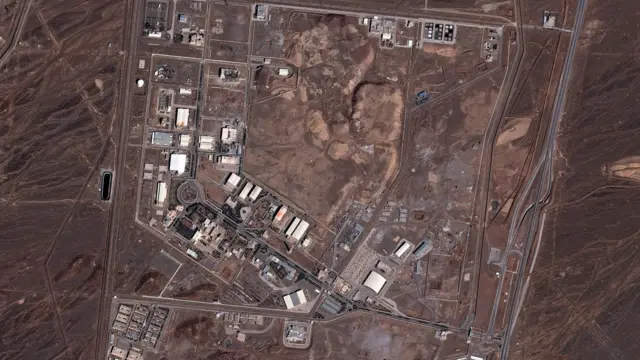
    Satellite image of the nuclear facility on 2 MarchImage source, Vantor

    Earlier this morning, we reported that Iran says one of its key nuclear facilities at Natanz has been targeted by strikes.

    It's one of three underground Iranian nuclear sites bombed by the US last June.

    Tehran insists its nuclear programme is entirely peaceful and denies it is seeking to develop nuclear weapons.

    But it has been enriching uranium to 60% purity, far beyond the level needed for civil nuclear power and close to the 90% required for weapons-grade uranium.

    Washington and Tehran had been in talks about Iran's nuclear programme as recently as two days before the war began, with Trump threatening military action if a deal was not reached.

  12. Starmer outlines 'latest support for Bahrain' in call with crown prince - No 10published at 11:54 GMT 21 March

    Prime Minister Keir Starmer spoke about the ongoing war with the crown prince of Bahrain this morning - one of the Gulf states hit by Iran during the course of the conflict.

    During the call, Starmer "outlined the UK's latest support for Bahrain, including deploying a team of experts to help counter drone attacks", a Downing Street spokesperson says - and gave an update on the US use of UK bases in "collective self-defence of the region".

    The pair also condemned "ongoing attacks on critical national infrastructure and the Strait of Hormuz", with Starmer thanking Crown Prince Salman bin Hamad Al-Khalifa for signing "the UK-led joint statement condemning Iran's attacks and calling for deescalation".

    Keir Starmer pictured on Downing Street this weekImage source, EPA
  13. How has the UK shifted its stance on the US using its bases?published at 11:29 GMT 21 March

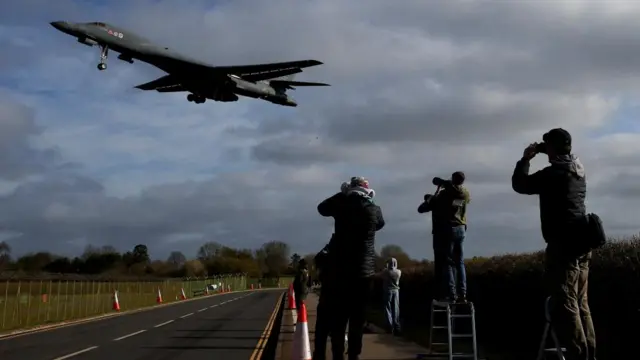
    Four people with cameras stand on a roadside photographing a US B1 BomberImage source, Reuters
    Image caption,

    A B1 Bomber landing at RAF Fairford

    28 February: As the US and Israel mounted their war against Iran, the UK had withheld permission for America to use its military bases to support strikes.

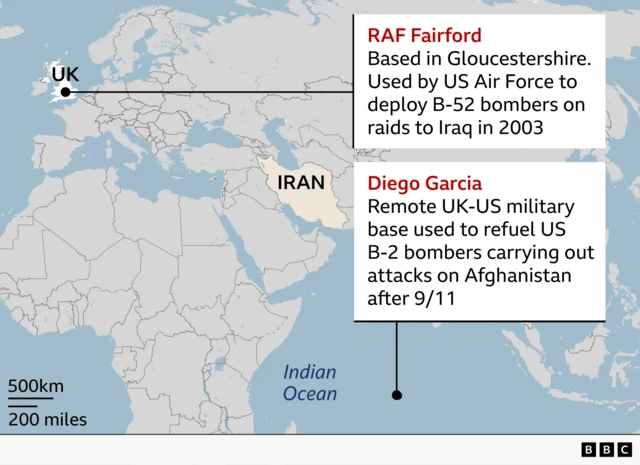
    1 March: PM Keir Starmer said the next day that permission had how been given for "defensive" strikes on Iranian missile sites from RAF Fairford in Gloucestershire and Diego Garcia in the Indian Ocean.

    He maintained that the UK didn't "believe in regime change from the skies". Two days later, Trump would call him "no Winston Churchill" over his approach to the matter.

    20 March: The UK said yesterday the bases could be used for strikes on Iranian sites targeting the Strait of Hormuz.

    It came shortly after Trump called Nato allies "cowards" for not doing more to help open the critical shipping channel, and Iran warned the UK that letting the US use its bases would be seen as a "participation in aggression".

  14. US crews continue to use RAF Fairfordpublished at 11:21 GMT 21 March

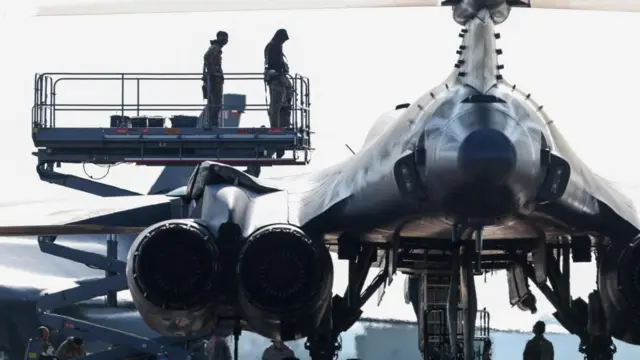
    Two members of ground crew stand on a scissor lift by a USAF B-1B bomber at RAF Fairford airbaseImage source, Reuters
    Image caption,

    Ground crew work by a USAF B-1B bomber at RAF Fairford airbase

    US bomber planes continue to use at RAF Fairford in Gloucestershire.

    With its long runway, the base is capable of hosting all three kinds of long-range bombers in the US Air Force - the B-1, B-2 and B-52.

    B-52s and B-1s have both spotted at the base since the US first launched strikes on 28 February.

    One woman who lives in the village of Down Ampney, which is just a few kilometres from the base, has told the BBC how "the whole house does shake" when the planes fly over.

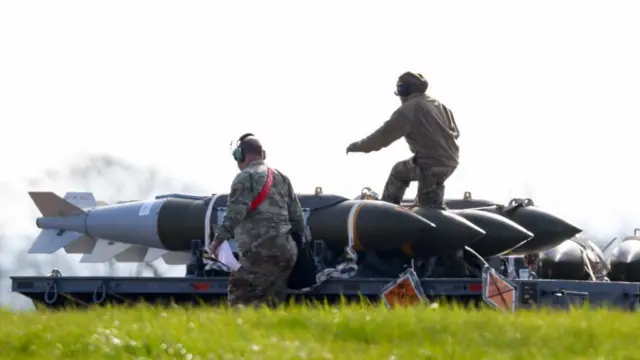
    Pictures from Saturday morning show crew members working on a B-1B bomber, with others handling munitions.

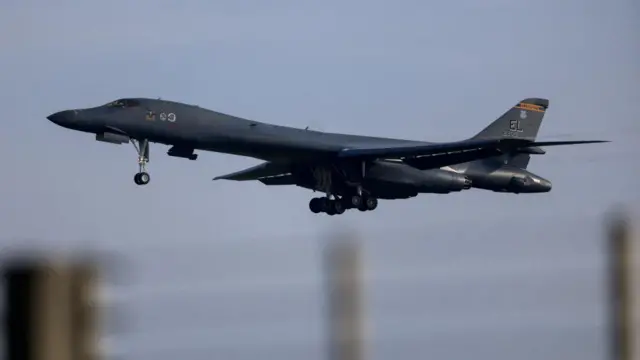
    A USAF B-1B bomber lands at RAF Fairford airbaseImage source, Reuters
    Image caption,

    A US Air Force B-1B bomber lands at RAF Fairford airbase

    Two ground crew are seen working next to four large missiles near a field of grass. More munitions can be seen in the backgroundImage source, Reuters
    Image caption,

    Ground crew personnel handle munitions at RAF Fairford airbase

  15. Neither Iranian missile fired at Diego Garcia reached the basepublished at 11:05 GMT 21 March

    Jonathan Beale
    Defence correspondent

    The BBC understands reports that two Iranian missiles were fired towards the British Sovereign Base at Diego Garcia are accurate.

    Neither missile reached the base.

    The Wall Street Journal first reported the missile launches - quoting unnamed US officials. The BBC has spoken to separate sources who have now confirmed it to be correct.

    The UK’s Ministry of Defence (MoD) itself has neither confirmed nor denied that two Iranian missiles were fired towards the base.

    It said in a statement that Iran’s reckless attacks across the region are “a threat to British interests and British allies.”

    The UK has given permission for the US military to conduct what it calls defensive bombing missions from Diego Garcia.

    As yet, there are no reports the US has conducted bombing missions from the UK sovereign base in the Indian Ocean.

    The US though has conducted bombing missions from RAF Fairford in Gloucestershire.

    The UK has not given the US permission to carry out strike missions from RAF Akrotiri in Cyprus.

    The image is a labelled map showing parts of Europe, Africa, and the Middle East, highlighting connections between the UK, Iran, and military bases used by the United States.
  16. What is the significance of the Diego Garcia military base?published at 10:52 GMT 21 March

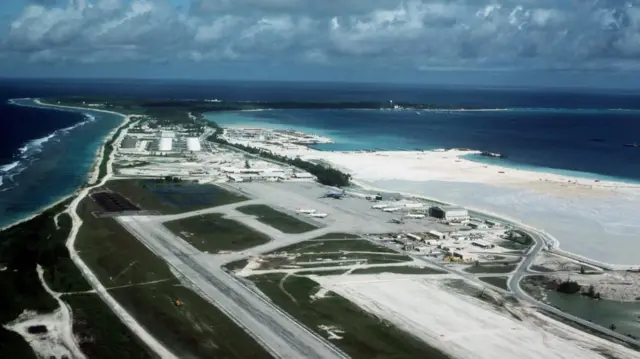
    A runway and military airport can be seen on the thin island of Diego Garcia. A clear blue sea can be seen on both sides of the runway and a white, sandy beach can be seen next to a road and hangar on the right hand sideImage source, US National Archives

    Diego Garcia is the largest island in the Chagos Islands archipelago in the Indian Ocean and is houses a joint military base by the UK and US armed forces.

    Earlier this month, the US was been given permission by the UK to use the base - as well as RAF Fairford in Gloucestershire - for defensive operations to prevent Iran firing missiles that put British interests or lives at risk.

    On Friday, the UK agreed to allow the US to use British bases to launch strikes on Iranian sites targeting the Strait of Hormuz.

    Diego Garcia is strictly out of bounds to most civilians and is about 1,000 miles (1,609km) from the nearest landmass.

    The remote island has been at the centre of a long-running territorial dispute between the UK and Mauritius. Under a deal between the nations - which was announced last May - the UK will lease back Diego Garcia for a period of 99 years at an average cost of £101m a year.

    A map showing the location of Iran and the island of Diego Garcia. Iran is highlighted in white with Tehran marked by a black dot. Diego Garcia is labelled in red in the central Indian Ocean, far south of Iran
  17. Iran did launch missiles at Diego Garcia, BBC understandspublished at 10:40 GMT 21 March
    Breaking

    BBC News understands that Iran did launch missiles at the joint UK-US base on Diego Garcia.

    It’s understood the attack was unsuccessful and happened before the UK announced an expansion of American use of British bases last night.

  18. Britain 'needs to be certain' if missiles were fired at US-UK base, former general sayspublished at 10:37 GMT 21 March

    The former commander of UK Joint Forces Command says the UK "needs to be certain" if two missiles fired at the joint US-UK military base Diego Garcia were launched from Iran.

    Reports in the Wall Street Journal and CNN say that two intermediate-range ballistic missiles were fired at the base.

    General Sir Richard Barrons tells the Today programme on BBC Radio 4 that it was previously thought that Iran's missiles had a range of 2,000km (1,243 miles) but the base is about 3,800km (2,361 miles) from Iran.

    He adds that British interests - along with the UK's allies - are at risk, and "ignoring" the conflict in the Middle East is no longer an appropriate option.

    Barrons adds that the US has done as much as it can using air power and now must choose between announcing victory or potentially escalating the conflict and deploying troops.

    He says Iran would be very difficult to occupy as it “the size of western Europe,” but the US may choose to raid sites such as Kharg Island or create blockades.

    • For context: Around 90% of Iran's oil exports pass through a terminal on Kharg Island, transported through pipes from the mainland. The US previously said it struck more than 90 military targets on the small island in the Gulf.
  19. MoD doesn't confirm or deny US media reports of Diego Garcia attackpublished at 10:18 GMT 21 March
    Breaking

    Jonathan Beale
    Defence correspondent

    The UK Ministry of Defence has neither confirmed nor denied that Iran has launched missiles towards the joint US - UK military base at Diego Garcia.

    In a statement released a few minutes ago, an MoD spokesperson says: "Iran’s reckless attacks, lashing out across the region and holding hostage the Strait of Hormuz, are a threat to British interests and British allies.

    “RAF jets and other UK military assets are continuing to defend our people and personnel in the region.

    “This government has given permission to the US to use British bases for specific and limited defensive operations.”

    Earlier, when asked about reports of the strikes in US media, the Pentagon said it had “nothing to provide”.

  20. Officer killed as drone targets Iraqi intelligence HQ - reportspublished at 10:02 GMT 21 March

    An officer has been killed after a drone targeted the headquarters of Iraq's National Intelligence Service, AFP and Reuters report, citing a statement from the service.

    The head of the country's Security Media Cell said a little earlier that the site in Mansour, Baghdad, had been targeted on Saturday morning.