บทเรียน 29: Lost arts
Used to & would
เลือกบทเรียน
- 1 Nice to meet you!
- 2 What to wear
- 3 Like this, like that
- 4 The daily grind
- 5 Christmas every day
- 6 Great achievers
- 7 The Titanic
- 8 Travel
- 9 The big wedding
- 10 Sunny's job hunt
- 11 The bucket list
- 12 Moving and migration
- 13 Welcome to BBC Broadcasting House
- 14 New Year, New Project
- 15 From Handel to Hendrix
- 16 What's the weather like?
- 17 The Digital Revolution
- 18 A detective story
- 19 A place to live
- 20 The Cult of Celebrity
- 21 Welcome to your new job
- 22 Beyond the planets
- 23 Great expectations!
- 24 Eco-tourism
- 25 Moving house
- 26 It must be love
- 27 Job hunting success... and failure
- 28 Speeding into the future
- 29 Lost arts
- 30 Tales of survival
บทเรียนย่อย 2
In this session we'll find out how to use used to and would to talk about things we did regularly in the past. Do you know which one to use when? You will after this session!
คะแนนจากบทเรียนย่อย 2
0 / 16
- 0 / 9แบบฝึกหัด 1
- 0 / 7แบบฝึกหัด 2
- 0 / 0แบบฝึกหัด 3
แบบฝึกหัด 1
Things we did regularly in the past
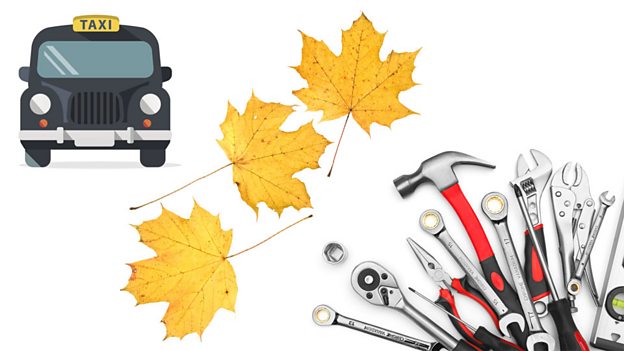
In this unit we're finding out how to use used to and would to talk about the past. To help us, let's take another look at the conversations we heard in Session 1. We listened to a taxi driver, a rambler and an amateur mechanic.
They all used the words used to and would. Read their sentences carefully and then we'll do an activity to work out the differences.
Taxi driver
- I used to know all the street names in London.
- When I picked up a passenger, I used to ask them where they were going, and we'd be off!
- I wouldn't carry a map, never!
Rambler
- When I was younger, I would go for a long walk every morning.
- I used to love rambling!
- I also used to recognise all the trees on my way to school.
Amateur mechanic
- Whenever my car had a problem I would always repair it myself.
- I used to be a very good amateur mechanic.
อ่านเนื้อหาพร้อมทำแบบฝีกหัด
To do
You're going to do a sorting activity to help you learn the main differences between used to and would. Drag each sentence into the correct column, depending on whether 'used to' or 'would' describes:
1. A habit or repeated action in the past
2. A state or situation in the past
State or habit?
9 Questions
Drag the sentences into the correct columns
ช่วยเหลือ
แบบฝึกหัด
Drag the sentences into the correct columns
คำใบ้
Is 'knowing' something you 'do'?ช่วยเหลือ
แบบฝึกหัด
Drag the sentences into the correct columns
คำใบ้
Is 'asking' something you can do many times? Or is it a general state?ช่วยเหลือ
แบบฝึกหัด
Drag the sentences into the correct columns
คำใบ้
Is 'carrying' something you can do many times? Or is it a general state?ช่วยเหลือ
แบบฝึกหัด
Drag the sentences into the correct columns
คำใบ้
Is 'carrying' something an action? Or is it a general state?ช่วยเหลือ
แบบฝึกหัด
Drag the sentences into the correct columns
คำใบ้
Is 'going for a walk' something you can do many times? Or is it a general state?ช่วยเหลือ
แบบฝึกหัด
Drag the sentences into the correct columns
คำใบ้
Is 'love' a habit - something you do? Or is it a state - a feeling you have?ช่วยเหลือ
แบบฝึกหัด
Drag the sentences into the correct columns
คำใบ้
This is an ability that the rambler had in the past. Is an ability a state or an action?ช่วยเหลือ
แบบฝึกหัด
Drag the sentences into the correct columns
คำใบ้
Is fixing things an action you can do many individual times, or is it a general state?ช่วยเหลือ
แบบฝึกหัด
Drag the sentences into the correct columns
คำใบ้
The verb 'to be' is the clueQuestion 1 of 9
State or situation
Habit or repeated action
Excellent! เยี่ยม! แย่หน่อย! คุณทำคะแนนได้:
State or habit?
9 Questions
Drag the sentences into the correct columns
ช่วยเหลือ
แบบฝึกหัด
Drag the sentences into the correct columns
คำใบ้
Is 'knowing' something you 'do'?Question 1 of 9
ช่วยเหลือ
แบบฝึกหัด
Drag the sentences into the correct columns
คำใบ้
Is 'asking' something you can do many times? Or is it a general state?Question 2 of 9
ช่วยเหลือ
แบบฝึกหัด
Drag the sentences into the correct columns
คำใบ้
Is 'carrying' something you can do many times? Or is it a general state?Question 3 of 9
ช่วยเหลือ
แบบฝึกหัด
Drag the sentences into the correct columns
คำใบ้
Is 'carrying' something an action? Or is it a general state?Question 4 of 9
ช่วยเหลือ
แบบฝึกหัด
Drag the sentences into the correct columns
คำใบ้
Is 'going for a walk' something you can do many times? Or is it a general state?Question 5 of 9
ช่วยเหลือ
แบบฝึกหัด
Drag the sentences into the correct columns
คำใบ้
Is 'love' a habit - something you do? Or is it a state - a feeling you have?Question 6 of 9
ช่วยเหลือ
แบบฝึกหัด
Drag the sentences into the correct columns
คำใบ้
This is an ability that the rambler had in the past. Is an ability a state or an action?Question 7 of 9
ช่วยเหลือ
แบบฝึกหัด
Drag the sentences into the correct columns
คำใบ้
Is fixing things an action you can do many individual times, or is it a general state?Question 8 of 9
ช่วยเหลือ
แบบฝึกหัด
Drag the sentences into the correct columns
คำใบ้
The verb 'to be' is the clueQuestion 9 of 9
Excellent! เยี่ยม! แย่หน่อย! คุณทำคะแนนได้:
Next
Well done. So, have you worked out the rule? On the next page, we'll take a closer look!
หลักไวยากรณ์จากบทเรียนย่อย
Used to and would help us to talk about things that happened in the past.
Would + infinitive without 'to' - habits & repeated actions
- When I had free time, I would practise guitar.
- Since we were always in a hurry, we wouldn’t stop for tea on Fridays.
- Would you often stay for lunch?
Used to + infinitive without 'to'- habits & repeated actions
- Isabel used to sing in a band.
- Pablo didn’t use to drive to work.
- Did John use to study with you?
Used to + infinitive without 'to'- states or situations
- Bob used to be much shorter.
- I didn’t use to like art.
- Did Wayne use to belong to the debating team?
- Didn’t Margaret use to hate flying