유닛 8: Art
Adjectives and adverbs
유닛 고르세요
- 1 Pop-ups
- 2 Hidden talents
- 3 Can't buy me love
- 4 Travellers' tales
- 5 The colleague from hell
- 6 Jurassic mystery: unpacking the past
- 7 Career changes
- 8 Art
- 9 Project management
- 10 The dog ate my homework!
- 11 The diary of a double agent
- 12 Fashion forward
- 13 Flat pack skyscrapers
- 14 Extreme sports
- 15 Food fads
- 16 Me, my selfie and I
- 17 Endangered animals
- 18 A nip and a tuck: cosmetic surgery
- 19 I'm really sorry...
- 20 Telling stories
- 21 Fakes and phrasals
- 22 Looking to the future
- 23 Becoming familiar with things
- 24 From rags to riches
- 25 Against the odds
- 26 Our future on Mars?
- 27 Where is it illegal to get a fish drunk?
- 28 Dodgy dating
- 29 Annoying advice
- 30 I'll have been studying English for thirty weeks
세션 2
Is this session, we look at adjectives and adverbs. We'll do some revision, point out some useful tips, test your knowledge, and finish with a fun summary in 6 Minute Grammar.
A gentle reminder
You know about adjectives and adverbs, don't you?
You know that adjectives describe nouns, and that adverbs give information about a verb…
- Adjectives: Rufus has an expensive car. It has leather seats.
- Adverbs: He drives it very slowly and carefully.
But there's more to adjectives and adverbs than that. In Activity 1 we're going to remind ourselves about the differences between these parts of speech. In Activity 2 we're looking at some irregular examples.
Adjectives – meaning and use
As we've said, adjectives tell us about nouns. They also tell us about pronouns like he, she and it:
- He's very unhappy.
- She's stunning.
Adjectives – Form
Most of them have no particular form, for example:
-
Happy, sad, light, green, quick, busy, large
Though some are made by adding a suffix to a noun or verb:
-
Fun – funny
-
Week - weekly
-
Child – childlike
-
Fool – foolish
-
Care – careful
-
Accept – acceptable
Adverbs – meaning and use
You know that adverbs tell us about verbs, but did you know they also tell us about adjectives and other adverbs?
-
It was a very sunny day. (The adverb very refers to the adjective sunny. It tells us how sunny it was.)
-
He finished the exam really quickly. (The adverb really refers to the adverb quickly. It tells us how quickly he finished.)
Adverbs - form
Many adverbs can be made by adding the suffix –ly to an adjective:
-
Sad – sadly
-
Serious – seriously
-
Quiet – quietly
-
Total – totally
-
Careful - carefully
-
Sleepy - sleepily
-
Slow - slowly
But others have no regular structure:
-
Soon, well, never, quite, often, already, just
문서 읽고 엑티비티를 하세요
Story
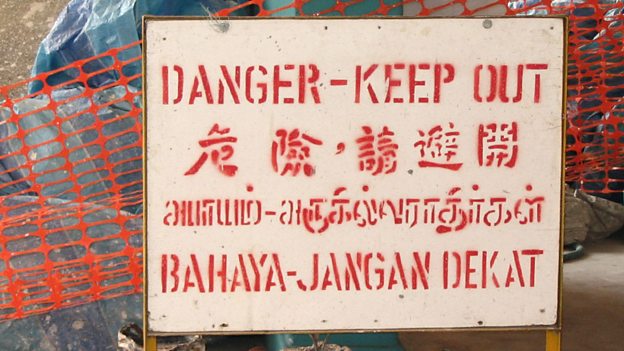
Singapore is a very diverse, multicultural country. The biggest ethnic group is Chinese. They make up about 75% of the population. Other significant groups are the Malays and Indians. The country has four official languages: English, Mandarin, Malay and Tamil, and most Singaporeans speak at least two of them fluently. In addition, a creole called Singlish is spoken widely, though this is officially discouraged by the government. The country has changed very fast in the last few decades as the economy has grown quickly.
Singapore
10 Questions
Each of these words is from the story about Singapore above. Can you drag them into the right columns, according to how the word is used in the story?
도움
엑티비티
Each of these words is from the story about Singapore above. Can you drag them into the right columns, according to how the word is used in the story?
힌트
The story said "spoken widely"... it looks like 'widely' is describing a verb?도움
엑티비티
Each of these words is from the story about Singapore above. Can you drag them into the right columns, according to how the word is used in the story?
힌트
It gives more information about 'diverse'도움
엑티비티
Each of these words is from the story about Singapore above. Can you drag them into the right columns, according to how the word is used in the story?
힌트
This looks like it might be describing 'country'도움
엑티비티
Each of these words is from the story about Singapore above. Can you drag them into the right columns, according to how the word is used in the story?
힌트
We had 'official' earlier - this time it's 'officially'...도움
엑티비티
Each of these words is from the story about Singapore above. Can you drag them into the right columns, according to how the word is used in the story?
힌트
This is right beside the word Singapore...도움
엑티비티
Each of these words is from the story about Singapore above. Can you drag them into the right columns, according to how the word is used in the story?
힌트
This is describing the word 'group'도움
엑티비티
Each of these words is from the story about Singapore above. Can you drag them into the right columns, according to how the word is used in the story?
힌트
'Official' is describing the word 'languages'...도움
엑티비티
Each of these words is from the story about Singapore above. Can you drag them into the right columns, according to how the word is used in the story?
힌트
Many words that end in -ly are...?도움
엑티비티
Each of these words is from the story about Singapore above. Can you drag them into the right columns, according to how the word is used in the story?
힌트
Be careful with this one...도움
엑티비티
Each of these words is from the story about Singapore above. Can you drag them into the right columns, according to how the word is used in the story?
힌트
This means the same as 'fast' in the last questionQuestion 1 of 10
Adjective
Adverb
Excellent! Great job! 네 안타깝군요 이번 점수입니다:
Singapore
10 Questions
Each of these words is from the story about Singapore above. Can you drag them into the right columns, according to how the word is used in the story?
도움
엑티비티
Each of these words is from the story about Singapore above. Can you drag them into the right columns, according to how the word is used in the story?
힌트
The story said "spoken widely"... it looks like 'widely' is describing a verb?Question 1 of 10
도움
엑티비티
Each of these words is from the story about Singapore above. Can you drag them into the right columns, according to how the word is used in the story?
힌트
It gives more information about 'diverse'Question 2 of 10
도움
엑티비티
Each of these words is from the story about Singapore above. Can you drag them into the right columns, according to how the word is used in the story?
힌트
This looks like it might be describing 'country'Question 3 of 10
도움
엑티비티
Each of these words is from the story about Singapore above. Can you drag them into the right columns, according to how the word is used in the story?
힌트
We had 'official' earlier - this time it's 'officially'...Question 4 of 10
도움
엑티비티
Each of these words is from the story about Singapore above. Can you drag them into the right columns, according to how the word is used in the story?
힌트
This is right beside the word Singapore...Question 5 of 10
도움
엑티비티
Each of these words is from the story about Singapore above. Can you drag them into the right columns, according to how the word is used in the story?
힌트
This is describing the word 'group'Question 6 of 10
도움
엑티비티
Each of these words is from the story about Singapore above. Can you drag them into the right columns, according to how the word is used in the story?
힌트
'Official' is describing the word 'languages'...Question 7 of 10
도움
엑티비티
Each of these words is from the story about Singapore above. Can you drag them into the right columns, according to how the word is used in the story?
힌트
Many words that end in -ly are...?Question 8 of 10
도움
엑티비티
Each of these words is from the story about Singapore above. Can you drag them into the right columns, according to how the word is used in the story?
힌트
Be careful with this one...Question 9 of 10
도움
엑티비티
Each of these words is from the story about Singapore above. Can you drag them into the right columns, according to how the word is used in the story?
힌트
This means the same as 'fast' in the last questionQuestion 10 of 10
Excellent! Great job! 네 안타깝군요 이번 점수입니다:
Next
Did you notice the word fast in that game? It can be both an adjective and an adverb. We look at a few irregular examples like this in the next activity.
이번 세션 문법
Adjectives
Tell us about nouns and pronouns:
- Mark is unhappy
- They are beautiful
They have no particular form:
- Happy, sad, green
Though some can be made by adding suffixes:
- Fun / funny, child / childlike, care / careful
Adverbs
Tell us about verbs, adjectives and other adverbs:
- He drove slowly
- It was a very sunny day
- He counted the money really carefully
Most are made by adding –ly:
- Serious / seriously, quiet / quietly, total / totally
But others have no pattern:
- Soon, well, never, quite, often, already, just
Session Vocabulary
diverse
including many different thingsmulticultural
containing many culturesethnic
relating to a race of peoplefluently
(of a language) very well, without pauses