
From Disaster to Victory: The British Army from 1916-1918
By Dr Dan Todman
Last updated 2011-02-17
Training
Training
Even before the Battle of the Somme had begun, the British Expeditionary Force (BEF) had already made an effort to study its performance in battle and to learn from its successes and failures in 1915.
This process of self-examination continued during and after the Somme. The British army had traditionally been suspicious of rigorously-imposed doctrine, partly because of the sheer range of roles its pre-war soldiers had to fill, and partly because of strong traditions of regimental independence.
But the Somme demonstrated that standards of training - particularly in rifle fire - and methods in attack varied greatly throughout the army. Successful tactics developed by one unit were not necessarily spread throughout the BEF.
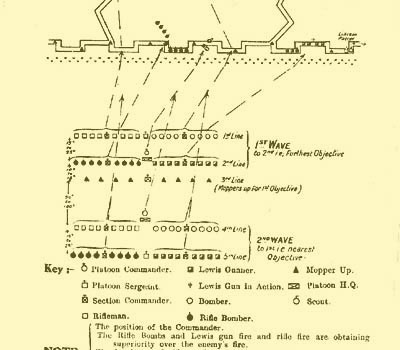
In trying to turn a large number of civilians into soldiers quickly, the army found it necessary to standardise its procedures. From the summer of 1916 onwards, a series of training pamphlets were produced. They summarised the lessons learned on the Somme, laid down simple instructions for combat operations, and made sure that British soldiers adapted to the new demands of the modern battlefield.
In the last years of the war, General Headquarters in France paid particular attention to the training of its junior commanders.
World War One Centenary

- Find out more about how the BBC is covering the World War One Centenary, and see the latest programmes and online content
Surviving the trenches

Pack Up Your Troubles

BBC iD
BBC iDBBC navigation
BBC links

BBC © 2014 The BBC is not responsible for the content of external sites. Read more.
This page is best viewed in an up-to-date web browser with style sheets (CSS) enabled. While you will be able to view the content of this page in your current browser, you will not be able to get the full visual experience. Please consider upgrading your browser software or enabling style sheets (CSS) if you are able to do so.
