| 13 November 2014 |

|
|
| BBC Homepage | | |
| |||
| Contact Us | | |
Blast Arts 2008You are in: North Yorkshire > Blast > Blast Arts 2008 > 30 Days and 30 Nights 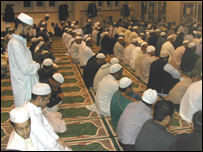 30 Days and 30 NightsBy Nadia Emam The holy month of Ramadan lasts for 30 days and 30 nights, when Muslims all over the world cultivate a spiritual and peaceful mind state in order to fast. What is Ramadan?There are five pillars of Islam of which each Muslim must adhere to in their lifetime. The third pillar is to fast during the ninth month in the Islamic calendar, Ramadan. It is perhaps considered the most sacred of months to Muslims, as it is said that the gates of heaven are open and those of hell are closed. It was during this time when Allah (the translation of ‘God’ in Arabic) chose Mohammed (pbuh) as a prophet, and sent down to him the first revelations of the Qu’ran. On this very night ‘Lailat ul Qadr’ (said to be around the last ten days of Ramadan) prayer is said to be better than a thousand months of worship. This is the equivalent to an average lifetime for a human being. 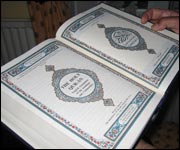 A Qu'ran in both English and Arabic. “Whosoever fasts in Ramadan out of faith and hopeful of reward, all his past sins will be forgiven; and whosoever stands up in prayer in Ramadan out of faith and hopeful of reward, all his past sins will be forgiven” The Prophet Mohammed (Peace be upon him). Muslims commemorate this holy month by making extra effort to indorse spiritual and physical discipline into their daily lives. The timing of Ramadan is different every year. It is determined by the sighting of the new moon in the skies. FastingFasting is compulsory for the 30 days Ramadan. To fast is to replenish the body and soul by taking on a more peaceful or faithful state of mind. It consists of surrendering all food and liquids from the first light of sunrise until sunset. This is abided by timetables of sunrise and sunset, and five prayer times. The intention is to help each individual gain more self-control over their body and in areas of lust or bad habits. People who are exempt from fasting are the sick, elderly, pregnant women and children. “O believers, you must fast so that you may learn self-restraint. Fasting is prescribed for you during a fixed number of days, so that you may safeguard yourselves against moral and spiritual ills.’ (Surah 2:183-4) The other moral of fasting is to gain appreciation for the things that we mostly take for granted, like food and water. It teaches sympathy for the poor, and those deprived of the luxuries we have everyday. 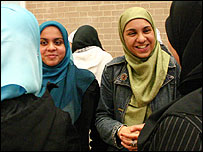 A time for friendship and gathering The way fasting is practised usually brings people together in the celebration of one’s strength. Food can be eaten up until the first break of dawn, (Suhur) to ensure the person has a sufficient amount to last them through the day; although the main objective of Ramadan is to feel hunger, therefore resisting temptation to reinforce the soul in piety. This year Ramadan falls at the peak of British summer time, meaning the hours of daylight are considerably longer for fasting. It is difficult when the hours are long and the weather is warmer, which is what most Muslims have to cope with in hot countries. Breaking the fast (Iftaar) is made immediately after sunset and the prayer of Maghrib. It is common for families, friends and neighbours to celebrate Iftaar together. One who feeds a fasting person at the time of breaking fast shall have all their sins forgiven and praised by Allah. The holy month of Ramadan brings most Muslims to recite as much of the Qu’ran and pray as much as possible, usually meaning Mosques are full day and night. 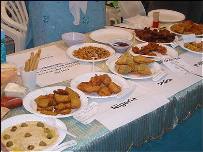 Food for thought Eid-ul-FitrAt the end of the month is the festival of Eid-ul-Fitr begins. Again depending on the sight of the new moon, it lasts three days and is a celebration of the completion of fasting. Eid the time to feast, comprises of large gatherings of people in the Mosques or on the streets with food, sweets, gifts and decorations. It is a joyful occasion for all Muslims and a time where they can thank Allah for the strength, guidance and forgiveness given during Ramadan. Nadia Emam last updated: 12/11/2008 at 10:17 Have Your SayHow are you celebrating Ramadan 2008?
ADNAN
faris You are in: North Yorkshire > Blast > Blast Arts 2008 > 30 Days and 30 Nights  |
| | About the BBC | Help | Terms of Use | Privacy & Cookies Policy |