Wet
and wild 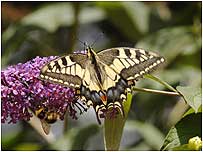 |
Wetlands are a must for nature lovers. They are especially
good for bird watching, bug spotting and pond dipping. So get out and about and
enjoy a wetland adventure! | Stunning
Swallowtail butterfly.
Photo - Broads Authority. |
Here
are three great nature activities which you can take part in wetland areas:
*
Pond dipping.
* Bird watching and bug spotting.
* Butterfly watching.
Pond
dipping
Wetland habitats are a great place to try pond dipping.
Great locations for this activity featured on BBC Nature's Calendar include: *
How
Hill, Norfolk Broads - the How Hill Trust in Norfolk organises dyke dipping
for school groups.
*
Caerlaverock, Solway Firth - pond dipping area.
Other locations
recommended include: * Arundel Wetlands
Centre, West Sussex
* Castle Espie Wetlands Centre, Northern Ireland
These are our top tips for pond dipping: *
Buy a children's fishing net from a toy shop - make sure it has a long pole so
you can reach further without falling in. *
Alternatively you can try making your own by stretching an old pair of tights
over a tennis racquet. * The best ponds to
try dipping in have lots of vegetation like reeds and lily pads on which insects
and other life can rest. * Dip the net gently
into the water and make small movements to collect a good variety of pond life. *
When you think you've got plenty to look at, gently lift your net out of the water
and place gently on a piece of white paper. *
Use a good identification guide to examine your catch and don't forget to put
everything back where you found it! * The Wildfowl
and Wetlands Trust runs Great
Pond Safari learning programmes for children at many of their wetland centres.
Wetland
birds and bugs  Wetland
ponds are a great habitat for ducks, geese and other migratory birds, but they're
also ideal for Dragonflies and Damsels, skimming across the water's surface. Wetland
ponds are a great habitat for ducks, geese and other migratory birds, but they're
also ideal for Dragonflies and Damsels, skimming across the water's surface.
Good
locations for wetland birds and bugs include: *
Martin Mere, Lancashire
*
London Wetlands Centre
*
Slimbridge, Gloucestershire
Why not follow these great
tips from the Nature's Calendar team: *
Bird-watching has three golden rules - be patient, be quiet and buy a good pair
of binoculars - these may be expensive but there are still bargains to be found
if you buy second-hand. * The best time of
day for bird-watching is in the morning - this is when birds are most active,
particularly in summer. * For Dragon and Damselfly-watching,
lunchtime is better as they thrive in the midday sun, but be careful not to cast
a shadow - they're less active in the shade. *
There are three main plants that Damsels and Dragonflies like - tall plants around
the water's edge, surface plants like lily pads to land on and water-borne plants,
which oxygenate the water to keep it nice and clear. *
Dragonflies are larger with outstretched wings while Damselflies tuck their wings
up behind them - make sure you know the difference!
Butterfly
watching
 One
of the best places to see butterflies is How Hill in Norfolk - it's a great place
to spot the rare Swallowtail which is only found in the Norfolk Broads. One
of the best places to see butterflies is How Hill in Norfolk - it's a great place
to spot the rare Swallowtail which is only found in the Norfolk Broads.
Other
good Norfolk reserves where you can spot the Swallowtails are Catfield
Fen, Strumpshaw
Fen and Wheatfen Our
top tips for a successful trip are: *
Look for butterflies darting around to get a general sense of their movements,
but your best chance of seeing them land is when the temperature drops slightly.
*
Swallowtails are Britain's biggest butterfly with a distinctive 10 cm wing span. *
Swallowtails like to feed on nectar plants so look out for the butterflies on
Yellow Flag Irises, Meadow Thistles and Ragged Robin.
* If you're lucky,
you might spot Swallowtail eggs on plants such as Milk Parsley - these are small
white, round blobs. * The
Butterfly Conservation website is a good source of information about rare
butterflies.
|