
Tank: Life and Times of a 'Wonder Weapon'
By Patrick Wright
Last updated 2011-03-08
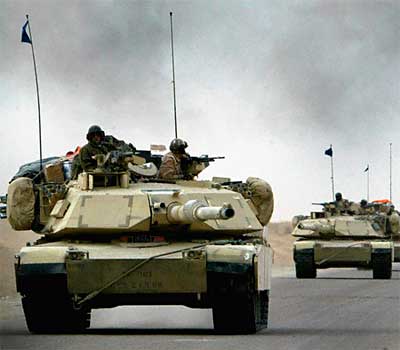
The future of the tank
The future of the tank
As the Cold War ended, the main battle tank seemed destined to become a thing of the past - a military antique that, despite any amount of high-tech retooling, would hardly outlast the 20th century in which it had been born.
Following the disintegration of the Soviet Union, treaties were drawn up to ensure that tanks were scrapped, blown up in front of international monitors or converted to civil use.
In a world no longer ruled by the prospect of massive collision between the armies of the ‘Communist East’ and the ‘Capitalist West’, it was imagined that tanks would soon be replaced with lighter, more flexible vehicles designed for ‘peace-keeping’ purposes.
Elsewhere, a new kind of military operation was called for. Described as ‘force projection’ - strikes against distant terrorists or ‘rogue states’ - it was not easily carried out with vast 50-ton machines that, as was revealed in the Gulf War of 1991, require many weeks to be shipped to their destination.
Mobility, firepower and protection are likely to remain basic principles of warfare. However, it has repeatedly been questioned whether it will remain necessary in the future to combine all three on one platform.
And yet people have been predicting the redundancy of the tank since the end of World War One. It would be a rash person, even now, who predicted its final passing.
World War One Centenary

- Find out more about how the BBC is covering the World War One Centenary, and see the latest programmes and online content
Surviving the trenches

Pack Up Your Troubles

BBC iD
BBC iDBBC navigation
BBC links

BBC © 2014 The BBC is not responsible for the content of external sites. Read more.
This page is best viewed in an up-to-date web browser with style sheets (CSS) enabled. While you will be able to view the content of this page in your current browser, you will not be able to get the full visual experience. Please consider upgrading your browser software or enabling style sheets (CSS) if you are able to do so.
