
From Disaster to Victory: The British Army from 1916-1918
By Dr Dan Todman
Last updated 2011-02-17
Intelligence
Intelligence
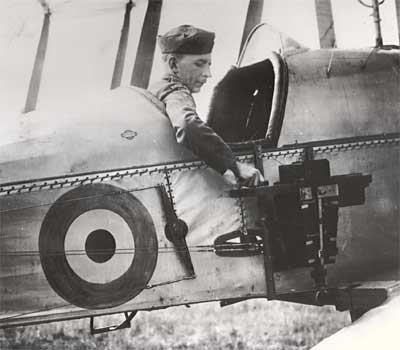
Many of the most important technical developments of the war related to the gathering of information. The key role of the Royal Flying Corps (RFC), on the Somme and after, was to observe and correct British artillery fire. This meant not only carrying observers, but attempting to identify and communicate with British forces on the ground. Throughout the war, aerial photography steadily improved.
The British developed a number of other sophisticated means for locating enemy guns, including flash-spotting (looking for the muzzle-flash from enemy artillery pieces) and sound-ranging (calculating the position of enemy artillery from their sound).
Taken together, these improvements allowed the British to target German artillery far more effectively in 1917. This counter-battery fire was a crucial ingredient in British successes in the second half of the war.
Battles of attrition – as many engagements of World War One tended to be – often lack decisive results. Because of this, information about the enemy was also a means of deciding success or failure. This, in turn, could give Intelligence officers tremendous influence over command decisions.
Although the intelligence branch of British General Headquarters expanded enormously in 1917, the year after the Somme, it often provided over-optimistic information about the state of German reserves and morale - factors which were much more open to interpretation than the location of enemy guns.
World War One Centenary

- Find out more about how the BBC is covering the World War One Centenary, and see the latest programmes and online content
Surviving the trenches

Pack Up Your Troubles

BBC iD
BBC iDBBC navigation
BBC links

BBC © 2014 The BBC is not responsible for the content of external sites. Read more.
This page is best viewed in an up-to-date web browser with style sheets (CSS) enabled. While you will be able to view the content of this page in your current browser, you will not be able to get the full visual experience. Please consider upgrading your browser software or enabling style sheets (CSS) if you are able to do so.
