
WDYTYA? Series One: Celebrity Gallery
By Dan Waddell
Last updated 2011-02-17
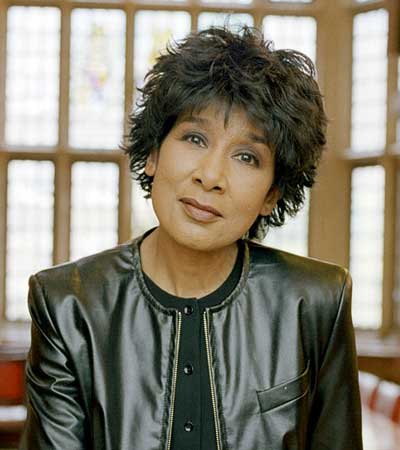
Moira Stuart
- Aspiration and migration
- Moira Stuart says that she has always felt 'global', with rumours of Carib and Cape Verdean blood circulating in family legend, and a family history characterised by movement and change. Her personal story, too, as she discovered when she started to investigate her roots, incorporates epic themes of aspiration and migration, civil rights and colonialism.
Marjorie, Moira's mother, was born in Dominica in 1921, and three years later she and her family moved to Bermuda. Marjorie's parents - Trinidadian Edgar Fitzgerald Gordon, and his wife Clara - separated when she was still a young girl. In 1935, she and her three sisters, Barbara, Joyce and Evelyn, were sent to England, and they went to La Sargasse Convent School in Hampshire.
Despite the major upheaval, the girls forged lives in England. After training as a nurse, Marjorie fell in love with Harold Stuart, a Barbadian lawyer. They married in 1943 and moved to Edinburgh. Here their daughter Sandra was born. The marriage ended shortly after Moira, their second child, was born.
- The family's past
- Edinburgh had already featured in the family's past. Marjorie's father (and Moira's grandfather), Edgar Gordon, had studied medicine there. He arrived in Scotland in 1912 following a three-week voyage, as Moira discovered. There were few black students at that time in Edinburgh, hardly any of them female. Clara Christian was one. Following the wishes of her father, the Hon. George James Christian, she was studying medicine. She was halfway through her course when she fell in love and married Edgar in 1917.
Edgar's fortunes took a downturn with the decimation of his father's livery business, so Clara gave up her studies and used the subsidies from her father to support both herself and her husband. When he learned of his daughter's actions, George Christian was displeased. It was to be while before the pair were reconciled.
- Challenging racism
- Further research revealed that Edgar qualified in 1918 and accepted a job in the town of Kingussie, Inverness. By then Edgar and Clara had a one year-old child, Barbara, and later, while still in Kingussie, their twins, Joyce and Evelyn, were born.
Having served his internship, and made a brief visit to Trinidad, Dr Gordon started his career in his wife's birthplace, Dominica. He secured the post of Chief Medical Supervisor and he and Clara had two more children, Marjorie and Teddy.
Edgar and Clara moved on once more, to Bermuda. He became involved in Bermudian politics and stood as a member of parliament, motivated to challenge the racism he had witnessed in England and Bermuda.
He went on to become a leading activist and fought strongly for the rights of Bermuda's workers. He was the founding father of the Bermuda Workers Association and played a role in protests when black citizens were excluded from the civic commemoration of Queen Elizabeth II's coronation tour of 1953. He died in 1955.
- Protest
- Edgar was not the only significant historical figure in Moira's family history. George James Christian, her great grandfather on her grandmother Clara's side, was a powerful man with a passionate interest in progressive politics. He was born in Dominica in 1869 and became a schoolteacher.
With ambitions to become a barrister, he travelled to London in 1899 and enrolled at Gray's Inn. His associates included like-minded people such as Trinidadian Henry Sylvester Williams, who founded an association concerned with promoting and protecting the interests of people of African descent, particularly in the British colonies.
The movement held a meeting at Westminster Town Hall in July 1900 at which George spoke. His speech, 'Organised plunder and human progress have made our race their battlefield', dealt in part with the treatment of black South Africans during the Boer War, and was reported at length in The Times.
Moira's instinctive sense of her family background seems to have been confirmed by what she found out during her researches - and she now has some solid facts to flesh out the tale. From this firm base she could well go on to find further family stories as interesting as those of Edgar and George.
Family History
Programmes
BBC iD
BBC iDBBC navigation
BBC links

BBC © 2014 The BBC is not responsible for the content of external sites. Read more.
This page is best viewed in an up-to-date web browser with style sheets (CSS) enabled. While you will be able to view the content of this page in your current browser, you will not be able to get the full visual experience. Please consider upgrading your browser software or enabling style sheets (CSS) if you are able to do so.
