| 13 November 2014 |

|
|
| BBC Homepage | | |
| |||
| Contact Us | | |
Local HistoryYou are in: Stoke & Staffordshire > History > Local History > Staffordshire's soldiers...1917 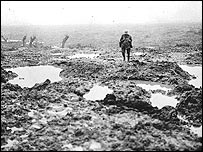 Passchendaele - the mud, the devastation Staffordshire's soldiers...1917Paul Morris Amongst the infantry taking part in the bloody battle of Passchendaele in the First World War were the South Staffs and the North Staffs Regiments. November 8th marks the anniversary of the end of the battle. Paul Morris tells the story... November 8th 2007 marks the 90th anniversary of the conclusion to the battle of 3rd Ypres, commonly known as Passchendaele. Numerous attacks made 3rd Ypres a protracted struggle that became centred upon the village of Passchendaele. The village was of strategic importance as it lay upon a ridge; whoever held it could dominate the whole area and therefore hold the advantage. The battle was a bruising one and the British advance was a slow and painful one with their artillery pounding German positions in preparation for mass infantry assaults. Eventually the overall British offensive ground to a halt in mud caused by the heaviest rainfall seen in the area for decades. It was made worse by the damage to the land drainage system caused by shellfire. The North Staffs & South StaffsAmong the many units involved in the tumultuous battle was the 2nd Battalion of the South Staffordshire Regiment which had been in almost continuous action since landing in Belgium in autumn 1914. On 4th October 1917, it took part in the successful attack on the Gheluvelt Plateau which had defied a previous attack. Its capture was essential for any further advance. On 30th November 1917, the 2nd South Staffordshires attacked, which restored the local situation. And the 2/5th Battalion of the North Staffordshire Regiment repelled an attack on its front. On the same day, the 2/6th South Staffordshires and the 2/6th North Staffordshires were less fortunate. They were heavily attacked and suffered so many casualties – (350 and 318 respectively), that they had to be relieved at once. These numbers reflect the huge scale of loss throughout the battle and are an indicator of just how individual regiments and therefore the communities they were drawn from suffered on huge scale. BraveryWhat must be remembered however is that the British Army and its allies were ultimately successful in defeating the German Army in the field. Since the guns fell silent the debates and arguments over the rights and wrongs of the conflict have been hotly debated. For some commentators hindsight has proved a wonderful tool, which they have been able to make sweeping judgments from an early 21st century perspective. This is folly. Whatever the motivations and machinations of politicians, generals and others at the time, the genuine belief in patriotic duty and unswerving bravery in the face of horrendous casualties by the men of Staffordshire and other regiments from across the UK should not be undermined or their sacrifice forgotten. Western Front AssociationOne organisation that is dedicated to the preservation of the memory of those who fought and fell in the Great War is the Western Front Association. The Western Front Association was established in 1980 with the purpose of remembering what and why these men suffered. The Western Front Association's membership includes many enthusiastic amateur historians who possess a wealth of knowledge on a huge variety of subjects from the history of individual regiments and commanding officers, through to the weapons and tactics used in the conflict. If you would like to know and understand more why not come along to a regular meeting, held at the Town Hall in Sutton Coldfield, usually on the 3rd Saturday afternoon of every month. For more information please call Jonathan Dale on 01827 52862 or log onto www.wfa-birmingham.org.uk Paul Morris last updated: 20/04/2009 at 09:58 SEE ALSOYou are in: Stoke & Staffordshire > History > Local History > Staffordshire's soldiers...1917 |
| | About the BBC | Help | Terms of Use | Privacy & Cookies Policy |