|
|
|
|
|
PROGRAMME INFO |
|
|
|
|
|
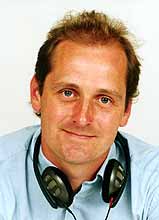
Richard Daniel chairs the interactive environmental programme in which he and his guests deal with listener's questions and concerns.
Call 03700 100 400
home.planet@bbc.co.uk
Home Planet, PO Box 3096, Brighton BN1 1PL |
|
|
|
|
LISTEN AGAIN 30 min 30 min |
|
|
|
|
PRESENTER |
|
|
|
 |
|
|
|
"Home Planet is the environmental programme for which you set the agenda. We tackle your questions and concerns and try and make some sense out of the conflicting opinions which make up the environmental debate."
Richard Daniel |
|
|
|
|
|
|
|
|
|
|
PROGRAMME DETAILS |
|
|
|
 |
|
Panel
Dr Susan Buckingham
Head of Department and Senior Lecturer in Geography, Brunel University; Director of the Women's Environmental Network
Dr Anna Lawrence
Human Ecology Programme Leader, Environmental Change Institute, Oxford University
Emeritus Professor Philip Stott, University of London
Discussion topics
How do we find out accurate information about the loss of species?
A listener is interested by claims made by the Rainforest Action Network that 137 species become extinct each day - and up to 50,000 each year. How do we know this?
Rainforest Action Network
Classification of Life and Species
Professor Stott shows how one species of damselfly falls into the Classification of Life:
Life
Kingdom: Animalia (animals)
Phylum: Arthropoda (animals with jointed limbs, segmented bodies, and an exoskeleton of chitin)
Class: Insecta (insects)
Order: Odonata (dragonflies and damselflies)
Suborder: Zygoptera (damselflies - means equal wings)
Family: Coenagrionidae (narrow-winged damselflies)
Genus: Ischnura (a group of narrow-winged damselflies first described in 1840)
Species: Ischnura elegans (blue-tailed damselfly - common around ponds)
A species name is always formed of two separate Latin words, as with Ischnura elegans, which combines the genus name with the species element. The species is the animal or plant of which you see an individual specimen.
How to dispose of low energy light bulbs
National Energy Foundation
DEFRA
Community Recycling Network
The Recycling Consortium
Waste Recycling Group plc
Individuals making a difference to the health of our environment
Sustrans - the Sustainable Transport Charity
Environ
The Environmental Concerns of Disadvantaged Groups
Involving children with environmental issues
Wildlife Learning
The Princes Trust
Wildfowl and Wetland Trust
RSPB Wildlife Explorers
The Wildlife Trusts
Your local education authority or local library will be able to give further information.
Houseflies
What would happen to a housefly, busy around a light at night, if that light were switched off. The panel was keen to point out that these insects can be harmful to human health.
Oxford City Council pest control
Barrow in Furness Environmental Health
Contact Home Planet
Send your comments and questions for future programmes to:
Home Planet
BBC Radio 4
PO Box 3096
Brighton BN1 1PL
Or email the programme: home.planet@bbc.co.uk
Or telephone the Audience Line 03700 100 400
Home Planet is a Pier Production for BBC Radio 4.
The personal information you provide will be held by the BBC and by Pier Productions Ltd, the independent production company which makes Home Planet. Your information will be used for the purpose of creating the Home Planet programme, and will be processed in accordance with the Data Protection Act 1998. For more details on how the BBC deals with your information, please see the BBC’s Privacy and Cookies Policy at http://www.bbc.co.uk/privacy
|
|
|
OTHER RELATED LINKS
Philip Scott
English Nature
The Wildlife Trusts
Pond Conservation Trust
British Trust for Conservation Volunteers
Froglife
Bath and North East Somerset council
DEFRA
Community Recycling Network
The Recycling Consortium
Waste Recycling Group Plc
Country Land and Business Association
National Farmer's Union
Oxfam
WWF
Guardian Unlimited
English Nature
DEFRA
The BBC is not responsible for the content of external websites
|
|
|
|
|